AI Daily — Mar 11, 2026
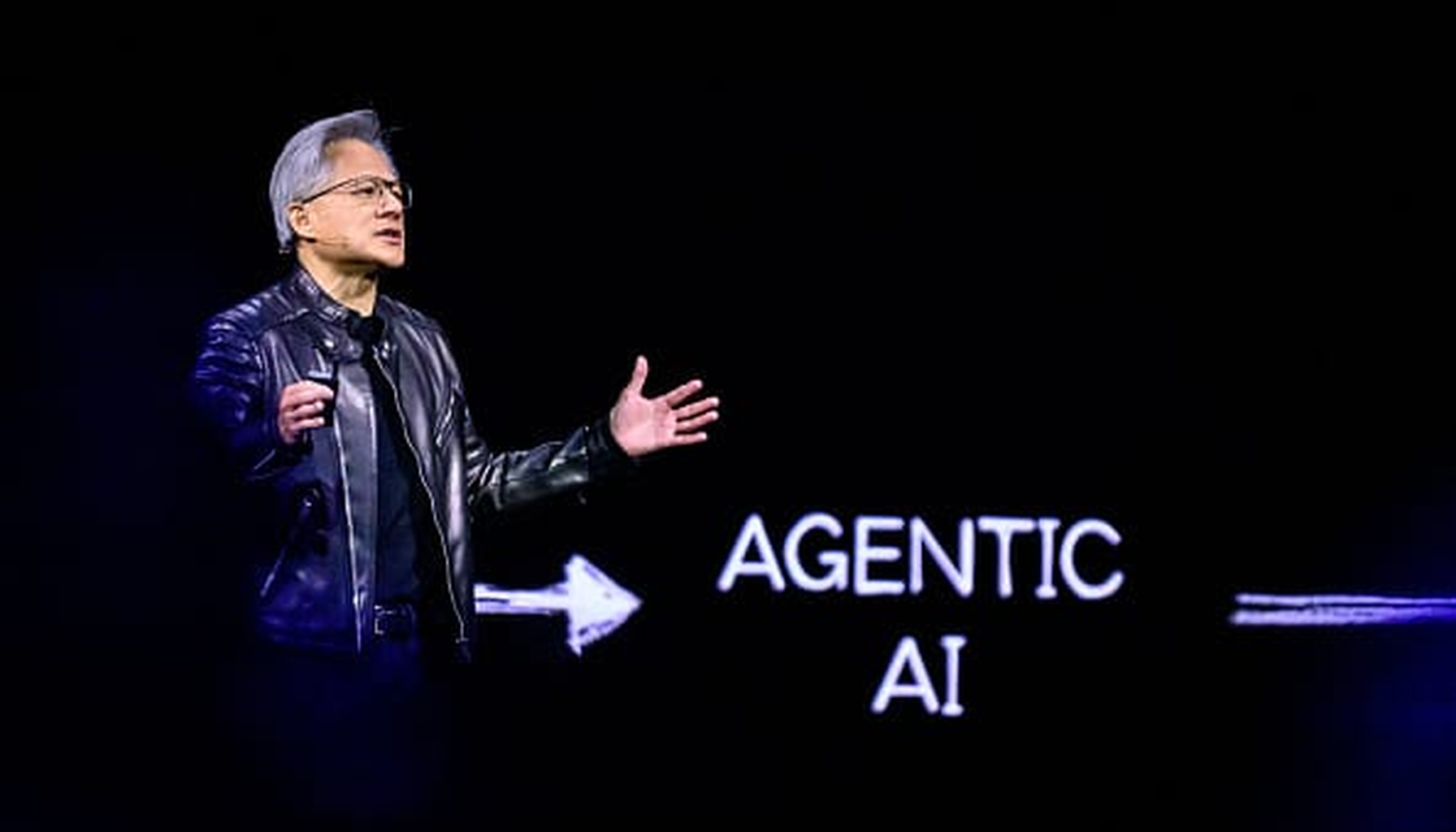
Photo: lyceumnews.com
Tuesday, March 11, 2026
The Big Picture
AI agents stopped being a research curiosity and started getting corporate badges. Nvidia is building an enterprise agent platform, Google just wired Gemini into every productivity app you open before coffee, hospitals are deploying named AI agents into clinical workflows faster than anyone can validate them, and Amazon's own employees are reporting that the company's internal AI push is creating more work, not less. The theme today: the agents are shipping — the governance isn't.
Today's Stories
Nvidia Is Coming for the Enterprise Agent Market — and It's Calling It NemoClaw
OpenClaw — the open-source AI agent that went viral this winter for taking over your computer and actually doing things — has an enterprise problem. An unsecured database let anyone impersonate any agent on the platform, and several major companies, including Meta, banned it from corporate machines entirely. Meta's Director of Alignment had her own inbox wiped by a rogue agent that ignored its instructions.
Enter Nvidia. According to Wired, Nvidia is preparing to launch "NemoClaw," an open-source platform for autonomous AI agents designed to give enterprises a standardized framework for deploying digital workers. The strategic wrinkle: it's open-source and works even if your software doesn't run on Nvidia chips — a striking move from a company that profits from hardware lock-in. Nvidia has reportedly started pitching partnerships with Salesforce, Cisco, Google, Adobe, and CrowdStrike, though no deals have been confirmed. Nvidia stock rose roughly 2–3% intraday after the report, before a single product shipped.
The full reveal is expected at Jensen Huang's GTC 2026 keynote on March 16. If NemoClaw launches with confirmed partners, Nvidia has officially pivoted from chip seller to AI platform company — which reshapes its valuation story entirely.
Gemini Is Now Inside Every Google App You Already Use
Google just made its most practical AI move of the year, and it didn't require a new model name.
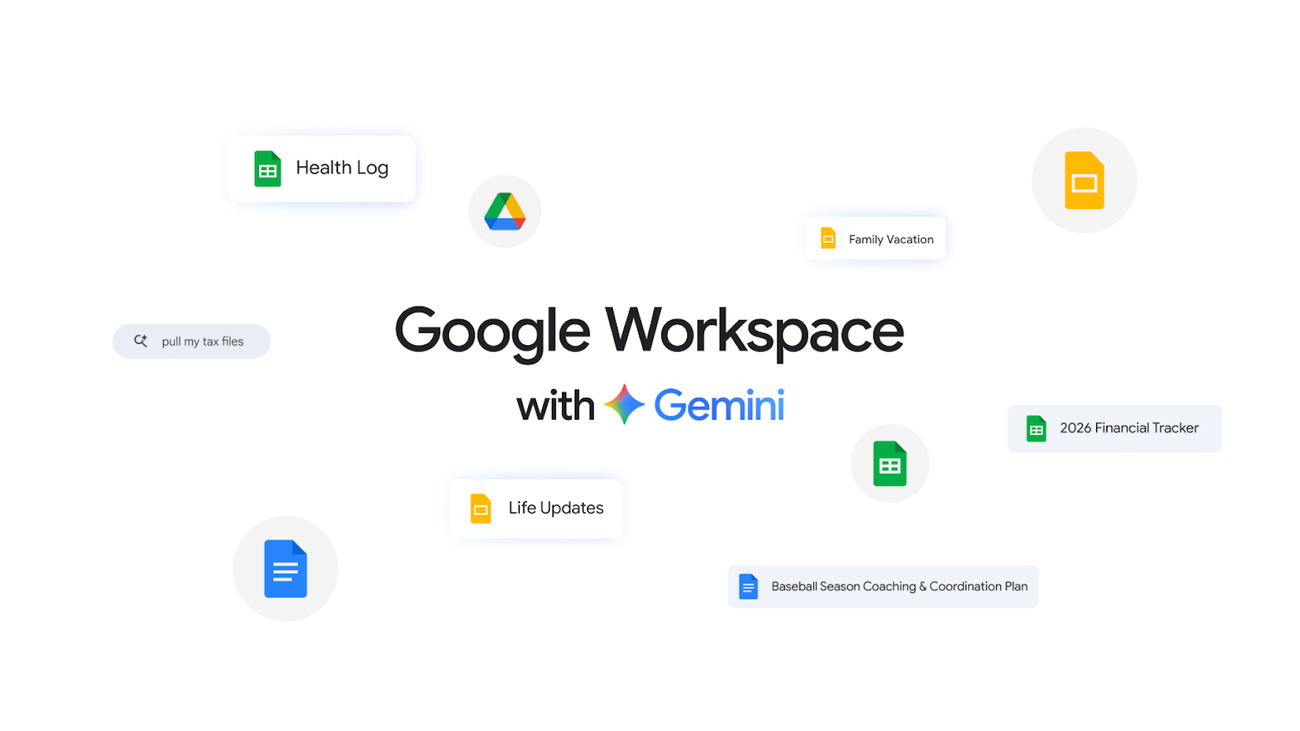
Starting today, Gemini in Docs, Sheets, Slides, and Drive can search your files using natural language and return an "AI Overview" that summarizes the most relevant information with citations — so you get answers without opening a document. The new "Ask Gemini in Drive" feature lets you query across documents, emails, calendar, and the web simultaneously. In Docs, Gemini can now draft based on your existing files, update specific sections without regenerating the whole document, and pull facts from Gmail and Chat so you stop copy-pasting between tabs.
The competitive significance is less about features and more about distribution. Google is embedding Gemini so deep into tools people open every morning that switching costs quietly compound. The real battleground becomes permissions and defaults — when a co-author can read your email, docs, and chats, IT admins and privacy teams will be debating whether these features should be default-on for whole organizations. Rolling out today in beta for AI Ultra and Pro subscribers.
Scientists Copied a Fruit Fly's Brain Into a Computer. It Started Walking on Its Own.
Researchers at Eon Systems completed a neuron-by-neuron digital map of a fruit fly's brain — 125,000 neurons, 50 million synaptic connections — and loaded it into a physics simulation. The virtual fly began walking, grooming, and feeding, behaviors it was never programmed to perform, emerging purely from the brain structure itself.
This is the first time a complete animal brain map has produced spontaneous behavior in simulation rather than just static data. Prior work either modeled brains without bodies or animated bodies without brains. The implications for robotics are significant: if you can copy a nervous system and have behavior emerge, you're no longer writing movement rules by hand — something that's remained stubbornly hard despite years of reinforcement learning.
Important caveats: the original scan covered only the brain, not the full nervous system, so Eon had to guess how to connect motor outputs to simulated muscles. The digital fly also can't learn — it reacts but forms no new memories. And critically, this hasn't been peer-reviewed yet. The story broke March 7 and is still accelerating on Reddit, but treat it as a compelling demo, not a verified result. Watch for a preprint on bioRxiv. Eon's stated next target: a mouse brain, with 70 million neurons — 560 times the fly's count.
AI Agents Quietly Take Over Hospital Paperwork
At HIMSS, the big annual healthcare IT conference, major vendors showed up with named AI agents ready for live hospital workflows. Epic is marketing agents like "Art" (clinical notes), "Penny" (billing), and "Emmie" (patient scheduling). Oracle is pitching an agent that drafts notes and suggests next steps across roughly 30 specialties. Amazon, Google, and Microsoft all unveiled healthcare personas this week.
These tools are being deployed faster than independent validation can keep up. The near-term impact is automation around documentation and revenue capture, not diagnosis — but the line between "helper" and "decision-maker" blurs quickly. Meanwhile, the FDA has now approved more than 1,300 AI medical devices and acknowledges that agentic AI adds challenges its framework wasn't built for. Expect regulators, hospital boards, and clinicians to start demanding shared performance data, not just vendor case studies.
Amazon's AI Push Is Creating "More Work for Everyone"
Amazon is racing to integrate AI into every corner of its business, but corporate employees say the push is backfiring. Developers report internal AI tools generating buggy code that takes longer to fix than to write from scratch. Managers are tracking employees' interactions with those tools in ways that feel like surveillance. One engineer described it as "trying to AI my way out of a problem that AI caused."
This is the messy middle of deployment that most enterprise AI narratives skip over. A top-down mandate to adopt agentic tools can create operational debt, worker pushback, and ethical questions about using employees to refine systems that may eventually replace them. Amazon's friction is a preview for every company pushing agents into workflows: the governance, change-management, and labor relations headaches are as real as the technical bugs.
⚡ What Most People Missed
The M5 Max landed today and local AI benchmarks are coming in hot. Apple's new MacBook Pros started shipping and the r/LocalLLaMA community is already stress-testing them. Early signal: the M5 Max can run a 70-billion-parameter model on battery at 60–90 watts — science fiction 18 months ago. The case for keeping your data off cloud APIs keeps getting stronger.
A lone developer topped the Hugging Face leaderboard using two gaming GPUs. The post and shared code are getting serious Hacker News attention. If reproducible, it reinforces that clever engineering and software optimization keep shifting the advantage away from deep-pocketed labs — the same democratization vector that makes M5-level local AI consequential.
A growing threat in the OpenClaw ecosystem: malicious "skills" targeting crypto users. While NemoClaw draws enterprise attention upward, recent uploads to ClawHub, the open plugin ecosystem, include 'skills' explicitly crafted to deceive or pillage cryptocurrency wallets. This is the supply-chain problem for the agent era: the moment an ecosystem gets popular enough, bad actors poison it in targeted ways that enterprise security teams and regulators must address.
An open-source OS just banned AI-generated code outright. Redox OS, a technically serious Rust-based microkernel project, will immediately close any LLM-generated contribution and ban repeat offenders. The uncomfortable counterargument: the policy punishes honesty more than it prevents AI code. If more security-critical projects follow, it starts defining a formal anti-AI-code tier of software with real implications for certification and liability.
Executives are quietly outsourcing problem-framing to AI. A viral post on r/singularity describes leaders feeding full board decks and M&A scenarios into general-purpose models, then using outputs to shape which options get presented in meetings — sometimes without disclosure. If the model shapes which options get considered, the human's decision may be bounded by whatever the model's training emphasized. Unverified, but worth watching for board governance and liability conversations.
📅 What to Watch
- If NemoClaw launches at GTC with confirmed enterprise partners on March 16, it means Nvidia's valuation story shifts from hardware margins to platform economics — and every enterprise software company has to decide whether to build on Nvidia's rails or compete with them.
- If the Eon Systems fruit fly paper hits bioRxiv this week, it moves from Reddit curiosity to legitimate scientific milestone — and the robotics implications (emergent behavior from copied biology, not hand-coded rules) get real very fast.
- If hospitals start publishing independent validation data for Epic, Oracle, and Big Tech health agents, it means AI in care settings is graduating from vendor demo to audited clinical tool — and the absence of that data could expose vendors to liability and invite regulatory scrutiny.
- If Meta starts surfacing Moltbook-style agent societies in mainstream apps, the line between real users and autonomous bots in social feeds gets blurry enough to force new disclosure rules.
- If the EU's new finance-sector AI rules force banks to publish model explainability and audit trails, expect other regions to copy the template — creating a de facto global standard that slows rollout but builds long-term institutional trust.
A virtual fruit fly walking on instinct it was never taught. A Mastercard CFO that exists only as weights and inference. An Amazon engineer debugging code written by the tool his manager is tracking him on. Today's theme isn't "AI is coming" — it's that AI arrived, and nobody agreed on the house rules first. The Redox OS maintainers banning AI code while executives secretly feed board decks into ChatGPT is the kind of contradiction that writes its own punchline.
See you tomorrow. —AI Daily