Biotech & Life Sciences Weekly — Mar 10, 2026
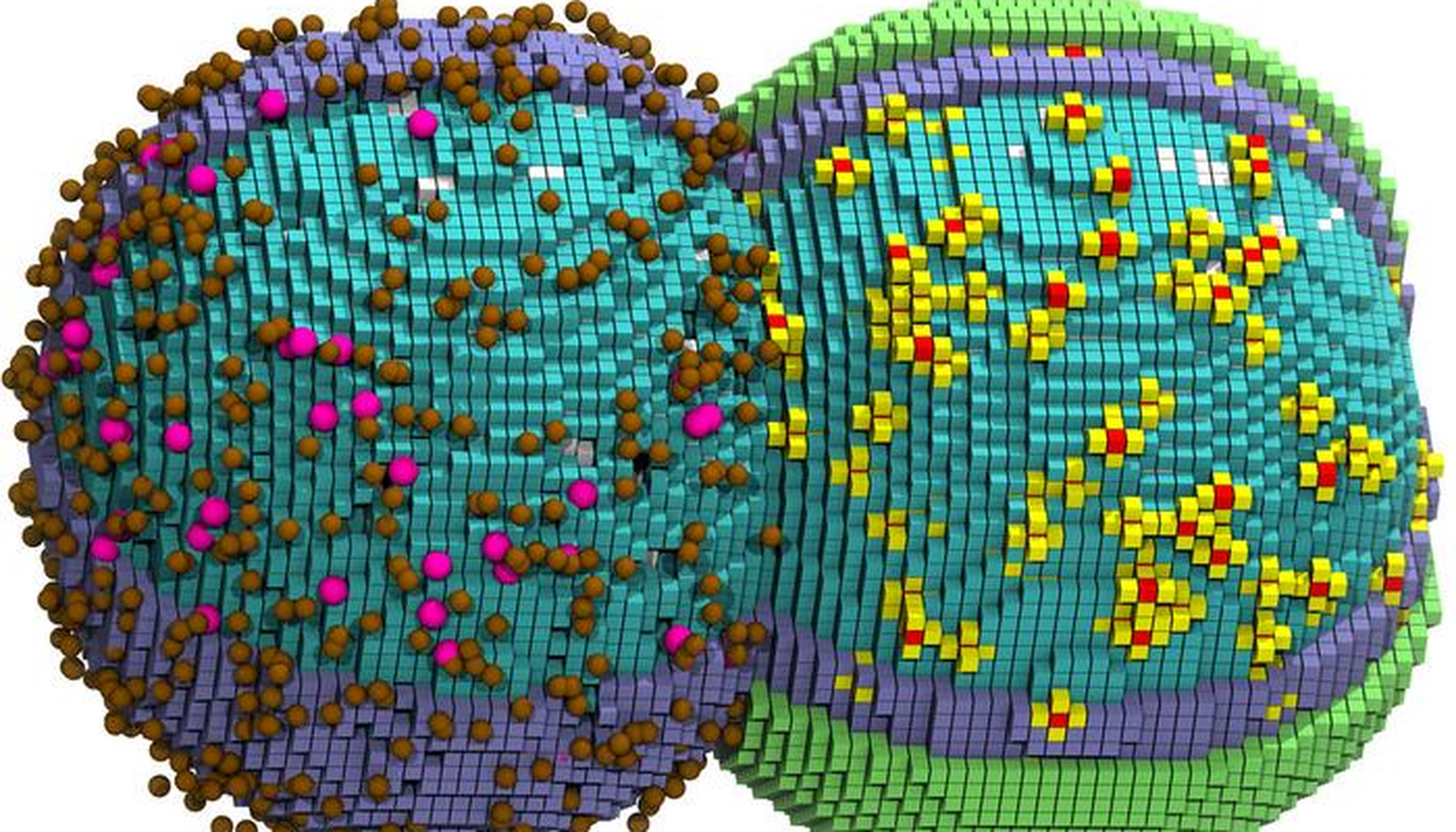
Photo: lyceumnews.com
Week of March 10, 2026
The Big Picture
Biology stopped asking permission to be infrastructure this week. Scientists turned an entire living cell into runnable software, a sleep apnea pill built from two repurposed drugs landed on the FDA's desk, and CRISPR-edited cells that hide from the immune system showed they can survive inside a human body without a single immunosuppressant. Meanwhile, the quieter moves — a defense contract for fungal composites, precision fermentation hitting whey protein price parity, AI-designed enzymes chewing through plastic faster than nature ever managed — all point the same direction: the gap between "biology can do this in a lab" and "biology does this at industrial scale" is closing faster than most boardrooms have priced in.
This Week's Stories
The Entire Living Cell, Simulated — Every Molecule, Every Reaction
The most audacious goal in computational biology just got a credible first answer. A multi-institution team has built a complete 4D simulation of JCVI-syn3A — the simplest living organism ever constructed, with just 473 genes — modeling every DNA replication event, every metabolic reaction, every protein interaction, all the way through cell division. Not a diagram. Not a static network map. A running, dynamic simulation of a cell's roughly 100-minute life, inside a 3D grid of nanometer-scale cubes.
JCVI-syn3A is the right target precisely because it's as stripped-down as life gets. Previous modeling efforts simulated one subsystem at a time — metabolism here, gene expression there. This work stitches them all together: DNA replication, transcription, translation, membrane dynamics, growth, and division, constrained by real-world measurements like ribosome counts and mRNA half-lives. The simulated timing and population variability closely track experimental data, which means this isn't just conceptual — it's producing numerically calibrated outputs labs can act on.
The real prize isn't the simulation itself. It's what you can do with it. A virtual cell you can perturb without killing anything is the ultimate test bed: design a new metabolic pathway, run it in silico ten thousand times, take only the best variants into the lab. For drug discovery, it's virtual toxicology before you touch a cell. For synthetic biology, it's a sandbox for prototyping genetic circuits without burning wet-lab time. Think of it as turning the Design phase of strain optimization into a compute-first workflow.
The engineering payoff isn't instant — full-cell runs still require multiple days across high-end GPUs — but the trajectory is clear. If this framework scales to more complex organisms, companies investing in whole-cell modeling infrastructure now will have a meaningful head start in industrial strain design.
The Cells That Hide From the Immune System — CRISPR's Diabetes Gambit
Source: static.scientificamerican.com
Every cell transplant in medicine runs into the same wall: the immune system sees foreign cells and destroys them, forcing patients onto lifelong immunosuppressive drugs that raise cancer risk and leave them vulnerable to infection. A team led by Uppsala University Hospital just cleared that wall — at least in one patient — and the results, published in the New England Journal of Medicine, are generating serious buzz.
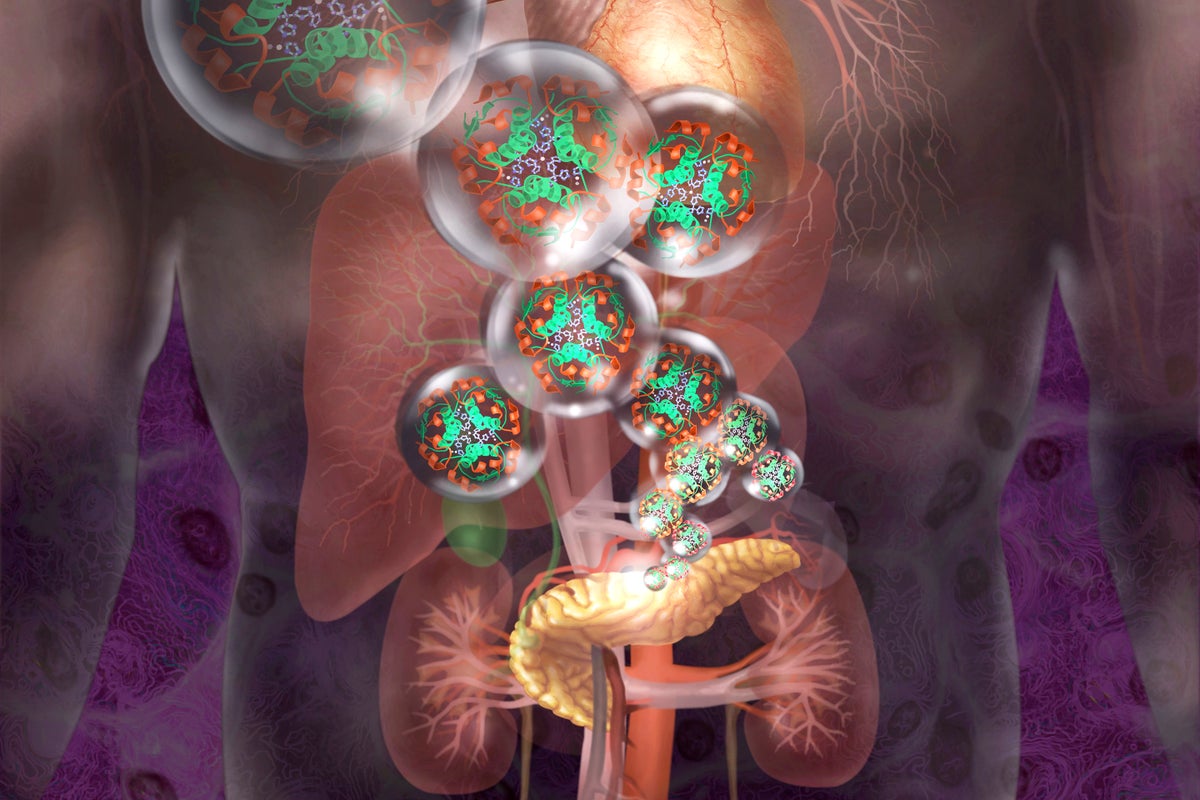
A 42-year-old man with type 1 diabetes received 79.6 million CRISPR-edited insulin-producing cells, injected into 17 tiny tracks in his forearm muscle. No steroids. No anti-inflammatory agents. No immunosuppressants. The editing trick: CRISPR-Cas12b switched off two genes that flag cells as "foreign" to the immune system, and boosted CD47 — a "don't eat me" signal — so neither adaptive nor innate immunity would attack.
His average blood sugar dropped about 42% over the study's follow-up period, and he still needed daily insulin; the transplant provided approximately 7% of full replacement at the time of assessment. This was explicitly a safety and proof-of-concept study, not a cure. But the fact that edited cells survived and functioned without immune suppression is the engineering breakthrough. The company behind the work is now pursuing stem-cell-derived beta cells, which are far easier to produce at scale than donor cells.
Here's why this extends well beyond diabetes: the same "hypoimmune" genetic strategy — knocking out HLA surface proteins to cloak cells — could theoretically protect any transplanted tissue from rejection. CAR-T cells that don't trigger host rejection. Engineered liver cells. Universal stem cell lines. If validated at scale, this is potentially a foundational technology for allogeneic cell therapy. The real challenge now is manufacturing: producing enough reliably edited cells, consistently, at cost.
The Sleep Apnea Pill Just Landed on the FDA's Desk
If you or anyone you know sleeps with a CPAP machine — the pressurized mask abandoned by roughly half of all patients — this is the story. Apnimed has filed its New Drug Application with the FDA for AD109, a once-nightly pill for obstructive sleep apnea, backed by two successful Phase 3 trials.
The LunAIRo study showed AD109 reduced the apnea-hypopnea index (AHI — how many times per hour you stop breathing) by 46.8% versus 6.8% for placebo at week 26, holding through week 51. The SynAIRgy trial reported roughly a 56% AHI reduction from baseline at the trial's primary endpoint — placing the pill's effect in the same ballpark as adherent CPAP use for many patients, with a dramatically different adherence profile.
The mechanism is genuinely clever. One component, atomoxetine (already FDA-approved for ADHD), boosts norepinephrine to maintain upper airway muscle tone during sleep. The other, aroxybutynin, blocks acetylcholine receptors that would otherwise inhibit the nerve controlling the key airway muscle. Two repurposed drug components, engineered together, targeting the actual neuromuscular root cause of airway collapse — not just blowing air past it.
AD109 worked across all severities and in patients with and without obesity — a meaningful contrast to Zepbound (tirzepatide), the only currently approved pharmacological OSA treatment, which only helps patients with obesity and requires months of weight loss. If the FDA accepts the filing and sets a review date, this is a mass-market drug serving a condition that affects about one in five adults currently.
Turning Tumors Into Lymph Nodes — A New Immunotherapy Trick
Cancer immunotherapy has a consistent frustration: inject something systemically and you set off inflammation everywhere. Rockefeller University's Jeffrey Ravetch took a different approach — inject the drug directly into the tumor and let the body's own immune geography do the rest.
Results from the Phase 1 trial of 2141-V11, published in Cancer Cell and trending heavily this week: of 12 patients, six saw tumors shrink, including two with complete disappearance. More striking, the effect wasn't limited to injected tumors — tumors elsewhere in the body shrank or were destroyed. Tissue samples revealed the tumors had become "full of immune cells — dendritic cells, T cells, mature B cells — forming aggregates resembling something like a lymph node." The drug essentially converts enemy territory into a forward operating base for the immune system.
Follow-on trials now have nearly 200 people enrolled across bladder cancer, prostate cancer, and glioblastoma. The critical question: the two patients whose cancers vanished both had high T-cell clonality at baseline, suggesting 2141-V11 needs a companion diagnostic to predict who will respond. Response prediction may prove as scientifically significant as the drug itself.
CRISPR Fungus Quietly Becomes an Industrial Protein Platform
The cultivated protein space keeps expanding past the obvious plays. Chinese researchers used CRISPR to edit Fusarium venenatum — the workhorse fungus behind Quorn — deleting cell-wall and metabolic genes to produce a strain yielding up to about 88% more protein in lab-scale experiments while cutting sugar and energy inputs and slashing modeled environmental impact by as much as 61% in the authors' life-cycle model. The edited fungus has thinner cell walls, higher protein content, lower chitin (meaning better digestibility), and a texture testers describe as meat-like — all without adding foreign DNA.
This reads less like a novelty food paper and more like a template for industrially tuned CRISPR food strains. Unlike cultivated meat (which requires animal cells and expensive growth factors), fungal fermentation runs on cheap feedstocks — agricultural waste, corn steep liquor — and scales in standard industrial bioreactors at a fraction of the capital cost. The regulatory pathway matters too: CRISPR-edited microorganisms used in closed fermentation often face a shorter route than field-grown GM crops, since the organism doesn't enter the food chain alive. If a company gets GRAS (Generally Recognized As Safe) status for an edited mycoprotein strain this year (2026), it opens a commercial pathway faster than any cultivated meat approach currently in the pipeline.
Related signals reinforce the fungal-materials moment: Adidas licensed mycelium leather for a 2027 product rollout, and MycoWorks landed a $2.1M defense contract for fungal composites in lightweight tactical gear. When fashion brands and defense agencies both want the same material class, the supply chain is about to get very real.
⚡ What Most People Missed
DNA foundation models can be reverse-engineered to reconstruct your genome. A March 6, 2026 preprint showed that embeddings from state-of-the-art DNA models can be decoded back into surprisingly accurate original sequences — meaning "privacy-preserving" genomic analytics via embeddings may leak far more raw genotype than hospitals and biobanks have been assuming. Expect this to force operational changes in how genomic AI consortia share model outputs.
Precision-fermented whey protein just hit price parity with cow-derived whey. Formo reported achieving approximately $5/kg for beta-lactoglobulin in a 10,000-liter run using engineered yeast. If reproducible at scale, this shifts alt-dairy from niche supplement to commodity ingredient — the kind of threshold that gets CPG procurement teams on the phone.
An AI-designed enzyme degrades PET plastic 30% faster than the best natural variants. A UT Austin preprint used a diffusion model to generate a scaffold and optimize catalytic residues, achieving about 2.1 g/L/hr in bench reactors; the work was posted in March 2026 and is not peer-reviewed yet. The convergence of multiple groups using AI to redesign plastic-eating enzymes is making enzymatic circularity feel less speculative by the month.
Self-driving labs are outpacing human experts by about 60% on enzyme design benchmarks. A March 2026 preprint showed an autonomous design-build-test-learn stack running thousands of variants per week with AI-generated protein designs and robotized execution. Meanwhile, AI-designed small molecules are entering Phase 3 trials in 2026 — meaning regulatory frameworks for model provenance and audit trails are about to become concrete, urgent problems.
Engineered gut bacteria are being taken seriously for cardiovascular disease. A new review in Frontiers in Cardiovascular Medicine (2026) treats programmable bacterial therapeutics — strains that sense disease states and secrete GLP-1, degrade branched-chain amino acids, or modulate vitamin B6 metabolism — as pipeline-stage candidates, not science fiction. When cardiology journals adopt this framing, big pharma target-selection teams should notice.
📅 What to Watch
- If the FDA accepts Apnimed's NDA and sets a PDUFA date, durable medical equipment suppliers, payers, and sleep-clinic referral patterns could shift as insurers reassess CPAP reimbursement and hospitals renegotiate service contracts and device-service agreements.
- If peer-reviewed follow-up data on the hypoimmune diabetes cells confirm durable immune evasion at higher doses, developers could pivot capital and talent from autologous manufacturing to scalable allogeneic platforms, shifting investment toward centralized cell-manufacturing capacity and altering supply-chain and regulatory priorities given that the same cloaking strategy could be applied to CAR-T, liver cells, and other off-the-shelf transplants.
- If regulators or IRBs react to the DNA-embedding inversion preprint by tightening sharing rules, expect immediate disruption to how genomic AI consortia operate — biobanks and consumer genomics firms may need to treat model outputs as PHI-equivalent and redesign pipelines for model output redaction and access control.
- If any precision fermentation player publicly discloses titers and $/kg from new production lines (Amyris's Brazil expansion is a candidate), procurement teams at large CPGs could reprice long-term ingredient contracts, triggering renegotiations and immediate scale investments in feedstock supply chains and downstream processing.
- If the EU's New Genomic Techniques implementation guidance is finalized and cleared for rollout, it would enable field trials and market authorization pathways for CRISPR-edited crops in European markets and materially change competitive dynamics for companies that have been waiting years for regulatory access to the EU agricultural market.
That's the week. A simulated cell, a stealth cell, a pill that keeps your airway open, a tumor turned into a lymph node, and a fungus that tastes like chicken. Biology keeps finding new ways to make itself useful. See you next Monday.