Buried Risk — May 16, 2026

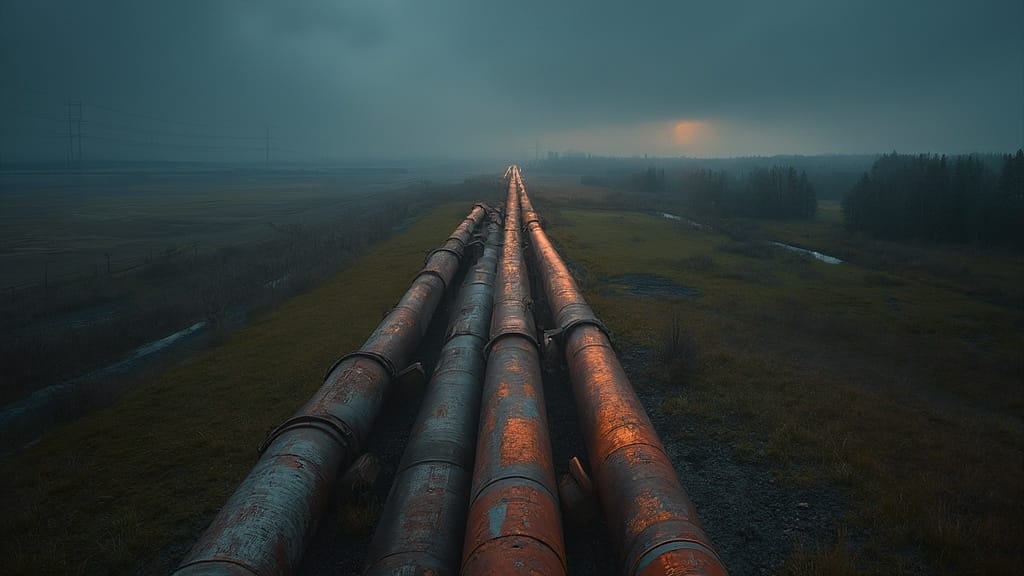
Photo: lyceumnews.com
Saturday, May 16, 2026
The Big Picture
The Auburn Hills pipe is fixed, the pressure is back, and tens of thousands of people in Oakland County still can't drink from their taps on day seven of the boil water advisory. That gap — between "the emergency is over" and "the risk is resolved" — is where today's story lives, and it's getting wider. A manufacturing defect theory is now on the record from the Great Lakes Water Authority itself, the full Senate has passed a pipeline safety bill the House must either match or oppose, and a Missouri attorney general just made mapping accuracy — not locate timing — the basis of a fatal-explosion settlement. The throughline: regulators, insurers, and utility executives are quietly shifting from "fix the break" to "who's responsible for the design, the data, and the eighty miles of pipe just like it."
What Just Shipped
- Vactor 2100i combination sewer cleaner (Vactor): higher-capacity jet-vac unit positioned for municipal cleaning programs trying to extend intervals on aging concrete sewer mains.
- PHMSA Innovation Showcase: Underground Utility Locating demonstration (PHMSA / UtiliQuest / Vivax-Metrotech): the federal pipeline regulator publicly platforming locating technology alongside leak detection and satellite monitoring — a procurement signal more than a mandate.
- Caterpillar 2025 Annual and Sustainability Reports (Caterpillar): record-year results published May 12, with a refreshed enterprise strategy that names underground infrastructure equipment as a growth pillar.
- EPA Region 5 Proposed Consent Agreement and Final Order (Terminal Ready-Mix) (EPA): newly posted May 12 enforcement action alleging unlawful industrial stormwater discharges to the Black River under an NPDES permit.
- PIPELINE Safety Act of 2025 (S.2975) (U.S. Senate): full text of the bipartisan five-year PHMSA reauthorization passed by the full Senate by unanimous consent this week, raising the per-violation civil penalty cap from $272,926 to $400,000.
Today's Stories
The Pipe Is Fixed. The Water Still Isn't Safe. And GLWA Just Put a Manufacturing Defect Theory on the Record.
The hardest thing to explain to a resident standing in line at a water distribution station on a Saturday morning is why the emergency is "over" but their tap water still isn't safe. That's where Auburn Hills, Orion Township, Lake Orion, and Rochester Hills are today, day seven of the boil water advisory that began when a 42-inch transmission main ruptured on May 10. Distribution sites are running 8 a.m. to 2 p.m. today, and officials expect the advisory to last through the weekend while system flushing and multi-day water quality testing play out.
The more consequential development is what the Great Lakes Water Authority said publicly about why the pipe failed. Officials told WDIV Local 4 they believe the pipe may have had a manufacturing defect — an anomaly that caused the internal pre-stressing wires that give the pipe its structural strength to deteriorate far faster than expected. That shifts the failure narrative from "old pipe wore out" to "the pipe was defective from the start." The material is pre-stressed concrete cylinder pipe, or PCCP — a highly engineered product that was supposed to last a century but failed at fifty. And roughly 80 miles of the same type of pipe still runs underground across the GLWA system.
If the defect theory holds, what changes is the underwriting question. GLWA's 80-mile PCCP inventory stops being a capital planning problem and becomes a latent liability question — and every regional water authority running PCCP from the same era and manufacturer needs to be asking it. The observable signal: watch for GLWA to announce a formal system-wide condition assessment using electromagnetic inspection (the technology that detects wire breaks before they propagate to rupture). If it does, that's a material disclosure event for GLWA revenue bondholders. If it doesn't, the next break tells you what you needed to know.
⚡ The Senate Passed Its Pipeline Safety Bill. The House Has Its Own. The Numbers Don't Match.
The full Senate passed S.2975, the PIPELINE Safety Act of 2025, by unanimous consent this week. What hasn't gotten enough attention is that the House Committee on Transportation and Infrastructure has reported a competing bill — H.R. 5301, the PIPES Act of 2025 — out of committee. These are not the same bill, and the differences are not cosmetic.
The Senate's version authorizes the Pipeline and Hazardous Materials Safety Administration — the federal pipeline regulator — for five years through 2030, raises the maximum civil penalty per violation from $272,926 to $400,000, and includes specific language requiring state programs and distribution operators to account for pipelines made of "historic plastics with known safety issues" such as Aldyl-A — the brittle 1970s-era polyethylene at the center of multiple fatal gas explosions. According to McGuireWoods, the Senate bill carries $1.65 billion in appropriations over five years. The House PIPES Act sets the pipeline integrity program funding at a notably different number and a shorter window.
What changes if it succeeds: the conference reconciliation determines whether PHMSA can actually fund the distribution-line oversight expansion that Auburn Hills and the February Centreville gas explosion are demanding. What failure looks like: the gap between Senate ambition and House restraint becomes the place where damage prevention and Aldyl-A provisions get traded away to clear the floor. The observable signal is the House Committee on Transportation and Infrastructure's markup calendar before the August recess. If the House moves before recess, conference is real. If it doesn't, this rolls into 2027 and the next pipe failure writes the bill.
Liberty Utilities Will Remap Lexington — Because Its Map, Not Its Locator, Killed a Five-Year-Old

Missouri Attorney General Catherine Hanaway announced on May 15 that Liberty Utilities agreed to pay the maximum $30,000 civil penalty and remap all of its underground facilities in Lexington, Missouri, after a 2025 excavation strike on an unmarked gas main caused a house explosion that killed a 5-year-old boy. According to KCTV5, the state's finding is the specific part worth pausing on: Liberty told the excavator its lines were properly marked, but the markings were wrong because of a mapping error.
That is a different failure mode than the usual "contractor struck a line" shorthand, and it's why this small-dollar state settlement matters more than its penalty number suggests. The next fight in one-call enforcement is shaping up around record quality and geospatial accuracy — not whether the operator answered the 811 ticket within two working days. If the locate was timely and the marks were where the map said they should be, but the map was wrong, liability moves up the chain from the contractor in the trench to the utility that drew the lines on paper.
The observable signal: whether other state attorneys general or public utility commissions cite mapping integrity (rather than locate timeliness) as the basis for enforcement in the next 90 days. If they do, every gas distribution operator running on legacy GIS data has an exposure they haven't priced. If this stays a Missouri story, it's a tragedy. If it spreads, it's a new enforcement frontier.
GLWA's Concrete Main Problem Is Bigger Than One Pipe
The Auburn Hills break is getting the headlines. The more important number was buried in GLWA CEO Suzanne Coffey's May 12 press conference: GLWA officials are now looking into the causes of deterioration for not just the Auburn Hills transmission line, but also another concrete main that broke in Farmington Hills in early March, causing a water emergency in Novi. The original lines are concrete; the replacement lines are steel.
That's two major concrete transmission main failures in the same regional system within ten weeks. Add the February 2025 rupture of a 1930s-era 54-inch steel main in southwest Detroit that flooded up to 400 homes with water and ice as deep as five feet, and GLWA has now had three major transmission main failures in fifteen months across a system serving millions of people in metro Detroit.
What changes if this becomes a pattern in disclosure: GLWA's revenue bonds reprice. A formal condition assessment quantifying the remaining concrete main inventory by age and condition becomes a material event. What failure looks like: GLWA defers the assessment, the next break happens in a denser service area than Auburn Hills, and the political tolerance for water-intensive industrial loads — data centers, in particular — collapses across the region. The observable signal is already in motion: the Ypsilanti Community Utilities Authority approved a 12-month moratorium on supplying water to data centers, blocking service to a planned $1.2 billion University of Michigan project. That action predates Auburn Hills. Its visibility doesn't.
Franklin Foods Pays $265K for Vermont Wastewater Violations — and the Number Is the Least Interesting Part
A $265,000 EPA settlement with a Vermont cheese manufacturer isn't going to move markets. But the pattern it represents is exactly what municipal wastewater operators and their insurers should be tracking. According to Wastewater Digest, Franklin Foods agreed to pay the civil penalty and implement corrective measures after violating its wastewater discharge permits. The corrective-measures requirement suggests the violations were ongoing rather than isolated.
Here's why it matters beyond Vermont: EPA is actively pursuing industrial pretreatment violations — cases where a factory discharges into a municipal sewer system without properly treating its waste first. That can overwhelm a city's treatment plant and trigger the city's own permit violations downstream. If you have a food processor on your pretreatment program and you haven't audited their discharge monitoring reports recently, this is the reminder.
What changes if EPA expands the sweep: industrial pretreatment liability becomes a named line item in municipal wastewater accounts rather than an afterthought. The observable signal is the agency's ECHO database — the Enforcement and Compliance History Online system — which will show whether additional food-processing enforcement actions appear in the Northeast over the next 30 days. One settlement is housekeeping. Three is a campaign.
⚡ What Most People Missed
- Kinsale Capital's late-Friday 10-Q tightened underwriting for municipal utility contractors: the excess-and-surplus carrier cited "attritional loss accumulation" from excavation and horizontal directional drilling strikes on legacy infrastructure. When the market of last resort starts pulling back on contractor capacity, municipal capital project pricing changes — not next year, now. (Per Kinsale's SEC 10-Q filing; the CGA conference link is included because it documents the 200,000-annual-strikes context driving the underwriting math.)
- A Melville sinkhole on the Long Island Expressway swallowed part of a vehicle: a municipal sewer project undermined a westbound section at Exit 49, producing a roughly 10-foot sinkhole that closed the right and center lanes through Friday morning's commute. The sewer repair is cheap. The state DOT subrogation against the contractor — if pursued — is where this becomes a multi-million-dollar single-event loss. Watch the subrogation notice.
- A fiber cut took Clayton, North Carolina's town hall offline: the physical repair is modest; the operational liability for a municipal service interruption is not. If no 811 locate ticket existed or the markouts were wrong, the loss profile shifts from the excavator to whoever drew the map — the same fact pattern as Lexington, just without the body count.
- A Philadelphia 311 API spike showed a 400% jump in low-pressure complaints in ZIP 19125 early Saturday morning: the city had not posted a matching break notice as of the same morning. When a dense urban grid loses pressure that hard without a visible surface break, it can indicate an internal breach or subgrade washout hours before the utility detects it via flow alarms. Civic-data anomalies are now leading official utility notices on the timeline, not following them.
📅 What to Watch
- If GLWA announces an electromagnetic inspection program for its remaining PCCP inventory, the manufacturing defect theory has moved from press conference to balance sheet — and other PCCP-heavy authorities (WSSC Water, DC Water, Tampa Bay Water) will face investor questions within the quarter.
- If the House schedules a PIPES Act floor vote before August recess, the Aldyl-A inventory language survives conference; if it doesn't, gas distribution operators with undisclosed 1970s polyethylene mileage get another year of plausible deniability.
- If a second state attorney general cites mapping integrity (not locate timing) as the basis for a damage prevention enforcement action in the next 90 days, every utility running on legacy GIS has a new exposure category to fund.
- If EPA's ECHO database shows additional Northeast food-processing pretreatment actions within 30 days, Franklin Foods is the opening of a regional sweep — and any municipal wastewater account underwriting a city with industrial dischargers needs to reprice.
- If the Ypsilanti data center moratorium gets adopted or echoed by another Michigan utility this summer, the AI-infrastructure-versus-residential-water-capacity fight has officially started, and Auburn Hills is the precedent everyone will cite.
- If PHMSA's distribution incident feed continues to show sub-threshold clusters before the July 1 reporting threshold increase, operators are clearing the books — and what disappears from the federal record after July 1 is exactly what nobody will be able to measure.
The Closer
A five-year-old killed by a map that lied, a hundred-year pipe that quit at fifty, and a Philadelphia ZIP code where 400% more people were yelling about water pressure than the utility had officially noticed. The pipe was built to last a century — which is the kind of warranty that only matters if anyone's still around to honor it. Stay dry where you can.
Know an underwriter, a public works director, or a bond analyst who's been hand-waving about "aging infrastructure" for years? Forward this. They've earned a specific number.