Buried Risk — May 20, 2026

Photo: lyceumnews.com
Wednesday, May 20, 2026
The Big Picture
Two things are true today: there are no new fatalities or interceptor collapses on the wire, and the regulatory machinery surrounding the failures we already know about is grinding forward in ways that change how the next account gets priced. The Pennsylvania PUC is asking UGI to prove it knows where its pre-1983 plastic pipe lives. The NTSB is on record saying Atmos Energy in Jackson left identified leaks alone until houses exploded. And the Department of Justice has decided that "this is a Washington, D.C., pipe on federal land" is not a legal defense Maryland gets to use. Today is less about new breaks than about who pays for the old ones.
What Just Shipped
- MTR726 Microtrencher Attachment (Vermeer): Cuts trenches up to 27 inches deep and 3 inches wide for fiber installs where regulations require greater depth of cover.
- Mud Dog 700 (Super Products): A 7-cubic-yard hydro-excavation truck with an 8-inch boom built for tight municipal jobsites where a strike means power disruption or injury.
- Super Boom for Camel Max Combo Sewer Cleaners (Super Products): High-reach boom redesigned around the daily ergonomic failures operators report with traditional boom setups.
- Komatsu Diesel Technician Program — 2026 Class (North Dakota State College of Science): 17 graduates from the two-year work-based learning program, the labor pipeline the underground construction industry has been begging for.
- Revised Steam Electric Wastewater Discharge Limits (EPA): Proposed rule rescinding certain treatment requirements and allowing site-specific limits for steam electric power plants — lower compliance costs, new wording to read carefully.
Today's Stories
The Pipe That Was Already Retired — and Still Killed Seven People
Seven workers died in a chocolate factory in West Reading, Pennsylvania, in March 2023. The Pennsylvania Public Utility Commission's Bureau of Investigation and Enforcement has now filed a formal complaint against UGI Utilities seeking $2.57 million — the maximum civil penalty the statute allows — and a list of corrective actions that read like a confession of what the operator didn't know.
Investigators traced the gas to a retired plastic service tee connected to a vintage Aldyl-A plastic pipeline beneath Cherry Street. Aldyl-A is a brand of polyethylene gas pipe manufactured primarily between the late 1960s and early 1980s, with a well-documented history of stress-cracking failures — the gas distribution industry's ticking clock. The NTSB's parallel investigation reached the same probable cause: degradation of the retired Aldyl-A service tee allowed gas to migrate underground into the building, where an unknown ignition source did the rest. A corroded steam pipe owned by the Palmer facility next door had been heating the surrounding soil for years, accelerating the failure.
What the PUC is demanding is the interesting part: new procedures for retiring aging Aldyl-A tees with Delrin inserts, more frequent leak surveys for older plastic pipelines in dense urban areas, and improved tracking, mapping, and risk analysis of vintage plastic assets installed prior to 1983.
That last item is the one to watch. It is, fundamentally, a data problem dressed as an engineering problem. If UGI cannot produce a defensible inventory of its pre-1983 plastic pipe, no other gas distribution operator with Aldyl-A in the ground can either — and that's most of them. If the case settles with a consent order requiring mapping and accelerated replacement, expect other state PUCs to issue similar directives within the year, and expect underwriters to start asking for Aldyl-A inventory disclosures in renewal submissions. The observable signal: whether the consent order, when it lands, specifies a deadline for the mapping deliverable.
Mississippi's Unrepaired Leaks: The NTSB Names What Happened

West Reading is about a pipe that failed silently. Jackson, Mississippi is about leaks that were found and then left alone.
Two natural gas pipeline explosions destroyed homes in Jackson after Atmos Energy Corporation failed to promptly repair underground leaks it had already identified, the NTSB said in its March 26 final report. That is the cleanest finding the NTSB writes: the operator knew, and didn't act fast enough.
The board issued eight safety recommendations to Atmos — replacing vulnerable pipe connections, checking known leaks more frequently, improving public and emergency responder education, better tracking of service-line information, enhancing risk assessment, and making gas alarms available to residents. That last one is quietly novel. Residential carbon monoxide alarms are standard. Residential natural gas alarms are not. The NTSB is now on record saying they should be, at least in neighborhoods with documented leak histories, because alarms inside the Jackson homes might have warned occupants to evacuate before the explosions.
If PHMSA picks up the recommendation through rulemaking, or if even one state PUC adopts it as a condition of an integrity management plan, it becomes a new compliance line item — and a new coverage question. Does the homeowner's policy respond when a gas alarm was offered but not installed? Does the utility's liability program?
The gap between "we found a leak" and "we fixed a leak" is where people die. For anyone pricing a gas distribution account this quarter, the question to put in the submission is the operator's average time-to-repair on Grade 2 leaks — the ones classified as non-hazardous but monitored. If that number isn't there, ask why.
A Contractor Hit a Water Main in Ocoee — Nine Days Later, the Road Is Finally Fixed
Excavation damage is the most common cause of underground infrastructure failure in the United States, and it almost never makes national news. This one is worth a paragraph precisely because it's so ordinary.
The break happened at Ocoee-Apopka Road and Chablis Way on Monday, May 11, when a contractor struck a reclaimed water main — the parallel non-potable system many Florida municipalities run for irrigation. Road repairs wrapped Tuesday, May 19. Above-ground restoration was scheduled for Wednesday, May 20.
Nine days, strike to surface. That's not a scandal; it's the baseline. What it illustrates is the cost chain that never makes the headline — emergency response, excavation, pipe replacement, backfill, compaction, road patching, surface restoration. Each a separate contractor, each a separate invoice, none individually large enough to file a PHMSA report or trigger an insurance program retention.
The Common Ground Alliance's most recent DIRT report counted over 85,000 dig-ins nationally in 2024. The vast majority look exactly like Ocoee: a single intersection, a nine-day cycle, a line-item in a municipal public works budget that nobody outside the city ever sees. They don't move the federal data. They move the loss runs.
The DOJ Just Sued DC Water — and the Potomac Interceptor Story Gets a New Chapter
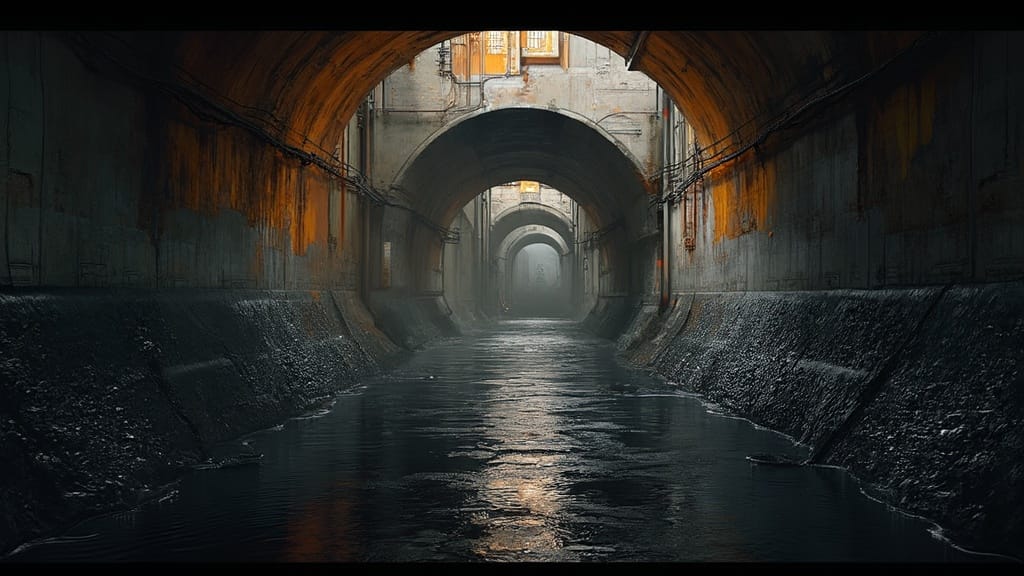
The Potomac Interceptor has been the year's defining wastewater story. Now it has a federal lawsuit.
The Department of Justice, on behalf of the EPA, has filed a Clean Water Act complaint against the District of Columbia Water and Sewer Authority alleging that more than 200 million gallons of raw sewage discharged into the Potomac River, that DC Water ignored clear warning signs of imminent failure, and that the authority violated its permit by failing to properly maintain the interceptor and its broader collection system. The complaint seeks financial penalties, sewer assessment and rehabilitation projects, and pollutant mitigation. The 72-inch trunk sewer failed along Clara Barton Parkway on January 19.
The interesting subplot is jurisdictional. The collapse occurred within Maryland. Maryland disclaimed responsibility — Governor Wes Moore stated on February 18, 2026 that "this is a Washington, D.C., pipe on federal land." The federal government's theory is that Maryland took Clean Water Act primacy within its borders and can't simply hand it back when the offending pipe belongs to a neighbor.
Large interceptor sewers routinely cross state lines. Every regional wastewater authority in the country with a trunk line that crosses a jurisdictional boundary should be reading the briefs. If the case proceeds to a consent decree requiring a full condition assessment of DC Water's interceptor system, that assessment will become the most detailed public record of large-diameter sewer condition in the United States — and a template for what every regulator asks for next.
EPA Puts $80 Million on the Table for Sewer and Stormwater — Right After Suing DC Water for Not Maintaining Theirs
The timing is either ironic or clarifying, depending on your mood.
The EPA has announced approximately $80 million through the Sewer Overflow and Stormwater Reuse Municipal Grant program, blending fiscal year 2025 and 2026 dollars, to be distributed through states to communities — with priority for small and financially distressed systems.
Here's the context number. In 2024, EPA estimated wastewater and stormwater infrastructure would need $630 billion in 2022 dollars over the next 20 years to meet federal water quality objectives, according to the Congressional Research Service. Eighty million is roughly 0.013 percent of that need. Grant dollars can move real projects in small systems that can't self-fund — but this is not a solution. It is a signal that the federal government knows the gap exists and is choosing to address it at the margins.
If the program is oversubscribed (it will be), the gap between applications received and awards made will be the clearest available proxy for how many small systems are carrying deferred rehabilitation backlogs they cannot fund out of rates. For municipal risk managers, the more useful question isn't whether you'll get a grant. It's whether the application gap in your state is large enough to predict the next interceptor failure — and whether your reinsurance treaty contemplates the answer.
⚡ What Most People Missed
- D.C. is now seeking nearly $20 million in federal reimbursement for Potomac Interceptor emergency response costs — a meaningful escalation from where the cleanup stood a week ago. Whether FEMA or another federal agency agrees to reimburse a corrosion-driven structural collapse of a buried sewer as an emergency event will set precedent the insurance and municipal finance markets haven't priced.
- Washington Gas's Maryland rate case is in evidentiary hearings this week — Case No. 9849, with hearings May 18 through May 20 and reserve days through May 22. Rate cases are where utilities say, under oath and in numbers, what they think their distribution system needs; the real signal value lands once briefs are filed and replacement pace stops being abstract investor language.
- The Mid-Atlantic just got $14.8 million of that $80 million sewer overflow allocation — split across Delaware, Maryland, Pennsylvania, Virginia, West Virginia, and the District of Columbia. Whether any of that reaches the systems most at risk of the next Potomac Interceptor depends entirely on how states prioritize applications, a process almost entirely opaque to outside observers.
- PHMSA's current reporting instructions package warns that operators routinely misclassify low-stress segments as transmission when they should be reported as distribution, and vice versa. Buried-risk intelligence is less about whether an event happened than whether it lands in the bucket you're watching — when the labels are wrong, your trend is wrong too.
- A Petersburg, Virginia water main break shut down multiple intersections Tuesday afternoon — no pipe diameter, no material type, no cause, no estimated timeline in the local report. The absence of incident data is not evidence of absence; it's evidence of a reporting culture, and it's exactly what's missing from most small-system submission packages.
📅 What to Watch
- If the PA PUC consent order against UGI specifies a hard deadline for Aldyl-A inventory mapping, every gas distribution underwriter will have a new question on the renewal questionnaire by Q4.
- If PHMSA picks up the NTSB's gas alarm recommendation through rulemaking or advisory bulletin, the homeowner's policy and the utility liability program suddenly have a coverage interaction nobody's drafted around.
- If FEMA reimburses D.C. for the Potomac Interceptor cleanup, every regional wastewater authority will reclassify its trunk-line failure exposure as a federal emergency event rather than a capital repair — and treat it accordingly in budget projections.
- If Maryland's "not our pipe" position survives the DOJ complaint, every state that hosts a neighboring jurisdiction's interceptor just got an enforcement holiday, and federal primacy doctrine is in for a long decade.
- If the EPA $80 million sewer overflow grant pool draws applications totaling over $1 billion (the historical multiple is roughly that), that ratio is the deferred-maintenance number nobody publishes.
- If the July 1 PHMSA reporting threshold increase from $149,700 to $153,600 produces a visible dip in reported gas distribution incidents over the second half of 2026, it is an artifact of the threshold, not a safety improvement — and anyone benchmarking against the federal number needs to adjust.
The Closer
A retired plastic tee under a chocolate factory, a Maryland governor pointing across the river, and a Florida reclaimed-water trench that took nine days to close — the American underground revealed less by what broke than by who refused to pay for it. Somewhere in a UGI records room, an intern is being asked to find every Aldyl-A fitting installed before 1983; somewhere in Annapolis, a lawyer is rehearsing the words "federal land" until they sound like a defense.
Stay suspicious of anything you can't see.
If you know someone who prices a gas account, manages a sewer authority, or just lives downstream of one — forward this to them.