Buried Risk — May 23, 2026

Photo: lyceumnews.com
Week of May 23, 2026
The Big Picture
The week's underlying signal is a quiet erosion of confidence in the assumptions utilities use to schedule inspections, set rates, and price risk. A 42-inch transmission main in Auburn Hills that wasn't due for its next look until 2030 ruptured at roughly half its design life; Waterbury's 42-inch main broke for the second time in four weeks, 50 feet from the first failure; and a National League of Cities survey found public works officials' "satisfactory" ratings of their own water systems collapsed from 82% in 2022 to 39% in 2026. None of these stories on its own is a rupture in the regulatory order. Together, they describe a sector whose lifecycle math is no longer holding — and a Fifth Circuit ruling, a DOJ lawsuit, and a PHMSA paperwork revision all suggest the federal apparatus is starting to notice.
This Week's Stories
The Pipe That Wasn't Supposed to Break Until 2126
The Great Lakes Water Authority's 42-inch transmission main in Auburn Hills, Michigan, failed catastrophically at roughly 1:30 a.m. on May 10, triggering a state of emergency and cutting service to thousands of customers across northern Oakland County. By May 16, boil-water advisories had been lifted. The investigation is just starting.
The pipe is prestressed concrete cylinder pipe — PCCP, a large-diameter main built with high-tension steel wires wound around a concrete core. Installed in 1975 with a 100-year design life. It failed at 50. GLWA officials believe a manufacturing defect caused its internal pre-stressing wires to corrode far faster than expected — which is why the pipe wasn't scheduled for its next detailed inspection until 2030.
The inspection interval is the story, not the rupture. PCCP failure modes — silent wire breaks that cascade until the pipe can no longer hold pressure — have been documented in AWWA research for two decades. Roughly 80 miles of the same vintage pipe run underground across the GLWA system. If the manufacturing-defect theory holds up, every large-diameter water utility with 1970s-era PCCP on a design-life inspection schedule is carrying unquantified exposure. The signal to watch: whether GLWA publishes a vintage-and-manufacturer-specific root cause finding. If it does, and if the defect is traceable to a specific production run, inspection protocols and reinsurance terms will move within the year.
Waterbury's 42-Inch Transmission Main Breaks Again, 50 Feet from the Last One

Fifty feet. That's how far from the April 24 failure Waterbury, Connecticut's 42-inch water transmission line from Thomaston ruptured again on May 20. The system is 55 years old. No customers lost service this time, but repairs will take five to seven days and road closures are already in place.
A second break this close to the first is not a coincidence; it's a corridor problem. The question is no longer whether the pipe is old. It's whether Waterbury's replacement sequencing is keeping up with failure timing — and the visible answer right now is no.
What changes if this gets worse: repeat breaks in transmission corridors are the kind of pattern that bond analysts notice before they downgrade, and that excess-of-loss reinsurers notice before they re-quote. The signal to watch is whether a third break occurs in the same corridor before the full replacement project is bid out. If it does, Waterbury moves from "aging system" to "actively triaging," which is a different conversation with rating agencies and insurers.
The Self-Assessment Collapse Nobody's Pricing Yet
The pipes didn't collectively age 40 percentage points in four years. The people responsible for them just started telling the truth. The National League of Cities' 2026 Municipal Infrastructure Conditions Report found that public works directors, city engineers, and city managers rating their own water systems "satisfactory" dropped from 82% in 2022 to 39% in 2026. The share rating their systems "not satisfactory" went from zero to 18% over the same four years.
This is a self-assessment survey, which is exactly what makes it interesting. What changed is that more utilities have now actually done condition assessments — many of them funded by IIJA dollars — and they don't like what they found. The NLC acknowledges this directly: increased funding for condition studies is surfacing problems that were always there.
The implication for anyone pricing this risk: the failure-rate data will catch up to the perception data in three to five years. Utilities don't downgrade their own ratings unless they've seen something. For underwriters, this is the period where the gap between book value and actuarial reality opens. For municipal investors, it's the period before the rating agencies start asking harder questions. The signal to watch is whether the 2027 NLC update shows the collapse leveling off — meaning awareness has caught up to reality — or continuing, meaning conditions are deteriorating faster than assessment can map them.
The Fifth Circuit Just Told PHMSA Its Inspection Logic Doesn't Hold
On May 20, the U.S. Court of Appeals for the Fifth Circuit vacated PHMSA's enforcement order against Florida Gas Transmission Co. tied to a 2020 stress-corrosion-cracking rupture on the Sanford Lateral — a 1959 line built from low-frequency electric-resistance-welded steel. The court found PHMSA acted arbitrarily and failed to provide fair notice on its findings related to maximum allowable operating pressure documentation and inspection adequacy.
This is not a sweeping change to pipeline safety rules. It's narrower and more consequential than that: the court told PHMSA that retroactively reading inspection expectations into the record, then penalizing operators for not meeting them, doesn't survive judicial review.
What changes if PHMSA absorbs the ruling: the agency tightens its documentation discipline before bringing enforcement actions on legacy assets, which slows the enforcement pipeline but makes the cases that do get brought harder to overturn. What changes if PHMSA tries to work around it: more vacated orders, and a growing operator playbook for challenging inspection-adequacy theories in court. The signal to watch is the next PHMSA enforcement order touching pre-1970 pipe — specifically, how much more carefully the agency builds its notice and documentation record.
DOJ Sues DC Water While a 140-Year-Old Sewer Gets Emergency Shotcrete
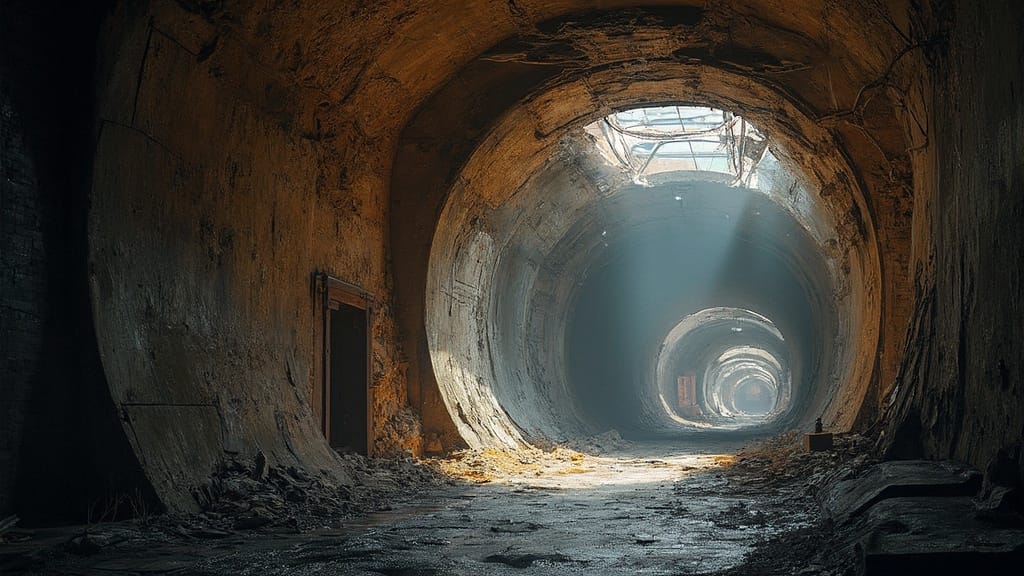
The Department of Justice, on behalf of EPA, filed a civil complaint against DC Water and the District of Columbia this week, alleging Clean Water Act violations tied to the January 19 collapse of a 72-inch section of the Potomac Interceptor along Clara Barton Parkway. The suit seeks financial penalties and mandated rehabilitation. Separately, DC Water is applying emergency shotcrete to a 140-year-old sewer tunnel under 22nd Street NW to prevent another collapse. EPA simultaneously announced roughly $80 million through its Sewer Overflow and Stormwater Reuse Municipal Grant program.
Three actions — lawsuit, emergency repair, grant announcement — hitting the same utility in the same week. Federal enforcement, acute asset triage, and federal financing, all at once.
What it means for the sector: large legacy sewer systems are now being managed in a regulatory environment where the failure event and the enforcement action arrive close enough together to compound. The signal to watch is whether other major Clean Water Act consent decrees get reopened or accelerated after Potomac Interceptor — particularly in older Northeast and Mid-Atlantic systems where the asset profile rhymes.
⚡ What Most People Missed
- PHMSA quietly revised the form that captures every gas transmission incident in America: On May 19, PHMSA said OMB approved changes to the instructions for Form F 7100.2 — the incident report for gas transmission, gas gathering, and underground natural gas storage. In parallel, the agency is revising gas-operator reporting to collect one-call tickets and excavation damage data on annual reports. This is the paperwork layer where federal oversight gets real before anyone calls it a crackdown.
- PHMSA opened the door for non-steel hazardous liquid and CO2 pipelines: A May 18 policy statement clarifies that operators don't need a special permit to use non-steel pipe under Part 195 if they give PHMSA 90 days' written notice detailing the product, material compatibility, and construction. It's not a new mandate — it's a formal process around materials the agency used to treat as edge cases, which signals where the risk conversation is heading.
- PHMSA folded AMPP corrosion standards into federal law: Revised editions of NACE SP0206 (internal corrosion direct assessment) and NACE SP0502 (external corrosion direct assessment) are now incorporated by reference into 49 C.F.R. Parts 192 and 195. Effective January 1, 2027, unless adverse comments arrive by June 23. Operators who previously followed these standards voluntarily now face PHMSA enforcement if they deviate.
- The BUILD America 250 Act cleared the House Transportation and Infrastructure Committee — and it's a five-year excavation forecast: The House Transportation and Infrastructure Committee approved H.R. 8870 on May 21 in a full committee vote, authorizing roughly $580 billion over FY2027–2031. Current IIJA authorities expire September 30, 2026. Every road project funded under this bill is also an excavation project — and excavation is still the leading cause of underground utility damage in the U.S.
- Con Edison's steam filing reads like a balance-sheet distress signal: In NYPSC Case 25-S-0741, ConEd is proposing $2.256 billion in Rate Year 1 base capex for its steam system, with $31 million of the first-year increase attributed to "new infrastructure investment." Steam systems are dense buried-utility networks with ugly failure consequences; when the operator is telling the regulator it needs this much capital just to keep the system dependable, that's the buried-asset bill coming due in public.
📅 What to Watch
- If GLWA publishes a vintage-and-manufacturer-specific root cause for the Auburn Hills failure, expect inspection-interval assumptions for 1970s-era PCCP to compress nationally — and reinsurance terms to follow within a year.
- If the GPAC's May 28 meeting on the gas distribution NPRM produces substantive industry pushback on DIMP expansion, the timeline for the first meaningful federal data on local distribution failures slips past 2027.
- If adverse comments on the PHMSA reporting threshold proposal arrive in volume before June 23, the agency may have to sever that piece from the broader 40-rulemaking package — which would narrow the incident record just as operators are being asked to prove excavation risk more precisely.
- If a third break occurs in the same Waterbury transmission corridor before the replacement project is bid out, the bond market reprices Connecticut municipal water credits before the rating agencies formally move.
- If BUILD America 250 stalls in the full House or Senate past July, expect a short-term IIJA extension that preserves SRF funding mid-cycle but freezes new project awards — and watch utilities mid-procurement get caught flat-footed.
- If PHMSA's next post-Florida Gas enforcement order on legacy pipe shows visibly tighter documentation discipline, the agency is absorbing the Fifth Circuit ruling; if it doesn't, expect more vacatur within 18 months.
The Closer
A 50-year-old pipe rated for 100 years exploding under a Michigan park, public works directors quietly downgrading their own systems from "fine" to "not fine," and DC Water applying shotcrete to a sewer that's older than the telephone while DOJ sues it for the last one — this is the week the inspection schedule stopped being aspirational and started being fiction. The most honest document in American infrastructure right now might be a National League of Cities survey, which is not a sentence anyone wanted to write.
Stay dry.
If you know a risk manager, underwriter, or utility CFO who's still pricing PCCP on its design life, forward this to them — they'll thank you in 2030, or sooner.