Chinese planes have stopped flying over/near Taiwan for over 2 weeks. What's going on?

Photo: lyceumnews.com
For more than two weeks, Chinese military aircraft have not conducted their near-daily incursions into Taiwan's air defense identification zone — the longest pause in at least three years. No official explanation has come from Beijing. Taipei hasn't claimed credit. And Washington, consumed by a widening war with Iran now in its fourteenth day, has said almost nothing publicly about the shift.
Here's what we know, what we don't, and what the competing theories say.
What Actually Changed
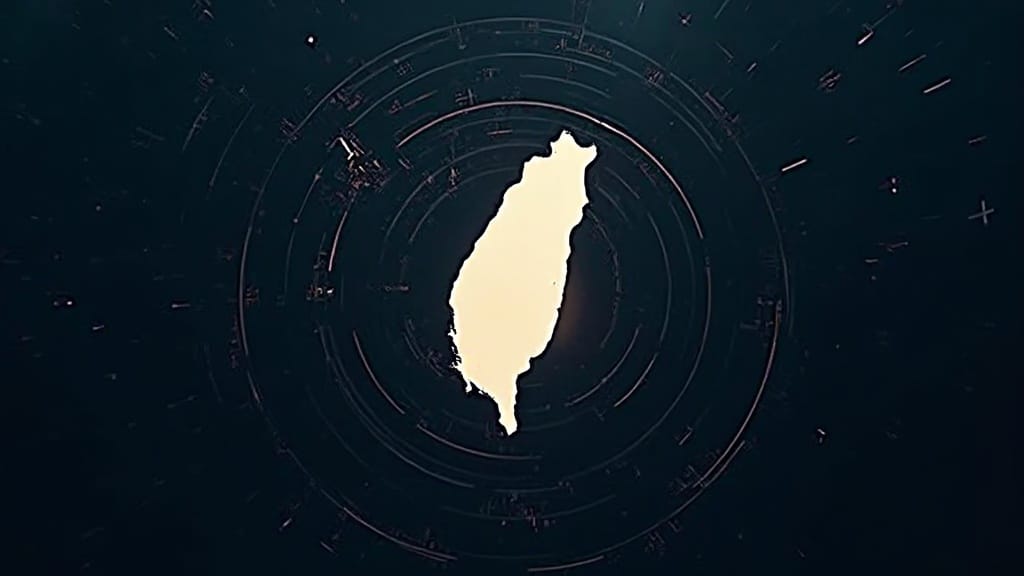
Taiwan's Ministry of National Defense publishes daily reports of People's Liberation Army activity near the island. Since roughly late February, those reports have shown a dramatic dropoff: no bomber sorties, no large-formation flights skirting Taiwan's southwestern ADIZ — the buffer zone where most provocations occur. Sporadic drone activity and routine naval patrols appear to continue, but the signature PLA Air Force pressure campaign has gone quiet.
This matters amid the flights' role as Beijing's primary tool of gray-zone coercion — military intimidation that stays below the threshold of outright conflict. Taiwan's air force was scrambling jets nearly every day for much of 2024 and 2025, burning through pilot hours and maintenance budgets at an unsustainable rate. The sudden halt is the most significant behavioral change in the Taiwan Strait since the 2022 crisis triggered by Nancy Pelosi's visit.
Evidence status: The pause itself is confirmed by Taiwan's own published data. The reason for it is unconfirmed and contested.
Hypothesis 1: Strategic Restraint During the Iran Crisis
The most widely circulated explanation among defense analysts ties the pause directly to the U.S.-Israel military campaign against Iran. Analysts' logic runs like this: with American carrier strike groups redeployed to the Persian Gulf and Middle East, Washington's Pacific posture is temporarily thinner. Analysts say Beijing could escalate — but doing so while the U.S. is already at war risks triggering the kind of two-front crisis that would unify American political will against China overnight.
Analysts say Beijing may be choosing restraint to harvest diplomatic capital. China has positioned itself as a mediator in the broader Middle East fallout and has significant economic interests in the Strait of Hormuz staying open — China imports more Iranian oil than any other country. Provoking a second crisis in the Pacific would undermine that positioning and could accelerate the very decoupling Beijing wants to avoid.
Supporting this reading: Beijing's foreign ministry has issued unusually measured statements on the Iran conflict, and Chinese state media has emphasized calls for de-escalation rather than anti-American rhetoric. The Shanghai Composite fell 0.82% this week as the energy shock hit Chinese markets — a reminder that Beijing has its own economic reasons to keep tensions low.
Evidence status: Speculative but well-supported by circumstantial alignment. No Beijing official has confirmed this reasoning.
Hypothesis 2: Internal Military Reorganization
A second theory, favored by some PLA watchers, is more prosaic: China may be in the middle of a significant internal military rotation or reorganization that has nothing to do with Taiwan signaling.
The PLA's Eastern Theater Command — responsible for Taiwan operations — has been undergoing leadership changes since late 2025, part of Xi Jinping's broader anti-corruption purge that has swept through the Rocket Force and senior naval ranks. New commanders may be pausing operations while they assess readiness, recalibrate doctrine, or simply establish authority. Seasonal maintenance cycles for the J-16 and H-6 fleets that typically fly the ADIZ missions could compound the effect.
There is precedent: similar lulls occurred in 2023 during the Rocket Force purge, though they were shorter and less complete.
Evidence status: Speculative. No confirmed reports of a specific reorganization order. The leadership turnover is confirmed; its operational effects are inferred.
A Third Possibility Worth Naming
Some Taiwan-based analysts have floated a darker reading: that the pause is preparation, not restraint — that the PLA is conserving flight hours and reducing pattern-of-life signatures before a larger exercise or escalatory action. This would mirror Russian behavior before the 2022 Ukraine invasion, when certain military signals went temporarily quiet before surging.
Evidence status: Highly speculative. No corroborating intelligence has surfaced publicly, and most Western defense officials have not endorsed this interpretation.
Why It Matters Now
The pause arrives at a moment of extraordinary global strain. The Strait of Hormuz has been disrupted, Brent crude is trading above $103 a barrel on the session, the S&P 500 just posted its third consecutive weekly loss for the week ending March 13, 2026, and a majority of Americans already oppose the Iran war (as of 2026 survey). The last thing markets or policymakers can absorb is a simultaneous Taiwan crisis.
But the silence also creates its own instability. Taiwan's military planners cannot easily distinguish between a genuine de-escalation and a tactical pause. Reduced PLA flights mean fewer data points for intelligence analysts tracking readiness and intent. And if the pause ends abruptly — with a large-scale exercise or a provocative transit — the shock effect would be amplified precisely because expectations have shifted.
There's also a resource dimension. Taiwan's air force has been operating at punishing tempo for years. A two-week reprieve allows maintenance backlogs to clear and pilots to rest. If the pause extends, it could paradoxically improve Taiwan's defensive readiness — an outcome Beijing presumably does not intend.
What's Confirmed, What's Not
| Claim | Status |
|---|---|
| PLA flights near Taiwan have stopped for 2+ weeks | Confirmed (Taiwan MND data) |
| Pause is linked to Iran war strategy | Speculative (analyst consensus, no official statement) |
| PLA Eastern Theater Command undergoing leadership changes | Confirmed |
| Operational pause tied to reorganization | Speculative |
| Pause is preparation for escalation | Highly speculative |
| U.S. Pacific force posture is thinner due to Middle East deployments | Contested (Pentagon denies significant degradation) |
📅 What to Watch
- Any resumption of PLA flights near Taiwan — even a single large-formation sortie could force Taiwan to scramble jets at higher tempo, increase civilian flight disruptions, and prompt immediate diplomatic démarches. Taiwan's MND reports daily; the data is public.
- Beijing's tone at the China-related data release window (Monday, March 16) — simultaneous releases of industrial production, retail sales, and unemployment figures. If those numbers disappoint, Beijing may have more incentive to avoid external tensions that could exacerbate capital outflows and pressure the renminbi.
- U.S. Pacific Command statements — any announced carrier movement back toward the Western Pacific would signal Washington is hedging against the pause ending and could prompt allied coordination measures.
- The FOMC meeting this week — a hawkish Federal Reserve that tightens financial conditions would increase Beijing's incentive to avoid a second geopolitical shock.
- PLA Eastern Theater Command personnel announcements — confirmation of new senior appointments would lend weight to the reorganization hypothesis.
The most dangerous moment may not be the pause itself. It may be whatever comes after it.