Chinese planes have stopped flying over/near Taiwan for over 2 weeks. What's going on?
Photo: lyceumnews.com
Here is what we know: for more than two weeks, Chinese military aircraft have not conducted their routine flights near or over Taiwan's air defense identification zone — a pattern of incursions that had become so regular over the past four years that their absence is, paradoxically, the news. No official announcement from Beijing. No formal explanation from Taipei. Just a quiet sky where there used to be a loud one, and a scramble among analysts to figure out what it means.
The thesis is straightforward, even if the answer isn't: China's abrupt pause in Taiwan Strait military aviation activity comes amid the U.S.-Israel war on Iran, and the competing explanations for why Beijing made that choice reveal a genuine fault line in how experts read Chinese intentions.
What the Pattern Break Looks Like
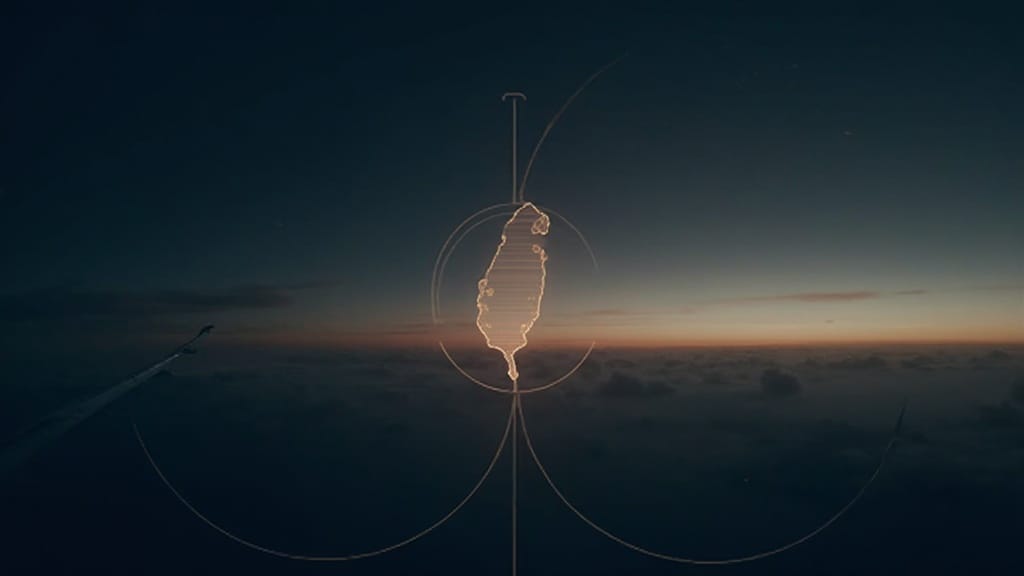
To understand why the absence matters, you need the baseline. Since 2022, the People's Liberation Army Air Force had been sending fighters, bombers, and surveillance aircraft into Taiwan's ADIZ — the self-declared buffer zone where Taipei monitors approaching planes — on a near-daily basis. Some days it was a handful of jets. On others, dozens. The flights served multiple purposes: testing Taiwan's response times, fatiguing its pilots and equipment, signaling resolve to domestic audiences, and normalizing a military presence that would make an actual escalation harder to distinguish from routine posturing.
Then, around the end of February, the flights stopped. Taiwan's Ministry of National Defense, which publishes daily incursion reports, has shown no PLA air activity in or near the zone for over fourteen consecutive days as of March 14, 2026 — the longest such gap since the flights intensified following then-Speaker Pelosi's 2022 visit.
The timing is not subtle. The cessation began within days of U.S.-Israeli strikes on Iran on February 28 that, according to some reports, killed Supreme Leader Ali Khamenei. The United States now has carrier strike groups, bomber wings, and thousands of Marines deployed to the region as of mid-March 2026. Six U.S. airmen died in a KC-135 crash in western Iraq on March 13, 2026. B-52 and B-1 bombers have been operating from RAF Fairford in England in March 2026. The American military machine is, by any measure, occupied.
Two Hypotheses, One Silence
The first and more optimistic reading — call it the restraint hypothesis — holds that Beijing is deliberately de-escalating to avoid a two-front crisis for Washington. Under this theory, Chinese leadership looked at the Iran war, the Strait of Hormuz disruption that has affected roughly 20 million barrels per day of oil transit, and the S&P 500 sliding to its 2026 low on March 14, 2026 and made a calculated decision: this is not the moment to provoke. The reasoning would be partly economic — China imports vast quantities of Middle Eastern oil, and the IEA describes the current disruption as the largest in the history of the global oil market — and partly diplomatic. Beijing has been positioning itself as a mediator in the Iran conflict, and aggressive moves near Taiwan would undercut that posture. Proponents of this view point to China's broader pattern of pulling back on military provocations during moments of acute global instability, preferring to let rivals exhaust themselves.
The evidence for this is circumstantial but coherent (status: speculative, consistent with pattern). China's foreign ministry has issued statements calling for de-escalation in the Middle East. Beijing's credit impulse data suggests the PBOC is focused on domestic economic stabilization. And the energy math is punishing: with Brent crude trading above $100 per barrel for the first time since 2022 on March 13, 2026 and LPG supplies from the Gulf plunging, China has every incentive to keep its other geopolitical flanks quiet.
The second and more unsettling reading — the opportunism hypothesis — inverts the logic entirely. Under this framework, Beijing isn't pausing out of goodwill. It's pausing to prepare. The argument runs like this: the United States has never been more strategically overextended. Its carrier groups are in the Persian Gulf, not the Pacific. Its intelligence apparatus is focused on Iran. Amid congressional disagreement over War Powers resolutions, the executive branch's attention and authority are largely fixed on the Middle East. If China were ever going to make a significant move on Taiwan — not necessarily an invasion, but perhaps a blockade drill, a new "normal" of naval encirclement, or a gray-zone escalation — the optimal moment would be when Washington is looking the other way. One plausible rationale is that the first thing you'd do before such a move is stop the routine flights, so that the resumption of activity doesn't trigger early warning systems tuned to detect changes in pattern.
The evidence for this is thinner but not dismissible (status: speculative, contested among analysts). Satellite imagery analysts have noted continued PLA Navy activity in the South China Sea as of mid-March 2026, though at levels that don't clearly deviate from recent norms. North Korea's launch of approximately 10 ballistic missiles this week could be read as a coordinated signal among states that benefit from American distraction, though it could equally be Pyongyang's independent opportunism. Some defense analysts in Taipei and Tokyo have privately flagged the quiet as more worrying than the noise, reasoning that China's military bureaucracy doesn't simply stop flying sorties without orders.
What Makes This Genuinely Hard to Read
The honest answer is that both hypotheses could be partially true simultaneously, and the distinction between them may only become clear in retrospect. Beijing could be exercising restraint and repositioning assets. It could be de-escalating the air domain while quietly advancing in the naval or cyber domains. The Iran-linked cyberattack on Stryker Corporation this week — in which staff reportedly saw the logo of a pro-Palestinian hacking group on their screens — is a reminder that modern conflict sprawls across domains in ways that make single-theater analysis insufficient.
What is confirmed is the structural context: the United States is burning through military resources and political bandwidth at a remarkable rate. The IEA's record 400-million-barrel strategic reserve release in March 2026 failed to contain oil prices. U.S. Q4 GDP was revised down to 0.7% (annualized) in a March 12, 2026 revision. Consumer sentiment has cratered to 55.5 as of March 14, 2026. The 10-year Treasury yield has risen from 3.97% to 4.28% over the past two weeks (as of March 13, 2026) on what traders are calling a "war premium." These are not conditions under which Washington can credibly threaten to open a second major theater of confrontation.
Beijing knows this. Taipei knows this. The question is what each side does with that knowledge.
Where This Goes
Three things to watch in the coming days and weeks.
First, the FOMC meeting on March 18. If the Federal Reserve signals that the Iran-driven energy shock is constraining its policy options — for example, holding rates steady while inflation pressures build — it will reinforce the narrative that American economic resilience is eroding. That narrative matters in Beijing's calculus.
Second, PLA Navy movements in the Western Pacific. The air pause is visible because Taiwan publishes daily data. Naval positioning is harder to track in real time, but any unusual concentration of amphibious or logistics vessels near the Taiwan Strait would shift the balance of evidence sharply toward the opportunism hypothesis.
Third, any diplomatic signal from Beijing on Taiwan specifically. Iran's new supreme interlocutor in the Iran situation is Mojtaba Khamenei, a figure with no governing track record and an unknown diplomatic posture. If Beijing uses the Iran mediation channel to extract concessions from Washington on Taiwan-related arms sales or diplomatic recognition — trading peace brokerage for strategic gain — the silence over the Strait will have been the opening move in a negotiation, not a military feint.
The most dangerous possibility is also the simplest: that the silence means nothing yet, and that Beijing is genuinely undecided, watching the Iran war unfold and keeping its options open. In strategic ambiguity, the absence of a decision is the decision — and it leaves every other actor guessing. Taiwan's pilots are getting rest they haven't had in years. Whether that's a gift or a setup depends on what comes next.