Defense Tech Daily — Mar 12, 2026

Photo: lyceumnews.com
Thursday, March 12, 2026
The Big Picture
The Iran war just showed up in a hospital supply closet. Pro-Iran hackers wiped thousands of devices at a major U.S. medical equipment company — the first significant destructive cyberattack on American soil since hostilities escalated — while Russia coaches Tehran on drone tactics lifted straight from Ukraine, and the Pentagon quietly confirms AI is now embedded in its targeting chain. The technology of this war is spreading faster than anyone built guardrails for.
Today's Stories
Iran-Linked Hackers Just Wiped a Hospital Equipment Giant's Network
When you imagine wartime cyber retaliation, you picture power grids or military networks going dark. You probably don't picture a surgeon reaching for a defibrillator that won't turn on.
A cyberattack claimed by pro-Iran hackers has caused a "global network disruption" at Michigan-based Stryker, one of the world's largest medical device companies. Thousands of employees found their Windows devices — laptops, phones, anything connected to Stryker systems — had been remotely wiped. The group responsible, Handala, is believed to be a front for Iran's Ministry of Intelligence. Check Point Research called it "the first time this Iranian-backed threat actor has disruptively targeted a major US enterprise," adding that disrupting healthcare infrastructure "doesn't just mean data loss, it can mean patient safety."
Iran has a long history of "wiper" attacks — operations designed not to steal data but to destroy it. Saudi Aramco in 2012, the Sands Casino in 2014. Handala claims it wiped over 200,000 systems and took 50 terabytes of data, though those figures are unverified. What's verified: employees watched data erased in real time.
Here's the detail that should unsettle you. Palo Alto Networks' Unit 42 assessed that Iran's domestic internet has been running at 1–4% capacity since U.S.-Israeli strikes began — yet the attacks kept coming. Iran has built a distributed cyber militia that operates independently even when the home country is nearly offline. The target choice is the message: no sector is off-limits, and Tehran's proxies are willing to put patients at risk to make that point.
Russia Is Now Iran's Drone Coach — Using Ukraine's Playbook

Imagine your chess opponent getting real-time advice from a grandmaster who's been studying your style for years. That's the Gulf right now.
A Western intelligence official told CNN that Russia is providing Iran with advanced drone tactics drawn directly from its war in Ukraine — strategies for targeting, coordinating attacks, and evading air defenses. This goes beyond the satellite imagery Moscow was already sharing; now it's coaching Tehran on how to fly.
The numbers tell you why this matters. A new CSIS analysis found the UAE alone absorbed 1,422 detected drones and 246 missiles in just eight days — roughly 180 events per day concentrated on a country the size of South Carolina. Iran's Shahed drones aren't designed to destroy targets so much as to bankrupt defenders: force them to spend $3 million interceptors on $30,000 drones until the math breaks.
The bitter irony: Ukraine has sent drone interception experts to the Gulf to help stop the same Shaheds that Russia taught Iran to fly better. Meanwhile, Trump's envoy Steve Witkoff told CNBC that Kremlin officials assured him Moscow wasn't providing targeting information, and that the U.S. "can take them at their word." The intelligence community and the White House appear to be reading very different documents. Open-source analysts have also identified debris from what appears to be a Geran-2 — a Russian-manufactured Shahed variant — in UAE strike wreckage. If confirmed, Russian hardware is now in the same conflict as American forces.
France Is Building Europe's HIMARS — and Washington Gets No Veto
European defense ministers have been quietly asking a question for years: what happens when the U.S. decides you can't use the weapons you bought from them? France just unveiled its answer.
ArianeGroup and Thales disclosed the FLP-T 150, a truck-mounted rocket launcher firing eight guided rockets to 150 kilometers with single-digit-meter accuracy — even when GPS is jammed. Think of it as France's HIMARS, the mobile rocket artillery system that became famous in Ukraine, except built from the ground up to be "ITAR-free." ITAR — International Traffic in Arms Regulations — is the U.S. law giving Washington effective veto power over where American-made weapons go. The FLP-T 150 uses no American components subject to export authorization, meaning it's exportable to any country without U.S. approval.
The propulsion comes from ArianeGroup's space launcher expertise — the same solid-propellant technology that puts satellites in orbit is now designing missiles to hit targets on the ground. Flight tests are scheduled for the first half of 2026, with demonstration firings in May. This is Europe deciding, in hardware, that strategic autonomy is no longer just a speech topic.
The Pentagon Is Hunting for an AI Safety Inspector — Before Something Goes Wrong
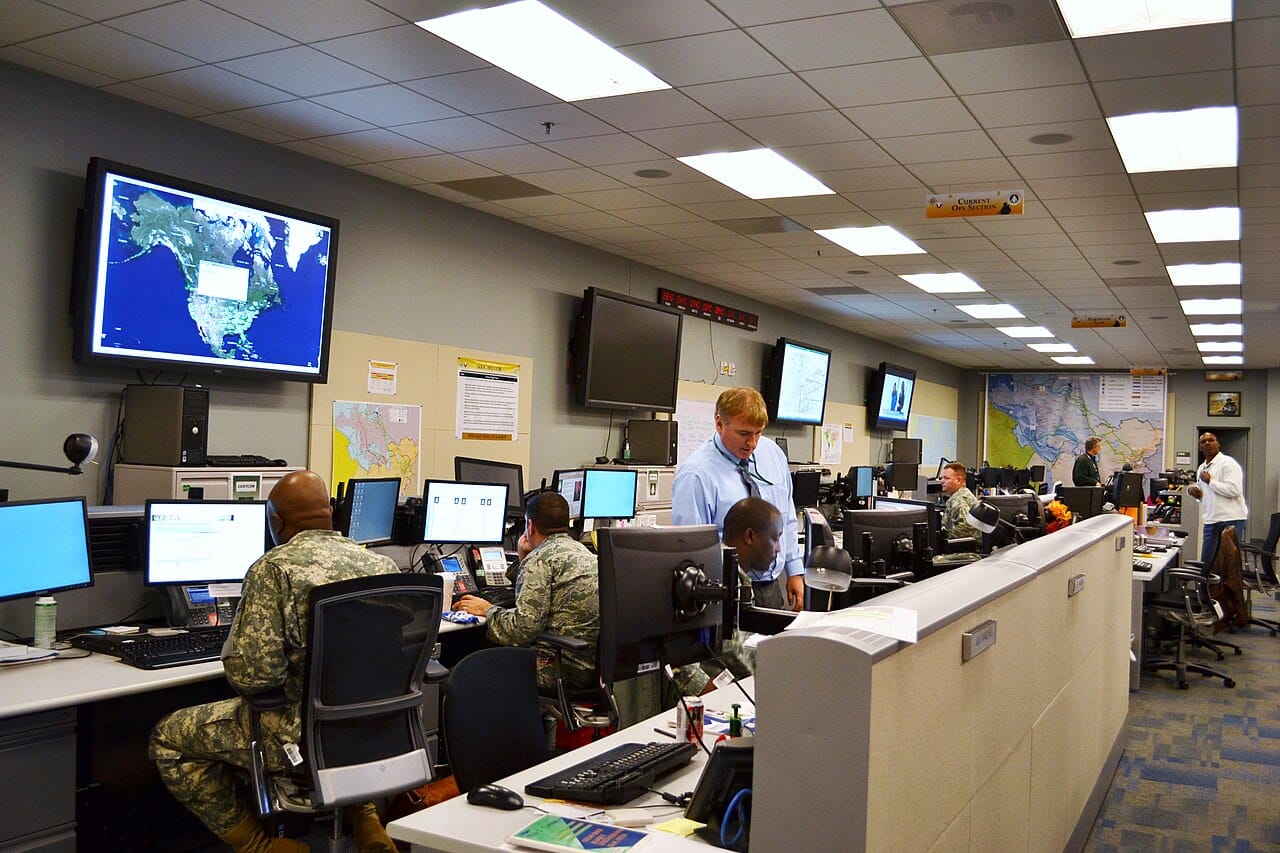
If you're going to let AI anywhere near war plans, you'd better be sure it does what you think it does. The Pentagon and the Office of the Director of National Intelligence just kicked off a procurement for a system that can continuously test and validate AI models before they touch anything operational — a kind of wind tunnel for algorithms.
The Defense Innovation Unit wants a "harness" with a standard, pluggable architecture that can evaluate any AI from any contractor. The explicit goal: assess "not only whether AI systems can perform tasks in isolation, but whether human-AI teams achieve better mission outcomes than either humans or AI alone." This matters amid the Anthropic controversy, which highlighted the lack of a neutral, technical way to verify what a model would or wouldn't do. Whoever wins this contract effectively becomes the safety gatekeeper for deployed battlefield AI.
The deeper problem, though, is cultural. Analysts argue the real barrier to military AI adoption isn't ethics or tooling — it's a risk-averse bureaucracy that struggles to absorb new technology at speed. The test rig could change outcomes, or it could become another compliance checkbox. The deadline for responses is in less than two weeks.
AI Is Already in the Kill Chain Over Iran — and Lawmakers Just Found Out
The years of hypothetical debate about AI in warfare ended quietly sometime in the last few weeks. Two sources confirmed to NBC that the military is using Palantir's AI systems to identify potential targets in Iran. Buried in the same reporting: Anthropic's Claude model is a component of Palantir's Maven intelligence program, where it helps analysts "sort through intelligence" but "does not directly provide targeting advice."
That distinction — sorting intelligence versus recommending targets — is where the accountability gap lives. Separately, a cybersecurity reporter told NPR that Israel used "very cutting-edge data processing or big data fusion techniques that you would call AI" to target an airstrike that reportedly killed a senior Iranian commander, leveraging access to "nearly all" of Tehran's traffic cameras. That may be the most significant public disclosure of AI-assisted targeting in a leadership strike in modern history, and it's getting almost no standalone coverage.
Meanwhile, the industry is fracturing. Anthropic is suing the Pentagon after being labeled a "supply-chain risk." OpenAI's head of robotics resigned, saying "lethal autonomy without human authorization" deserved more deliberation. And Elon Musk's xAI quietly landed on the Pentagon's classified network. The AI is already in the loop. The argument now is about who controls it.
⚡ What Most People Missed
- Germany is moving to build a sovereign milsatcom backbone. Reports say Berlin is exploring an €8–10 billion military satellite communications constellation to give Europe a hardened, sovereign comms layer — a program that would reshape procurement priorities and create new European-centric supply chains for secure SATCOM.
- China just established a public record of objecting to AI warfare at the exact moment the U.S. is demonstrating it in combat. A defense ministry spokesperson warned of a "Terminator world" and used the phrase "technological runaway" — the kind of language that shows up in treaty negotiations before they start. Beijing is investing heavily in its own autonomous systems, but it's staking moral high ground first.
- Agentic AI cybercrime is exploding. Flashpoint's new threat intelligence report tracked a 1,500% surge in illicit online discussions about AI between November and December 2025. The chatter isn't theoretical — it's about building autonomous systems that orchestrate entire cyberattacks with minimal human oversight, from reconnaissance to credential testing to infrastructure rotation.
- Ukraine's newest drones use fiber-optic tethers to connect to operators, making them largely immune to radio-frequency jamming. Others use AI-based visual navigation to fly without GPS. These are battlefield innovations turning into fielded systems in months, not years — and they're the template everyone else will copy.
- A UAE startup is exporting "secure autonomy" drone software to Europe — a zero-trust architecture that assumes every part of a drone mission can be compromised. Instead of Europe licensing security tech from the U.S. or Israel, a Gulf-state platform is becoming the backbone. Watch whose standards everyone else has to follow.
📅 What to Watch
- If the U.S. officially attributes the Stryker attack to Iran's Ministry of Intelligence, it could allow Washington to treat the incident as state-sponsored aggression rather than a criminal intrusion, opening the door to state-level responses such as defensive cyber operations, expanded sanctions, and intensified diplomatic escalation.
- If open-source analysts confirm Russian-made Geran-2 drones in UAE strike debris, it could force U.S. policymakers to publicly reassess Moscow's role, increase pressure for punitive measures against Russian materiel supply chains, and complicate deconfliction and diplomatic channels with Russia.
- If France's FLP-T 150 demonstration firings succeed in May, watch whether Germany, Poland, or the Nordics express interest — that would signal a genuine alternative supply chain and a structural shift in U.S. leverage inside NATO.
- If the House Armed Services Committee or the Senate Armed Services Committee hold hearings (full committee) on the Pentagon's AI testing initiative, it would signal congressional appetite to codify minimum safety or oversight standards for algorithms used in targeting and could turn a procurement into the basis for broader legislative guardrails.
- If the Anthropic lawsuit produces an injunction, it would set early legal precedent on whether AI companies can decline military contracts on ethical grounds without being effectively excluded from government work, reshaping hiring and partnership dynamics across the defense-tech sector.
A surgeon's defibrillator bricked by Iranian hackers, a French space company building missiles to escape American permission slips, and Elon Musk's chatbot quietly sliding onto the Pentagon's classified network while everyone argued about the other chatbot. The best part of Russia coaching Iran on drone tactics from the Ukraine playbook is that Ukraine then sent its own experts to the Gulf to help stop the drones — making this the world's first conflict where both sides of the same war are consulting for opposing teams in a different war.
See you tomorrow. —DTD