Flat Iron Steak and Potatoes
Generated: 2026-03-28 18:34
Cuisine: All
Focus: all
The flat iron is the sleeper cut of the beef world: more tender than flank, more affordable than ribeye, and more forgiving than filet — but only if you understand the two things that will make or break it: a ripping-hot sear and a knife that cuts against the grain. Pair it with the right potato technique and you have a weeknight dinner that eats like a Saturday night at a proper bistro.
Where to source: Sam's Club carries flat iron steak in bulk — shop flat iron steak at Sam's Club.
The Universal Technique: The Cast Iron Pan-Sear with Butter Baste
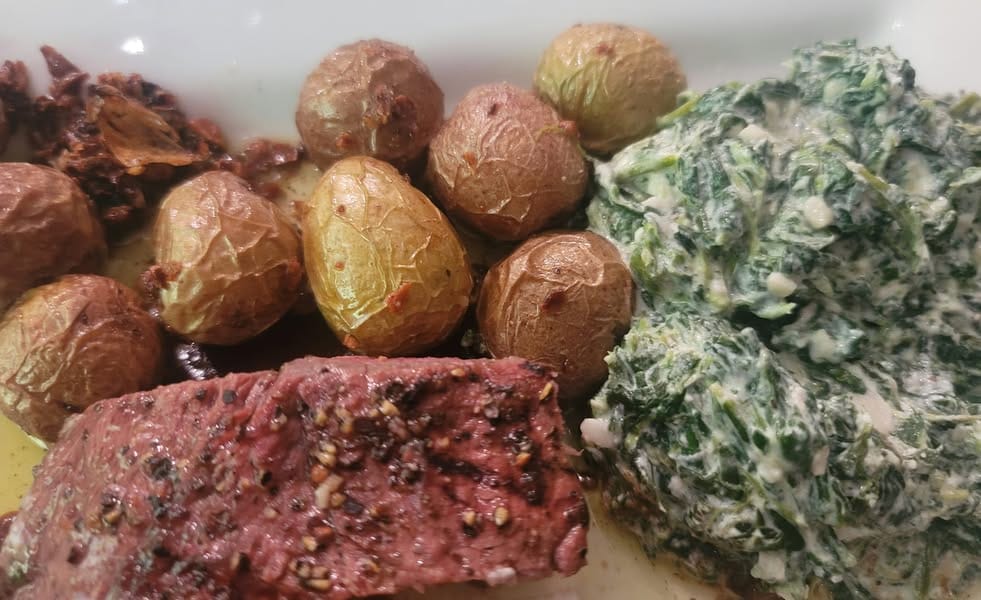
This is the foundational method that underpins every great flat iron steak, regardless of what potato preparation you're pairing it with. Master this and every variation below becomes a riff on a theme you already own.
Pro Tip: "Get oil smoking hot in a heavy pan. Add salted and peppered steak and cook, flipping every 15 to 30 seconds until the desired internal temperature is almost reached. Add butter to the pan and continue to cook until the steak is done." — J. Kenji López-Alt, Serious Eats
Step 1: Salt Early or Salt Right Before — Never In Between
Apply kosher salt (about 1 tsp per pound) either immediately before cooking or at least 40 minutes ahead. The science is unambiguous: salt applied 10–30 minutes before cooking draws moisture to the surface, creating a brine that inhibits browning. Either the salt hasn't had time to reabsorb (fine) or it has fully reabsorbed (great) — anything in between is the worst of both worlds. Overnight dry-brining on a rack in the refrigerator, uncovered, is the professional standard and produces the best crust of any method.
Step 2: Bring to Room Temperature and Dry the Surface
Pull the steak from the refrigerator 30–45 minutes before cooking. Pat it completely dry with paper towels — this is non-negotiable. Wet meat steams; dry meat sears. The Maillard reaction that creates that mahogany crust requires surface temperatures above 300°F, and surface moisture holds the temperature at 212°F until it evaporates.
Step 3: Preheat Your Cast Iron Until It Smokes
Set a cast iron or carbon steel skillet over high heat for a full 3–5 minutes. Add 1 tablespoon of a high-smoke-point oil (canola, avocado, or grapeseed) and wait until it shimmers and just begins to smoke. A properly preheated pan is the single most common variable separating restaurant results from home disappointments.
Step 4: Sear with Frequent Flips
Add the steak and resist the urge to move it for the first 60–90 seconds to establish the initial crust. After that, flip every 15–30 seconds. Counter to the old "flip once" mythology, frequent flipping produces more even cooking, a thicker crust, and less of the gray overcooked band beneath the surface. Total searing time for a 3/4-inch flat iron: approximately 6–8 minutes for medium-rare.
Step 5: Butter Baste in the Final 90 Seconds
When the steak is about 10°F below your target temperature (pull at 120°F for medium-rare), add 2 tablespoons of unsalted butter to the pan along with 2 smashed garlic cloves and 2–3 sprigs of fresh thyme or rosemary. Tilt the pan and continuously spoon the foaming butter over the steak. The milk solids in butter brown and infuse the meat with nutty, complex flavor that oil alone cannot replicate. Don't add butter earlier — it will burn before the crust develops.
Step 6: Rest, Then Cut Against the Grain
Transfer to a cutting board and rest for a minimum of 5 minutes, 8–10 minutes preferred. Do not tent with foil — trapped steam softens the crust you just worked to build. When slicing, identify the direction of the muscle fibers and cut perpendicular to them. For flat iron, this means slicing on a slight diagonal across the width of the steak. This step matters more for flat iron than for premium cuts because the muscle fiber structure is more pronounced.
Category 1: The Weeknight Classics — One Pan, Full Dinner
These are the recipes that justify owning a 12-inch cast iron skillet. Everything cooks in sequence in the same vessel, the potato picks up the steak's fond, and cleanup is a single pan.
1. Cast Iron Flat Iron Steak with Garlic Herb Smashed Potatoes — *The One-Pan Weeknight Standard*
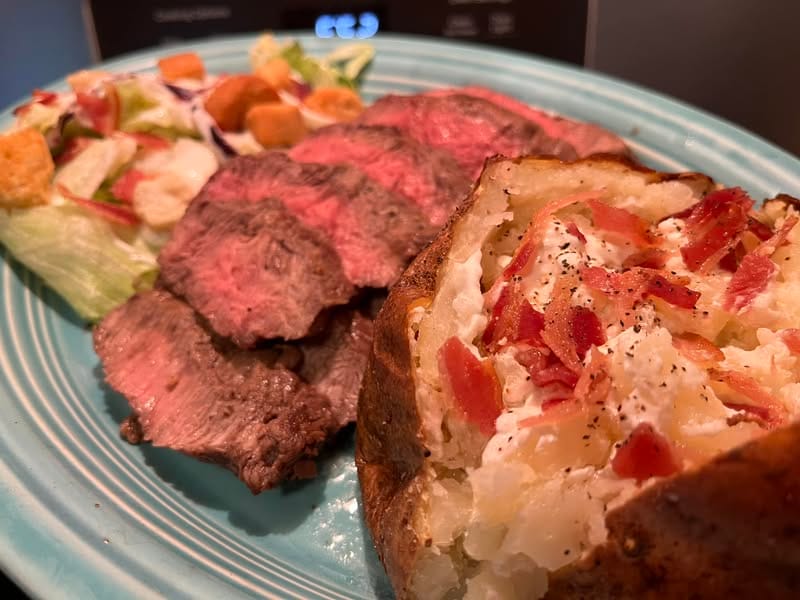
Time: 20 min active / 40 min total | Difficulty: Easy | Yield: 2 servings | Est. Macros: 48g protein / 38g carbs / 22g fat per serving
This is the recipe that earns its place in permanent rotation. The potatoes cook first in the same skillet, picking up the seasoned oil, then get pushed to the side while the steak sears. The steak's butter baste then coats both components simultaneously — every element on the plate shares the same flavor language. It's the kind of efficiency that looks like effort.
Key Ingredients:
- 1 flat iron steak (10–12 oz, about 3/4 inch thick)
- 1 lb baby Yukon Gold potatoes
- 2 tbsp canola oil, divided
- 2 tbsp unsalted butter
- 3 garlic cloves, smashed
- 3 sprigs fresh thyme
- 1 tsp kosher salt (for steak), plus more for potatoes
- Freshly ground black pepper
The Method:
- Par-boil the potatoes (medium-high heat): Cover baby Yukons with cold water, add 1 tbsp kosher salt, bring to a boil, and cook 8–10 minutes until a knife meets light resistance. Drain and let steam-dry for 2 minutes.
- Smash and sear the potatoes (medium-high heat): Heat 1 tbsp canola oil in a 12-inch cast iron skillet. Add drained potatoes and use the bottom of a measuring cup to smash each one to about 1/2-inch thickness. Season with salt and pepper. Cook without moving for 3–4 minutes until a golden crust forms on the bottom, then flip and cook another 3 minutes. Push to the outer edges of the pan.
- Sear the steak (high heat): Add remaining 1 tbsp oil to the center of the pan. Pat the steak dry, season aggressively with salt and pepper, and add to the hot center. Sear, flipping every 30 seconds, for 5–6 minutes total.
- Butter baste (medium-high heat): Add butter, garlic, and thyme to the pan. Tilt and spoon the foaming butter over both the steak and the potatoes continuously for 90 seconds. Pull the steak at 120°F internal temperature.
- Rest and serve: Transfer steak to a cutting board and rest 7 minutes. While it rests, toss the potatoes in the remaining garlic butter in the pan. Slice steak against the grain and serve over the potatoes with the pan drippings spooned over everything.
The hack: Use pre-washed baby potatoes and skip peeling entirely. The skin crisps beautifully and holds the smashed shape better than peeled potatoes.
Source: Technique synthesized from Serious Eats Perfect Pan-Seared Steaks and Serious Eats French-Style Brown Butter New Potatoes
2. Skillet Flat Iron Steak with Lyonnaise Potatoes — *The French Bistro Move*
Time: 25 min active / 45 min total | Difficulty: Medium | Yield: 4 servings | Est. Macros: 44g protein / 41g carbs / 24g fat per serving
Lyonnaise potatoes — sliced Yukon Golds pan-fried in clarified butter with caramelized sweet onions — are the most underrated steak side dish in the French canon. The vinegar-spiked par-cook is the professional secret: it acidulates the water, strengthening the pectin in the potato cells so the slices hold their shape during frying while still developing a genuinely crisp exterior. Paired with a butter-basted flat iron, this is bistro cooking at home without the bistro markup.
Key Ingredients:
- 2 flat iron steaks (10 oz each)
- 1.5 lbs Yukon Gold potatoes, peeled and sliced 1/4-inch thick
- 2 tbsp distilled white vinegar (for par-cooking)
- 2 tbsp kosher salt (for par-cooking water)
- 5 tbsp clarified butter, divided (regular unsalted butter works, reduce heat slightly)
- 1 large sweet onion, thinly sliced
- 2 tbsp canola oil (for steak)
- 2 tbsp unsalted butter (for basting)
- Fresh flat-leaf parsley, chopped, for garnish
The Method:
- Par-cook the potatoes (high heat to simmer): Cover sliced potatoes with cold water by 1 inch. Add 2 tbsp kosher salt and 2 tbsp white vinegar. Bring to a boil, reduce to a simmer, and cook 4 minutes until barely tender — a paring knife should meet slight resistance. Drain and set aside.
- Caramelize the onions (medium-high heat): In a 12-inch cast iron or stainless skillet, heat 1 tbsp clarified butter until shimmering. Add sliced sweet onion with a pinch of salt. Cook, stirring occasionally, 10 minutes until lightly browned and softened. Add 1 tbsp water and scrape up any fond. Transfer onions to a bowl.
- Fry the potatoes in two batches (medium-high heat): Add 2 tbsp clarified butter to the now-empty skillet. Add half the par-cooked potato slices in a single layer. Cook without moving 3 minutes until golden brown on the bottom. Flip and cook another 3 minutes. Transfer to the bowl with onions. Repeat with remaining 2 tbsp butter and remaining potatoes.
- Sear the steaks (high heat): In a separate cast iron or carbon steel pan, heat canola oil until smoking. Pat steaks dry, season aggressively. Sear, flipping every 30 seconds, 6–7 minutes total. Add 2 tbsp unsalted butter, garlic, and thyme in the final 90 seconds and baste continuously. Pull at 120°F.
- Finish and plate: Return potatoes and onions to their skillet, toss to combine, and heat through 1 minute. Season with salt and pepper. Rest steaks 7 minutes, slice against the grain. Plate potatoes, top with sliced steak, garnish with fresh parsley.
The hack: Clarified butter is ideal here because its higher smoke point prevents burning during the potato fry. If you don't have it, use a 50/50 mix of regular unsalted butter and canola oil — you get the butter flavor with enough oil to raise the smoke point.
Source: Serious Eats Lyonnaise Potatoes
3. Flat Iron Steak with French Brown Butter New Potatoes — *The Elegant Minimalist*
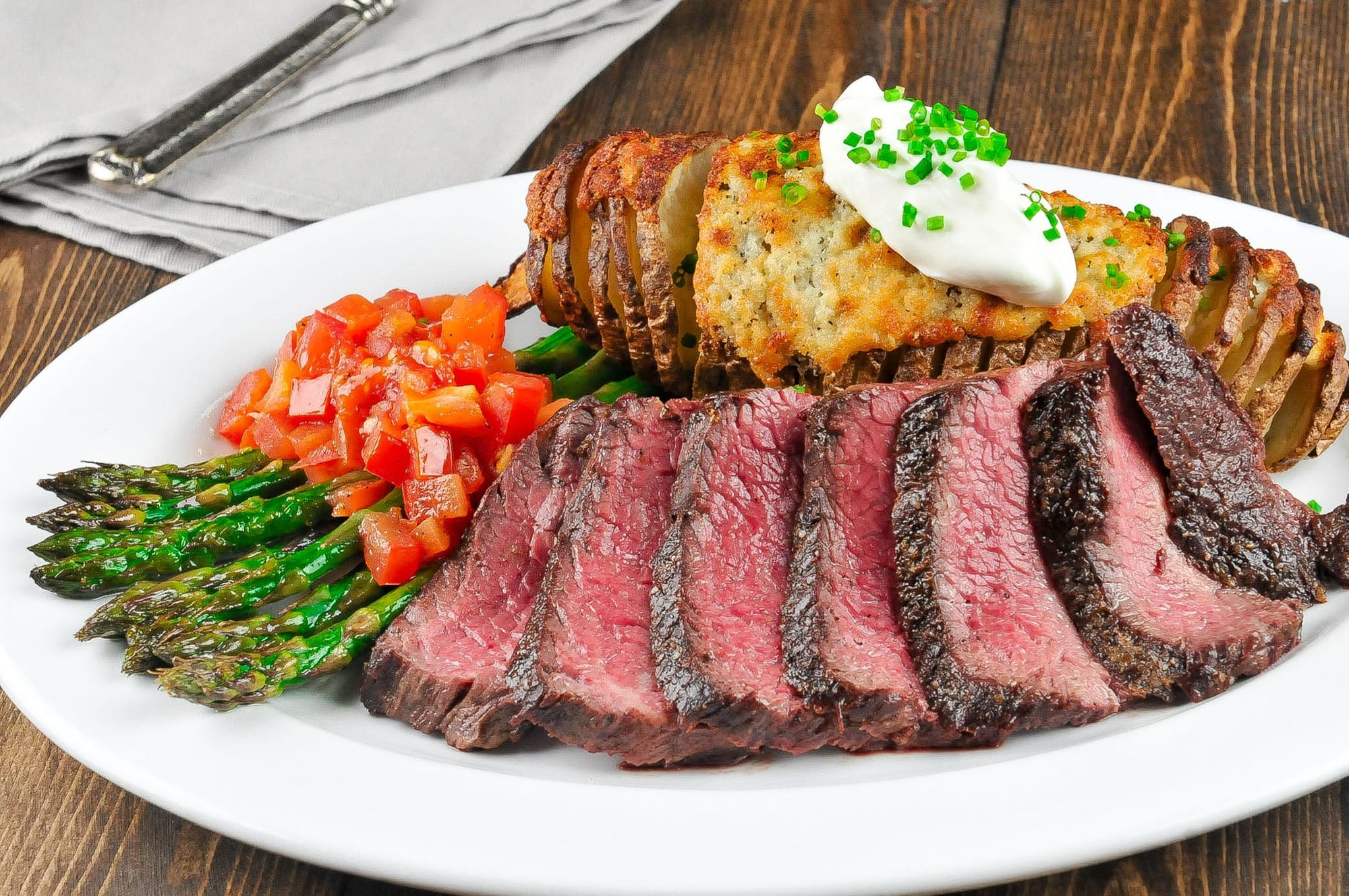
Time: 10 min active / 55 min total | Difficulty: Easy | Yield: 2–4 servings | Est. Macros: 42g protein / 35g carbs / 28g fat per serving
This is the recipe that proves restraint is a technique. Tiny new potatoes cooked entirely in brown butter — no par-boiling, no roasting, just a single saucepan and patience — develop a crinkly, butter-coated skin and a creamy interior that is genuinely extraordinary. The brown butter becomes the sauce for both the potatoes and the steak. It's the kind of dish that makes guests ask what restaurant you trained at.
Key Ingredients:
- 1 flat iron steak (12 oz)
- 1 lb small new potatoes, uniform in size (the smaller the better)
- 1 stick (4 oz / 113g) unsalted butter, cut into 1/2-inch pieces
- 4 sprigs fresh thyme
- 2 garlic cloves
- Fleur de sel or flaky sea salt
- Sliced chives, for garnish
- Crème fraîche, for serving
The Method:
- Start the potatoes in cold butter (medium heat): In a medium (3-quart) saucepan, melt the butter over medium heat. Add potatoes immediately — before the butter browns — along with a healthy pinch of salt and pepper. The potatoes need to cook, and the butter will have plenty of time to brown around them.
- Brown the butter around the potatoes (medium heat): Cook, swirling and stirring frequently, as the butter hisses and pops. After 5–8 minutes, the butter will foam rapidly and turn golden yellow. Reduce heat to medium-low and add thyme and garlic. The butter should be gently bubbling, not aggressively sizzling.
- Go low and slow (medium-low to low heat): Cook, turning potatoes occasionally for even browning, approximately 45 minutes total, until completely tender (a paring knife meets zero resistance). Remove from heat and let potatoes rest in the brown butter for 5 minutes — this keeps the centers creamy rather than hardening.
- Sear the steak (high heat): While potatoes rest, sear the flat iron in a separate cast iron pan using the universal technique above. Pull at 120°F, rest 7 minutes.
- Plate: Use a slotted spoon to transfer potatoes to a serving bowl. Drizzle reserved brown butter over both potatoes and sliced steak. Finish with fleur de sel, chives, and a dollop of crème fraîche alongside.
The hack: The brown butter from the potatoes is liquid gold — use it as the basting medium for your steak in the final 90 seconds of cooking instead of fresh butter. You get double the nutty, toasted flavor.
Source: Serious Eats French-Style Brown Butter New Potatoes
Category 2: The Marinated Flat Iron — When You Have Time to Plan
Marinating is the flat iron's secret weapon. The cut's relatively lean profile benefits enormously from an acidic marinade that seasons deeply, tenderizes the muscle fibers, and creates a more complex flavor baseline before the steak ever hits heat.
4. Overnight Marinated Flat Iron with Crispy Roasted Potatoes — *The Weekend Warrior*
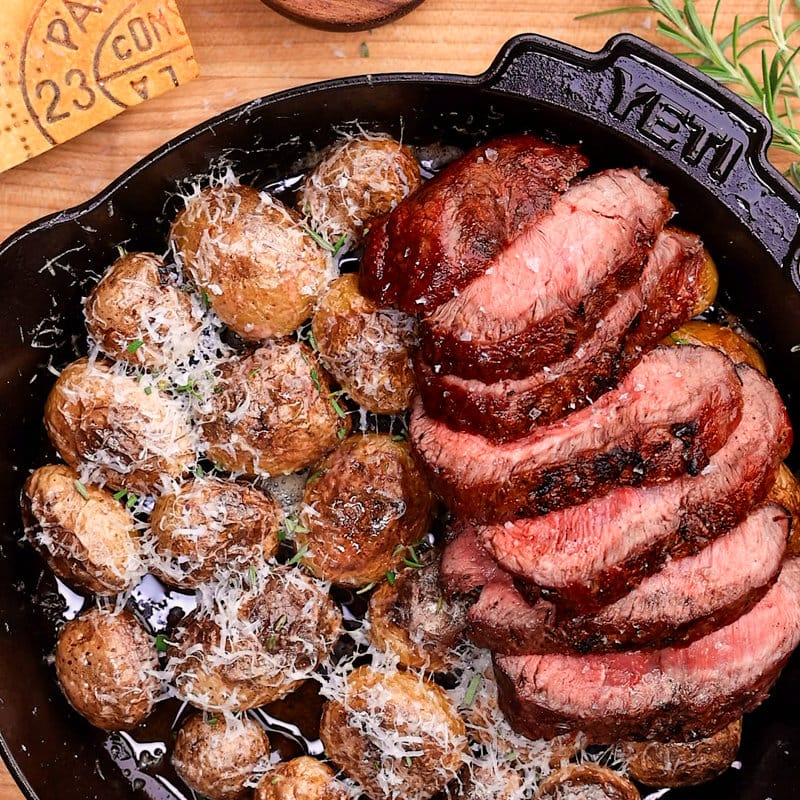
Time: 20 min active / 8+ hours marinating / 30 min cooking | Difficulty: Easy | Yield: 4 servings | Est. Macros: 46g protein / 32g carbs / 18g fat per serving
The marinade here does the heavy lifting while you sleep. Soy sauce provides salt and umami, Worcestershire adds depth, a touch of brown sugar promotes caramelization, and the acid (red wine vinegar) tenderizes the muscle fibers without turning them mushy. The result is a steak that tastes like it's been seasoned from the inside out — because it has been.
Key Ingredients:
For the marinade:
- 3 tbsp soy sauce
- 2 tbsp Worcestershire sauce
- 2 tbsp olive oil
- 1 tbsp red wine vinegar
- 1 tsp brown sugar
- 4 garlic cloves, minced
- 1 tsp smoked paprika
- 1/2 tsp red pepper flakes
For the steak and potatoes:
- 1.5 lbs flat iron steak
- 1.5 lbs Yukon Gold potatoes, cut into 1-inch cubes
- 2 tbsp olive oil
- 1 tsp dried rosemary
- 1 tsp garlic powder
- Kosher salt and black pepper
The Method:
- Marinate (refrigerator, 4–24 hours): Whisk all marinade ingredients together. Place flat iron in a zip-lock bag or shallow dish, pour marinade over, and refrigerate. Minimum 4 hours; overnight is ideal. Do not exceed 24 hours — the acid will begin to denature the proteins and create a mushy texture.
- Prep the potatoes (oven at 425°F): Toss potato cubes with 2 tbsp olive oil, dried rosemary, garlic powder, 1 tsp kosher salt, and black pepper. Spread in a single layer on a rimmed baking sheet — do not crowd. Roast 25–30 minutes, flipping once at the 15-minute mark, until golden and crispy on the exterior and tender throughout.
- Prep the steak: Remove steak from marinade 30 minutes before cooking. Pat completely dry with paper towels — this is critical. Wet marinated meat will steam, not sear. Discard marinade.
- Grill or sear (high heat): For grilling, cook over maximum heat 4–5 minutes per side, targeting 130°F internal for medium-rare. For pan-searing, use the universal technique above. The sugar in the marinade will promote faster browning — watch carefully to avoid burning.
- Rest and slice: Rest 8 minutes. Slice thinly against the grain on a slight diagonal. Serve over the roasted potatoes with any accumulated resting juices drizzled over the top.
The hack: If you forgot to marinate overnight, a 1-hour marinade at room temperature (not refrigerator) accelerates penetration significantly. The warmer temperature speeds diffusion — just don't go beyond 90 minutes at room temp for food safety reasons.
Source: Technique synthesized from research on marinated flat iron preparations and Serious Eats Perfect Pan-Seared Steaks
5. Bistec Encebollado-Inspired Flat Iron with Vinegar-Marinated Potatoes — *The Latin Weeknight*
Time: 15 min active / 1 hour marinating / 20 min cooking | Difficulty: Easy | Yield: 4–6 servings | Est. Macros: 42g protein / 28g carbs / 16g fat per serving
Puerto Rican bistec encebollado — steak and onions — is one of the most efficient flavor-delivery systems in weeknight cooking. The vinegar marinade is tangy and bright, the onions cook in the rendered beef fat and pick up every bit of fond from the pan, and the whole thing comes together in under 15 minutes of active cooking. Adapted here with flat iron (a step up from the traditional cube steak) and served with vinegar-brightened potatoes that echo the marinade's flavor profile.
Key Ingredients:
For the marinade:
- 1/2 cup distilled white vinegar
- 1 tsp garlic powder
- 1 tsp dried oregano
- Kosher salt and freshly ground black pepper
For the steak and potatoes:
- 1.5 lbs flat iron steak, sliced 1/2-inch thick against the grain before marinating
- 1 large yellow onion, halved and thinly sliced (marinated with the steak)
- 1 lb red bliss potatoes, quartered
- 3 tbsp neutral oil (canola, avocado, or grapeseed), divided
- 1 tbsp white vinegar (for potatoes)
- Fresh cilantro, for garnish
The Method:
- Marinate steak and onions: Season sliced flat iron on both sides with salt, pepper, garlic powder, and oregano. Place in a zip-lock bag with sliced onions. Pour 1/2 cup white vinegar over everything, toss to coat, and refrigerate 1–12 hours. Do not exceed 12 hours — the acid will turn the meat mushy.
- Cook the potatoes (medium-high heat): Boil quartered red bliss potatoes in salted water with 1 tbsp white vinegar for 10–12 minutes until tender. Drain. In a cast iron skillet, heat 1 tbsp oil over medium-high heat and pan-fry the boiled potatoes, tossing occasionally, until golden and crispy on the exterior, about 8 minutes. Season with salt and pepper.
- Sear the steak in batches (medium-high to high heat): Remove onions from marinade and set aside. Pat steak slices dry. Heat 1 tbsp oil in a large stainless steel or cast iron skillet over medium-high heat until just smoking. Working in batches to avoid crowding, cook steak slices 45–60 seconds per side until browned. Transfer to a platter. Crowding the pan is the enemy here — it drops the temperature and causes steaming instead of searing.
- Cook the onions in the fond (medium-high heat): Add remaining 1 tbsp oil to the now-empty skillet. Add reserved onions and cook, stirring and scraping up all browned bits from the bottom of the pan, 4–5 minutes until translucent and beginning to soften with lightly browned edges. The onions should retain some crunch — this is a hallmark of the dish.
- Plate: Arrange steak slices over the crispy potatoes, top with the browned onions, and garnish with fresh cilantro. Serve immediately.
The hack: The vinegar in the potato cooking water does double duty — it acidulates the water to strengthen the potato's pectin (preventing blowout) while echoing the tangy flavor profile of the steak marinade. One ingredient, two functions.
Source: Adapted from Serious Eats Bistec Encebollado
Category 3: The Restaurant Techniques — Precision Cooking at Home
These methods require more time or equipment but produce results that are genuinely difficult to distinguish from professional kitchen output. They're worth understanding even if you only deploy them on special occasions.
6. Reverse-Seared Flat Iron with Fondant Potatoes — *The Precision Play*
Time: 30 min active / 75 min total | Difficulty: Medium | Yield: 2 servings | Est. Macros: 50g protein / 36g carbs / 26g fat per serving
The reverse sear is the most reliable method for achieving edge-to-edge medium-rare with zero gray band. The steak goes into a low oven first, coming up to temperature slowly and evenly, then gets a 60-second blast in a screaming-hot pan for the crust. The result is a steak that looks like it was cooked by someone who really knows what they're doing — because the method removes almost all the variables that cause failure.
Key Ingredients:
- 1 flat iron steak (12–14 oz, at least 1 inch thick — thinner cuts don't benefit as much from this method)
- 1 tsp kosher salt (applied the night before, or at minimum 40 minutes ahead)
- 1 tbsp canola oil
- 2 tbsp unsalted butter
- 2 garlic cloves, smashed
- 2 sprigs rosemary
For the fondant potatoes:
- 2 large Yukon Gold potatoes, peeled and cut into 2-inch cylinders (use a round cutter or just cut into thick rounds)
- 3 tbsp unsalted butter
- 1 cup chicken stock
- 3 sprigs thyme
- 2 garlic cloves
- Kosher salt and pepper
The Method:
- Dry-brine the steak: Salt the steak at least 40 minutes ahead (overnight is better). Place on a wire rack over a baking sheet, uncovered, in the refrigerator. The surface will look slightly dry — this is ideal for crust formation.
- Start the fondant potatoes (medium-high heat, then oven at 400°F): Season potato cylinders with salt and pepper. In an oven-safe skillet, melt 3 tbsp butter over medium-high heat until foaming. Add potatoes flat-side down and sear without moving 4–5 minutes until deep golden brown. Flip, add chicken stock (it should come halfway up the potatoes), thyme, and garlic. Transfer to a 400°F oven and roast 25–30 minutes until potatoes are completely tender and have absorbed most of the stock. The bottom should be golden and caramelized.
- Reverse-sear the steak (oven at 250°F): Place the dry-brined steak on a wire rack over a baking sheet. Roast in a 250°F oven until internal temperature reaches 115°F for medium-rare (approximately 25–35 minutes depending on thickness). Use an instant-read thermometer — this is not a step to eyeball.
- The final sear (maximum heat): Heat a cast iron skillet over the highest heat possible for 5 minutes. Add canola oil until smoking. Sear the steak 45–60 seconds per side — no more. Add butter, garlic, and rosemary and baste for 30 seconds. The crust will form almost instantly because the steak's surface is completely dry from the oven.
- Rest and plate: Rest 5 minutes (carryover will bring it to 130°F). Slice against the grain. Plate alongside the fondant potatoes, spooning the remaining butter-stock pan sauce from the potato skillet over everything.
The hack: The reverse sear works best with steaks at least 1 inch thick. For thinner flat irons (3/4 inch), skip the oven step and use the standard pan-sear method — the thin profile doesn't benefit enough from the low-and-slow approach to justify the extra time.
Source: Technique from Serious Eats Perfect Pan-Seared Steaks and reverse-sear methodology
7. Steak Frites — Flat Iron Edition with Green Peppercorn Sauce — *The Bistro Classic*
Time: 35 min active / 50 min total | Difficulty: Medium-Hard | Yield: 2 servings | Est. Macros: 52g protein / 48g carbs / 34g fat per serving
Steak frites is the dish that proves two simple ingredients can be a complete culinary statement. The cold-start frying method for the potatoes — attributed to Joël Robuchon — uses half the oil of traditional deep-frying, skips the double-fry, and produces genuinely crispy fries with minimal splatter. The green peppercorn pan sauce built from the steak's fond is the element that elevates this from dinner to an event.
Key Ingredients:
For the steak:
- 1 flat iron steak (12 oz), salted 40 minutes ahead
- 1 tbsp canola oil
- 2 tbsp unsalted butter
For the cold-start fries:
- 1 lb russet potatoes, peeled and cut into 1/4-inch sticks
- 6 cups neutral oil (canola or vegetable) — started cold
- Flaky salt, for finishing
For the green peppercorn sauce:
- 1 tbsp rendered beef fat (from the steak pan)
- 1 shallot, minced
- 2 tbsp green peppercorns in brine, drained
- 1/4 cup cognac or brandy
- 1/2 cup beef stock
- 1/2 cup heavy cream
- 1 tsp Dijon mustard
The Method:
- Start the cold-start fries (high heat, then monitor): Place cut potato sticks and 6 cups cold oil in a large Dutch oven or heavy cast iron pot. Turn heat to high. As the oil slowly heats, the potatoes will poach in the fat, their moisture gently evaporating. Do not stir aggressively — around the halfway point (approximately 10–12 minutes in), the fries will be cooked through but very fragile. Use a thin spatula to gently separate any that stick. Total frying time: approximately 20–25 minutes until deep golden and crispy.
- Sear the steak (high heat): While fries cook, sear the flat iron using the universal technique. Flip every 30 seconds for 6–7 minutes total. Add butter in the final 90 seconds and baste. Pull at 120°F. Transfer to a cutting board to rest. Do not clean the pan.
- Build the green peppercorn sauce (medium heat): Pour off all but 1 tbsp of fat from the steak pan. Add minced shallot and cook 2 minutes until softened. Add green peppercorns and cook 30 seconds. Add cognac — carefully, it may flame — and scrape up all the fond from the bottom of the pan. Reduce until nearly dry, about 1 minute. Add beef stock and reduce by half, 2–3 minutes. Add heavy cream and Dijon, stir to combine, and simmer until the sauce coats the back of a spoon, 3–4 minutes. Season with salt.
- Drain and season the fries: When golden and crispy, remove fries with a spider or slotted spoon to a paper towel-lined tray. Season immediately with flaky salt.
- Plate: Slice steak against the grain. Arrange on plates with a pile of fries. Spoon green peppercorn sauce generously over the steak and serve immediately — fries wait for no one.
The hack: If the fries finish before the sauce, spread them on a wire rack in a 250°F oven to hold. Do not cover them — steam is the enemy of crispiness.
Source: Serious Eats Perfect Steak Frites
8. Steak au Poivre — Flat Iron with Peppercorn Crust and Crispy Potato Galette — *The Date Night Special*
Time: 30 min active / 45 min total | Difficulty: Medium | Yield: 2 servings | Est. Macros: 48g protein / 34g carbs / 30g fat per serving
Steak au poivre is the dish that makes a flat iron punch above its weight class. The coarsely cracked peppercorn crust creates a textural contrast that premium cuts don't need but this cut absolutely benefits from. The potato galette — essentially a rösti — is the ideal companion: crispy, buttery, and substantial enough to soak up the cream sauce without becoming soggy.
Key Ingredients:
For the steak:
- 1 flat iron steak (12 oz)
- 2 tbsp coarsely cracked black peppercorns (use a mortar and pestle or the bottom of a heavy pan — not pre-ground)
- 1 tsp kosher salt
- 1 tbsp canola oil
- 2 tbsp unsalted butter
For the pan sauce:
- 1 shallot, minced
- 2 tbsp cognac
- 1/2 cup beef stock
- 1/3 cup heavy cream
- 1 tsp Dijon mustard
For the potato galette:
- 1 lb Yukon Gold potatoes, peeled and grated
- 2 tbsp clarified butter or ghee
- 1/2 tsp kosher salt
- 1/4 tsp black pepper
The Method:
- Make the potato galette (medium heat): Grate potatoes and immediately squeeze out as much moisture as possible using a clean kitchen towel — this is the most important step for crispiness. Season with salt and pepper. Heat clarified butter in a 10-inch nonstick or cast iron skillet over medium heat. Add grated potato in an even layer, pressing firmly with a spatula. Cook without moving 8–10 minutes until the bottom is deep golden brown. Carefully flip (use a plate to invert if needed) and cook another 6–8 minutes. Keep warm in a 200°F oven while you cook the steak.
- Crust the steak: Press coarsely cracked peppercorns firmly into both sides of the steak. The peppercorns should adhere — if they're falling off, press harder. Season the edges with salt.
- Sear the steak (high heat): Heat canola oil in a cast iron skillet until smoking. Sear the peppercorn-crusted steak 3 minutes per side without flipping frequently — the peppercorn crust needs time to set and adhere. Add butter in the final minute and baste. Pull at 120°F.
- Build the sauce (medium heat): Rest the steak. In the same pan, cook shallot in remaining fat 2 minutes. Add cognac and reduce until nearly dry. Add beef stock and reduce by half. Add cream and Dijon, simmer until sauce coats a spoon, 3–4 minutes.
- Plate: Cut galette into wedges. Slice steak against the grain. Plate galette, top with steak slices, and spoon sauce generously over everything.
The hack: Crack peppercorns in a zip-lock bag with a rolling pin if you don't have a mortar and pestle. You want coarse, irregular pieces — not powder. The texture variation is what makes the crust interesting.
Source: Technique from Serious Eats Classic Steak au Poivre
Category 4: The Elevated Weeknight — Compound Flavors, Practical Execution
These recipes introduce one or two additional flavor elements — a compound butter, a quick pan sauce, a smoked element — without adding significant complexity to the execution.
9. Herb-Rubbed Flat Iron with Crispy Vinegar Potatoes — *The Acid-Forward Crowd-Pleaser*
Time: 20 min active / 45 min total | Difficulty: Easy | Yield: 4 servings | Est. Macros: 44g protein / 35g carbs / 18g fat per serving
The vinegar-spiked par-cook for potatoes — borrowed from Kenji's chorizo taco technique — is one of the most transferable hacks in the Serious Eats canon. The acid strengthens the potato's pectin structure, allowing the exterior starch to gelatinize and then crisp dramatically when it hits hot fat, while the interior stays creamy. Applied here to a simple herb-rubbed flat iron, the result is a plate where every component has textural contrast and brightness.
Key Ingredients:
For the steak rub:
- 1.5 lbs flat iron steak
- 1 tsp kosher salt
- 1 tsp coarsely ground black pepper
- 1 tsp dried rosemary, crushed
- 1/2 tsp garlic powder
- 1/2 tsp smoked paprika
For the crispy vinegar potatoes:
- 1.5 lbs russet or Yukon Gold potatoes, cut into 3/4-inch cubes
- 1 tbsp white vinegar (for par-cooking water)
- 2 tbsp kosher salt (for par-cooking water)
- 3 tbsp canola or vegetable oil
- 1 tsp dried thyme
- Flaky salt, for finishing
The Method:
- Par-cook the potatoes (high heat): Place potato cubes in a large pot, cover with cold water by 1 inch. Add 2 tbsp kosher salt and 1 tbsp white vinegar. Bring to a boil and cook 5 minutes after boiling — just until cooked through but not falling apart. Drain and let steam-dry over the sink for 3 minutes. The surface should look slightly rough and starchy — this is the texture that will crisp.
- Apply the rub: Mix salt, pepper, rosemary, garlic powder, and smoked paprika. Press firmly into all surfaces of the flat iron at least 30 minutes before cooking (or up to 4 hours ahead, refrigerated).
- Fry the potatoes (medium-high heat): Heat 3 tbsp oil in a large cast iron skillet over medium-high heat until shimmering. Add par-cooked potatoes in a single layer — do not crowd. Cook without moving 4–5 minutes until a deep golden crust forms. Toss and cook another 4–5 minutes until crispy on all sides. Season with dried thyme and flaky salt. Transfer to a bowl and keep warm.
- Sear the steak (high heat): In the same skillet (add a touch more oil if needed), sear the rubbed flat iron using the universal technique. The smoked paprika in the rub will promote faster browning — watch carefully. Pull at 120°F, rest 7 minutes.
- Plate: Slice steak against the grain. Serve over or alongside the crispy potatoes. A squeeze of lemon over the potatoes at the table adds brightness that ties the whole plate together.
The hack: The vinegar par-cook produces dramatically crispier potatoes than any other method short of deep-frying. The acid is doing structural work at the cellular level — don't skip it.
Source: Potato technique from Serious Eats Crispy Potato and Chorizo Tacos
10. Flat Iron Steak with Red Wine Pan Sauce and Herbed Red Bliss Potatoes — *The Dinner Party Move*
Time: 30 min active / 85 min total | Difficulty: Medium | Yield: 6 servings | Est. Macros: 46g protein / 38g carbs / 22g fat per serving
This is the recipe that scales for a dinner party without requiring you to be in the kitchen the entire time. The red bliss potatoes roast hands-off while you build the pan sauce, and the flat iron — seared in batches — rests while everything else comes together. The red wine reduction is the element that makes this feel restaurant-caliber: it concentrates the fond, adds acidity, and creates a glossy, professional-looking sauce from pantry staples.
Key Ingredients:
For the steak:
- 6 flat iron steaks (6 oz each)
- 2 tbsp garlic powder
- Kosher salt and freshly ground black pepper
- 2 tbsp canola oil
- 3 tbsp unsalted butter
For the red wine pan sauce:
- 1 small onion, finely chopped
- 1.5 cups red wine (something you'd drink — Côtes du Rhône or Malbec work well)
- 1 cup beef stock
- 2 tbsp unsalted butter, cold, cut into cubes (for mounting)
- 1 tbsp fresh thyme leaves
For the herbed red bliss potatoes:
- 3 lbs red bliss potatoes, scrubbed and quartered
- 3 tbsp olive oil
- 2 tsp dried rosemary
- 1 tsp garlic powder
- Kosher salt and pepper
The Method:
- Roast the potatoes (oven at 425°F): Toss quartered red bliss potatoes with olive oil, rosemary, garlic powder, salt, and pepper. Spread on two rimmed baking sheets in a single layer. Roast 35–40 minutes, flipping once at the 20-minute mark, until golden and crispy. Hold in a 200°F oven while you cook the steaks.
- Season and sear the steaks in batches (high heat): Season steaks with garlic powder, salt, and pepper. Heat 1 tbsp canola oil in a large cast iron skillet over high heat until smoking. Sear steaks 2–3 per batch, 3 minutes per side, adding butter in the final minute and basting. Pull each batch at 120°F and rest on a platter. Do not clean the pan between batches — the accumulated fond is flavor.
- Build the red wine sauce (medium heat): Pour off all but 1 tbsp fat from the pan. Add chopped onion and cook 3 minutes until softened. Add red wine and scrape up all the fond — this is the flavor foundation of the sauce. Reduce wine by two-thirds, about 5–7 minutes. Add beef stock and reduce by half, another 4–5 minutes. Remove from heat and whisk in cold butter cubes one at a time until the sauce is glossy and slightly thickened. Add thyme leaves and season with salt and pepper.
- Plate: Arrange steaks over the herbed potatoes. Spoon red wine sauce generously over the steaks. Serve immediately.
The hack: Cold butter whisked into the sauce at the end (a technique called monter au beurre) creates a glossy, restaurant-quality finish without any thickener. The key is adding the butter off the heat or over very low heat — if the sauce boils after the butter goes in, it will break and turn greasy.
Source: Inspired by Food Network's Flatiron Steak with Herbed Red Bliss Potatoes recipe (Robert Irvine); technique refined from Serious Eats Perfect Pan-Seared Steaks
11. Grilled Flat Iron with Smoked Paprika Rub and Crispy Skillet Potatoes — *The Backyard Standard*
Time: 20 min active / 35 min total (plus 30 min marinating) | Difficulty: Easy | Yield: 4 servings | Est. Macros: 45g protein / 30g carbs / 16g fat per serving
Grilling flat iron requires a slightly different approach than grilling thicker cuts. The relatively thin profile means you want maximum heat and minimal time — the goal is to develop a crust before the interior overcooks. Keeping the steak cold (not room temperature) before grilling is the counterintuitive professional move here: the cold center buys you time to develop browning on the exterior without pushing the interior past medium-rare.
Key Ingredients:
For the dry rub:
- 1.5 lbs flat iron steak
- 1.5 tsp kosher salt
- 1 tsp smoked paprika
- 1 tsp coarsely ground black pepper
- 1/2 tsp garlic powder
- 1/2 tsp onion powder
- 1/4 tsp cayenne
For the skillet potatoes:
- 1.5 lbs Yukon Gold potatoes, cut into 1/2-inch cubes
- 2 tbsp canola oil
- 1 tbsp unsalted butter
- 3 garlic cloves, minced
- 1 tsp fresh rosemary, minced
- Kosher salt and pepper
The Method:
- Apply the rub: Mix all rub ingredients and press firmly into all surfaces of the flat iron. Refrigerate uncovered for 30 minutes to 4 hours. Unlike the overnight dry-brine, keep this steak cold until it hits the grill — the thin profile benefits from the cold center buffer.
- Par-cook the potatoes (medium-high heat): Boil potato cubes in salted water 5–6 minutes until just tender. Drain and steam-dry.
- Preheat the grill to maximum heat: For charcoal, you want a full chimney of lit coals spread in an even layer. For gas, all burners on high for 10 minutes. The grill grates should be clean and oiled.
- Grill the steak (maximum heat): Place the cold steak directly over the hottest part of the grill. Cook 4–5 minutes on the first side without moving — you want grill marks and a proper crust. Flip and cook another 3–4 minutes. Target 130°F internal for medium-rare. Rest 7 minutes.
- Crisp the potatoes (medium-high heat): While the steak rests, heat canola oil in a cast iron skillet over medium-high heat. Add par-cooked potatoes and cook, tossing occasionally, 6–8 minutes until golden and crispy. Add butter, minced garlic, and rosemary in the final 2 minutes. Season with salt and pepper.
The hack: For cross-hatch grill marks (purely aesthetic but impressive), place the steak at a 45-degree angle to the grill grates for 2 minutes, rotate 90 degrees for another 2 minutes, then flip and repeat. The marks don't affect flavor, but they signal competence.
Source: Grilling technique synthesized from research on flat iron grilling methods
12. Sheet-Pan Flat Iron Steak and Potatoes with Chimichurri — *The Efficient Weeknight*
Time: 15 min active / 40 min total | Difficulty: Easy | Yield: 4 servings | Est. Macros: 43g protein / 32g carbs / 20g fat per serving
Sheet-pan dinners get a bad reputation for producing mediocre results — and usually that reputation is earned. The fix is sequencing: potatoes go in first at high heat to develop color, the steak sears separately in a cast iron pan for the crust it needs, and everything finishes together in the oven. The chimichurri is the element that makes this feel intentional rather than convenient — bright, herby, acidic, and ready in 5 minutes.
Key Ingredients:
For the steak and potatoes:
- 1.5 lbs flat iron steak
- 1.5 lbs baby Yukon Gold potatoes, halved
- 3 tbsp olive oil, divided
- Kosher salt and black pepper
For the chimichurri:
- 1 cup fresh flat-leaf parsley, packed
- 3 garlic cloves
- 2 tbsp fresh oregano (or 1 tsp dried)
- 1/3 cup olive oil
- 3 tbsp red wine vinegar
- 1/2 tsp red pepper flakes
- 1/2 tsp kosher salt
The Method:
- Make the chimichurri: Finely chop parsley, garlic, and oregano by hand (or pulse briefly in a food processor — don't over-process into a paste). Combine with olive oil, red wine vinegar, red pepper flakes, and salt. Let sit at room temperature while you cook — the flavors develop as it rests.
- Roast the potatoes (oven at 450°F): Toss halved baby potatoes with 2 tbsp olive oil, salt, and pepper. Spread cut-side down on a rimmed baking sheet. Roast 20 minutes until golden on the cut side.
- Sear the steak (high heat): While potatoes roast, heat 1 tbsp olive oil in a cast iron skillet over high heat until smoking. Pat steak dry, season aggressively. Sear 2 minutes per side — just enough to develop a crust. The steak will finish in the oven.
- Finish together in the oven (450°F): Place the seared steak on the baking sheet with the potatoes. Return to the oven for 8–12 minutes until the steak reaches 125°F internal (it will carry over to 130°F while resting). Remove steak and rest 7 minutes. Return potatoes to the oven for another 5 minutes if they need more color.
- Plate: Slice steak against the grain. Arrange over potatoes. Spoon chimichurri generously over everything and serve the rest alongside.
The hack: Make a double batch of chimichurri and refrigerate the extra. It keeps for 5 days and works as a marinade, a sauce for eggs, a dressing for grain bowls, or a dip for bread. It's one of the most versatile condiments in the home cook's arsenal.
Source: Technique synthesized from sheet-pan methodology and Serious Eats Perfect Pan-Seared Steaks
The Cheat Codes: Depth Without the Wait
| Shortcut | How To | What It Replaces | Why It Works |
|---|---|---|---|
| Vinegar par-cook for potatoes | Add 1 tbsp white vinegar per quart of salted water when par-boiling potato cubes or slices. Boil 4–5 min until barely tender. | Double-frying or long roasting for crispy potatoes | Acid strengthens pectin in potato cells, preventing blowout while allowing the exterior starch to gelatinize — that starchy layer crisps dramatically when it hits hot fat. Serious Eats |
| 40-minute salt window | Salt steak at least 40 min before cooking (or immediately before). Never 5–30 min before. | Guessing when to season | Salt draws moisture out (3–10 min), then reabsorbs as a brine (40+ min). The 5–30 min window leaves surface moisture that inhibits browning. Serious Eats |
| Frequent flipping | Flip steak every 15–30 seconds after the initial crust sets (first 60–90 sec). | The "flip once" rule | More frequent flipping produces more even cooking, a thicker crust, and less gray overcooked band beneath the surface. Serious Eats |
| Cold butter mounting for pan sauce | Remove pan from heat. Whisk in 2–3 tbsp cold butter cut into 1/2-inch cubes, one at a time. | Flour-thickened sauces or cream reductions | Cold butter creates a stable emulsion that gives the sauce a glossy, restaurant-quality finish. If the sauce boils after butter is added, it breaks. Serious Eats Steak Frites |
| Brown butter as steak sauce | Cook 1 stick butter in a saucepan over medium heat until golden brown and nutty-smelling, ~8 min. Spoon over steak and potatoes. | Elaborate pan sauces | Brown butter (beurre noisette) delivers complex, nutty flavor with zero technique beyond patience. The milk solids that brown are the same compounds responsible for the Maillard reaction. Serious Eats |
| Clarified butter for potato frying | Melt 1 stick butter over low heat, skim foam, pour off clear fat, discard white solids. Use in place of regular butter for frying potatoes. | Regular butter (which burns at high heat) | Removing the milk solids raises the smoke point from ~300°F to ~450°F, allowing you to fry potatoes at proper searing temperatures without burning. Serious Eats Lyonnaise Potatoes |
| Instant-read thermometer pull points | Pull flat iron at 120°F for medium-rare (rests to 130°F), 130°F for medium (rests to 140°F). Carryover adds 8–10°F over 7 min rest. | Color/feel/timing guesswork | Carryover cooking is real and consistent. Pulling 10°F early is the professional standard — it's the single most reliable way to hit your target doneness every time. Serious Eats |
| Smash technique for baby potatoes | Par-boil baby Yukons 8–10 min, drain, smash to 1/2-inch with a measuring cup, pan-fry in 2 tbsp oil over medium-high heat 4 min per side. | Cutting and roasting potato wedges | Smashing maximizes surface area contact with the hot pan, creating more crispy surface per potato than any other method. The irregular edges get extra-crunchy. |
| Cold-start frying for French fries | Place cut potato sticks and cold oil in a Dutch oven together. Heat to high. Total frying time ~20–25 min. No temperature monitoring required. | Traditional twice-fried method | As oil heats slowly, potatoes poach in fat and moisture evaporates gently — no violent splattering. Results in crispy fries using half the oil of traditional methods. Serious Eats Steak Frites |
| Overnight dry brine | Salt steak on both sides (1 tsp per pound), place on a wire rack over a baking sheet, refrigerate uncovered 8–24 hours. | Marinating or last-minute seasoning | The surface dries out (ideal for crust formation), salt penetrates deeply (internal seasoning), and the dry exterior browns faster and more evenly than any other prep method. Serious Eats |
| Fond as flavor foundation | After searing steak, do not clean the pan. Add shallot, deglaze with 1/4 cup wine or stock, scrape up all browned bits. This is your sauce base. | Packaged sauce mixes or gravy | The fond (browned bits stuck to the pan) contains concentrated Maillard reaction compounds — the most flavor-dense material in your kitchen after the steak itself. Serious Eats Steak Frites |
| Chimichurri as instant sauce | Finely chop 1 cup parsley, 3 garlic cloves, 2 tbsp oregano. Mix with 1/3 cup olive oil, 3 tbsp red wine vinegar, 1/2 tsp red pepper flakes, 1/2 tsp salt. Ready in 5 min. | Pan sauces requiring 15+ min of reduction | No cooking required, infinitely scalable, keeps 5 days refrigerated, and the acid in the vinegar cuts through the richness of the beef in a way that cream sauces cannot. |
The Bottom Line
If you learn just 3 recipes, make them:
- Cast Iron Flat Iron with Garlic Herb Smashed Potatoes (for weeknights) — This is the recipe that proves a great steak dinner doesn't require a second pan, a sauce, or more than 40 minutes. Master the universal sear technique here and every other recipe in this guide becomes accessible. 40 min total. Serious Eats Perfect Pan-Seared Steaks
- Steak Frites with Green Peppercorn Sauce (for dinner parties) — The cold-start fry method removes the most intimidating element of classic steak frites, the pan sauce uses the fond you'd otherwise discard, and the result is a plate that looks and tastes like a $45 bistro entrée. 50 min total. Serious Eats Perfect Steak Frites
- Overnight Marinated Flat Iron with Crispy Roasted Potatoes (for meal planning) — The marinade does the work while you sleep, the potatoes roast hands-off, and the whole thing scales effortlessly for four to six people. This is the recipe that makes flat iron the smartest buy in the butcher case. 30 min active. Serious Eats Perfect Pan-Seared Steaks
What separates the restaurant version from the home version is almost never the recipe — it's three things executed without compromise: a pan that is genuinely, aggressively hot before the steak touches it; seasoning that is bolder than feels comfortable (professional cooks salt more than home cooks think is reasonable, and they're right); and the discipline to use a thermometer and rest the meat properly rather than cutting into it the moment it comes off the heat. The flat iron is a cut that rewards technique over budget — spend the money you save on the cut on a good instant-read thermometer and a bottle of wine, and you'll eat better at home than you will at most steakhouses.