Lyceum Eats — Mar 08, 2026
Week of March 8, 2026
This week, the people who grow your food took the hit so the people who sell it could keep moving. Ivory Coast slashed what cocoa farmers earn by nearly 60 percent effective March 1. Soybean oil is being diverted to fuel tanks. Winter wheat is freezing without snow cover. The throughline: who absorbs the shock when markets, weather, policy, and supply choices collide is being decided right now — and it's rarely the person holding the knife or the hoe.
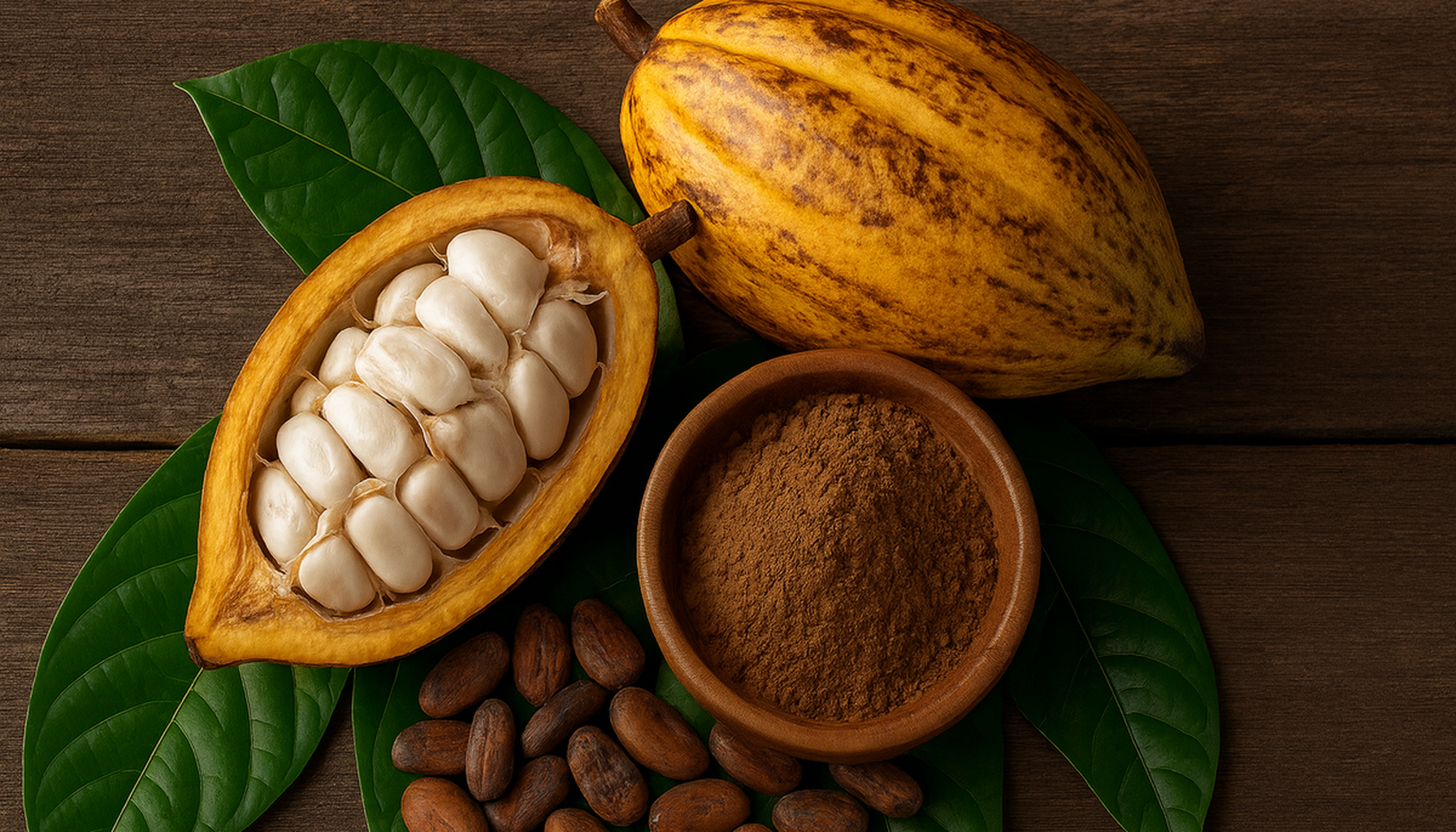
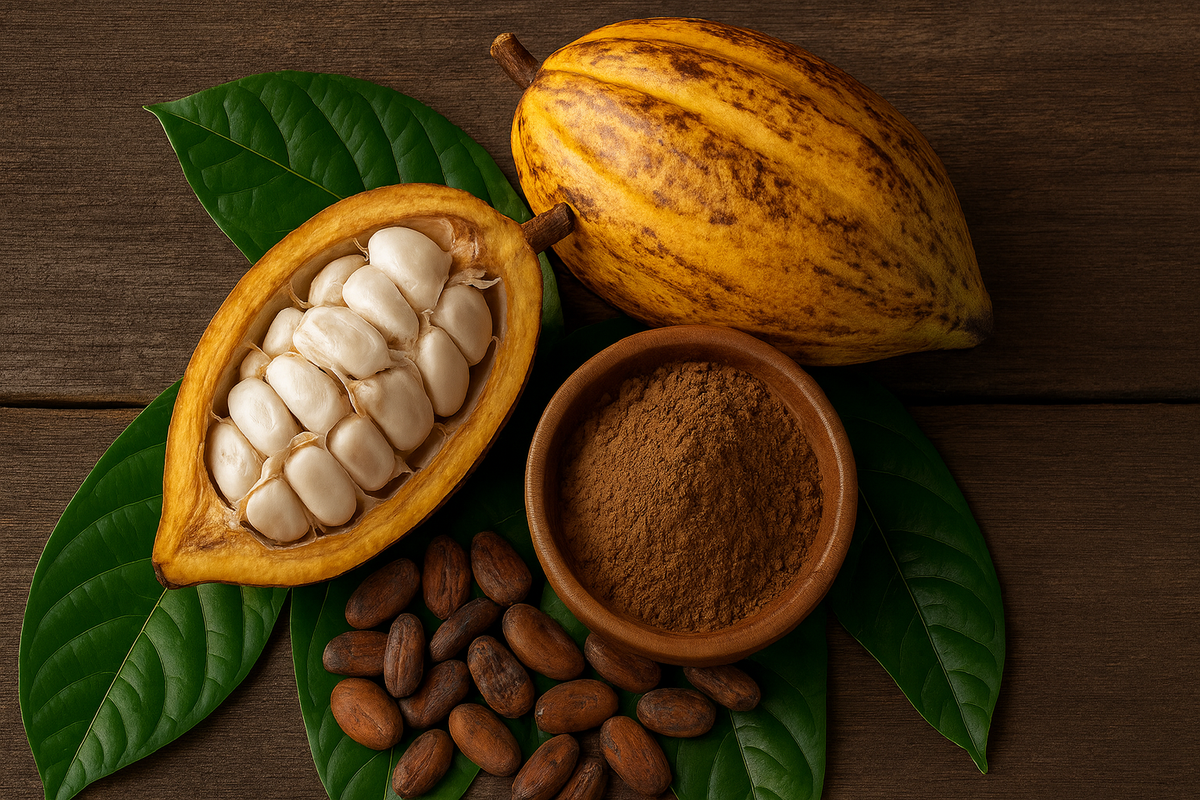
Ivory Coast Slashes Cocoa Farmgate Prices by 57% — and Your Chocolate Math Just Changed
Ivorian smallholder farmer with cocoa bag
Ivory Coast and Ghana grow over 60 percent of the world's cocoa. When global futures prices dropped, exporters refused to pay the high fixed minimum the Ivorian government had set, and roughly 200,000 tons of beans sat unsold in warehouses. The government's fix, effective March 1: cut the farmgate price — the guaranteed minimum farmers receive — by about 57 percent, effective March 1.
On paper, this restores "competitiveness." On the ground, it means smallholders already squeezed by aging trees and erratic rainfall have far less cash for fertilizer, labor, or feeding their families. The phrase to understand is fixed price meets falling market: whenever a government-set floor drifts too far from what buyers will actually pay, someone eats the loss. It is almost never the multinational.
Meanwhile, Nestlé is quietly hedging the entire cocoa question. The company launched a snack line using ChoViva, a cocoa-free chocolate alternative made from fermented grains by food-tech firm Planet A Foods. The flavor reconstruction relies on Maillard browning chemistry — the same sugar-meets-amino-acid reaction that gives a seared steak its crust — and fermentation, rather than cocoa extracts. When one of the world's largest chocolate companies starts moving volume through a cocoa substitute, it tells you where their procurement teams think prices are heading. Watch smaller origin-specific chocolate brands: if they don't talk openly about raising prices or reworking sourcing, ask what corners got cut.
The Fermented Foods Map Is Wildly Incomplete — Scientists Just Found 320 Unknown Bacterial Species in Your Kimchi

Glass jars of kimchi in fermentation
Fermentation is supposed to be well understood. Humans have been doing it for millennia. So it was a genuine surprise when Dr. Paul Cotter's lab at Teagasc — Ireland's agriculture and food development authority — ran metagenomics across 2,500 fermented food samples and found 320 completely unknown bacterial species that bioinformaticians had never encountered before, plus 211 partially unknown ones alongside 613 known species.
Metagenomics sequences all the DNA in a sample rather than relying on what you can grow in a petri dish. Traditional culture-based methods are biased: the microbes that grow fastest dominate, and slower-growing organisms sometimes never get detected at all. What this means practically is that the flavor, safety, and health properties of fermented foods we've eaten for generations are still being mapped.
This isn't just academic cataloging. The FAO recently convened experts on "innovative fermentation" — including precision fermentation — emphasizing the need for clear regulation as microbes move from artisanal to industrial uses. And consumer demand is pulling from the other direction: Pinterest data shows cabbage-ferment searches up 25 percent, dumpling searches up 110 percent, and Amazon cabbage sales climbing roughly 12 percent year-over-year (all year-over-year, as of March 2026). The bench science, the policy rooms, and the home kitchen are all converging on the same realization: we know far less about what's actually in our ferments than we thought, and that gap is about to matter commercially.
If you make or buy ferments, taste more often and log batch conditions. The microbes are more diverse than the labels imply.
Winter Wheat Is Freezing, Breadbaskets Are Drying Out, and the WASDE Report Drops Monday

Frosted winter wheat field without snow
Bread bakers and pasta makers, file this away. The USDA projects U.S. wheat production for 2026/27 at 6 percent below last year — 1,860 million bushels — on reduced harvested area and lower yields. Six percent doesn't sound like a crisis, but wheat markets are sensitive instruments, and thin global stocks amplify small shortfalls into real price moves.
The physical picture is worse than the numbers suggest. The U.S. Great Plains — the heart of hard red winter wheat, which is what most commercial bread is made from — lacks the protective snow cover that insulates dormant plants from deep freezes. The risk is "winterkill," where frost damages the crop before spring growth even begins. Simultaneously, global crop monitors flagged concurrent drought stress in the U.S. Southeast, East Africa, and South America's maize belt. Seeing significant moisture deficits in multiple major agricultural zones at once reduces the ability of one good harvest to offset another poor one.
Futures are already moving: hard red winter wheat gained 29¾ cents on the week, soft red winter up 24¾. The March WASDE report — the USDA's monthly global crop scorecard — dropped March 10. Any revision to global wheat stocks will ripple through flour pricing within weeks. And layered on top, soybean oil futures hit a two-year peak intraday in early March as biofuel mandates divert cooking oil from food to fuel, with the FAO's vegetable oil price index jumping 3.3 percent in February. If you fry for a living, run sensitivity checks on your oil line items now.
Vinegar Is the Ingredient of the Year — and the Science Behind It Is Better Than the Hype
Before you roll your eyes at another trend declaration, stay with this one. NYT food writer Kim Severson has declared vinegar the ingredient of 2026, and the case is more interesting than the headline.
Here's the actual mechanism: acetic acid — what makes vinegar vinegar — is one of the most powerful tools for balancing flavor because it interacts directly with your brain's perception of sweetness, richness, and salt. When you taste something fatty or sweet, your palate fatigues quickly. Acid resets it. That's why a squeeze of lemon on fried fish tastes miraculous — it's not adding flavor so much as removing the sensory static that prevents you from tasting the fish. Chefs have always known this. Some are now spritzing warm cookies with thyme vinegar to give them balance.
What's actually happening is that home cooks are catching up to what professional kitchens treat as basic doctrine: the finish matters as much as the cook. A $12 bottle of aged sherry vinegar will do more for your weeknight cooking than a $200 pan. Fruity vinegars — plum, tamarind, calamansi, elderflower — are gaining ground because they deliver complexity alongside acidity. Watch for specialty vinegar producers to get the spotlight that natural wine and artisan spirits got in previous cycles.
This connects to a parallel revival: garum, the ancient Roman fermented fish condiment, is enjoying a chef-driven comeback. Fermentation breaks fish proteins into free glutamates that hit umami receptors directly, delivering deep savory lift without just adding salt. Commercial garum and its Italian cousin, colatura di alici, are starting to ship for home cooks. If you can source a bottle, a quarter-teaspoon stirred into a dressing or butter sauce is an immediate flavor lever — the same glutamate mechanics restaurants use, now available in yours.
Michelin Redraws the Map — and Someone's Paying for It
The Michelin Guide had a busy winter, and the pattern is more interesting than any single star. South Korea's 2026 Seoul & Busan selection hit a record number of new and promoted stars — 46 total — signaling that contemporary Korean cuisine has moved firmly into the global fine-dining mainstream. Poland got its first-ever nationwide guide, expanding inspection beyond a few cities to the whole country. In the U.S., coverage is pushing into Colorado statewide, the American South, and the Southwest. The Philippines — Manila and Cebu — joins later this year.
In London, Bonheur by Matt Abé earned two stars within three months of opening in the former Le Gavroche space — an unusually rapid rise. That speed of recognition signals inspectors' confidence in a new generation, but also that iconic restaurant real estate carries its own gravitational pull.
Here's the crucial detail most coverage skips: cities and regions sometimes pay to be included. Colorado cities reportedly paid between $70,000 and $100,000 plus state support; Atlanta paid an estimated $1 million over three years. The guide's expansion is partly a tourism-marketing play, not purely editorial. That doesn't invalidate the stars, but it means the map is being drawn by economic incentives as much as by culinary merit. Meanwhile, closures like Club Gascon and Bibendum in London remind us that stars don't insulate you from rents.
⚡ What Most People Missed
The nitrite backlash is reshaping your bacon aisle. UK supermarkets are reporting falling demand for traditionally cured bacon as cancer fears push shoppers toward "nitrite-free" alternatives — which often use cultured celery powder, a natural nitrate source that converts to the same compounds consumers are trying to avoid. Nitrites do more than add color; they inhibit botulism and contribute cured flavor. If demand forces reformulation, expect more labeling complexity and possibly shorter shelf life.
AI-designed sweet proteins are targeting your taste receptors from scratch. A computational biology preprint describes using de novo protein design to build molecules that latch onto the human sweet taste receptor (TAS1R2) — not mimicking sugar's chemistry, but engineering a new lock for the same key. It's years from your grocery shelf and not yet peer-reviewed, but it shows where the "better-for-you" industry wants to go: custom-built molecules tuned to your tongue rather than your pantry.
Seattle's Sophon investigation is a labor canary. The buzzy modern Cambodian restaurant is under investigation by Washington's Department of Labor & Industries over alleged wage theft. This isn't about one bad actor — it's about the economics of running ambitious restaurants on tight margins. Ethical eating has to include who's getting paid in the back, not just who grew the carrots.
NOAA's first 2026 tuna landings update is the spreadsheet behind your sushi prices. The quota tracker for Atlantic bigeye, albacore, yellowfin, and skipjack shows how fast fleets are chewing through annual limits. When landings run hot early, managers tighten mid-season — and your favorite chirashi quietly swaps species.
The EU just moved to rebalance farmer bargaining power. A new agreement requires clearer written contracts and simplified rules for producer organizations — a structural attempt to stop concentrated buyers from extracting all the margin. Watch whether it translates into real farmgate price improvements or just better paperwork.
📅 What to Watch
- If cocoa futures stay depressed while farmgate prices crater, it means short-term stable chocolate built on long-term farmer attrition — expect either "ethical premium" bars or supply crunches within two years.
- If the March 10 WASDE report revises global wheat stocks downward, commercial bakers with thin margins should hedge or reformulate now; partial flour blends and enzyme additions are cheaper than absorbing a futures spike.
- If big beverage companies start name-dropping AI-designed sweet proteins in investor calls, the next sweetener wave will be branded as "protein" and "natural" — forcing regulators to redraw the line between food and engineering.
- If La Niña fades into El Niño by late summer (climate monitors say probability is rising), coffee, rice, and palm oil sourcing plans need stress-testing now — those commodities move months before menus do.
- If Marcus Samuelsson's multi-day chef residency model books out, expect more flagship kitchens to offer rotating residencies as low-capital incubators — changing who gets to be a "name" chef without fronting a million-dollar buildout.
A bottle of good vinegar, a jar of fermenting cabbage, and a close read of a USDA report. That's the week in three objects. Use all three.