Lyceum Weekly — Mar 11, 2026
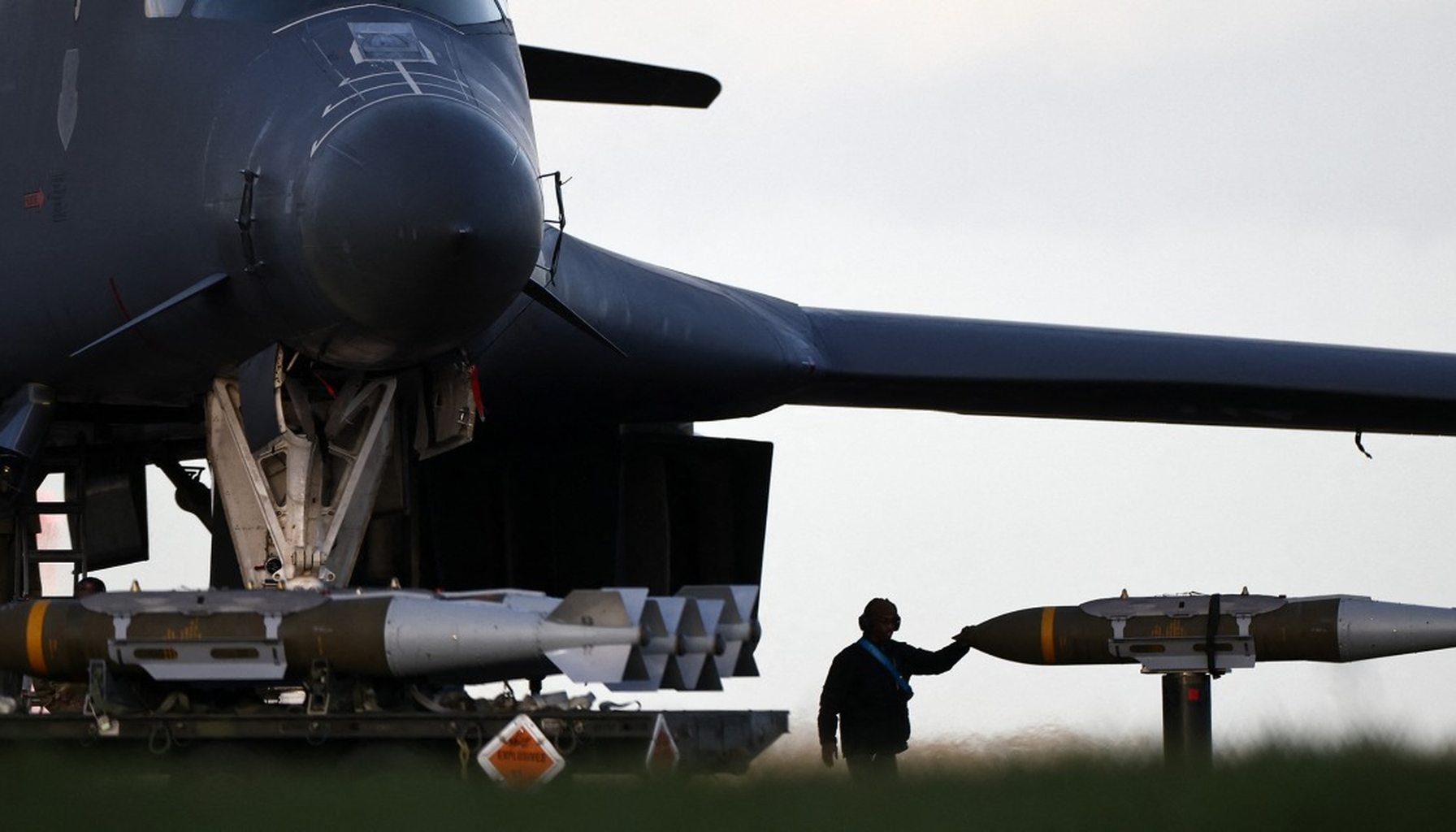
Photo: lyceumnews.com
Week of March 11, 2026
The Big Picture
A twelve-day-old war is metastasizing in ways nobody priced in. Operation Epic Fury — the U.S.-Israeli campaign against Iran — started as a military story, became an energy story, and this week became a tech-infrastructure story, a healthcare story, a constitutional-law story, and a fiscal crisis, all at once. The thread connecting everything: the costs of this conflict keep arriving in categories the people who launched it didn't seem to have a spreadsheet for.
This Week's Stories
The Bill Comes Due — and It's Staggering
The U.S. burned through more money in six days of this war than the entire annual budget of the Department of Education.
Defense Department officials told senators in a closed-door briefing that the first six days of Operation Epic Fury cost more than $11.3 billion. At least one senator believes the real number is higher, since the figure excludes full munitions replacement costs. A more granular breakdown leaked earlier in the week: the Pentagon used $5.6 billion in advanced munitions in just the first two days — Tomahawk cruise missiles, advanced interceptors — before switching to cheaper laser-guided bombs.
The math is punishing. At roughly $1 billion a day, the war could push toward $215 billion if it drags through September 2026, as some officials have warned. The Trump administration is now expected to send Congress a supplemental spending request worth potentially tens of billions — a request certain to face fierce opposition from Democrats whose efforts to restrain further military action have so far come up empty.
But the dollar figure is only part of the economic story. The Strait of Hormuz — the narrow passage through which roughly a fifth of the world's oil travels — has been effectively closed since March 1, 2026. And even if it reopened tomorrow, ships wouldn't sail through. War-risk insurance premiums from Lloyd's of London and the major reinsurers have made commercial transit economically impossible, not just physically dangerous. Most tankers are now sailing around Africa, adding two to three weeks to voyage times. The insurers' withdrawal has contributed to a de facto financial blockade amid cancellations of coverage by risk assessors in London, turning tankers into un-financeable liabilities.
Layer that onto a February jobs report showing the U.S. lost 92,000 jobs (February 2026), Brent crude swinging between $85 and $120 per barrel in a single week, and the average U.S. retail gasoline price rising 47 cents per gallon over seven days. The economy has moved from slowdown risk to stagflation risk — the ugly combination of rising prices and falling growth that the Fed has almost no good tools to fight.
Iran Puts Silicon Valley's Middle East on a Hit List
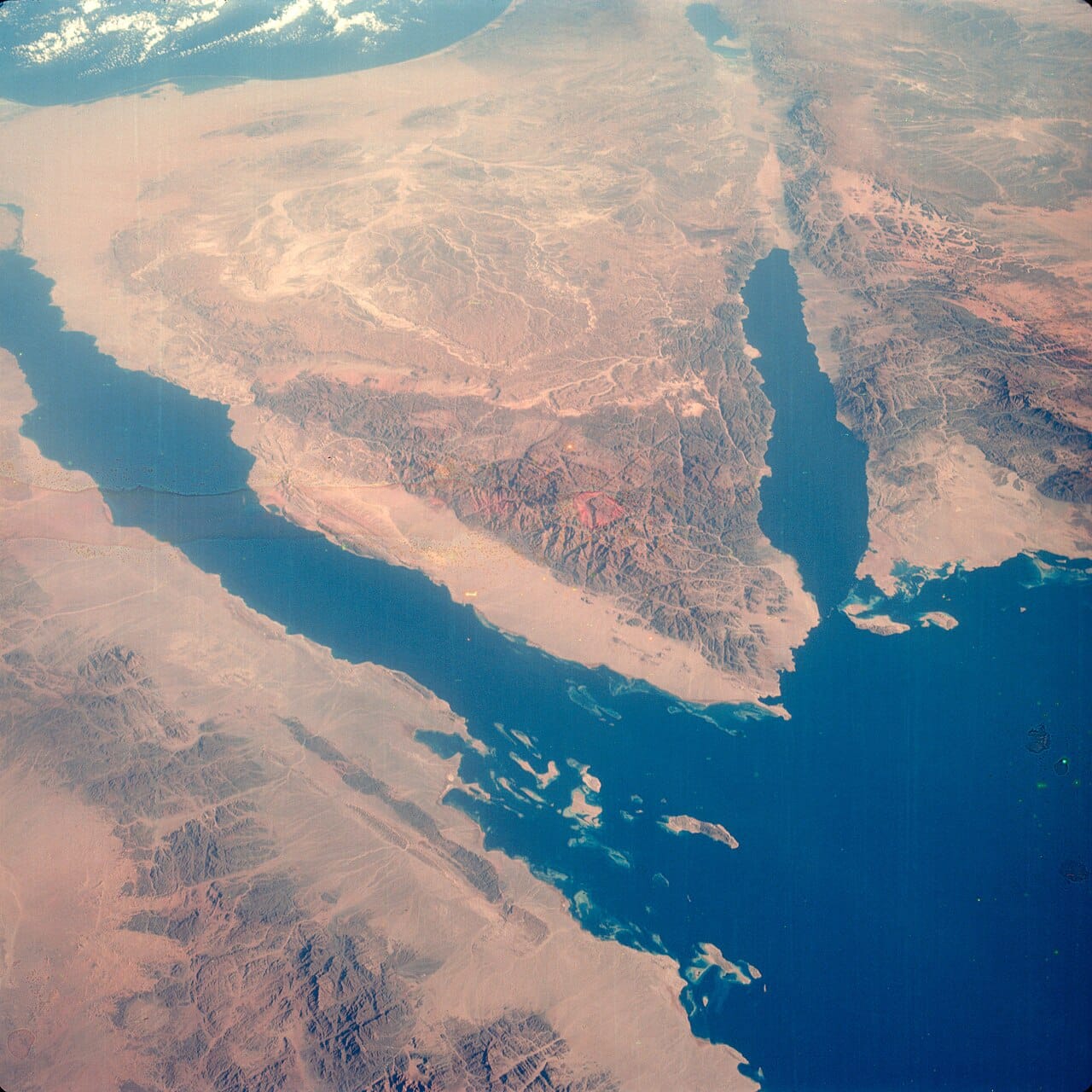
Your company's cloud backup, your bank's payment processing, a meaningful slice of global enterprise software — a lot of it runs through data centers in the Gulf that Iran just formally designated as military targets.
Iran's state-affiliated Tasnim News Agency published a list titled "Iran's New Targets" naming regional offices, cloud infrastructure, and data centers connected to Google, Amazon, Microsoft, Nvidia, IBM, Oracle, and Palantir. These weren't vague threats — the targets were presented in three slides on Telegram with vendor names, facility types, locations, and descriptions of their work. The publication came amid a U.S.-Israeli strike on an Iranian bank; a spokesperson for Iran's joint military command warned that Tehran now has "free rein" to strike financial institutions connected to the U.S. and Israel.
Iran isn't bluffing. It has already damaged Amazon Web Services facilities in the UAE and Bahrain, causing outages for banking, payments, and consumer services across the region. The phrase Tehran is using — "infrastructure warfare" — is doing a lot of work. It's a public announcement that the rules of this conflict have changed: cloud regions, subsea cables, satellite uplinks, and chip fabrication facilities are now declared theaters of war.
The stakes go beyond the immediate conflict. OpenAI is building a 10-square-mile AI campus in the UAE; Microsoft is reportedly planning $15 billion in UAE investment over three years. The Gulf was supposed to be the next frontier of American tech expansion. It just became a war zone.
And the threat isn't only kinetic. This morning, Stryker — a Fortune 500 medical technology giant that makes surgical equipment and orthopedic implants — suffered a devastating wiper attack (a cyberattack that permanently destroys data rather than holding it for ransom) carried out by an Iran-linked group called Handala. The attackers claimed to have wiped more than 200,000 servers across 79 countries. Most alarming: a system called Lifenet, which emergency responders use to transmit patient ECG data to hospitals, went non-functional across Maryland. The Iran war started as a military story, became an energy story, and is now, quietly, a healthcare infrastructure story.
Silicon Valley vs. the Pentagon — and Claude Lost

There's a new fault line in the AI industry, and it doesn't separate big companies from small ones — it separates the ones willing to build tools that can kill from the ones that aren't.
The Pentagon barred Anthropic — maker of Claude, one of the most capable AI systems in the world — from its supplier network after the company refused to allow its technology to be used for autonomous weapons or mass surveillance. The ban labeled Anthropic an "unacceptable supply chain risk" and gave commanders roughly 180 days to purge it from their networks. The White House is reportedly preparing an executive order that could extend the blacklisting across all federal systems.
Anthropic didn't take it quietly. The company filed suit against the U.S. government, arguing the ban was retaliation for its ethics stance — a First Amendment argument courts haven't fully wrestled with in an AI context. Microsoft has publicly signaled support. Human Rights Watch warned of a "dangerous slide" toward fully autonomous killing systems, framing corporate contracts as the de facto limiters of lethal AI policy.
This case will decide whether AI companies have a right to set ethical limits on how their technology is used. If Anthropic loses, every AI vendor faces a binary choice: accept all government use cases, or forfeit federal contracts entirely. The Pentagon is already quietly treating OpenAI and a small set of other vendors as "acceptable" military partners — a dynamic that could reshape market leadership in defense AI almost overnight.
AI on the Kill Chain: A Misclassified School and 175 Dead
AI is already in the room when generals pick targets — and this week showed what happens when it's wrong.
New reporting from the Washington Post suggests a U.S. target list in Operation Epic Fury may have misidentified an Iranian elementary school as a military site, contributing to a strike that killed 175 people, most of them children. The system at the center is part of a broader mosaic of machine-learning tools — descendants of initiatives like Project Maven — used to sift drone footage and satellite imagery into suggested targets at machine speed and scale.
Officials stress that humans still "make the final call." But in practice, those humans are leaning on algorithm-generated dashboards in the fog of a fast-moving war. A mislabeled cluster of pixels becomes a dot on a map, then a green-lit objective. The question is no longer whether AI will be part of targeting — it already is. The question is whether it will stay a decision aid or effectively become the default decision-maker. Watch how the internal Pentagon investigation describes "human oversight" and whether the House Armed Services Committee and the Senate Armed Services Committee hold full-committee oversight hearings (full-committee oversight hearings; dates to be determined) before more autonomous tools come online.
Europe Starts Breaking Ranks
The Western alliance isn't cracking loudly — it's cracking quietly, one diplomatic formality at a time.
Spain permanently withdrew its ambassador to Israel on Wednesday — not a protest recall, but a formal termination. Diplomatic representation will now be handled by a chargé d'affaires, a lower-ranking official whose status is meant to reflect downgraded relations. Prime Minister Sánchez also refused to allow U.S. military forces to use air bases in Spain.
Spain didn't act in a vacuum. Earlier this week, Denmark's intelligence service named the United States as a potential interference threat to a NATO ally's election — a sentence that would have been unthinkable five years ago. Meanwhile, U.S. officials said Russia is sharing real-time intelligence on American military positions with Iran and assisting with drone targeting tactics — active assistance to an enemy combatant during a live shooting war. During a Trump-Putin phone call, Trump reportedly offered to ease some oil sanctions on Russia.
The coalition that framed itself as the democratic West is now visibly fractured over how far to follow Washington into this war. And, amid a Trump administration simultaneously softening on Russia and fighting Iran, officials warn the U.S. may have less leverage to push for a Ukraine settlement that Kyiv can accept.
⚡ What Most People Missed
- Making a five-second AI video uses as much electricity as running a microwave for an hour. A new study found that video generation requires 1,000 to 3,000 times more energy than text generation. A University of Michigan team built an open-source power meter showing that energy consumption across models can vary by a factor of 300 for the same task — meaning the difference between "sustainable AI" and "grid-stressing AI" is architecture, not ambition.
- Entry-level hiring is quietly shrinking. New research shows that since late 2022, hiring rates for workers under 25 in AI-exposed occupations have declined, suggesting the early rungs of career ladders are disappearing rather than being reshaped by layoffs.
- The U.S. just aimed AI export controls at its own allies. The Commerce Department confirmed new chip export rules that sweep up roughly 18 allied countries, not just adversaries. Anything above a certain performance threshold now needs pre-authorization, shifting the chokepoint in AI from algorithms to access to industrial-scale compute.
- A report indicates frontier compute is consolidating. A reported tranche of Google TPUs — over a gigawatt of compute capacity — highlights that national-scale AI infrastructure is concentrating in a tiny club of firms. Those same facilities just appeared on an Iranian target list.
📅 What to Watch
- If the Pentagon's internal report on the Iranian school strike acknowledges AI-driven targeting errors, it will likely force new operational constraints on automated systems and prompt full-committee oversight hearings in the House Armed Services Committee and the Senate Armed Services Committee (full-committee oversight hearings; dates to be determined) that reshape procurement rules for every defense AI vendor.
- If the White House signs the executive order blacklisting Anthropic across all federal systems, it will make "no-weapons" clauses commercially radioactive and force companies to choose between rescinding no-weapons contract language or risking loss of federal contracting eligibility.
- If Iran carries out a kinetic strike on a named tech company's Gulf infrastructure, beyond the AWS incidents already reported, expect a mass pause in Middle East tech investment that reverses years of expansion and forces hyperscalers to redesign their global data-center footprint around wartime resilience and survivability.
- If next week's CPI print (the March 2026 release) comes in hot on top of February's 92,000-job loss, the stagflation narrative will move from economist concern to market reality, and the Fed could face a near-impossible choice — hiking rates into slowing growth or accepting higher inflation — complicating Treasury financing and term-premium dynamics.
- If major cloud providers announce new, geographically distributed data-center builds away from current Gulf hotspots, it will signal that hyperscalers now treat AI data centers as national-security infrastructure, increasing capital costs and prompting host governments to attach security and operational strings to approvals and investment.
- If any additional EU member states restrict U.S. military basing rights, the Western alliance fracture becomes structural — producing tangible operational constraints on forward basing, rapid deployment timelines, and interoperability for joint exercises.
A risk assessor in London canceling an insurance policy, a mislabeled pixel on a satellite image becoming a dead school, and a paramedic in Maryland staring at a blank ECG screen because a hacker group in Tehran decided to make a point. The week's most consequential AI development wasn't a product launch — it was a constitutional lawsuit filed by a company that said "no" and got blacklisted for it, which means the most important question in technology right now is being decided by the same government that just demonstrated what happens when the answer is "yes."
Stay sharp. —Lyceum