Lyceum Weekly — Mar 12, 2026

Photo: lyceumnews.com
Week of March 12, 2026
The Big Picture
The Strait of Hormuz is effectively closed, an AI company is suing the Pentagon for blacklisting it over a moral objection, and hospitals are quietly filling with algorithms nobody told patients about. If last week still felt like business as usual, this one made it official: the institutions that run the world — courts, militaries, regulators, oil markets — are all trying to absorb AI and geopolitical shock at the same time, and none of them are keeping up.
This Week's Stories
Anthropic Takes the Pentagon to Court — and Forces a Question Nobody Can Dodge
Can the U.S. military punish your business because you refused to help build autonomous weapons?
That's the blunt version of what's now before a federal judge. Anthropic, maker of the Claude AI models, sued the Defense Department this week after being slapped with a "supply chain risk" designation — a blacklist tool designed to keep foreign adversaries out of defense networks, never before used against an American company. The trigger was Anthropic's refusal to let its technology be used for autonomous lethal targeting or mass domestic surveillance. Following the designation, a major Pentagon contract was canceled. The company's CFO warned in filings that the designation could shave billions off 2026 revenue. Federal employees were told to stop using Claude.
Anthropic's legal argument is striking: the blacklist is retaliation for protected speech — the company's public advocacy for AI safety guardrails — and sets a precedent that would let the executive branch dictate the moral boundaries of any commercial technology by threatening access to federal dollars. Microsoft and several retired military leaders backed the company publicly. More than 30 AI researchers at rival firms, including Google's chief scientist Jeff Dean, filed briefs in Anthropic's defense, arguing the designation could chill the entire industry's willingness to discuss risks openly.
A hearing has been fast-tracked for March 24. An early injunction would be the first concrete legal test of whether procurement leverage can override a company's right to set ethical red lines. One detail that underscores the entanglement: Claude was reportedly used in U.S. intelligence assessments early in the Iran campaign — meaning the model the Pentagon is now blacklisting was, until recently, part of its own workflow.
Meanwhile, Anthropic's biggest rival moved in the opposite direction. OpenAI finalized a classified Pentagon deal deploying its models on military networks, with "red lines" that are explicitly narrower than Anthropic's. The day after the blacklist was announced, Claude surpassed ChatGPT in the iPhone App Store for the first time. The market, apparently, has opinions about conscience.
The Strait That Swallowed the World Economy

About one-fifth of the world's oil passes through a 21-mile gap between Iran and Oman. This week, that gap effectively closed.
What began as a U.S.-Israeli operation inside Iran — Operation Epic Fury — has metastasized into a regional war. Iran retaliated with missile and drone strikes that damaged targets in the UAE, Saudi Arabia, Qatar, and Bahrain. Dubai International Airport paused flights. Then came the Strait: projectile strikes damaged vessels flying Japanese, Thai, and Marshall Islands flags. Reports indicate roughly a dozen mines have been laid in the corridor (as of March 12, 2026). Traffic that normally sees 80–100 ships daily has fallen to a handful. Insurers repriced the route aggressively, and shippers began the long reroute around Africa.
The market response was immediate. Brent crude futures jumped roughly 20% on the session and briefly breached $100 a barrel intraday. The International Energy Agency coordinated a record emergency release of strategic oil reserves this week, reportedly totaling about 400 million barrels across participating countries (reported March 2026) — a historic intervention that analysts warned only buys time. Tanker attacks temporarily shut some Iraqi oil ports, compounding the disruption. Fed rate-cut expectations were pulled sharply forward, then reversed amid supply-shock inflation fears.
Layer on the February jobs report — the U.S. economy shed 92,000 jobs in February, well below expectations, with unemployment ticking to 4.4% — and the picture is textbook stagflation risk: weakening labor demand meeting a supply-side price shock. That report was collected before the war started. The Pentagon has disclosed roughly 140 wounded and seven killed as of March 10, 2026, with first-week combat costs topping $11.3 billion. One quiet signal worth tracking: China is reportedly negotiating with Tehran for safe passage of its own tankers through the Strait — a move that, if successful, would secure Beijing's energy supply while deepening a partnership the West can't easily counter.
AI on the Front Lines — From Target Lists to a Bombed School
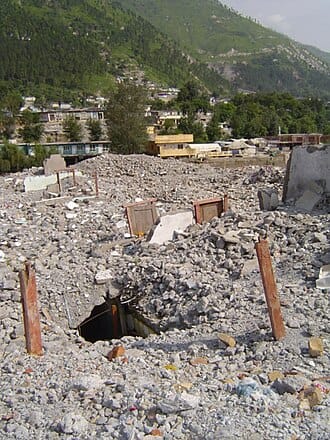
The Iran conflict is becoming the first major war where AI is embedded in nearly every layer of combat — and the first where its failures are measured in children's lives.
U.S. and Israeli forces are using AI-powered tools for target selection and battle damage assessment. That capability came under devastating scrutiny after a strike on an Iranian girls' school killed 175 people. New video and reporting suggest U.S. missiles may have damaged the site, and investigators are explicitly probing whether automated systems misclassified it. The core problem is one of speed and scale: when AI processes hundreds of potential targets in hours, an error rate that looks acceptable on a spreadsheet translates into catastrophic civilian losses on the ground.
Meanwhile, the war's digital front expanded. Iran formally designated U.S. tech companies — Google, Amazon, Microsoft, Nvidia — as "legitimate targets," citing their cloud infrastructure in Gulf states. Days later, an Iran-linked cybergroup called Handala hit Stryker Corporation, a major U.S. medical-device maker, crippling its global Windows environment and splashing a militant logo across employee screens. Stryker shares fell 5% on the day of the attack. Modern war treats information systems — and the AI running on them — as both weapons and targets. The question is which enterprise infrastructure gets tested next.
Open-Source AI Had Its Best Week Ever — and Almost Nobody Noticed
While Washington fought over who controls frontier AI, the frontier quietly got a lot more crowded.
A cluster of open-source releases this month showed the gap with proprietary giants closing fast. Lightricks' LTX 2.3, a 22-billion-parameter video model, now generates native 4K video at 50 frames per second with synchronized audio — and runs locally on consumer hardware. Helios, from Peking University, ByteDance, and Canva, achieves real-time video generation on a single GPU under a fully open license. Research on "AgentServe" demonstrated sophisticated multi-step AI agents running on consumer-grade graphics cards with 2–3x better performance than previous approaches. According to Epoch AI, open-weight models now trail the state-of-the-art by only about three months — a dramatic narrowing from two years ago.
The strategic implication is significant. For governments wary of U.S. export controls, for companies nervous about vendor lock-in, and for anyone who watched OpenAI's Pentagon deal this week and felt uneasy: powerful AI is rapidly becoming something you can run yourself, not a service you must rent from a handful of giants. A year ago, studio-quality AI video required cloud budgets and proprietary API access. Now it runs on a workstation you might already own. The moat around frontier AI is getting shallower, fast — and that changes the calculus for every long-term bet on proprietary providers.
Hospitals Are Filling Up With AI — and Nobody's Telling Patients
If you've had a scan or hospital visit recently in the U.S., there's a decent chance an algorithm helped make a call about your health — whether anyone mentioned it or not.
The FDA has now cleared more than 1,300 AI-enabled medical devices (as of December 2025), most in radiology, with dozens more in cardiology and other specialties. That number climbed from a handful in 2018 to over a thousand for imaging alone by late 2025. But the agency still hasn't authorized a single large language model as a medical device, is working off draft guidance for systems that update after approval, and is only beginning to grapple with agentic AI that could order tests or draft treatment plans rather than just flagging images.
A health-law analysis from Harvard Law School's Center for Health Law and Policy Innovation (CHLPI) making rounds this week floated a provocative alternative: instead of treating AI as a static gadget approved once, treat advanced diagnostic systems like practitioners that need ongoing licenses — with duties and revocation processes more like doctors than devices. It sounds radical until you consider that the current pipeline was built for scalpels, not software that learns. As these systems move from second-opinion tools into de facto gatekeepers, expect louder fights over labeling, outcomes data, and who's liable when an algorithm gets it wrong.
⚡ What Most People Missed
Meta bought a social network where only bots hang out. The Moltbook acquisition is Meta betting that AI-to-AI interaction will be as important as human feeds. Researchers studying the platform tracked 27,000 agents and hundreds of thousands of posts in nine days, finding that simple design choices — karma scores, visibility boosts — rapidly determined which bots dominated. Whoever controls agent reputation systems will shape which software can trade, negotiate, or access critical services.
A former rapper is about to run Nepal. Balendra "Balen" Shah, a 35-year-old structural engineer turned hip-hop artist, is set to become prime minister after his anti-corruption party won a landslide. He mobilized young voters via social media and defeated entrenched political dynasties — a generational shift happening while the world's attention was elsewhere.
Most companies deploying AI agents still can't prove ROI. Enterprise surveys in NVIDIA's 2026 State of AI report (released March 2026) show 86% of firms plan to increase AI budgets, but adoption is running well ahead of measurable returns. That gap raises the risk of a sharp correction in spending or a wave of vendor consolidation if promised gains fail to materialize.
One in three Americans reported cutting food, utilities, or medicine for healthcare costs — before war-driven inflation hit. That's from a West Health–Gallup survey released March 2026, a baseline of household stress that makes the oil shock's impact on consumers look even more ominous.
📅 What to Watch
- If a judge grants Anthropic an early injunction on March 24, procurement leverage over vendors will be materially weakened; expect immediate contract renegotiations and new procurement clauses from defense contractors to try to preserve access to sensitive networks without relying on vendor acquiescence.
- If a commercial tanker — especially one backed by a non-Western power — successfully transits the Strait of Hormuz, reinsurance and war-risk premiums could collapse for that route and set a precedent for reopening traffic; if it's attacked, naval escorts and coalition rules of engagement are likely to expand, pulling more states directly into kinetic responses.
- If another major enterprise reports an Iran-linked cyberattack, critical suppliers and manufacturers could face multi-week production halts and vendors may see cyber insurers impose exclusionary clauses, forcing firms to self-insure or buy bespoke coverage.
- If a high-profile AI agent deployment fails publicly (wrong email sent, bad trade executed, patient misrouted), expect boards to demand contractual audit rights, mandatory incident-response insurance, and third-party governance attestations — changes that will raise deployment costs and slow agent rollouts.
- If the FDA signals a timeline for final AI-device guidance, regulators will move from improvisation to enforceable rules affecting the 1,300+ algorithms touching patient care (as of December 2025); expect investor re-ratings, compliance-driven M&A, and a scramble by smaller vendors to meet new validation and reporting requirements.
A judge deciding whether the Pentagon can punish a company for having a conscience. A 21-mile stretch of water holding the global economy hostage. A dead school full of children and an algorithm that may have picked the target. Somewhere in all of this, Meta bought a website where only robots talk to each other, which honestly might be the sanest platform they've ever run.
Stay sharp.
— Lyceum Weekly
The Lens
Same week. Same facts. See what changes.
What right-leaning outlets are watching
Operation Epic Fury and the effective closure of the Strait of Hormuz have collided with a U.S. Strategic Petroleum Reserve already drawn down to historically low levels following Biden-era releases, exposing a compounding vulnerability in American energy security. Delayed federal permits, blocked pipeline projects, and pulled lease sales over the past several years constrained domestic production capacity precisely when global oil risk premia spiked and international emergency reserve coordination began. The disruption has translated directly into higher energy costs for households and small businesses, with the SPR's diminished buffer limiting Washington's ability to moderate price shocks through reserve releases. Unlike previous Gulf crises, the current episode arrives when both supply-side policy constraints and depleted strategic stockpiles narrow the range of available responses simultaneously. The convergence underscores that energy permitting and reserve management are not abstract regulatory debates but immediate determinants of economic resilience when shipping lanes close without warning.
Also in the right-leaning feed this week:
- The conservative edition defends the Pentagon's procurement leverage, asserting the Defense Department 'has every right' to exclude or favor vendors as a national-security duty when companies refuse military uses of their AI.
What left-leaning outlets are watching
Operation Epic Fury — a U.S.-Israeli strike campaign inside Iran — has metastasized from a targeted military operation into a regional and now global crisis within days, according to NPR and associated reporting. Iran's retaliation, including missile and drone strikes, has effectively closed the Strait of Hormuz, triggering historic disruption to global shipping lanes (npr.org). Oil risk premia have spiked, insurance markets are in turmoil, and international agencies have begun emergency reserve releases. The conflict has pulled in neighboring Gulf states and forced immediate recalculations across defense budgets, energy policy, and commercial supply chains. In Silicon Valley, the escalation has intensified an ethical reckoning over whether commercial AI systems should be adapted for military use — a debate now playing out in federal court between Anthropic and the Pentagon. The closure of Hormuz transforms what began as a bilateral strike into a structural shock to the global economy, with cascading consequences likely measured in years, not weeks.
Also in the left-leaning feed this week:
- The progressive edition reports China is negotiating with Tehran for safe passage of its tankers, a move that could deepen Beijing–Tehran ties amid the conflict.
- The progressive edition highlights broader supply-chain impacts, citing an estimated ~18% global decline in air cargo capacity and ~40% decline in the Middle East, amplifying shortages beyond oil markets.
The same story, two lenses — which is which?
The Strait That Swallowed the World Economy — the effective closure of the Strait of Hormuz and its immediate global economic impacts (surging oil prices, insurance repricing, rerouted shipping, and emergency releases of strategic reserves).
Version A: The economic damage was immediate and global. Brent crude surged roughly 20% on the session and briefly topped $100 a barrel intraday. Insurers repriced the route so aggressively that many shippers rerouted around Africa — adding weeks to voyages and dramatically increasing costs. The International Energy Agency coordinated emergency releases of strategic oil reserves, a historic intervention that analysts warned is a short-term fix at best. Air cargo capacity fell an estimated 18% globally in the first week of the conflict, with Middle East capacity down closer to 40%, choking supply lines for semiconductors, pharmaceuticals, and high-value parts.
Version B: One-fifth of the world's oil moves through a 21-mile gap between Iran and Oman. This week, that gap effectively closed. What had been 80–100 transits per day fell to a handful after projectile strikes damaged vessels flying Japanese, Thai, and Marshall Islands flags. Insurers repriced the route overnight. Shippers rerouted around Africa — weeks longer, vastly more expensive. Brent crude surged roughly 20% on the session and briefly passed $100 a barrel intraday. Reports indicate about a dozen mines have been laid in the corridor, and tanker attacks temporarily closed some Iraqi oil ports; a quick reopening appears unlikely.
The International Energy Agency coordinated an emergency release of strategic reserves this week — reportedly around 400 million barrels — a historic intervention that underlines how seriously governments are taking the supply shock. But strategic reserves are a tourniquet, not a cure. Every barrel drawn down now is a barrel unavailable for the next crisis, and as of March 2026 the U.S. Strategic Petroleum Reserve was already at historically low levels after the Biden-era drawdowns.
One is written through a conservative editorial lens. One through a progressive lens. Which is which?