Macro & Markets Weekly — Mar 12, 2026

Photo: lyceumnews.com
Week of March 12, 2026
The Big Picture
The conflict involving Iran and U.S.-aligned forces has effectively disrupted transit through the world's most important oil chokepoint; crude briefly touched $119 intraday, and February's clean inflation print arrived with an expiration date stamped on it. The Fed walks into next week's meeting facing a genuine stagflation trap — inflation rising from energy, jobs falling from everywhere else — and the dot plot it publishes on March 18 will tell us whether officials think they can cut rates this year or whether they've quietly given up. Every sector's planning assumptions about the cost of capital, the price of fuel, and the trajectory of demand are now in play simultaneously.
This Week's Stories
The Strait Is Still the Story — and the Math Is Getting Ugly
Iran's threat to attack any oil tanker transiting the Strait of Hormuz — the narrow waterway carrying 20% of global oil supply — has turned a geopolitical crisis into a physical constraint on the world economy. Gulf Arab states are cutting production not because they want to, but because they're running out of storage space with tankers refusing to sail. Oil spiked to $119 intraday before partially retreating when Trump signaled the operation was "pretty much" complete, but the market isn't buying the all-clear. Brent could reach $135 per barrel if conditions persist four months, according to Rystad Energy.
The scariest number isn't the price today — it's the duration. Even if shooting stops tomorrow, weeks or months of elevated fuel prices are likely as suppliers grapple with damaged facilities, disrupted logistics, and elevated shipping risk. European natural gas prices nearly doubled in the days after Iran-linked drone attacks on Qatari gas facilities, raising fertilizer and food costs across the continent. The G7 is preparing a coordinated strategic reserve release — roughly 400 million barrels across IEA members — but the U.S. SPR sits near multi-decade lows around 415 million barrels. Strategic reserves were designed for short disruptions measured in weeks, not prolonged chokepoint closures. That's a buffer, not a cure.
The second-order effects are already cascading. If oil averages $100 for the rest of the year, gasoline could approach $5 per gallon in Q2, airline fare inflation could spike from 2.2% year-over-year to roughly 20% year-over-year as jet fuel costs pass through, and agriculture prices face the most risk from sustained natural gas increases — a key fertilizer input. For any business model that touches fuel, freight, or fertilizer, this isn't a headline risk. It's already a margin risk.
February CPI: The Last Clean Print Before the Storm

The consumer price index rose 2.4% year-over-year in February, unchanged from January and exactly in line with expectations. Core CPI — stripping out food and energy — posted a 0.2% monthly gain and 2.5% annual rate. On the surface, that's the best kind of inflation report: no surprises, trend intact, the Fed can breathe.
Nobody is celebrating. Economists are calling this "the last clean snapshot" before the energy shock hits the data. February's collection period predates the oil spike entirely. If crude averages $100 for the year, CPI inflation could rise to 3.5% by year-end. Some strategists expect March's print — released in mid-April — to show headline CPI temporarily jumping well above 3% year-over-year as gasoline and jet-fuel passthroughs arrive in full.
There's also a data quality problem most people don't know about. Inflation data from December 2025 through April 2026 is affected by collection interruptions from last fall's 43-day government shutdown. The BLS used a carry-forward methodology for missing observations, and economists say this likely imparts a downward bias on reported inflation until fresh data catches up this spring. The calm 2.4% headline may be partly an artifact of imputation, not actual price behavior. Markets are making rate-cut timing decisions on data that the people who produce it flag as statistically impaired.
📅 The Fed Walks Into a Trap It Can't Escape — March 18 Proves It
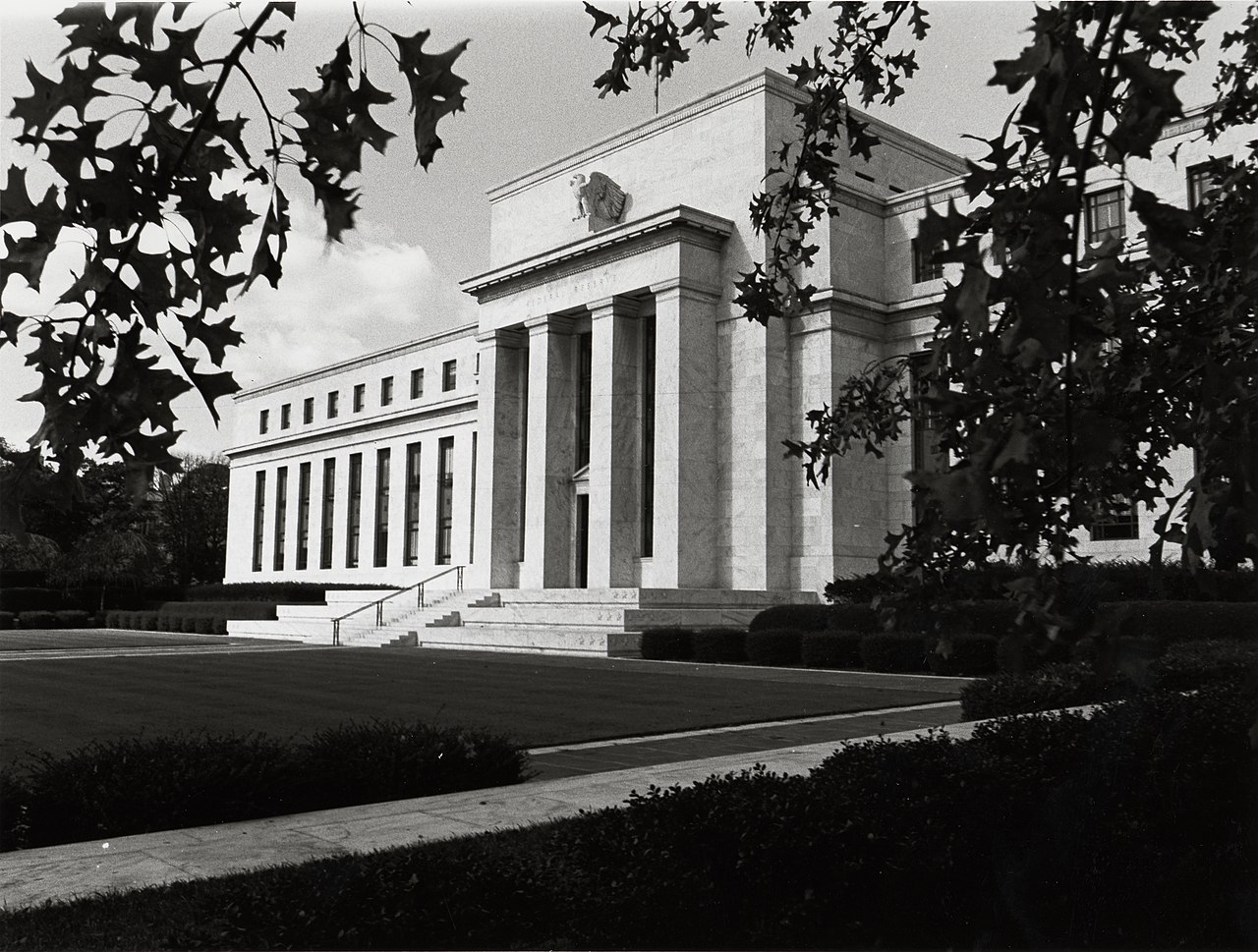
The FOMC meets March 17–18. A rate hold at 3.50%–3.75% is near-certain — CME FedWatch shows 92%+ probability as of March 12. What makes this meeting genuinely consequential is the dot plot, the quarterly chart where every Fed official pencils in where they think rates should go. The last dot plot was drawn before a war with Iran, before a 92,000-job loss in February, and before oil hit $119.
The January minutes revealed a Fed already at war with itself: several participants favored further cuts if inflation declined, several others wanted to hold for an extended period, and several indicated they'd have supported language acknowledging rate hikes could be appropriate. Individual projections for the appropriate fed funds rate at end of 2026 range from 2.13% to 3.88% — a spread that spans from significant cuts to an actual increase. That's not forward guidance; that's institutional uncertainty made public.
The dual mandate — maximum employment, stable prices — has become a contradiction. Core PCE inflation remains around 2.8% year-over-year as of January, well above the 2% target, giving little justification for a cut. But the labor market cracked in February — payrolls showed a net loss of jobs, broad-based across rate-sensitive sectors like construction and business services. Cutting risks re-accelerating inflation; holding risks amplifying the slowdown. The crucial phrase to watch in next week's statement is whether the Fed keeps "both sides of its dual mandate" language or tilts toward emphasizing inflation risks. A hawkish tilt, even without a rate move, would push September cut expectations further out and extend the higher-for-longer environment that punishes long-duration assets, biotech funding, and floating-rate borrowers.
One more complication: Jerome Powell's term expires May 23. Kevin Warsh, the leading replacement candidate, is viewed as more hawkish on monetary policy. A chair transition in the middle of an oil shock and a stagflation threat is a genuine institutional risk that markets haven't priced yet.
Treasury Yields Rose on a Bad Jobs Report. That's a Problem.
In a textbook world, a weak jobs report sends Treasury yields lower — growth is slowing, so investors buy safe assets, and yields fall. This week, the textbook was wrong. Following the payroll decline, the 10-year yield actually rose, moving back toward the mid-4.3% area at session highs, reflecting the market's view that the oil shock's inflationary impact outweighs the disinflationary effect of job losses.
This is a classic stagflation signal: investors demand higher compensation for the risk of sustained inflation even as growth weakens. The 2s10s curve — the spread between 2-year and 10-year yields, a closely watched recession indicator — moved a few basis points toward less inversion as short-term yields retreated on weak jobs data, but that modest steepening is not a growth signal. It's the market rapidly repricing short-end expectations.
The implications are broad and immediate. Higher "risk-free" yields elevate mortgage rates, compress equity multiples (especially for growth stocks whose value depends on distant future cash flows), and increase borrowing costs for corporates — tightening financial conditions even without an explicit policy rate move. The 10-year has averaged 4.3% since July 2023, well above the 2012–2019 prepandemic average of 2.3%. If the dot plot shifts cuts out of 2026 and into 2027, the biotech IPO window stays functionally closed and project IRRs modeled on a meaningful rate decline this year need to be rerun.
Google's $32B Wiz Deal Closes — and Reveals the AI Security Debt Nobody's Talking About
Google closed its $32 billion acquisition of Wiz on March 11 — reportedly its largest acquisition ever — folding the cloud security firm into Google Cloud with a mandate to protect customers across all cloud environments. The headline number has been known for a year. What's newer is the context it closes in.
Wiz's own research team recently uncovered a viral social network for AI agents that leaked millions of API keys, highlighting the security implications of "vibe-coded" applications — software built by prompting AI to write code with little human review of what the code actually does. As organizations ship AI-generated code at speed, the attack surface is expanding faster than security teams can audit it. Google has said it will keep Wiz multicloud as it integrates the business, a signal that the competitive play is security-first bundles that can become a decisive procurement factor for enterprises choosing cloud providers.
The macro signal matters too: a $32 billion cash-heavy deal in a high-rate environment means strategic urgency in AI can overwhelm the cost of capital. For deep-pocketed incumbents, being structurally behind in AI looks more expensive than expensive financing. That suggests pockets of resilient capex in cloud, AI, and cybersecurity even as other sectors pull back — and it tells CIOs that security posture, not just model performance, will increasingly determine where AI workloads live.
⚡ What Most People Missed
AI chip export rules are quietly becoming global AI permits. The U.S. Commerce Department is drafting rules that would require government approval for most exports of advanced AI chips, expanding country-specific controls into a global licensing regime. A parallel framework would require foreign buyers to invest in U.S. AI infrastructure as a condition of sale. AI chips are being treated more like weapons-adjacent infrastructure than commodity compute.
New York's RAISE Act is building a de facto federal AI regulatory regime from state law. Governor Hochul signed legislation requiring frontier AI developers to publish safety protocols and report incidents within 72 hours. Combined with California's SB 53 and the EU AI Act, the same handful of frontier labs now face overlapping compliance obligations across multiple jurisdictions — and enterprises buying their services may inherit liability exposure they don't know about.
South Korea's AI memory monopoly is a chokepoint hiding in plain sight. Korean firms produce roughly 70% of global DRAM and ~80% of the high-bandwidth memory essential for modern AI accelerators. In a world where the U.S. is contemplating global chip licensing and Iran is threatening physical energy flows, the world's AI ambitions effectively assume South Korea's political, industrial, and grid stability.
AI's electricity bill is arriving in household rate cases. In the PJM power grid, datacenter load growth is being cited as a primary driver for a potential 15% rate hike for households in 2026, with capacity costs nearly doubling. The theoretical "AI tax" on the grid is now a concrete utility rate case.
The tariff floor under inflation isn't going away when the Strait reopens. Before recent legal developments, the average effective U.S. tariff rate hit 14.3% — the highest since 1939. The current rate of 10.5% is still the highest since 1943, as of early 2026. Oil is getting all the inflation airtime, but tariff-driven goods price pressure is structural.
📅 What to Watch
- If the March 18 dot plot shifts median rate cuts out of 2026, market-implied September cut pricing reprices fast, the biotech IPO window stays shut, and any project IRR modeled on cheaper capital this year needs to be rerun immediately.
- If high-yield spreads widen decisively beyond ~350 bps (they briefly hit ~310 before retracing), that's the market moving from "geopolitical noise" to systemic credit stress — refinancing windows for leveraged borrowers could close within weeks and covenant-light borrowers would face materially higher workout risk.
- If March CPI (mid-April release) prints above 3% year-over-year, it would likely push market-implied cut expectations out, lift front-end yields, and materially increase mortgage and corporate funding costs — tightening conditions for rate-sensitive sectors such as housing and startups.
- If daily tanker transit counts through the Strait of Hormuz recover, the oil risk premium deflates fast, freight-cost surcharges ease, and gasoline futures backwardation could unwind; conversely, if Gulf infrastructure is hit, Brent could reach $135 per barrel per Rystad Energy's estimate if disruptions persist four months, forcing airlines to accelerate fuel hedging and pass through higher costs.
- If the White House formally nominates Kevin Warsh before Powell's May 23 departure, a hawkish-chair signal arriving alongside oil-driven inflation would likely reprice the policy path, lift real yields, and compress valuations for long-duration tech and biotech companies.
A tanker captain refusing to sail through a strait, a BLS statistician carrying forward data from a government that wasn't open, and seventeen Fed officials drawing dots on a chart that disagree by 175 basis points — three portraits of an economy navigating by instruments it doesn't fully trust. The good news is the February inflation print was clean; the bad news is it was clean the way a patient's labs look great the morning before surgery.
Until next week. —Lyceum