Robotics & Industrial Automation Weekly — Jul 06, 2026
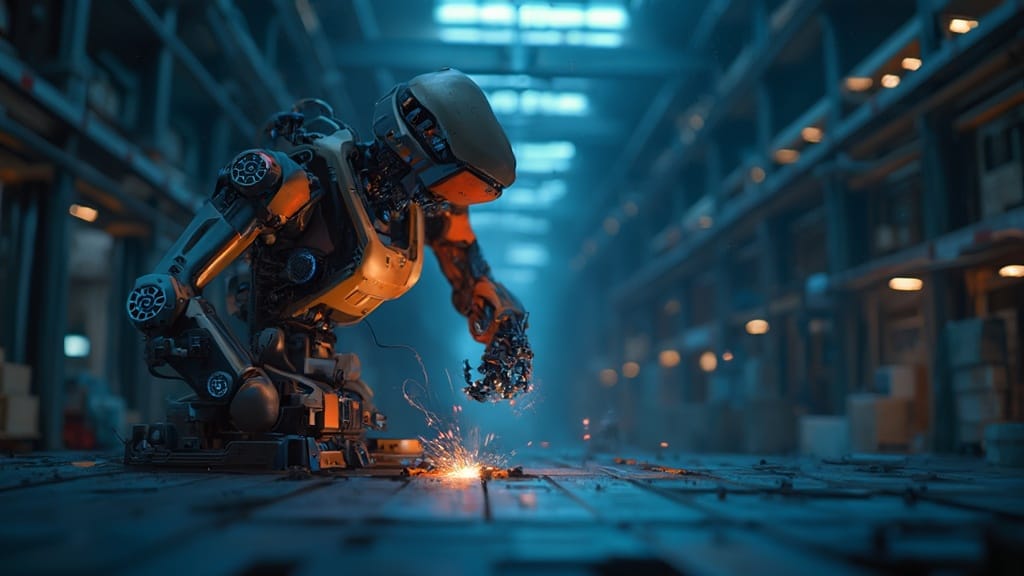
Photo: lyceumnews.com
Week of July 6, 2026
The Big Picture
This week the physical economy stopped talking about demos and started talking about consequences. South Korea committed the largest coordinated industrial investment in its history, betting a $1 trillion package on chips and humanoids; Ford quietly rehired 350 veteran engineers after admitting that AI quality systems cost it billions; and OSHA's injury data reminded everyone that the hard part of robotics still happens during cleaning and maintenance, not the keynote reel. The unifying thread is accountability — capital is getting serious, and so are the bills when automation falls short.
What Just Shipped
- Robot Park (Apptronik): opened its expanded flagship humanoid data-collection and training facility in Austin the week of June 30, alongside the Apollo 2 platform. The site is built to generate real-world manipulation data for Apollo in partnership with Google DeepMind.
- Ambi + Pickle inbound integration (Ambi Robotics + Pickle Robot Company): announced July 6 an integrated end-to-end inbound system — Pickle unloads trailers, Ambi sorts and inducts — targeting the labor-intensive receiving side of the warehouse.
- ADAR One (Sonair): a 3D ultrasonic safety sensor for AMRs and AGVs, launched July 1 with certification work assessed by exida against IEC 61496, IEC 61508, and ISO 13849.
- KinetIQ Ascend (Humanoid): the London startup introduced its reinforcement-learning manipulation approach the week of June 30, claiming a path toward 99.9% manipulation reliability at human speed.
This Week's Stories
South Korea Bets $1 Trillion on Chips, Humanoids, and Not Losing
This is what a government looks like when industrial policy stops being a talking point and becomes an emergency.
South Korea's government and top tech companies committed $1 trillion to a set of flagship megaprojects, with President Lee Jae Myung declaring in a televised speech on June 29 that "we must secure the core elements of AI faster than any other country." The plan runs on three pillars: Samsung Electronics and SK Hynix building new memory fabrication plants in the country's southwest to roughly double memory output within five years, per Reuters coverage via MarketScreener; a wave of AI data-center spending; and — the pillar that matters most here — a designation of "physical AI" as a national strategic industry, tied to preferential financing and procurement priority.
The robotics piece has physical evidence behind it. Hyundai Motor Company committed to a robot manufacturing facility and AI data center in the Saemangeum region, framed as a potential humanoid production base for Boston Dynamics, and the government said it will train 10,000 "AI robotics specialists" over five years. Reuters later reported that President Lee urged officials to move quickly on the mega chip projects — a signal that the hard part now is execution, not announcement.
What changes if it works: Korea moves from a 1% humanoid market share toward a genuine manufacturing base, and Korean tier-1 auto suppliers become part of the global humanoid supply chain.
What failure looks like: the 2028 humanoid-across-10-industries goal stays political framing while the fabs get built and the robots don't. Markets aren't sold either — Samsung fell 5% on the session and SK Hynix over 7% on oversupply fears. Watch whether Korean suppliers start showing up in Boston Dynamics' deployment disclosures over the next two quarters. That's the tell. (South Korea Bets $1 Trillion on Chips, Humanoids, and Not Losing)
Ford Rehired 350 Engineers After AI Quality Systems Cost It Billions
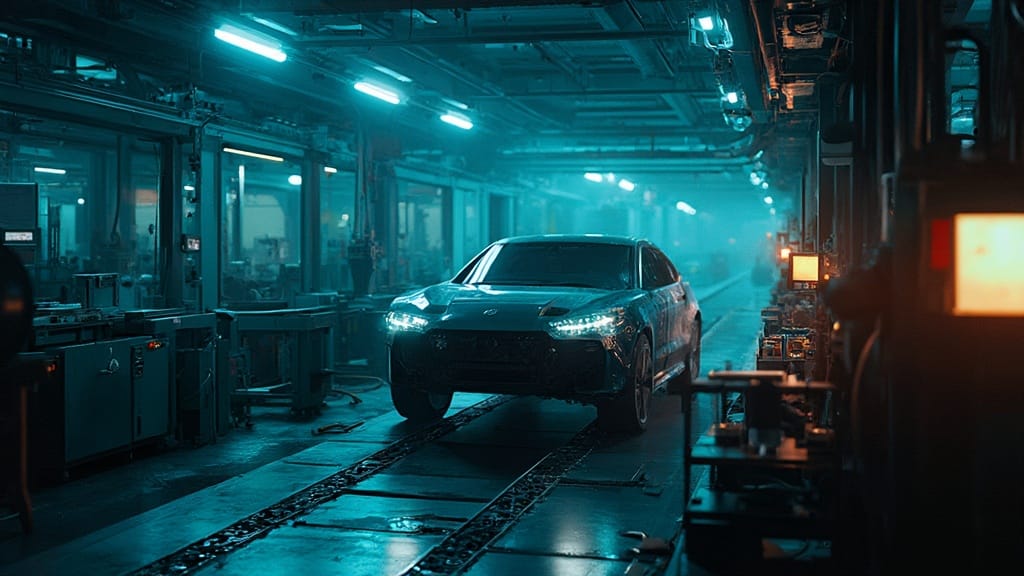
The most honest thing a major automaker has said about automation in years came out of Dearborn, and it wasn't a press release about robots. (Ford Rehired 350 Engineers After AI Quality Systems Cost It Billions)
Ford rehired more than 350 veteran engineers — internally called "gray beards" — over the past three years to catch mistakes its automated quality systems missed, after those failures cost the company billions, Bloomberg-sourced reporting via AOL confirmed. "We had been relying more and more on automated quality systems and not getting the desired results," said Kumar Galhotra, Ford's chief operating officer. Charles Poon, VP of vehicle hardware engineering, was blunter to TechCrunch: "Mistakenly we thought that by just introducing artificial intelligence and ingesting the design requirements that we had, that that would produce a high-quality product."
The rehiring worked. Ford ranked top among mainstream brands in the latest J.D. Power Initial Quality Survey, its first time in 16 years. The company won't abandon AI; it'll pair it with human oversight.
What changes: every operations leader deploying AI inspection now has a named reference case for procurement teams to cite. Automated quality without experienced human judgment isn't a cost reduction — it's a liability transfer. Watch whether other automakers quietly audit their own AI-for-QC deployments before their next earnings call. (Ford Rehired 350 Engineers After AI Quality Systems Cost It Billions)
Mujin Raises ¥36.4 Billion as Japan Bets on a "Native AI OS" for Factories
Humanoids grab headlines. The more immediately consequential battle in factory automation is over the software layer that tells every robot, conveyor, and autonomous mobile robot what to do and when.
Tokyo-based Mujin — which builds what it calls a "native AI OS," essentially a brain that coordinates whole factory floors rather than individual machines — raised ¥36.4 billion (roughly $250 million) in a round led by NTT and other Japanese institutional investors, according to Impress Watch. The platform is already deployed across Japanese logistics and manufacturing sites.
What changes if this succeeds: the company that controls factory-floor orchestration controls the switching costs. Once a plant's robots, conveyors, and inventory systems all talk through one OS, changing hardware vendors gets expensive fast. What non-adoption looks like: Mujin stays a strong domestic Japanese player while the orchestration layer in North America and Europe remains fragmented and up for grabs. Watch whether Mujin uses this capital to move abroad. [Source: Impress Watch — Japanese] (Standard Bots Hits $1B Valuation With $200M Round — and a Factory to Match)
Standard Bots Hits $1B Valuation With $200M Round — and a Factory to Match
The round closed June 9, but it remains the most-discussed capital event in US industrial robotics — and this is where the funding converts into steel. (Standard Bots Hits $1B Valuation With $200M Round — and a Factory to Match)
Standard Bots raised a $200 million Series C at a $1 billion valuation, and the money funds a major expansion of its Glen Cove, New York plant, from 16,000 to 70,000 square feet. The company builds AI-native robot arms programmed by demonstration — no code — for machining, welding, palletizing, and assembly, with customers including Sunoco, Lockheed Martin, Amazon, NASA, and the U.S. Army. (Standard Bots Hits $1B Valuation With $200M Round — and a Factory to Match)
The competitive context is stark. Per the International Federation of Robotics, cited by TechTimes, Chinese factories installed roughly 295,000 industrial robots in 2024 — nearly nine times the 34,000 in the US — and China now runs over 2 million industrial robots against about 393,700 stateside. Standard Bots is also lobbying for a ban on Chinese-made industrial robots, which would directly help its domestic positioning.
The 10% market-share claim is self-reported and depends on Glen Cove coming online on schedule. That expansion is the operational test that separates the unicorn valuation from the operating reality.
OSHA's Injury Data Shows Robot Safety Problems Still Look Very Old-Fashioned
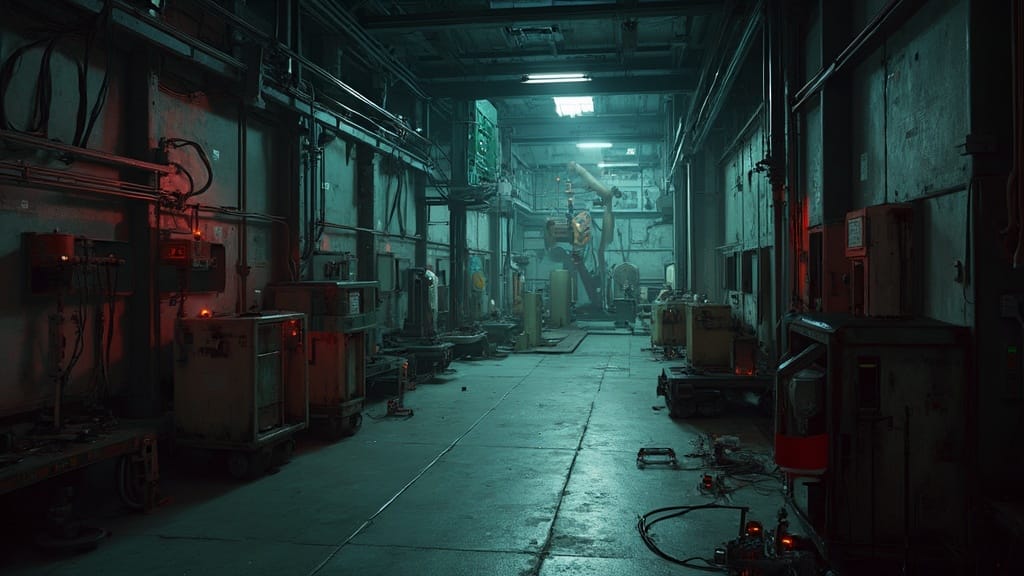
Here's the part of robotics that never makes the keynote reel: people getting hurt while cleaning, fixing, or clearing faults on machines meant to make work safer.
In its 2024 injury-and-illness summary, OSHA spotlighted 550 incidents involving robots in manufacturing — 33% treated in emergency rooms, 2% leading to inpatient hospitalization, with half occurring in motor vehicle and parts plants. Many acute injuries happened during cleaning and maintenance, not steady-state runtime. There is no robot-specific OSHA standard, so employers still lean on lockout/tagout — shutting down and isolating hazardous energy — and machine guarding.
The labor-and-safety story in robotics is less "robots replace danger" than "maintenance discipline decides whether automation is actually safer." Watch whether integrators and employers start talking less about autonomy and more about fault recovery, service procedures, and safe human-intervention zones — because that's where the workers'-comp pain lives, and where ROI models quietly go wrong.
New Products & Launches
ADAR One (Sonair) — A safety-certified 3D ultrasonic sensor for AMRs and AGVs, pitched as an alternative or complement to the light-based sensing most mobile robots use today. Its value isn't cinematic intelligence; it's that certified sensing is the bridge between "cool robot" and "legal, insurable, supportable robot." Watch whether major robot makers embed it rather than applaud it from the sidelines.
Apollo 2 + Robot Park (Apptronik) — Apptronik unveiled its updated Apollo 2 humanoid alongside an expanded Austin training facility, with CEO Jeff Cardenas framing it as both a robot factory and a data factory, in partnership with Google DeepMind. The real question is how fast Robot Park data becomes deployable task libraries — and whether it accelerates Apptronik's existing Mercedes-Benz factory trials.
KinetIQ Ascend (Humanoid) — The UK startup's reinforcement-learning approach claims a path toward 99.9% manipulation reliability at human speed, targeting the exact place where general-purpose robot ambitions usually die: grasping and handling. For now it's a capability claim, not a production rollout with cycle times and customer KPIs — the milestone is a customer reporting boring work done for long stretches without a babysitter.
⚡ What Most People Missed
Waabi says its AI driver transferred to a Volvo truck without retraining: The Toronto autonomous-trucking company demonstrated moving its virtual driver to a new vehicle platform without the months-long retraining that currently makes fleet diversification prohibitive. Platform-agnostic AI drivers would rewrite the economics of autonomous freight — but this is a company demonstration, not validated in commercial service. Watch for a named logistics customer confirming it.
A new U.S. mobile-robot safety standard is quietly moving into deployment reality: ANSI approved ANSI/A3 R15.08-3-2026, covering industrial mobile robot applications, and A3 is already running July training around the family. New rules become purchasing checklists, then insurance questions, then acceptance-test language in integrator contracts — about a year before anyone notices on earnings calls.
Federal buyers are writing automation into real solicitations: A VA procurement page updated July 4 includes an "AMR Solicitation" attachment, and a SAM.gov Air Force market-research notice for an "Advanced Automation Contract" is open through July 13, asking for frameworks to orchestrate a changing automation portfolio. Procurement is where robotics theater usually dies — a named category with pricing sheets is a more reliable predictor of installs than any demo.
Ambi-Pickle treats inbound as a system, not a single trick: The integration matters less for the brands than for the workflow logic — trailer unloading is only valuable if the next handoff works too. That systems view is often the difference between a paid pilot and a permanent line item; the missing evidence is independent throughput data from a named site.
📅 What to Watch
- If Apptronik names a first customer or site for Apollo 2, it means Robot Park is a commercialization engine, not just a better training gym.
- If Korean tier-1 suppliers start appearing in Boston Dynamics' supply-chain disclosures, it means Seoul's cluster investment is turning into real industrial demand — not political framing.
- If major mobile-robot makers adopt Sonair-style certified 3D sensing, it means safety architecture is becoming a competitive wedge, not a background checkbox.
- If another automaker publicly audits its AI-for-QC systems after Ford, it means the "gray beard" reversal is being read industry-wide as a liability warning, not a Ford-specific stumble.
- If Waabi's cross-platform transfer gets independent validation in revenue service, it means autonomous freight operators can finally diversify hardware without paying a retraining tax.
The Closer
This week: a nation bet a trillion dollars on robots, an automaker paid billions to un-fire the engineers it fired, and 550 people got hurt tending the machines that were supposed to keep them safe. Turns out the future of manufacturing runs on "gray beards" who hunt for failure points before a part reaches the floor — which is to say, the most advanced automation strategy of 2026 was hiring back the humans who knew where the bodies were buried. Back next week, once the paperwork clears.
Forward this to the ops lead still trying to convince their board that experienced people aren't a line item to optimize away.