Robotics & Industrial Automation Weekly — Mar 10, 2026
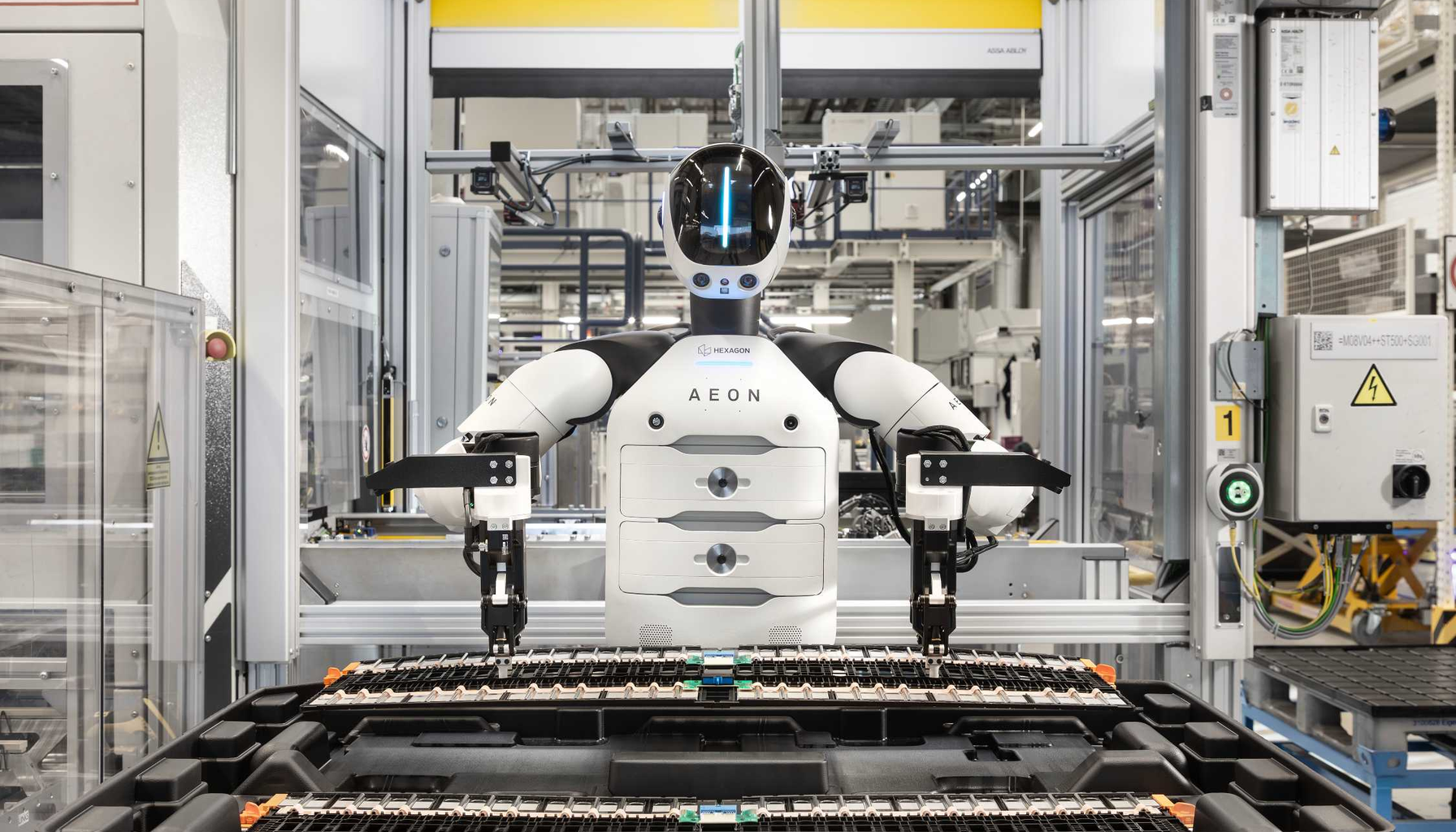
Photo: lyceumnews.com
Week of March 10, 2026
The Big Picture
BMW just gave us the first real shift data from a humanoid working an automotive production line — not a demo reel, actual operating hours and parts moved — and then immediately opened a second pilot with a different vendor in Germany. Meanwhile, OSHA is investigating a fatality at a Rivian warehouse, tightening export controls are choking robot shipments to China, and warehouse automation orders are quietly climbing back. The theme this week: the industry is crossing from "Can robots do this?" to "Who's responsible when they do?"
This Week's Stories
BMW's Humanoid Pilot Comes With Actual Shift Data — Then They Opened a Second One
This is the story that matters most this week, and it's worth reading carefully.
BMW's Spartanburg plant in South Carolina ran a Figure 02 humanoid robot on ten-hour shifts, five days a week, for roughly eleven months. The company's own disclosures put hard numbers on it: around 90,000 sheet-metal parts moved, approximately 1,250 operating hours, and work that supported production of some 30,000 X3 vehicles. Independent reporting pegged the robot at 85% of human cycle time during the pilot deployment on body shop tasks. That's the first credible, OEM-disclosed duty cycle for a humanoid in real automotive production — not a demo cell, not a trade show, but a line that ships cars.
What happened on the floor is just as instructive as the numbers. Mid-deployment, BMW's engineers had to retrofit additional physical barriers, upgrade 5G connectivity to stabilize communications, and tighten safety protocols as they discovered gaps between lab validation and live production conditions. The lesson: humanoids are being fielded in constrained, repetitive tasks, but deploying them required active plant changes, not plug-and-play installs.
Then BMW doubled down. A second pilot launched in Leipzig using a completely different humanoid — the AEON from Hexagon Robotics — focused on high-voltage battery assembly. Hexagon, better known for precision metrology and industrial software, is quietly positioning itself as a humanoid OEM with announced pilots at BMW, Pilatus, and Schaeffler. BMW also formalized a Centre of Competence for Physical AI to standardize evaluation across vendors and plants.
This is a multi-vendor evaluation with institutional infrastructure behind it. Every automotive Tier 1 supplier should be asking: what's our humanoid evaluation framework?
ABB and NVIDIA Try to Finally Close the Sim-to-Real Gap

If you've ever watched a beautiful simulation fall apart on the shop floor, this one's for you.
ABB is integrating NVIDIA's Omniverse simulation libraries into its RobotStudio software — the tool that thousands of integrators already use to program robot cells offline. The pitch: build a photorealistic, physics-accurate digital twin of your cell, then validate trajectories, perception, and safety behaviors before you touch metal. ABB is calling the integrated product "RobotStudio HyperReality" and claiming simulation fidelity approaching 99% for certain validated cells in ABB's pilot tests, with pilot reports of up to 40% reduction in commissioning costs in early trials. Early pilots reportedly include Foxconn and a robotics-as-a-service firm called Workr.
These are bold claims. The industry will want independent case studies showing concrete reductions in commissioning time and fewer on-floor surprises before this becomes a procurement standard. But the direction is clear: the gap between "what the simulation shows" and "what the robot actually does" is the single biggest time sink in industrial automation, and two of the biggest names in the space are throwing serious engineering at it.
Separately, ABB is also reportedly preparing a structural repositioning of its robotics business — potentially a spin-off or standalone entity — to accelerate focus on autonomous mobile robots and AI-enabled automation. Watch that space.
OSHA Investigates Rivian Warehouse Fatality — and the Regulatory Playbook Is Evolving

Source: techcrunch.com
OSHA confirmed it has opened an investigation into the death of a contractor at a Rivian warehouse in Illinois. Rivian characterized it as an accident and said it's cooperating. There's no public indication yet that automation equipment was directly involved, but any fatality inside a modern, partly automated warehouse will shape how regulators think about robots, contractors, and training requirements.
This isn't happening in isolation. On March 9, 2026, OSHA cited a Midwest distribution center after a worker was injured by an autonomous mobile robot during a pallet-moving operation — a $15,000 fine tied to failure to train staff on emergency stop protocols. And legal analysts are noting that OSHA isn't waiting for a specific "robot rule." Instead, inspectors are applying existing standards — lockout/tagout, machine guarding, powered industrial trucks — to automated workplaces and citing employers under those frameworks.
The bigger signal: buried in OSHA's 2024 injury summary is a section where the agency explicitly analyzes narrative data to understand how robotics contribute to incidents. That's the precursor to targeted emphasis programs. For plant safety managers, this means near-miss descriptions and narrative fields in your injury logs suddenly matter a lot more — they're becoming the dataset that justifies tomorrow's enforcement focus.
Apple's Houston Factory Is Real — But Read the Fine Print
The Mac mini Houston announcement has been bouncing around for two weeks. Here's what most commentary missed.
Apple is doubling the size of its existing 250,000-square-foot Houston facility, bringing Mac mini production to the U.S. for the first time alongside expanded AI server manufacturing. The physical evidence is real: construction commitments, utility hookups, and a 20,000-square-foot Advanced Manufacturing Center for workforce training scheduled to open later this year.
But the fine print matters. The facility operates in partnership with Foxconn, and Apple's operating chief made clear that the majority of Mac mini production will remain in Asia. As of February 2026, Apple has paid roughly $3.3 billion in tariffs since the current administration imposed levies — this is tariff hedging, not a fundamental supply chain shift.
The more interesting industrial story is the AI server ramp, which is higher-value, higher-automation-content manufacturing than Mac mini assembly and is already ahead of schedule. Independent tours describe the building as a largely empty high-bay warehouse in a tooling-and-hiring phase. Watch for SMT equipment orders and installation photos to confirm the move from capex to throughput.
BIS Tightens Export Controls on AI Robotics Tech, Choking Shipments to China
The Bureau of Industry and Security's March 8, 2026 rule update flagged "agentic AI" models — the kind powering robots like Figure 03 — as controlled technology, forcing OEMs to reroute shipments and delaying an estimated $300 million in articulated arms destined for Chinese electronics fabs. Fanuc and Midea-owned KUKA are reportedly facing 6–9 month shipment delays.
This escalates the trade war in robotics specifically. Germany's VDA (the auto industry association) is warning that German auto suppliers face 12% cost hikes in 2026. As of 2025, China installs roughly 50% of the world's industrial robots, so order diversions — likely toward Yaskawa's Japanese facilities and Vietnamese plants — will ripple through the entire OEM ecosystem. First compliance filings are due April 1, 2026.
For policy analysts: this is IRA-aligned, designed to boost domestic fab automation. For procurement teams: stress-test your supply chain for component availability if your robot OEM ships through any controlled channel.
New Products & Launches
Figure 03 launched publicly this week with legitimately interesting hardware: twice the camera frame rate, one-quarter the latency, and 60% wider field of view compared with Figure 02, and a new battery delivering around five hours of runtime with 2kW fast charging targeting UL safety certification. Figure's dedicated manufacturing facility, BotQ, claims initial capacity of up to 12,000 units per year — that's a production target, not an order book. BMW and Figure are now evaluating Figure 03 for potential new deployments as Figure 02 is retired.
Cognex AI-powered vision system unveiled on March 6 claims a 40% improvement in defect detection in initial pilot tests, aimed at high-speed electronics and pharma lines. Already in pilot with a major semiconductor fab. Production-ready for specific use cases; broad rollout is months out.
Dematic's unified orchestration platform pulls telemetry from AMRs, shuttles, conveyors, and sorters into one real-time interface with AI-assisted bottleneck detection. The big shift: warehouse "brains" are finally catching up with warehouse hardware. Related milestone: DHL and Locus Robotics hit one billion AMR picks, confirming AMRs are now core infrastructure, not experiments.
⚡ What Most People Missed
Warehouse automation orders turned back up before anyone noticed. Interact Analysis quietly updated its outlook in January 2026: order intake grew 7% in 2025 versus a forecast of 1%, with U.S. orders up roughly 12% in value. Expect integrator backlogs to tighten and component lead times to creep up, especially for motors, safety PLCs, and encoders. Daifuku is already reporting a surge in four-way shuttle orders as operators choose modular, phased expansions over full greenfield installs.
Permanent full expensing is a hidden capex accelerant. Recent tax legislation enacted in 2025 retained a 21% corporate tax rate and made full expensing permanent for new equipment and immediate expensing for domestic R&D — materially shortening payback periods on automation investments. If you're modeling ROI on a new robot cell, your finance team should already be running the updated numbers.
In 2025, Chinese manufacturers accounted for an estimated 87–90% of global humanoid shipments. Omdia's data pegs 2025 global humanoid shipments at roughly 13,000–16,000 units, with AgiBot alone shipping around 5,100. Three leading Chinese vendors are prepping public listings. This is the EV battery playbook applied to humanoids: state-backed demand, aggressive pricing, and integrated local ecosystems.
ISO 10218-1/-2:2025 changes mean the "cobot" product badge no longer defines safety. The updated standards effectively fold the old cobot technical specification into the main industrial robot standard. Safety is now determined by a validated application, tooling, and cell layout, not a product badge. Insurers are already reacting: some U.S. workers' comp portfolios reported premium increases of around 15% in late 2025 and early 2026 tied to perceived compliance gaps.
Rodney Brooks published a practical skepticism framework for humanoid buyers. The co-founder of iRobot and Rethink Robotics argued in detail that today's humanoids cannot develop the fine-motor dexterity needed for the tasks they're being marketed for — the jump from moving sheet metal to assembling electronics requires tactile feedback and force control that current platforms, trained primarily on video data, cannot reliably acquire. Every buyer evaluating a humanoid pilot should ask for manipulation benchmarks that address dexterity under variation.
📅 What to Watch
- If BMW publishes Leipzig pilot metrics on the same cadence as Spartanburg, it means the company is building a repeatable benchmark framework for humanoid evaluation — and every automotive Tier 1 will need to respond with their own criteria or risk being caught flat-footed when RFQs start referencing BMW's standards.
- If ABB's Omniverse-enabled RobotStudio lands independent case studies showing double-digit commissioning time cuts, expect every major OEM to announce a similar "simulation + AI" stack by Hannover Messe in April — and integrators who can't demo sim-to-real workflows will lose bids.
- If OSHA's eventual Rivian citation names specific automation equipment or guarding failures, it becomes the template for how regulators frame robot-heavy warehouse incidents going forward — and every warehouse operator running AMRs should pre-audit against that language.
- If the U.S. Supreme Court issues further rulings on tariff authority, expect a wave of deferred automation capex decisions to resolve — manufacturers have been holding equipment orders waiting for clarity, and that backlog is real enough to move OEM quarterly numbers.
- If Intel's Fab 52 crosses from shell to active tool install this quarter, watch for a squeeze in high-end automation talent — every CHIPS-funded fab needs controls engineers, cleanroom AMHS specialists, and robot techs, and there aren't enough of them to go around.
That's the week. Humanoids are earning their shift data, regulators are learning to count robot injuries, and the warehouse automation cycle is restarting before anyone's ready to brag about it on an earnings call. The gap between what's real and what's marketing is narrowing — but it's still there. Read the fine print.
See you next Monday.