Skilled Trades Weekly — Mar 10, 2026
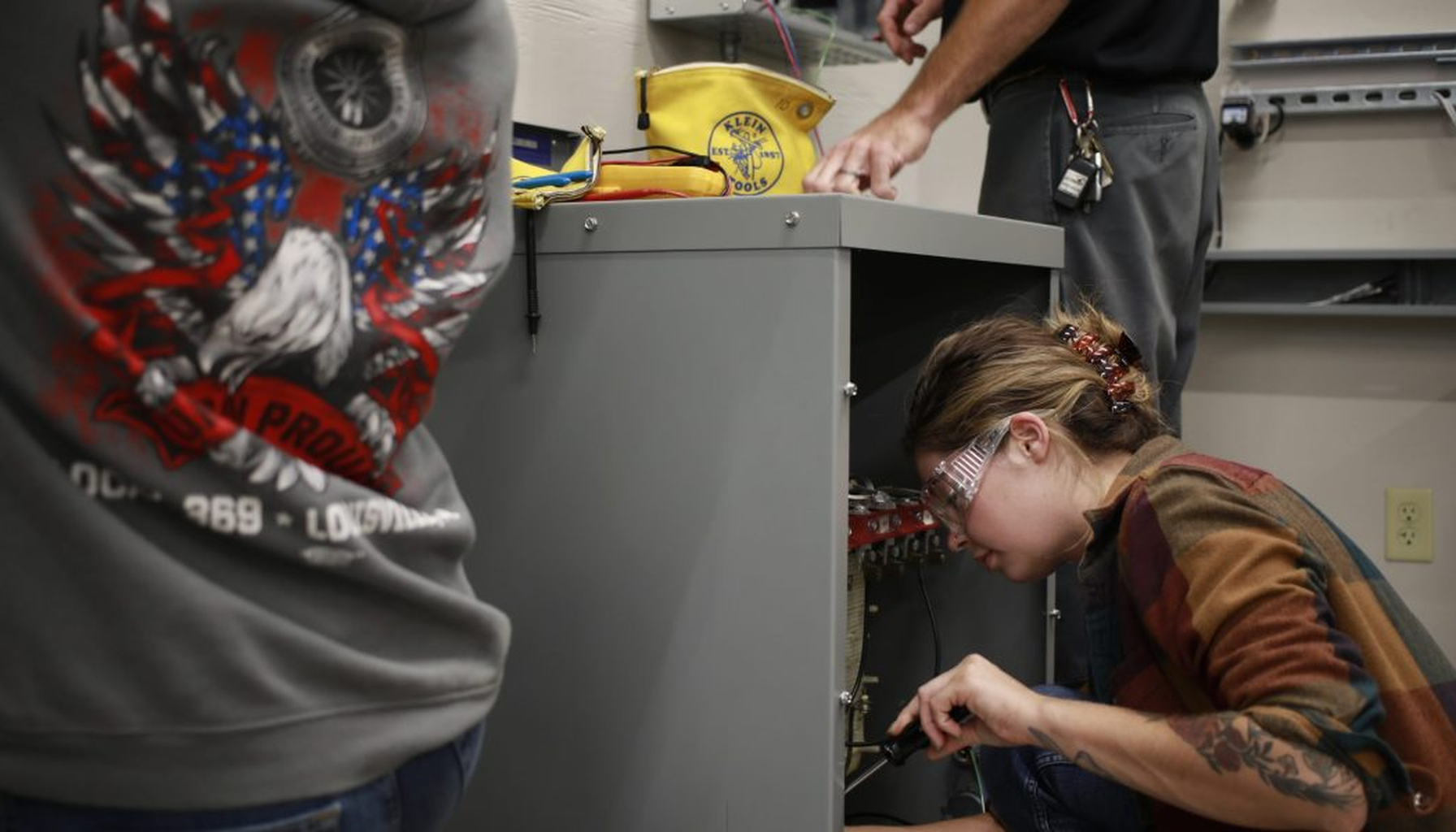
Photo: lyceumnews.com
Week of March 10, 2026
The Big Picture
The companies laying off tens of thousands of white-collar workers to "run leaner with AI" now face a constraint: their AI strategies depend on a dwindling supply of licensed electricians — and those electricians are nowhere near enough. This week, Microsoft named electrical talent as the single biggest obstacle to data center expansion, a federal court cleared the last of five frozen offshore wind projects to resume construction, and the NRC approved the first new nuclear reactor in a decade. Three massive infrastructure bets, one shared bottleneck: there aren't enough people who know how to wire things.
This Week's Stories
The Electrician Shortage Is Now Officially a Tech-Sector Crisis
If you thought the skilled trades shortage was a construction-industry problem, Microsoft's president just corrected you. Brad Smith has publicly identified electrical talent as the single biggest obstacle slowing U.S. data center expansion — not permitting, not land, not GPU supply. Electricians.
The numbers are brutal. The Bureau of Labor Statistics projects 81,000 electrician positions unfilled annually through 2034. McKinsey says the U.S. needs an additional 130,000 trained electricians, 240,000 construction laborers, and 150,000 supervisors by 2030 just to keep pace. A new recruiting-side report pegs the cumulative shortfall at up to 499,000 data-center and related construction workers through 2031, concentrated in electricians, low-voltage techs, HVAC/mechanical trades, and heavy civil crews.
The demand driver is specific: electrical work accounts for 45% to 70% of total data center construction costs. Each facility requires high-voltage switchgear, redundant power distribution, and precision cooling — all requiring licensed journeyworkers (tradespeople who've completed a full four-to-five-year apprenticeship) with years of specialized experience. You can't train your way out of this in a quarter.
Real-world signals are piling up. Microsoft is employing electricians commuting from 75 miles away. Oracle shifted data center completion dates from 2027 to 2028, citing labor constraints (Oracle disputes the framing). Google warned in a policy report that a lack of electricians "may constrain America's ability to build the infrastructure needed to support AI." Nearly 30% of union electricians are between 50 and 70, with roughly 20,000 expected to retire each year.
Meanwhile, Wall Street is paying attention: asset managers now include the electrician shortage on summit agendas amid concerns it poses a direct execution risk for capital deployed into data centers, batteries, and renewables. When BlackRock convenes a panel on pipefitters, the shortage has graduated from trade-press concern to systemic investment risk.
Google has pledged $15 million with the Electrical Training Alliance to expand the pipeline. In Sun Belt markets, recruiters report electrician job openings running 20–30% above historical averages this year, and contractors in some regions are literally turning down bids they can't staff. NECA projects an electrician shortfall north of 80,000 by 2030. The structural fix — more registered apprenticeship seats — takes five years to produce a single journeyworker. The structural demand is here now.
All Five Offshore Wind Projects Are Back Under Construction — For Now

The Nuclear Regulatory Commission issued its first commercial reactor construction approval in ten years this week — TerraPower's Natrium advanced reactor in Kemmerer, Wyoming, a sodium-cooled design that's the first non-light-water reactor permitted in roughly four decades. The project will peak at about 1,600 construction workers and later support 250 permanent operations jobs under a project labor agreement with NABTU.
The energy press covered the policy angle. Nobody's writing the workforce story underneath it.
Nuclear construction requires some of the most specialized craft labor in the industry: ironworkers certified for nuclear-grade welds, pipefitters with N-stamp qualifications (a quality assurance certification specific to nuclear components), electricians cleared for safety-related systems. These credentials take months to obtain even for experienced journeyworkers, and they aren't interchangeable with conventional commercial construction qualifications. The ironworker running data center work in Virginia can't transfer to a nuclear site next week.
The last major U.S. nuclear build — Vogtle Units 3 and 4 in Georgia — taught the industry a painful lesson about what happens when you try to staff a complex nuclear project without an experienced craft workforce. It ran years late and billions over budget, with labor availability cited as a central constraint.
If this project moves from approval to actual mobilization, it will compete for the same licensed electricians and pipefitters that data centers, offshore wind, and grid hardening projects are already fighting over — in a market that is already critically short. Budget estimates run into the single-digit billions, with a target commercial timeline around 2030. That's a multi-decade localized demand signal for specialized trades in a rural labor market. Watch which unions — particularly the Boilermakers and UA pipefitters — begin positioning, and whether the developer has a workforce plan that goes beyond a press release.
Students Are Turning Away From College Toward Apprenticeships — and the Pipeline Can't Keep Up
The Wall Street Journal's story on the apprenticeship shift pulled 722 upvotes on Hacker News this week — the highest-traffic trades-adjacent story from a mainstream outlet in months. That audience is overwhelmingly software engineers and tech founders, exactly the cohort that spent a decade assuming the knowledge economy was the only economy. When tech workers start publicly reconsidering the trades, the cultural shift has crossed a threshold.
The numbers back it up. Active apprentices have more than doubled, from roughly 318,000 in 2014 to 680,000 in 2024. Between 2014 and 2024, annual apprenticeship graduates increased 143%. A fresh HR Dive survey found roughly 60% of Gen Z respondents say they plan to pursue construction, electrical, HVAC, or similar trades this year (March 2026 survey). And 47% of skilled trades workers now earn more than the median college graduate.
Here's the operational reality: interest ≠ enrollment ≠ completion. The funnel leaks hard at the transition from outreach to registered apprenticeship slots. Less than 5% of U.S. high school students are enrolled in vocational programs, compared to 55% in Germany. McKinsey notes that Gen Z workers still perceive stigma in choosing vocational school over a four-year university.
A new model in Delaware is trying to dissolve that stigma. Wilmington University and LIUNA Local 199 (Laborers' International Union of North America) launched a formal pathway this week that lets registered apprentices convert field training into college credit — up to about 42 credits — toward an associate's or bachelor's degree. The apprenticeship is primary; the degree is the overlay. It directly addresses Gen Z's hesitation about "giving up" college for a trade, and if it shows retention gains, expect fast replication.
Watch whether this cultural shift translates into measurable apprenticeship registration increases in the DOL's RAPIDS system when quarterly data drops this spring (Q1 2026). The lead time from cultural shift to enrollment bump is 2–4 years. The shortage doesn't have 2–4 years.
Kansas City's Port Authority Fight Shows How Prevailing Wage Battles Shape Local Pipelines
Kansas City's Port Authority came under fire this week from construction trade unions over prevailing wage standards — the legally mandated minimum wage rates for workers on public construction projects, set at rates equivalent to local union scale. The dispute surfaces a recurring tension: development authorities want flexibility on labor costs; building trades unions argue that prevailing wage standards are what make construction jobs worth having and prevent out-of-area contractors from undercutting local workers.
Local organizers say the gap is dramatic — reported differentials as stark as $13 an hour for imported crews versus a $54 local union rate. That spread makes local apprenticeship expansion financially untenable if work is continually awarded to outside labor.
The real stakes are apprenticeship ratios. Prevailing wage requirements typically mandate that contractors employ a minimum ratio of registered apprentices on covered projects — one of the primary levers that keeps apprenticeship programs financially viable. Port and inland logistics infrastructure is one of the fastest-growing construction spending categories in the Midwest, and Kansas City sits at a major freight convergence point. If the Port Authority proceeds without prevailing wage protections, it signals that public development bodies are willing to absorb union opposition to move faster — a dynamic that will matter for every workforce director trying to sustain training pipelines funded in part by union-scale wages.
Unions have escalated to public bannering campaigns and are pushing the argument that tax incentives and public subsidies should be conditioned on prevailing wage floors and local apprenticeship hires. If that language gets adopted in procurement rules, it materially changes which contractors can viably win subsidized projects — not just in Kansas City, but in every mid-size city watching.
New Products & Launches
TyBot autonomous rebar-tying robot hit multi-site deployment in Texas this week, with a contractor reporting a 30% reduction in labor hours on initial bridge project runs. The machine ties rebar autonomously while skilled crews handle layout and inspection — augmentation, not replacement, but in tight markets it changes crew sizing and reduces the marginal demand for physical tying work.
DOL's new Registered Apprenticeship performance portal went live this week, promising 30-day turnaround for sponsor registrations and near-real-time completion reporting. Administrative plumbing, not a product launch — but if it actually cuts the paperwork drag that has bottlenecked new apprenticeship programs for years, it's the most consequential "product" in this section.
⚡ What Most People Missed
- The data center labor cliff nobody is modeling. Data centers require massive crews during construction but far fewer once operational. An IBEW Local 995 business manager in Baton Rouge described managing the AI-driven surge as "eating an elephant" — endless during the build, then gone. Local apprenticeship programs are training to the construction surge without building the operations and maintenance workforce the same facilities will need for 20+ years. That's a pipeline design problem that will surface in five years.
- Canada quietly reshaped its immigration priority list for trades. Immigration, Refugees, and Citizenship Canada changed work experience requirements for its Express Entry skilled trades category — increasing from six months continuous to 12 months total within the last three years and removing cooks from the "trades" category. The policy shift tilts future draws toward construction and mechanical trades like carpenters, electricians, and welders, re-weighting the international labor flows that some North American regions rely on for short-term demand.
- Vermont's claims spike hides a construction-specific signal. Initial unemployment claims more than doubled the week ending March 6, 2026 to almost 800, but construction's share of claims actually fell 11 percentage points week over week (week ending March 6, 2026) while services drove the increase. If other New England states show the same pattern, you're looking at a soft macro picture where construction stays "too busy" rather than falling off a cliff, and owners lean on cutting overtime rather than layoffs.
- Women-in-construction funding just went from pilot to multi-state pattern. California used Women in Construction Week to roll out Employment Training Panel funds for wildfire rebuilding upskilling and a statewide apprenticeship campaign. New Jersey opened $1.5 million in NJBUILD grants for women and minority residents entering building trades the same day. The DOL's WANTO program is reporting a low-single-digit increase in female apprentice shares in funded cohorts (March 2026 report). Once three or four states run the same playbook, PLAs and public RFPs tend to follow.
- A niche preprint modeled how wearable exoskeletons could narrow gender and disability pay gaps in construction by enabling more workers to meet physical demands — framing wearables as a diversity and equity tool, not just a safety device. If regulators and funders pick up that framing, demand could tilt toward vendors that document both safety and workforce-participation impacts.
📅 What to Watch
- If the March 2026 JOLTS release (March 13, 2026) shows construction openings dropping while electrician wages stay elevated, it confirms the shortage has shifted from broad to highly concentrated bottlenecks — a different problem requiring different interventions than general workforce expansion.
- If the administration files an emergency appeal or new stop-work order on offshore wind using different legal authority, the labor disruption pattern restarts immediately for the five projects that constitute the near-term U.S. offshore wind pipeline.
- If DOL's RAPIDS quarterly data shows a measurable rise in electrical and construction apprenticeship registrations this spring (Q1 2026), the Gen Z cultural shift is converting to real supply; if it doesn't, the 60% survey headline is aspiration, not pipeline.
- If TerraPower publishes major bid packages or workforce intake milestones within six months, advanced nuclear becomes a live hiring variable competing for the same electricians and pipefitters already fought over by data centers and offshore wind — and regional workforce boards in Wyoming and surrounding states need to start planning now.
- If the ABC Construction Backlog Indicator (mid-month release) holds above 9 months while craft worker availability scores remain negative, that's the clearest single-number confirmation that the shortage is intensifying, not stabilizing.
- If California or other states tie upcoming grant awards to measurable women-in-apprenticeship outcomes, contractors will need to treat gender metrics as seriously as safety EMR scores — watch the WANTO and state grant announcements in coming weeks.
A Microsoft executive commuting electricians 75 miles to wire server racks. A federal judge in Virginia allowing a wind farm to resume construction one injunction at a time. A 19-year-old in Tucson competing with 699 other applicants for 80 apprenticeship seats while Fortune tells her she's the solution.
The AI revolution will not be streamed — it will be wired by hand, assuming anyone can find the hands. Canada's change makes that harder.
See you on the jobsite.