The Industry Weekly — Mar 10, 2026
Photo: lyceumnews.com
Week of March 10, 2026
The Big Picture
Hollywood spent this week trying to hold two contradictory ideas at once: original stories can still win at the box office, and the safest money is still on sequels, remakes, and IP you already recognize. Meanwhile, the AI clock is no longer ticking in the background — it's on the table, in the contracts, and generating deepfake Brad Pitt fights that go viral before anyone can hit delete. The guild negotiations that will define whether Hollywood has a stable 2027 are now weeks away, and both sides showed up this week with very different definitions of "progress."
This Week's Stories
Pixar Proved Original Animation Isn't Dead. Now Disney Has to Decide If It Believes That.
After Elio opened to a franchise-worst $20.8 million in its opening weekend last June, the internal narrative at Pixar was getting grim: maybe audiences just won't show up for original animated movies anymore. Then Hoppers — a film about a college kid whose consciousness gets transferred into a robotic beaver, which is exactly the kind of sentence that makes you love Pixar — opened at number one with $46 million domestically in its opening weekend and $88 million worldwide against a $150 million budget. Multiple outlets called it the biggest global launch for an original animated film since Coco.
The business question is whether Disney treats this as a real signal or a lucky weekend. There's no family competition until Illumination's Super Mario Bros. Galaxy Movie at Easter, and rolling spring breaks give Hoppers a genuine runway to leg out through March. If it holds, the strategic implication is significant: early March, away from summer's franchise pile-ups, might be the new default window for Pixar originals. That's a scheduling insight worth more than any single weekend gross.
For context on why Disney keeps hedging between originals and remakes: the live-action Lilo & Stitch crossed $1 billion globally in 2025, proving nostalgia-driven family tentpoles still generate enormous scale. Studios aren't irrational for greenlighting remakes — the upside on a guaranteed family hit dwarfs the risk on most originals. The tension between those two realities is the central creative argument inside every major studio right now.
Netflix Bought Ben Affleck's AI Company. The Industry Might Actually Be Okay With It.
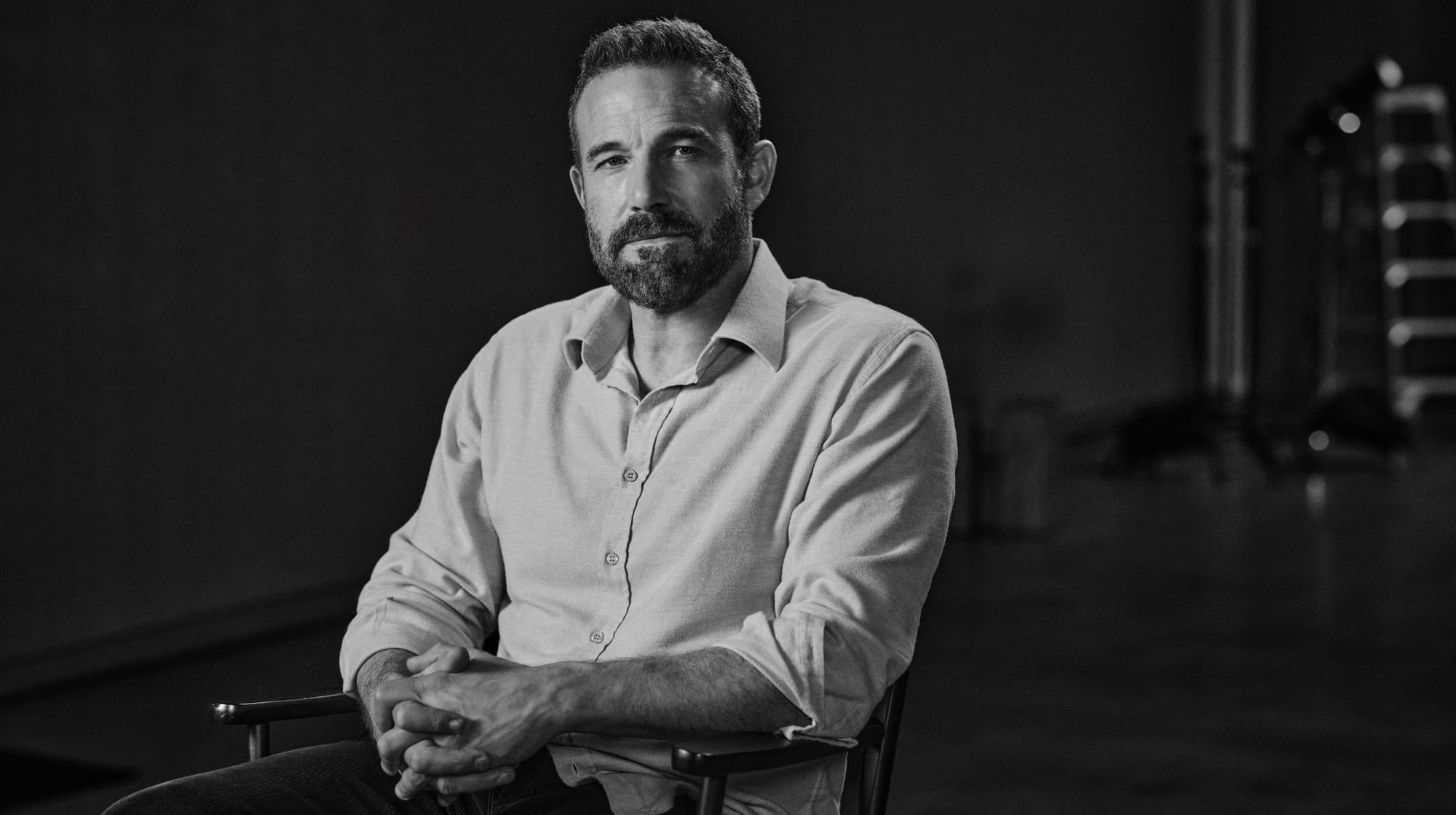
Every AI acquisition in Hollywood triggers the same reflex: writers update resumes, agents draft angry statements, Twitter catches fire. But Netflix's purchase of Ben Affleck's AI startup InterPositive is structured to avoid that meltdown — and the structure is the story.
InterPositive built its model using footage it shot itself, not scraped from the internet. It specializes in post-production fixes — adding missing shots, correcting lighting, enhancing backgrounds — essentially a very smart technical assistant for the editing room, not a replacement for anyone in front of or behind the camera. That distinction matters enormously when guilds are preparing contract demands where AI guardrails are agenda item number one.
Here's what most coverage missed: this wasn't a standalone deal. The same week, Affleck's production company Artists Equity signed a multi-year first-look deal with Netflix, giving the streamer first dibs on all their streaming projects. Netflix is building a vertically integrated Affleck ecosystem — production company, AI tools, senior advisory role — in a single week. That's not a coincidence; it's an ecosystem play designed to give Netflix political cover to build AI infrastructure with a credible creative champion out front.
The backdrop, though, is considerably less friendly. OpenAI previewed "Sora 2" this week, an advanced video tool that can insert real people into generated scenes using an opt-out model for likeness — meaning your face is fair game unless you specifically object. That's the exact inversion of the consent framework actors fought for in 2023, and it's why the Affleck deal and the OpenAI controversy aren't separate stories. They're the same argument, playing out on two very different stages.
Paramount Ate Warner Bros. Now Comes the $79 Billion Hangover.

The biggest chessboard in Hollywood just produced a new mega-player — and an enormous bill. Paramount Skydance's roughly $110 billion acquisition of Warner Bros. Discovery has jumped ahead of Netflix's competing bid, and European industry groups are already sounding alarms about what a combined Paramount-Warner would mean for local cinemas and productions.
But the real story is debt. The combined company will carry roughly $79 billion in financial obligations, and credit-rating firms are already flagging downgrades. David Ellison called it "reinventing the business" on an investor call, which is the kind of thing you say when you'd rather not say "we are going to cancel a lot of shows." Industry veterans are quietly asking the question nobody wants to answer publicly: what happens to HBO when the entity controlling it needs to find $6 billion in synergies?
Warner shareholders are scheduled to vote March 20, 2026 on the original Netflix merger agreement. If that vote gets delayed or amended, it's your clearest signal Paramount is actually winning. Meanwhile, an undercovered angle: buyers are increasingly treating studios like real estate plays — catalog value, tax benefits, and physical lot ownership make these companies attractive even when near-term content economics look terrible. That's why bidders keep making enormous offers despite public skepticism about the movie business.
Hollywood's Guild Contracts Expire in Weeks. Both Sides Are Already Sharp.
The 2023 strikes shut down Hollywood for months, and many productions still haven't fully recovered. Now the industry is heading into another contract cycle — the WGA contract expires May 1, 2026; SAG-AFTRA and DGA contracts expire June 30, 2026 — and the friction is already visible.
The studios' play is classic long-game strategy: offer the guilds a massive cash injection for health plans in exchange for extending contracts from three years to five. Give the unions money now, lock them into stability later — and buy more runway for AI to mature before the next showdown. The unions know exactly what that trade means, which is why the WGA membership approved its 2026 demands by 97.4% in a recent membership vote — not a rubber stamp, but a near-unanimous mandate to push hard on AI protections, streaming residuals, and staffing minimums.
The AI battleground is no longer theoretical. A deepfaked Brad Pitt–Tom Cruise fight generated by ByteDance's Seedance 2.0 went viral before anyone could contain it. Netflix's lawyers called Seedance "a high-speed piracy engine." A post-Super Bowl survey of Gen Z and Gen Alpha consumers found overwhelmingly negative reactions to AI branding (March 2026 survey). The guilds are walking into negotiations carrying live examples of what they're fighting against — a very different posture than 2023.
And it's not just writers and actors. The American Federation of Musicians called a March 11, 2026 Times Square rally demanding AI protections in their label negotiations, while motion-capture performers at 2K's Petaluma studio unanimously ratified their first union contract with IATSE, including protections around scanned likeness. If you want to know whether Hollywood has a stable 2027, watch May 1.
The Oscars Are Streaming on Disney+ This Sunday — and That's a Bigger Deal Than It Sounds
The 98th Academy Awards air on March 15, 2026, and for the first time, you can watch live without a cable subscription — Disney+ will stream the ceremony, pre-show and red carpet included. That sentence would have been absurd five years ago. The Oscars were appointment cable TV — the single most important night for Hollywood's self-mythology, locked behind a bundle.
This is part of a broader consolidation play. Disney is folding Hulu into Disney+ domestically, and internationally, the ad-supported Disney+ tier is now bundled into Sky's package across the UK and Europe. The strategy is becoming clear: Disney wants to be the single destination for everything from Marvel to live events that used to require a cable box. When the biggest night in entertainment shows up on a streaming app, the traditional TV bundle loses another reason to exist.
New Products & Launches
One Piece Season 2 hit Netflix this week as a full-season binge drop — Netflix's bet that all-at-once releases still drive subscriber retention, especially for a franchise it needs to replace Stranger Things and Squid Game in its tentpole rotation. First-week viewership numbers (typically released with a 10-day lag) will reveal whether the show expanded beyond its existing manga/anime fanbase.
Zootopia 2 arrived on Disney+ this week after surpassing the original's theatrical run — a textbook example of Disney harvesting a proven franchise for subscriber value. The contrast with Netflix's approach is instructive: one platform builds new franchises from scratch, the other monetizes existing ones on a second window.
Squid Game: The VIP Challenge, a celebrity reality spinoff of Netflix's biggest scripted hit, signals the streamer's push to treat breakout IP as multi-format content engines. If the engagement numbers work, expect every major scripted hit to spawn companion reality and event-based extensions.
⚡ What Most People Missed
- Starz stopped disclosing subscriber counts — even though it added nearly 1 million customers last quarter. The company is redirecting investors toward revenue and profit metrics instead, following Netflix, Roku, and Disney down the same path. When a streamer stops telling you how many subscribers it has, it's usually interpreted as the company expecting the next number won't make a great headline.
- Africa's biggest homegrown streaming platform is dead. MultiChoice shut down Showmax after French media conglomerate Canal Plus acquired a controlling stake and decided not to bankroll a money-losing African streamer. Netflix, Amazon, and Apple now have a cleaner runway into the continent's 1.4 billion potential viewers than they've had in years.
- The binge model is quietly dying everywhere except Netflix. Industry analysis shows Netflix still drops roughly 68% of shows all at once (as of June 2025), but most competitors have shifted to weekly or hybrid windows to stretch cultural conversation and reduce churn. Retention now trumps the blitz.
- Apple is treating Formula 1 like Marvel IP. A new five-year deal integrates F1 across Apple TV, Maps, and Music — playlists keyed to drivers, maps surfacing track locations, docuseries and data overlays converging into one fan funnel. Sports rights are mutating into full-stack world-building content plays, and every streamer with live rights is taking notes.
- The NFL pulled DAZN's German pay-TV deal early, two years ahead of schedule, setting up a fresh bidding war in one of the league's key international growth markets. Read it as an open invitation for streaming-heavy packages that could be mirrored in other territories.
📅 What to Watch
- If Hoppers drops less than 40% in its second weekend, it becomes the proof-of-concept that original animated theatricals aren't dead — just misscheduled — and Disney will likely own the early-March window for future originals, reshaping studio release calendars.
- If the AFM's March 11, 2026 rally draws visible support from SAG-AFTRA and WGA leadership, expect a coordinated cross-union front on AI language that makes every upcoming contract negotiation harder for studios to divide and conquer.
- If the March 20, 2026 Warner shareholder vote gets delayed or amended, it's the clearest signal that Paramount's hostile bid is actually winning — and the combined entity's debt load will start dictating which shows survive and which IP is mined for catalog value.
- If any streamer announces a significant pullback in international originals on their next earnings call, expect that to force renegotiations of local output deals and accelerate consolidation among regional producers, reallocating budgets away from risky local-language series.
- If Disney's OpenAI-powered fan-generated character videos actually launch this month, the engagement data will shape content strategy conversations in Hollywood for the next two years — and give guilds their most visceral bargaining exhibit yet.
An robotic beaver outperforming an $80 million Bride of Frankenstein at the box office. Ben Affleck pivoting from Batman to Netflix's AI whisperer in a single contract cycle. A $79 billion debt load that just became Hollywood's most powerful creative executive.
Somewhere in Times Square tomorrow, a musician is going to hold up a sign about AI stealing their job, and three blocks away a studio exec will be on a call explaining why synthetic actors are "empowering creators." The cognitive dissonance isn't a bug — it's the business model now.
See you next week. Bring aspirin.