AI Daily — Apr 18, 2026

Saturday, April 18, 2026
The Big Picture
Today was one of those days where the AI industry's center of gravity moved a little. Anthropic shipped a design tool that wiped value off Figma's market cap intraday. Tesla switched on driverless taxis in two new Texas cities. And Google is in quiet negotiations to put Gemini inside Pentagon classified networks — stepping into the space Anthropic left open when it refused to loosen its guardrails. The connecting thread: AI is moving from demo to deployment, and the rules about who gets to deploy what, where, are being written in real time.
What Just Shipped
- NVIDIA Nemotron 3 Super (NVIDIA): 120B-parameter open hybrid Mamba-Attention MoE with a 1M token context window, ~12B active parameters, trained on 25T tokens.
- Claude Design (Anthropic): Research-preview tool that turns natural-language prompts into prototypes, slides, and one-pagers; powered by Opus 4.7, available to Pro, Max, Team, and Enterprise subscribers.
- Codex computer use (OpenAI): Codex now operates a desktop alongside the user, runs tasks in parallel, schedules future work, and remembers preferences — with 3M+ weekly developers.
- Qwen2 1.5B (Alibaba): Small open-source model release aimed at on-device assistants and cheaper fine-tuning.
- Grok 4.3 Beta (xAI): Released April 17 exclusively for SuperGrok Heavy subscribers at $300/month; accompanied by wider beta access to Grok Computer, xAI's pixel-reading desktop agent.
Today's Stories
Anthropic Just Walked Into Figma's House
If you've ever spent three hours trying to make a slide deck look like you know what you're doing, Anthropic built something for you today.
Claude Design lets users generate prototypes, slides, and one-pagers from plain-language prompts, with inline refinement, sliders, and exports to Canva, PPTX, PDF, and HTML. It's powered by Claude Opus 4.7 and available in research preview to Pro, Max, Team, and Enterprise subscribers. The real kicker is the handoff: when a design is ready to build, Claude packages everything into a bundle that can be passed to Claude Code with a single instruction — closing the loop from prompt to prototype to production code entirely inside Anthropic's ecosystem.
The market got the message immediately: Figma and Adobe both slid on the session. The context makes it sharper: Anthropic chief product officer Mike Krieger resigned from Figma's board on April 14, the same day The Information reported Anthropic was building design tools. Figma commands an estimated 80–90% share of UI/UX design tools as of 2025 and typically assumes a trained designer is in the loop. Anthropic's tool does not.
If this succeeds, Anthropic stops being an assistant and becomes a first-draft workspace — the place where an idea becomes a rough artifact before anyone opens a dedicated design tool. If it fails, it'll show up as enterprise teams bouncing back to Figma after the research-preview honeymoon, complaining about polish and collaboration gaps. The early signal to watch: whether Anthropic extends Design beyond the preview tier within 30 days.
Tesla's Driverless Taxis Are Now Rolling in Three Texas Cities
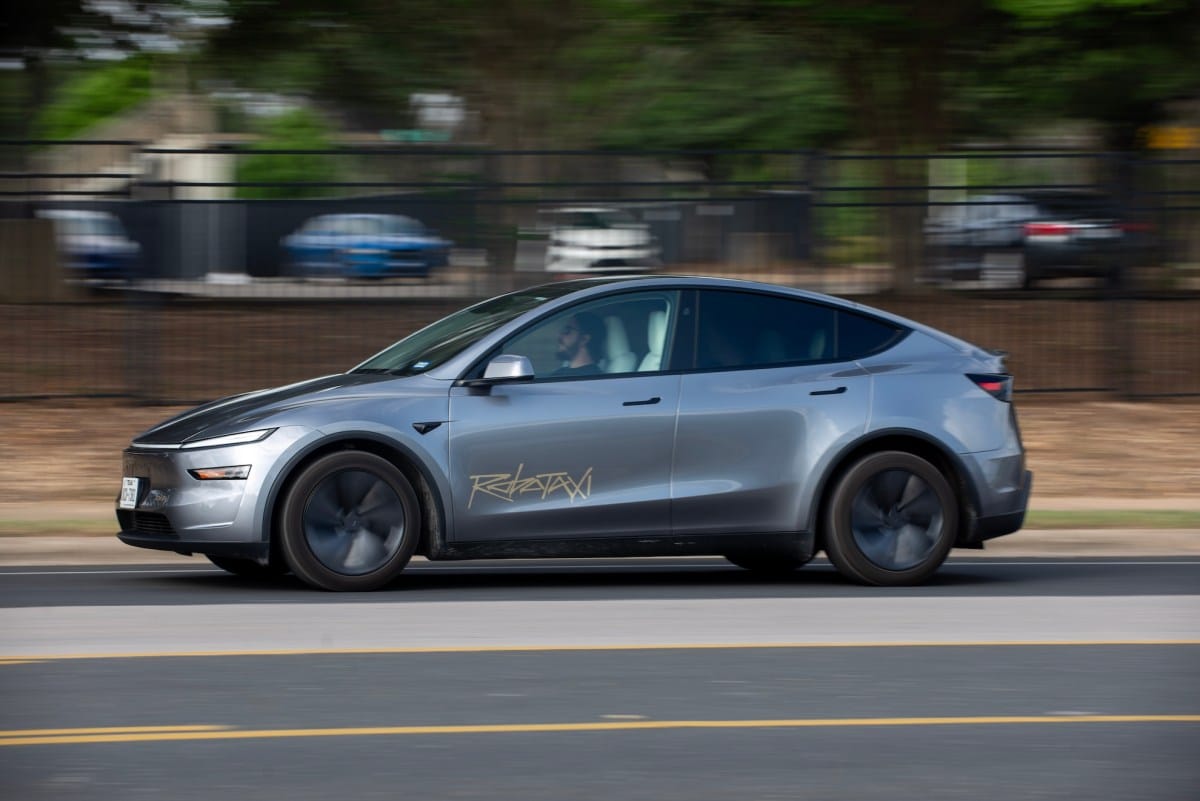
Tesla switched on its Robotaxi service in Dallas and Houston today, adding to its Austin deployment. The company posted a video showing vehicles operating with no one in the front seat.
The fleet is tiny. According to the independent Robotaxi Tracker, only one active vehicle was logged in each new city at launch, versus 46 in Austin. Geofences are narrow — Jersey Village and Willowbrook in Houston; University Park, Highland Park, SMU, Uptown, Downtown, and a handful of other neighborhoods in Dallas.
What matters is the strategy. Tesla's Q4 2025 earnings guidance outlined a broader H1 2026 rollout across seven U.S. cities, including Phoenix, Miami, Orlando, Tampa, and Las Vegas. And Tesla's camera-only approach — no lidar — is a fundamentally different bet than Waymo's. Every unsupervised mile is data that either validates that bet or undermines it. Tesla disclosed in a February 2026 filing that its Austin robotaxis had been involved in 14 crashes since launch. If Dallas and Houston produce similar incidents at scale, federal scrutiny lands fast. If the fleet expands to double-digit vehicles per city within two weeks, the seven-city target becomes credible. If it stalls, Austin may be harder to replicate than the announcement suggests.
Google Is Negotiating What Anthropic Refused
Google is in talks with the Department of Defense to deploy Gemini models inside classified environments, per reporting from The Information. Google's proposed contract language explicitly carves out domestic mass surveillance and autonomous weapons targeting from permitted uses.
The backdrop is what makes this consequential. In January, Anthropic refused to loosen its safety guardrails for defense use, and the Pentagon responded by labeling the company a supply-chain risk — jeopardizing its government contracts. Google is threading a different needle: negotiate protections up front, take the contract, don't pick the fight. It's also a remarkable reversal from 2018, when Google employees successfully pressured the company out of Project Maven.
If Google closes this deal with its proposed guardrails intact, it becomes the template every frontier lab negotiates against. If the guardrails get softened during negotiation — and nobody outside the room will ever fully know — it tells every other lab that the Pentagon sets the floor, not the ceiling. The Pentagon is now the most consequential enterprise AI customer in the world, and every major lab is recalibrating its safety posture accordingly.
OpenAI's Codex Just Became Actual Workplace Software
OpenAI said on April 16 that Codex can now operate a computer alongside the user, use more apps and plugins, run tasks in parallel, schedule future work, and remember preferences over time. The headline number: more than 3 million weekly developers, with a reported million-per-month growth rate.
Practitioners testing Codex Computer Use this week described it as genuinely fast — able to drive Slack, browser flows, and legacy desktop apps that never had proper APIs. Several high-signal accounts on developer Twitter called it the first computer-use platform that actually works for enterprise software written fifteen years ago.
If this holds up in production, the adoption curve starts looking less like tool adoption and more like organizational redesign — agents running long-horizon tasks across the workspace while humans handle the parts that require judgment. The signal to watch: whether enterprises extend Codex permissions beyond the safe, boring stuff within the next two quarters.
China's PLA Shows Off an Autonomous Robot Wolfpack
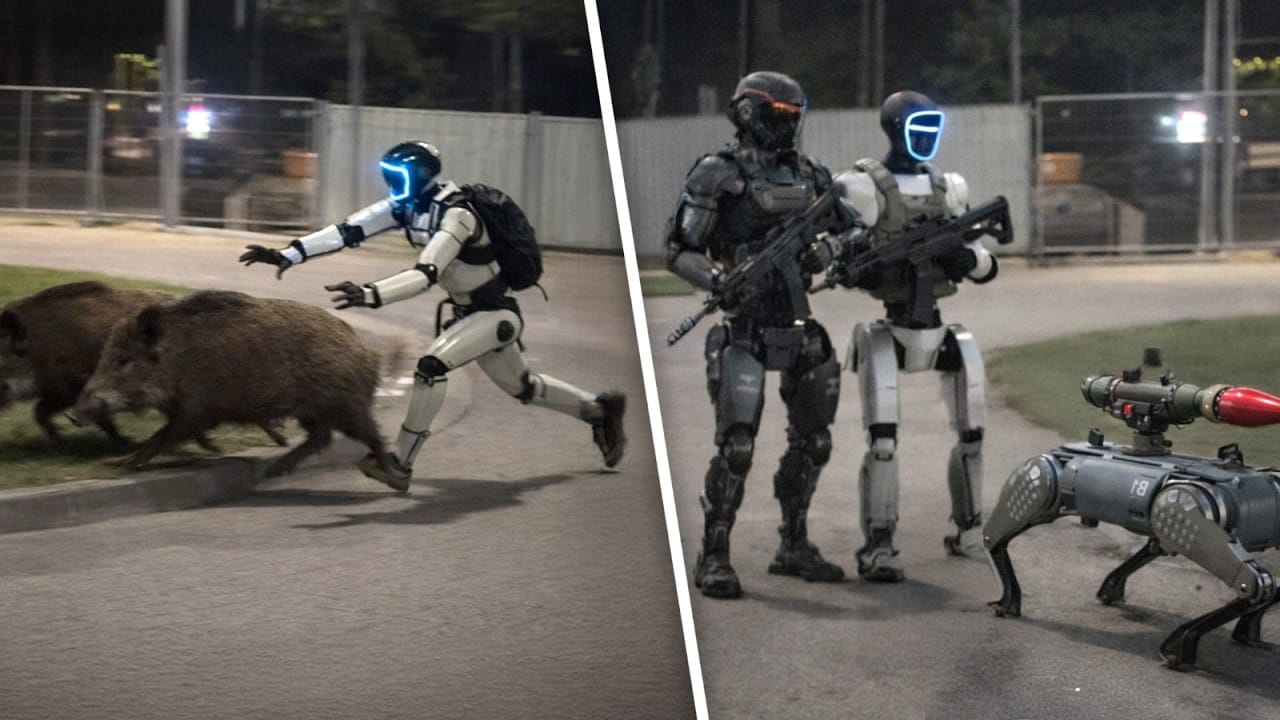
Chinese state media broadcast a CCTV documentary this week detailing the PLA's ground combat doctrine for autonomous robots. The system it described — a coordinated network of robot dogs, drones, and unmanned boats sharing intent through a protocol called ATLS — claims to operate under GPS denial and radio jamming, with a single soldier commanding the pack via voice, joystick, or tactical glove.
The individual platforms are named: Shadow scouts, Polar carries logistics, Bloody carries an automatic rifle, grenade launcher, and mini rockets. Sea and air layers sit on top — unmanned L30 boats running 65 km/h and Guang Jian laser systems for drone swarms. The claims about decentralized coordination without continuous comms are exactly the kind of thing that would reshape threat models if verified, and exactly the kind of thing nobody outside CCTV's edit bay has seen live.
The independent stress test arrives this month. Europe's LRO 2026 military robot trials, with about 20 international teams at the Swiss Army's Thun training area, will put unmanned ground vehicles and drones through mud, rough terrain, and realistic mission pressure. That's the first credible signal on whether decentralized multi-robot combat AI works outside polished demo courses.
Hesai's Color-Sensing LiDAR Chip Collapses a Messy Pipeline
Hesai announced what it calls the world's first full-color LiDAR chip — pixel-level native fusion of color and distance at the hardware layer, producing colored 3D point clouds without stitching camera and lidar data in software. It supports up to 4,320 laser channels and 4K perception, with mass production scheduled for later this year and vehicle deployment targeted for 2027.
The practical result: autonomous systems can recognize traffic lights, lane markings, and construction signs in one pass, without the micro-delays and alignment errors that come from fusing separate sensor feeds in post. Hesai supplies Li Auto, Xiaomi, and BYD, and held over 40% of China's LiDAR market in 2025, so this isn't a lab demo — it's a supplier roadmap. The company also showed a spatial-intelligence device called Kosmo, priced around 100,000 yuan, aimed at capturing 3D data for training AI world models. That one has no commercial timeline yet.
If cars ship with this in 2027, the cost curve for robust embodied perception bends downward for every robotics company, not just autonomous driving. If it slips, the message is that hardware fusion is genuinely harder than software stitching — and the industry settles for the messier pipeline longer than it wants to admit.
The Open-Source Agent Ecosystem Has a Security Problem
At an AI engineering conference in San Francisco today, Peter Steinberger gave two talks about OpenClaw — the same project, two very different framings. The TED version was the feel-good story about the fastest-growing open-source project in history. The engineering version was sobering: 60× more security incident reports than curl, and at least 20% of skill contributions flagged as malicious.
The shift from human pull requests to AI prompt requests has opened a supply-chain attack surface the open-source world hasn't had to reckon with before. Attackers aren't hacking code; they're poisoning the agents that write the code. And the maintainer playbook for vetting a malicious Python package doesn't quite translate to vetting a malicious agent skill that only misbehaves under specific conditions.
If enterprise agent platforms start mandating sandbox isolation for all third-party skills, it means the industry has internalized the risk. If they don't — and teams keep pulling skills from community registries the way they pull npm packages — the first large-scale agent supply-chain breach is a matter of when, not if.
⚡ What Most People Missed
On April 13, Moonshot AI quietly emailed its subscribers that K2.6 Code Preview had entered beta — built on a trillion-parameter MoE architecture with formal release targeted for May. The r/LocalLLaMA thread trending today is the Western community catching up to something that already happened. If the open weights drop alongside the full release, the coding-agent leaderboard shifts overnight.
Bloomberg reported this week that VCs offered Anthropic a preemptive round at an $800B+ valuation, and the company isn't interested. Anthropic's annualized revenue reportedly crossed $30B in early April, up from $9B at the end of 2025. A company declining that valuation either thinks it's worth more or doesn't need the money — both are interesting answers.
Epoch AI's new analysis of all seven planned U.S. Stargate data-center sites concludes the project is on track for more than 9 GW of power draw — comparable to New York City's peak electricity demand. AI policy is increasingly energy and permitting policy; the next regulatory battle isn't about model weights, it's about substations.
Fortune reports Salesforce's Agentforce drove roughly $100M in annualized support cost savings and influenced more than 3,200 previously dormant sales opportunities. It's the first concrete data point showing agents as top-line engines, not just headcount reduction. ROI conversations for agent infrastructure start looking different when the pitch is "new revenue" instead of "fewer people."
Mozilla AI is building Stack Overflow for agents. The cq project is a working proof of concept where agents query past lessons, contribute new ones, and build trust through reuse — with plugins for Claude Code and OpenCode already working. Externalized agent memory is starting to look like infrastructure, not a feature.
📅 What to Watch
- If Google's Pentagon deal closes with its proposed autonomous-weapons and surveillance carve-outs intact, every frontier lab now has a template for defense contracts that doesn't require abandoning safety posture — and the Anthropic standoff becomes the exception, not the rule.
- If Tesla's Dallas and Houston fleets stay in the low single digits past April 30, the Austin model is less replicable than the earnings guidance implied, and the seven-city H1 2026 target is aspirational.
- If Kimi K2.6 ships open weights in May, the coding-agent price-performance frontier gets redrawn before OpenAI or Anthropic can respond with pricing cuts.
- If Europe's LRO 2026 trials expose coordination failures in multi-robot systems under realistic terrain, it means the PLA's wolfpack claims are largely doctrine, not capability — and procurement cycles slow.
- If enterprise agent platforms start mandating sandbox isolation for third-party skills, the OpenClaw maintainers' warnings are landing, and the first wave of agent supply-chain hardening begins.
- If local-inference setups like Qwen 3.6 + Hermes reproduce at enterprise scale, expect a wave of on-prem agent projects in legal, healthcare, and R&D — sectors where API egress is a non-starter.
The Closer
A Figma boardroom learning its newest ex-director just shipped a Figma-killer; a Tesla crossing an empty Dallas intersection with nobody in the driver's seat; a PLA robot dog named Bloody carrying a grenade launcher up a staircase. In Shanghai, a LiDAR chip is quietly learning the color red. That's it for today.
Forward this to the friend who keeps asking what's actually happening in AI this week — they'll thank you.