The Lyceum: AI Daily — Aug 22, 2026

Photo: lyceumnews.com
Saturday, August 22, 2026
The Big Picture
This morning’s developments are incremental, but revealing. DeepSeek added vision, Anthropic placed a powerful cybersecurity model behind a narrow interface, and China’s robot industry is building shared places for machines to practice. The advantage is shifting beyond the model itself—to deployment design, physical training infrastructure and rules that determine where artificial intelligence may operate.
Recency note: Reuters’ August 4 report on Trump administration advisers and open-weight testing, Reuters’ state-attorney-general analysis, and the February 24 DeepSeek–Nvidia chip report carried by the Taipei Times fall outside this edition’s 24-hour window and are not treated as current news.
Today's Stories
[DeepSeek Gives Its Experimental Model Eyes [DEVELOPING]](https://www.caixinglobal.com/2026-08-22/deepseek-enters-the-multimodal-ai-race-with-experimental-vision-model-102476706.html)
DeepSeek gave its experimental model eyes overnight. According to Caixin Global, the company released DeepSeek-V4-Flash-Vision-Exp, adding visual understanding and a multimodal application programming interface—a service through which software can send the model images and text. The “Exp” suffix matters: this is an experimental release, not a settled claim of frontier performance.
Reliable performance would give DeepSeek an essential ingredient for agents that must interpret screenshots, documents and other visual interfaces. It would also give developers another multimodal option outside the largest American platforms.
Failure will look less dramatic: impressive demos followed by brittle performance on unfamiliar images or multi-step tasks. Independent evaluations, production pricing and sustained availability through DeepSeek’s API will tell us which version arrives.
Anthropic Puts Mythos 5 Behind a Security Scanner
Anthropic is offering Claude Mythos 5 without handing users the keys. On Friday, it made the model available inside Claude Security, a public-beta repository scanner for Claude Enterprise customers. The tool identifies possible vulnerabilities, assigns Common Weakness Enumeration categories and proposes patches, but users do not receive an unrestricted interface to the underlying cyber-capable model; humans must approve every fix. (Anthropic Puts Mythos 5 Behind a Security Scanner)
That architecture may be the product. Laboratories could distribute sensitive capabilities through constrained workflows—findings and patches rather than an open prompt box—without making the raw model broadly available. (Anthropic Puts Mythos 5 Behind a Security Scanner)
The announcement does not establish how accurately Claude Mythos 5 finds real production flaws. The decisive signals will be independent comparisons, accepted patches and evidence that security teams keep using the scanner after the beta novelty wears off. (Anthropic Puts Mythos 5 Behind a Security Scanner)
China Has Built More Than 70 Places for Robots to Practice
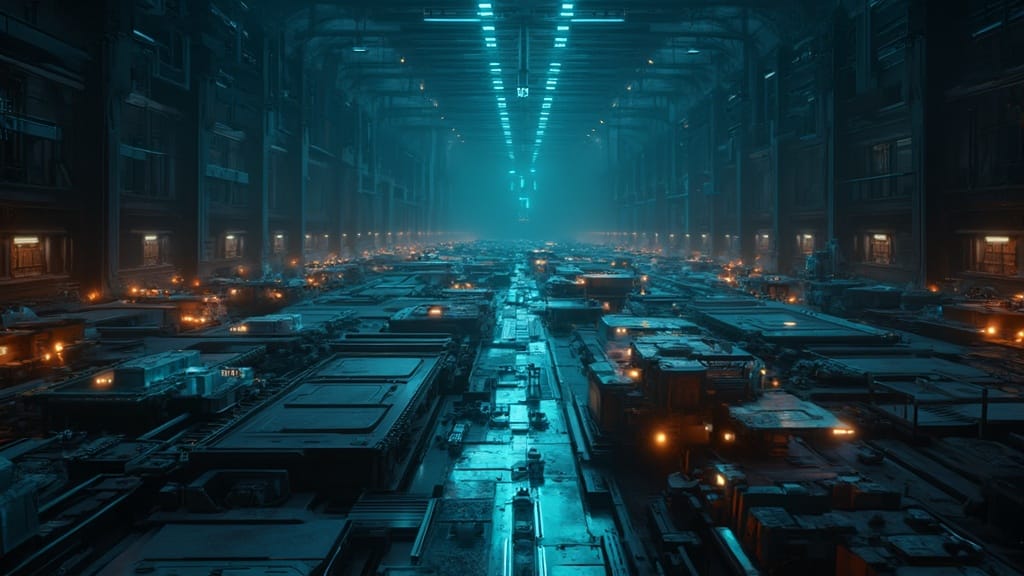
China has built a national practice field for robots. More than 70 embodied-AI training grounds were operating across China by the end of June, TechNode reported Friday, citing the China Academy of Information and Communications Technology. Another 46 were under construction or planned, while 86% of the operational facilities supported industrial-manufacturing scenarios. (China Now Has More Than 70 Embodied-AI Training Grounds)
These shared environments let companies collect physical interaction data and test robots without building every factory floor or warehouse from scratch. High utilization would create something like cloud infrastructure for machines that need to touch the world.
The raw count does not prove the facilities produce useful data—or useful robots. Published utilization rates, repeat customers and measured improvements in deployed machines would show whether the grounds are industrial infrastructure rather than expensive robot gyms.
Japan Draws a Legal Boundary Around Legal AI
Japan has drawn a clearer line for legal AI. The Ministry of Justice issued guidelines Friday clarifying how AI-assisted corporate legal services can operate without violating the country’s Attorney Act, Jiji Press reported. The guidance preserves a stricter boundary around litigation and other disputes while giving non-dispute legal technology a clearer lane.
If that distinction holds, Japanese legal-software developers can build contract and compliance products with less fear that routine automation will be treated as unauthorized legal practice. Other regulated professions may eventually seek similarly specific interpretations rather than waiting for sweeping AI legislation.
Ambiguous enforcement would erase much of that certainty. Product launches in Japan—and decisions by the Ministry of Justice involving services near the dispute boundary—will reveal whether the lane is wide enough to matter.
Micron Commits $10 Billion to the Memory Wall

Micron is betting that memory, not compute alone, will define AI’s next constraint. On Friday, the company unveiled Micron Research Labs, committing $10 billion over ten years to research advanced memory, packaging and architectures that bring memory and computation closer together. Micron says the Boise facility will break ground in 2027 and eventually host hundreds of researchers. (Micron’s $10B research hub bets memory is the real AI bottleneck)
The bet is that AI’s next bottleneck is not merely performing calculations, but moving data quickly enough to keep processors busy. If Micron is right, better memory systems could make long-context models and persistent agents cheaper without waiting for another leap in graphics processors.
A large building is not a breakthrough. Research publications, prototypes and designs that reach Micron products will distinguish a productive laboratory from a decade-long corporate monument. (Micron’s $10B research hub bets memory is the real AI bottleneck)
Karnataka Launches an AI Computer for Rural Students
Karnataka is testing whether AI access can begin with affordable local hardware. Karnataka Deputy Chief Minister D.K. Shivakumar unveiled KEO on Friday, The New Indian Express reported. Developed by Karnataka State Electronics Development Corporation, the AI-powered computing platform is aimed at rural students. (newindianexpress.com)
The important test is whether inexpensive access changes who can learn with AI, rather than simply placing another branded device in classrooms. Broad adoption could give Karnataka a locally supported route to AI education without assuming every student owns high-end hardware.
Failure will look like limited distribution, weak teacher support or hardware that cannot sustain useful software. School deployments, active use and continued software updates—not launch-stage ceremony—will determine whether KEO becomes educational infrastructure.
HelloGov Publishes a Common Language for Government Agents
HelloGov wants government agents to stop learning every form from scratch. The company launched GovSchema on Friday, describing it in its press release as an open standard for how AI agents interact with government services. The goal is to give agents a consistent structure for navigating forms, requirements and public-service workflows.
Real adoption would let agents complete government processes through machine-readable instructions instead of repeatedly deciphering websites designed for humans. HelloGov would benefit, but so would competing developers able to build against the same standard.
Standards die quietly when nobody else implements them. Named adopters, interoperable demonstrations and contributions from organizations beyond HelloGov will show whether GovSchema becomes shared infrastructure or merely a well-formatted proposal.
⚡ What Most People Missed
- Nvidia’s powered-land strategy: Cloverleaf Infrastructure announced Friday that Nvidia had made an undisclosed minority investment as part of a data-center development partnership. There is no named project or construction schedule yet, but the move shows Nvidia reaching toward the land, electricity and cooling that determine whether chip orders can become working data centers.
- OpenAI wants stronger California monitoring rules: Politico reported Friday that OpenAI called for California law to cover serious incidents involving frontier models still being trained or evaluated. That position puts OpenAI in the unusual posture of asking Sacramento for stronger oversight while laboratories and lawmakers continue arguing over the details.
- China’s robot grounds are overwhelmingly industrial: The eye-catching number is 70 facilities; the more consequential one is that 86% support manufacturing scenarios. China appears to be prioritizing factory competence over humanoid theater—which is less cinematic and much easier to invoice.
- Micron is funding research beyond its normal product calendar: Micron describes the new laboratory as a home for work that sits beyond existing road maps. The valuable output may therefore be new ways of arranging memory and computation, not simply denser versions of familiar chips.
📅 What to Watch
- If independent tests show DeepSeek-V4-Flash-Vision-Exp reliably operating unfamiliar software interfaces, it means lower-cost multimodal models can begin displacing custom integrations.
- If Claude Security produces patches that engineering teams routinely accept, constrained access may become the standard way laboratories commercialize high-risk model capabilities.
- If China’s embodied-AI training grounds publish high utilization and repeat-customer numbers, physical training data will be turning into shared industrial infrastructure.
- If Japanese legal-technology companies launch products close to the Ministry of Justice’s dispute boundary without enforcement action, interpretation of existing professional law will matter more than new AI statutes.
- If organizations outside HelloGov implement GovSchema, government-service agents may begin competing on execution quality rather than their ability to reverse-engineer forms.
- If Micron Research Labs produces architectures adopted in commercial systems, memory companies will gain leverage over an AI market accustomed to treating graphics processors as the entire machine.
The Closer
DeepSeek opened one experimental eye, China built seventy robot gyms, and Micron sketched a $10 billion filing cabinet for the world’s hungriest models. Meanwhile, Nvidia is shopping for powered land—because apparently the final form of artificial intelligence is a zoning attorney with a substation map.
Keep the machines supervised.
Forward this to the person who thinks AI infrastructure begins and ends with a chip.