The Lyceum: AI Daily — Jun 24, 2026

Photo: lyceumnews.com
Wednesday, June 24, 2026
The Big Picture
Today's clearest AI signal isn't a model — it's a sentence in a regulatory filing. Oracle told the SEC, in writing, that AI cut its workforce. That candor reframes the whole day: the most consequential AI stories right now aren't about what models can do, but about the systems around them — legal, financial, geopolitical — starting to push back hard. A chip deal exists on paper and nowhere in reality; a document-reading tool nobody should care about is racking up developer attention; and the cost of the AI buildout is finally showing up on someone's cash flow statement as a very large negative number.
What Just Shipped
The labs were quiet on day-zero launches — no major new frontier models surfaced in the past 24 hours, per current trackers. The one confirmed release worth your time:
- Mistral OCR 4 (Mistral AI): Document extraction with bounding boxes, typed block classification, and inline confidence scores across 170 languages — deployable in a single self-hosted container.
- REALM benchmark (arXiv preprint, not peer-reviewed): A unified red-teaming benchmark for physical-world vision-language models, testing how perception-reasoning systems behave in safety-critical scenarios.
- Doubao paid tiers (ByteDance): China's largest AI-native app rolled out three subscription tiers, from 68 to 500 yuan per month.
Today's Stories
Oracle Cut 21,000 Jobs — and Blamed AI in Writing
Most companies that lay off workers because of AI don't say so out loud. Oracle did.
Oracle shed 21,000 jobs over the past year — almost 13% of its workforce — bringing total headcount to 141,000 full-time employees as of May 2026. That's not an analyst's inference. In its annual filing, Oracle wrote: "The adoption and deployment of AI technologies across our operations have resulted, and may continue to result, in reductions to our workforce." A public company told regulators, investors, and employees that the machine is replacing the headcount — and warned it may keep doing so.
The financials make the trade-off stark. Oracle spent $55.7 billion on capital expenditure in fiscal 2026 — up 162% year over year — sending free cash flow to negative $23.7 billion. The company is borrowing against AI's future while cutting the human workforce that built its past. The sharpest cuts hit sales and marketing, which fell from roughly 31,000 to 25,000 employees — a 19% reduction in a single year.
If Wall Street rewards this, expect other legacy software vendors to copy the playbook. Watch whether any of them dares put the same AI-causation language in their own filings. The signal to track: the first company to follow Oracle into the 10-K. Once it's in a regulatory document, it's a precedent — and precedents get litigated.
The Chip Deal That Exists on Paper and Nowhere Else

Here's the strangest standoff in AI trade: Washington approved Nvidia H200 sales to China, the chips haven't moved, and both sides seem fine with that.
The US approved export licenses letting about 10 Chinese companies — including Alibaba, Tencent, ByteDance, and JD.com — buy Nvidia's H200 AI chips. Nothing has shipped. Each approved buyer could purchase up to 75,000 chips under US licensing rules — a multi-billion-dollar order sitting unsigned. Chinese firms reportedly slowed purchases following guidance from Beijing, which is pushing domestic companies to reduce reliance on foreign semiconductors.
This is the geopolitical equivalent of two parties signing a contract that neither intends to execute. Washington claims it opened the market; Beijing claims it's building alternatives; Nvidia holds the paperwork and zero revenue. Note this is mid-May reporting — the situation is ongoing, not breaking. The signal to watch: whether Beijing formally rejects the terms rather than simply stalling. That would turn the H200 deal from a negotiating chip into a case study in export-control diplomacy that satisfies no one.
Mistral OCR 4 Is Boring — and That's the Point
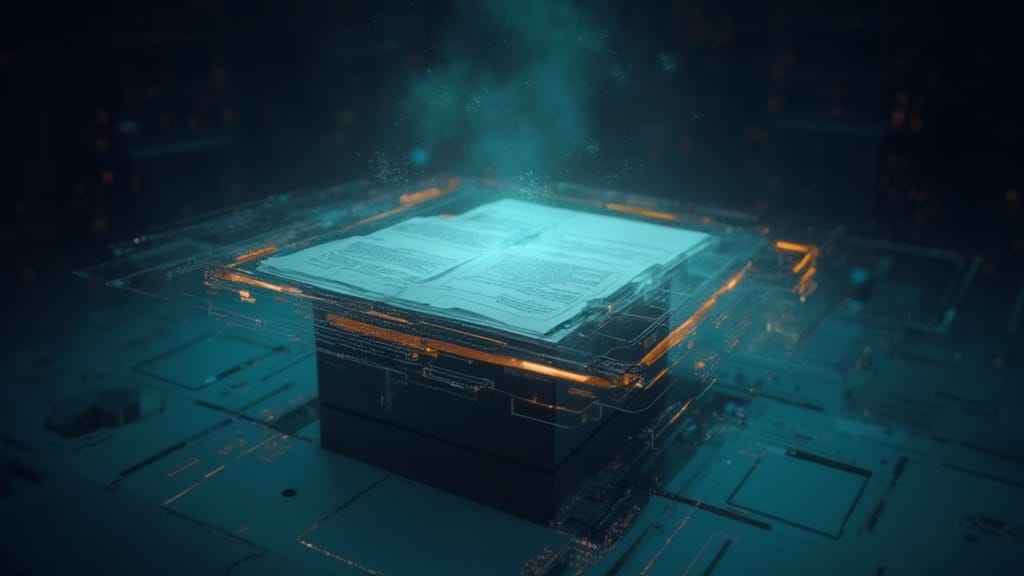
Nobody writes breathless threads about a document-reading model. So why is this one sitting near the top of Hacker News?
OCR — optical character recognition — is the unglamorous plumbing that turns scanned PDFs, invoices, and dense contracts into text AI systems can use. It's also where enterprise AI projects quietly die: not at the model level, but at the extraction layer. Mistral OCR 4 returns bounding boxes, block classification, and inline confidence scores alongside extracted text, supports 170 languages, and runs in a single self-hosted container.
That last detail is the real product. For regulated industries — banks, hospitals, government agencies — sending documents to a cloud API isn't permitted, which is exactly the market Google Document AI and Azure OCR have owned by default. Independent annotators blindly preferred OCR 4 over every system tested, with win rates averaging 72% on the session, and pricing lands at $4 per 1,000 pages, dropping to $2 with the batch discount. Vendor benchmark claims of "4x faster" and "8x lower cost" are unverified single-source figures — treat with skepticism. The pricing, though, is public and aggressive. Watch whether this pulls regulated document workflows away from the incumbents; if it doesn't, the on-prem story was a feature, not a moat.
SK Hynix Overtakes Samsung on the Back of AI Memory
Behind every flashy model demo is a lot of very specialized memory — and that quiet layer just reshuffled Korea's corporate leaderboard. The Economic Times reports SK Hynix has surpassed Samsung to become South Korea's most valuable company, amid its dominance in high-bandwidth memory (HBM) — the chips that let GPUs feed models fast enough to matter.
This is the deeper supply-chain story behind the AI hardware rally: memory, not just GPUs, is becoming the strategic bottleneck. Whoever controls HBM effectively sets a speed limit on how fast Nvidia can ship top-end accelerators. If memory pricing keeps climbing while GPU supply loosens, bargaining power shifts toward the component layer most AI buyers never think about — and compute access becomes constrained by who can source memory, not who can design silicon.
Doubao Switches On Paid Tiers in a Bid to Become China's AI "Super Entrance"
ByteDance's Doubao launched three paid subscription tiers — Standard at 68 yuan a month, Premium at 500 yuan — and is testing ride-hailing booking through a CaoCao Travel integration. With 345 million monthly active users as of March 2026, Doubao is China's largest AI-native app, and ByteDance is clearly trying to turn it into a WeChat-style front door for both subscriptions and commerce.
This is one of the clearest signs yet that a major AI app is moving from free distribution to real monetization. If the transactional layer works, Doubao stops being a chatbot and becomes a paid assistant that also books your car. The ride-hailing piece is still a grey test, not a full rollout — but the pricing is public, and the product direction isn't subtle. Watch whether the commerce integration graduates from test to default. [Source: 36Kr — Chinese]
New Benchmarks Quietly Raise the Bar for Safe Physical-World AI
While headlines chase layoffs and chips, some of the most consequential long-term safety work is hiding in dry-sounding preprints. A new arXiv paper — not yet peer-reviewed — introduces REALM, a unified red-teaming benchmark for physical-world vision-language models: systems that see and describe the world for robots and cars. It tests how they handle adversarial prompts and safety-critical edge cases.
Alongside it, DriveStack-VLA turns a general vision-language model into a driving policy, and VisCritic proposes using before/after screen comparisons as a reward signal to keep software-operating agents on track. Together, these papers mark a shift from "can robots see?" to "can they see, reason, and stay inside guardrails in messy real environments?" If even a fraction reach production — in warehouses, cars, home robots — regulators will ask why safety benchmarks like REALM aren't mandatory. The signal: whether the next embodied-AI deployment cites a red-team score, or skips it.
Meta's Keyboard-Watching Program Is Back — Paused, but Not Resolved
Reuters reported Meta had been running the Model Capability Initiative, capturing US employees' mouse movements, clicks, and keystrokes to train internal AI. After the report surfaced, Meta paused the program. The pause isn't the story — the unanswered legal question is.
The program sits at the intersection of two unresolved issues: what employers can collect on company devices, and whether that data can train AI systems that might eventually replace those same employees. Oracle's filing made the second part explicit this very week. No labor agency has formally responded yet — but with Oracle's disclosure and Meta's pause landing days apart, AI training on employee behavior is now squarely in front of regulators, ready or not. Watch for the first NLRB or state-agency response: whoever moves first sets the compliance floor for every enterprise running similar telemetry.
⚡ What Most People Missed
AI memory makers, not GPU brands, are gaining the leverage: Coverage of SK Hynix passing Samsung fixates on stock price, but the real story is that whoever controls high-bandwidth memory sets the speed limit on how fast Nvidia can ship accelerators. That's bargaining power most AI buyers haven't priced in. [Source: Economic Times — English]
GUI agents just got a visual sense-check: VisCritic proposes giving software-operating agents a visual process reward — teaching them to compare before/after screens to decide if a step worked, rather than trusting a brittle text description. It's a subtle but important step toward agents that handle long workflows without constant human babysitting.
Driving models are inching toward "LLM-native" autonomy: DriveStack-VLA's idea of turning a general vision-language model into a driving policy blurs the line between classical autonomy stacks and large multimodal models. Your next car won't run on an LLM — but regulators may soon have to audit driving systems the way they audit language models.
Doubao is testing ride-hailing inside a chatbot: ByteDance's CaoCao Travel integration is a grey test, not a rollout — but it's the clearest sign yet that China's biggest AI app wants to be a transactional "super entrance," not just a place to ask questions. [Source: 36Kr — Chinese]
📅 What to Watch
- If a second major firm puts "AI caused our layoffs" in a regulatory filing, AI displacement stops being a press narrative and becomes a litigation category — and disclosure language gets standardized fast.
- If Beijing formally rejects the H200 terms rather than just stalling, the deal becomes a precedent for export-control diplomacy that satisfies neither government — and Nvidia's China revenue assumptions evaporate.
- If HBM pricing keeps climbing while GPU supply loosens, AI profit margins migrate from chip designers to the memory makers most buyers ignore.
- If the NLRB or a state agency responds to Meta-style behavioral harvesting, the privacy rules around screen-watching agents tighten for every enterprise, not just Meta.
- If Doubao's commerce integration graduates from test to default, the "AI super-app" model gets a working template — and Western labs lose their excuse for keeping assistants confined to chat.
The Closer
A document-reading model nobody should care about climbing the Hacker News charts; a Korean memory maker quietly outgrowing the company that made your phone; and Oracle confessing to the SEC that the robots did it, in the same week its cash flow hit negative $23.7 billion. The most honest sentence in AI today was written by a lawyer who had to disclose it — which tells you the candid stuff now lives in the filings, not the keynotes.
Stay suspicious of anything that ships without a benchmark.
Forward this to the friend who still thinks "AI replacing jobs" is a thing that happens later.