The Lyceum: AI Daily — Mar 14, 2026

Photo: lyceumnews.com
Saturday, March 14, 2026
The Big Picture
Today's AI story isn't about new models — it's about power, and who's grabbing it. Palantir CEO Alex Karp said on camera that AI will reshape which voters matter. Elon Musk admitted his AI company needs to be rebuilt from scratch. And Anthropic quietly changed the economics of building with large language models by making million-token context windows cheap. The theme: the people steering AI are making bolder, stranger moves, and the consequences are getting harder to ignore.
Today's Stories
Palantir's CEO Says AI Will "Lessen the Power" of Educated, Democratic Voters
In a Thursday CNBC interview now ricocheting across Reddit and political Twitter, Palantir CEO Alex Karp said AI will undermine the economic and political power of "highly educated, often female voters, who vote mostly Democrat" while boosting working-class men. He framed this not as a threat but as an inevitability the industry is dodging — and warned that without an honest public reckoning, "you are going to get the pitchforks."
This wasn't a slip. Karp has long positioned Palantir as "completely anti-woke" and courted military and law enforcement contracts worldwide. What makes this a signal rather than just a controversy: a CEO whose company runs data platforms for governments and armies is explicitly framing AI as a tool for political realignment — on the record, on camera, in an election cycle. Whether you find that prescient or chilling, it's a data point about how the defense-AI industry wants to position itself. Watch how procurement officers and institutional investors respond — if contracts or shareholder pressure follow, AI just became a partisan litmus test for enterprise sales.
Musk Admits xAI "Was Not Built Right," Down to 2 of 12 Co-Founders
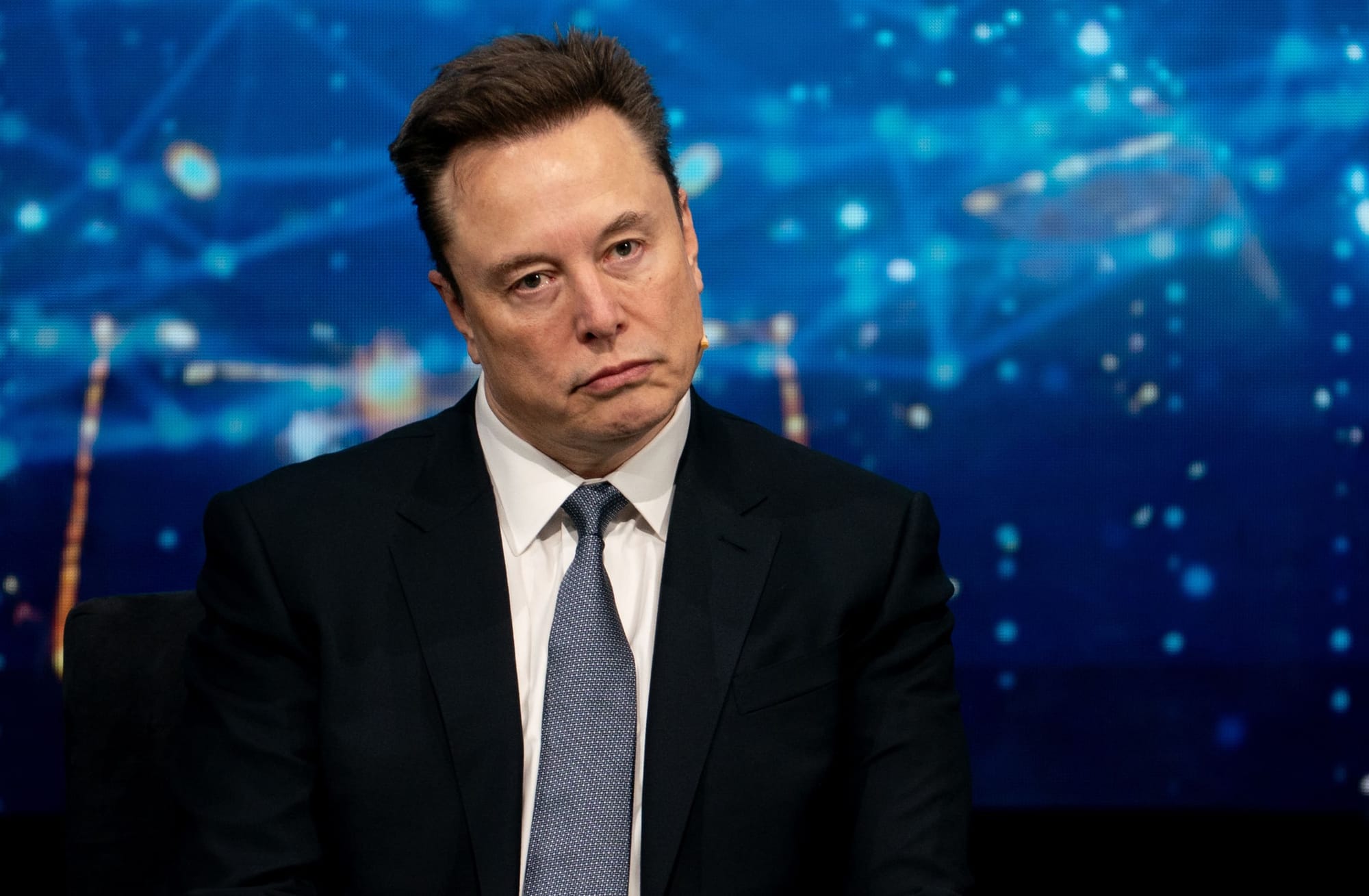
Weeks after merging xAI with SpaceX in a deal he valued at $1.25 trillion, Elon Musk posted on X that his AI company "is being rebuilt from the foundations up." The admission follows a talent exodus that has left just two of xAI's original twelve co-founders. The latest departures — Guodong Zhang and Zihang Dai — were key technical leaders. Musk blamed frustration with the company's coding products.
The scramble to recover is already underway: xAI poached two senior leaders from Cursor, Andrew Milich and Jason Ginsberg, both reporting directly to Musk. Meanwhile, remaining staff have complained that the upheaval is destroying morale, and researchers keep leaving for better offers or to escape Musk's "extremely hardcore" demands. A CEO publicly declaring a full rebuild — right before what could be one of history's largest IPOs — is not a confidence signal. It's organizational distress in real time.
Anthropic Makes Million-Token Context Windows Cheap — and That Changes Everything
Anthropic quietly dropped the long-context pricing premium for Claude Opus 4.6 and Sonnet 4.6, making a million-token request — roughly 700,000 words, or several novels — cost the same per token as a short one. A context window is how much text a model can "see" at once; at a million tokens, you can feed it an entire codebase, a multi-year contract library, or a full research corpus in a single call. No chunking, no summarization hacks, no workarounds.
The competitive math is sharp. Google's Gemini 2.5 Pro matches the million-token window but still charges a premium above 200,000 tokens. OpenAI's strongest model, GPT-5.4, tops out at 256,000 tokens. Claude is now the only model family where both top tiers offer a million tokens at flat pricing. Developers on r/ClaudeAI are already treating "dump the whole repo into the model" as a default workflow. The value shift: less clever prompt engineering, more organizing your data so the model can actually use it. Competitors will face pricing pressure over the coming weeks.
The Hidden Cost of AI: A War Over Power Lines
The insatiable energy appetite of AI data centers is now sparking fights in America's backyards. The boom in training and inference demands a massive expansion of high-voltage transmission lines, and landowners are pushing back hard — arguing the infrastructure damages property values, harms farmland, and disrupts ecosystems, all to power tech companies that may never benefit their communities directly.
This isn't a zoning dispute. It's a physical bottleneck for the entire AI industry. Without a clear path to more power, the pace of AI development gets constrained by the grid itself. The resistance is growing, and it could reshape the economics and geography of where AI infrastructure gets built. If you're tracking where the next wave of data centers lands, follow the transmission fights — they'll tell you more than any earnings call.
Uber Co-Founder Travis Kalanick Bets on Specialized Robots, Not Humanoids
While Tesla and Figure AI chase the dream of a general-purpose humanoid, Travis Kalanick launched Atoms on Friday — a robotics startup building task-specific industrial machines for mining, transport, and food. His thesis: "gainfully employed robots" that do one thing well are a faster, clearer path to revenue than trying to replicate the full range of human movement.
It's a meaningful counter-signal. The humanoid hype cycle has attracted billions in investment, but Kalanick is betting the real money is in automating single, repeatable industrial tasks. When a founder with his track record and capital access chooses the narrow bet over the moonshot, it suggests the smart money sees verticalized hardware — not general-purpose androids — as where near-term returns actually live.
⚡ What Most People Missed
The U.S. quietly killed a major AI chip export rule. The Commerce Department withdrew a planned regulation that would have required government approval for AI chip exports worldwide. No explanation was given. The proposal had been seen as a potential chokepoint for the global semiconductor supply chain, and its disappearance creates immediate uncertainty for companies and allied governments planning around those rules.
China is drafting a national AI law while projecting a $1.4 trillion AI market by 2030. The combination of codifying rules and promising massive economic scale signals that the Chinese state wants both carrots — subsidies, compute networks, industrial policy — and sticks — legal frameworks — ready as AI scales. Meanwhile, a Shenzhen district is offering subsidies for tools built on the open-source agent platform OpenClaw — cities competing to host agent ecosystems the way they once competed for factories.
AI is becoming a design constraint for space hardware. A new paper in Acta Astronautica describes using machine learning to control how modular satellite antennas physically adjust in orbit. It's lab-stage work, but it points to a quiet shift: AI stops being the payload and starts shaping how you design the structure itself — build lighter, push complexity into software, let the model correct for mechanical imprecision.
📅 What to Watch
- If Anthropic's competitors match flat million-token pricing within weeks, it means context length just became a commodity — and the real differentiator shifts to retrieval quality, latency, and tool integration at scale.
- If xAI's Cursor hires ship a credible coding product before the SpaceX IPO, it validates Musk's "rebuild from foundations" gambit; if they don't, the IPO narrative gets much harder to sell.
- If EU regulators announce the first formal AI Act enforcement actions, it means AI governance moves from policy papers to line-item legal risk for anyone selling into Europe — and U.S. teams treating it as "future policy" are already behind.
- If landowner resistance delays major transmission projects by more than six months, it becomes a binding constraint on where new AI data centers can physically operate — reshaping the geography of compute.
- If Chinese local governments move from proposing agent-ecosystem subsidies to disbursing them, it's a preview of cities worldwide competing for autonomous-agent infrastructure the way they once competed for manufacturing plants.
The Closer
Palantir CEO Alex Karp pitching AI as electoral engineering on live television; Elon Musk publicly apologizing to job candidates his own company rejected; and a pricing change that lets you feed seven hundred thousand words into a model for the same cost as a paragraph. The funniest part of the AI chip export rule disappearing without explanation is that it's exactly how an AI agent would handle a policy it didn't want to defend — just quietly delete the file and hope nobody checks the logs. Stay sharp out there.
If someone you know is trying to keep up with AI without losing their mind, forward them this.