The Lyceum: AI Daily — Mar 14, 2026

Photo: lyceumnews.com
Saturday, March 14, 2026
The Big Picture
Anthropic just made it dramatically cheaper to feed an AI an entire codebase in one gulp, xAI is publicly admitting it needs to be rebuilt from scratch with only two of its twelve co-founders still around, and state legislatures are passing AI laws faster than most companies can update their compliance docs. The story this week isn't who has the best model — it's who can hold their organization together long enough to ship one, and who's writing the rules while everyone else is distracted.
Today's Stories
Anthropic Just Made Million-Token Context Windows Cheap — and It Changes What Agents Can Do
If you've ever wanted to drop an entire codebase, a year of legal contracts, or a novel-length research corpus into an AI in a single request — it just got dramatically cheaper. Anthropic announced that Claude Opus 4.6 and Sonnet 4.6 now include the full 1-million-token context window at standard rates. No surcharge, no multipliers. A million tokens is roughly 700,000 words — War and Peace, twice. Until now, Anthropic charged up to double for requests exceeding 200,000 tokens. Users can also now process up to 600 images or PDF pages per request, up from 100.
The practical impact is likely immediate. The high cost of large context was a real bottleneck for building sophisticated agents — tools that need to reason across long conversations, refactor entire codebases, or audit massive document sets in a single pass. With per-token parity across tiny and enormous requests, developers can stop building elaborate workarounds to chunk documents and start building agents that actually reason across long timelines.
Community reports on Reddit confirm Anthropic has started rolling this out as a default in Claude Code for Max, Team, and Enterprise users — not as a separately metered premium, but bundled into existing plans. The r/singularity thread confirms the pricing shift is live for both Opus and Sonnet 4.6. Every enterprise using Claude for document analysis, legal review, or agentic workflows should revisit what's now feasible.
xAI Is Falling Apart — and Musk Is Admitting It

When Elon Musk publicly says xAI "was not built right the first time," that's not a routine restructuring. Less than six weeks after Musk described merging SpaceX and xAI in a deal he valued at $1.25 trillion, Musk acknowledged the company is "being rebuilt from the foundations up." Of the 12 people who co-founded xAI with Musk in 2023, only two — Manuel Kroiss and Ross Nordeen — remain.
An immediate catalyst: co-founders Zihang Dai and Guodong Zhang left this week after Musk complained that xAI's coding tools weren't competing with Claude Code or Codex. The replacements tell you where the real AI revenue battle is: Andrew Milich and Jason Ginsberg are joining from Cursor, the AI coding tool startup, where they led product engineering. The fight for AI isn't about chatbots anymore — it's about who owns the developer's terminal. Watch whether Grok 5 can ship before the SpaceX IPO makes this chaos very public. Some outlets note departures have concentrated in core research and safety teams — suggesting the rift isn't just managerial churn but a disagreement over pace and guardrails.
Palantir CEO: AI Will Weaken Educated, Democratic Voters
Palantir CEO Alex Karp said the quiet part out loud on CNBC, claiming AI will disrupt the economic and political power of "highly educated, often female voters, who vote mostly Democrat" while increasing the importance of "vocationally trained, working-class, often male" workers. He framed this as inevitable, warning of a backlash against "rich people in tech" if society doesn't adapt.
This is one of the most explicit statements from an industry leader about AI's potential to rewire not just jobs but political power — and it's coming from the CEO of Palantir, a major U.S. government and defense contractor. The comments went viral almost immediately, with many interpreting them as a direct admission that AI is being built to deliberately shift societal power balances. Expect this clip to show up in congressional hearings and state legislative debates for months.
State Legislatures Are Done Waiting for Washington on AI
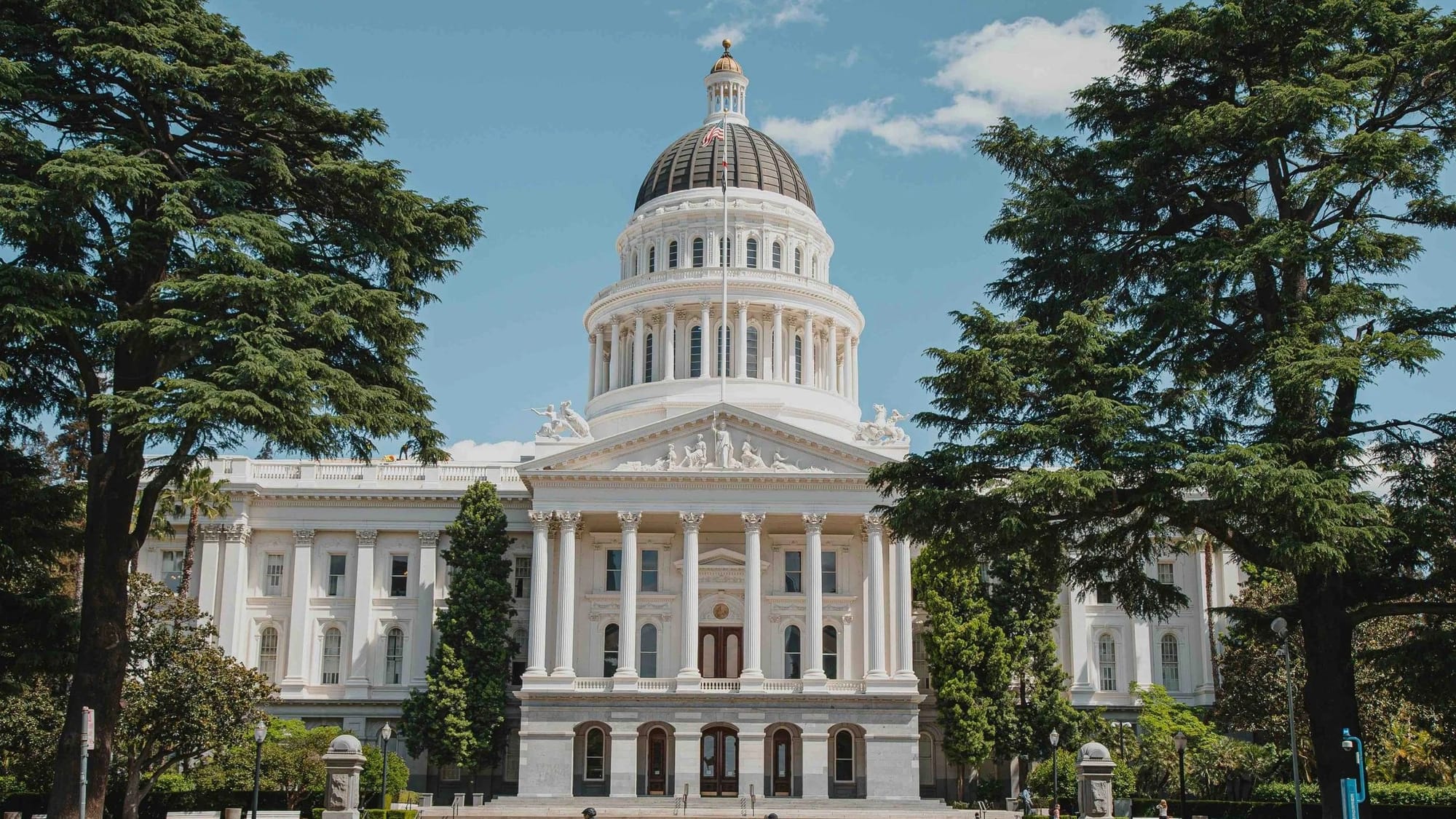
While federal AI policy sits in a holding pattern, state capitols are moving at assembly-line speed. Washington state gave final passage to a chatbot safety bill on March 13, 2026 — the second chatbot safety measure to pass in 2026, after Oregon approved a similar measure last week. The Virginia General Assembly passed three significant AI bills this week targeting deepfakes, school device use, and medical AI decisions, with the legislature adjourning on March 14, 2026. Additional bills across states are limiting AI in schools and ensuring medical decisions stay with qualified humans.
Nobody's writing the cumulative headline yet, but here it is: America is getting a patchwork of state AI law whether DC acts or not. Companies operating across state lines are about to face compliance obligations that vary by jurisdiction — the same fragmentation that happened with data privacy after California's CCPA. The question is whether Congress eventually steps in to unify this, or whether 50 different rulebooks become the permanent reality.
Photoshop's New AI Rotate Tool Turns 2D Images into Spin-Ready 3D-ish Objects
Adobe pushed a feature into the Photoshop beta that sounds like science fiction: select an object in a flat image, hit "Rotate Object," and the AI hallucinates what the hidden sides should look like, generating new viewing angles up to 360°. Creators on Reddit are posting early tests and calling it surprisingly usable for matching camera angles in composites, though results get messy on complex scenes.
This isn't true 3D reconstruction — it's AI-generated plausible perspectives. But for e-commerce product shots, concept art, and quick mockups, it's a massive speed boost: one photo shoot, many camera angles. It also blurs the lines between photography, illustration, and 3D rendering in ways that will create new copyright and authenticity headaches faster than the feature reaches general availability. It's in beta now, which means creative agencies and power users will normalize AI-generated perspectives before casual users ever see them.
⚡ What Most People Missed
Meta's "Avocado" frontier model delay is becoming an open-source morale crisis. A LocalLLaMA thread roasting the delay is blowing up, with the community openly questioning whether Meta still leads open-weights. The vibe shift matters: if developers start treating Meta as the bloated incumbent rather than the scrappy champion, it gets politically harder inside Meta to keep releasing weights for free — and easier for DeepSeek and Qwen to claim the innovator mantle.
BlackRock CEO Larry Fink warned that the AI infrastructure arms race will produce corporate bankruptcies. When the world's largest asset manager publicly flags bankruptcy risk in AI infrastructure two days before Jensen Huang's GTC keynote, that's a signal worth taking seriously.
Qwen3-TTS landed on Hugging Face with voice cloning and multilingual streaming synthesis. A credible open-weight text-to-speech model with voice cloning from Alibaba's Qwen team changes the calculus for anyone building voice agents — and it arrived with almost no press coverage.
ACE ROBOTICS open-sourced Kairos 3.0-4B, a 4-billion-parameter "world model" that runs in real time on edge hardware like NVIDIA Jetson. If the claims hold up in community tests, this is a meaningful step toward on-device, low-latency intelligence for robots and drones — another piece that takes AI from cloud demos to factory floors.
Uber co-founder Travis Kalanick launched Atoms, a company building specialized industrial robots for mining, transport, and food — betting that purpose-built machines will be profitable long before humanoids can navigate the real world.
📅 What to Watch
- If Nvidia announces meaningful inference cost cuts alongside new Rubin GPUs at GTC on Monday, March 16, 2026, it won't just help Nvidia's customers — it will force cloud providers and enterprise contracts to reprice inference and could undercut startups whose primary pitch is cheaper inference at scale.
- If Virginia Governor Spanberger signs the three AI bills hitting her desk this weekend (March 14, 2026), it creates a fast-growing cluster of Mid-Atlantic AI liability frameworks that could become a de facto national standard before Congress acts.
- If Anthropic extends million-token defaults from Claude Code to its broader API pricing, long-context agents become economically viable for startups that couldn't previously afford them — shifting product roadmaps for document-heavy SaaS and pressuring competitors to stop treating context length as a premium upsell.
- If Meta's Avocado slips past May 2026, the open-weights community's trust deficit becomes a recruiting and ecosystem problem — developers and researchers will route their energy toward Qwen and DeepSeek, which could permanently shift where open-source AI innovation happens.
- If xAI can't ship Grok 5 before the SpaceX IPO, the rebuild narrative becomes an investor-liability story instead of a turnaround story.
The Closer
Anthropic making 700,000 words cost the same as a haiku, Musk publicly admitting his AI company needs a do-over while poaching engineers from Cursor, and state legislators passing AI laws faster than most companies can update a terms-of-service page. Larry Fink is out here warning that the AI gold rush will produce bankruptcies, which is the kind of thing that sounds obvious until you remember someone has to actually go bankrupt first. Stay sharp.
If someone you know is building on AI and not reading this, forward it — they'll thank you on Monday.