The Lyceum: AI Daily — May 26, 2026

Photo: lyceumnews.com
Tuesday, May 26, 2026
The Big Picture
The most powerful moral institution on Earth issued its first AI policy document yesterday — and an Anthropic researcher was standing next to the Pope when it was released. Beneath that headline, a quieter pattern: Chinese models have now outpaced American ones in global weekly token consumption for four straight weeks, xAI confirmed its next coding-focused model finished training, and Boston Dynamics is teaching Atlas to move by watching soccer. No major model shipped in the last 24 hours, but the question of who gets to set AI's rules — labs, governments, or the Vatican — got sharper on every front.
What Just Shipped
No major lab or open-source group shipped a new model, API, or tool in the past 24 hours, according to the LLM Stats daily changelog. The most recent flagship releases — Gemini 3.5 Flash, Claude Sonnet 4.6, Qwen 3.7, DeepSeek V4 — all fall outside today's window. This is the first quiet release day in over a week.
Today's Stories
The Pope Just Wrote the World's First Papal AI Policy Document
There are roughly 1.4 billion Catholics in the world. Yesterday, their leader told all of them — and "every person of goodwill" — that AI is a moral emergency.
Pope Leo XIV released Magnifica Humanitas, his first major theological document, warning that control of AI must not remain in the hands "of a few" and calling for AI use in warfare to be subject to "the most rigorous ethical constraints," according to CNN's coverage. He signed the encyclical on May 15 — deliberately timed to the 135th anniversary of Rerum Novarum, the 1891 document that defined the Church's position on workers' rights during the Industrial Revolution. The parallel is intentional: Leo XIV is positioning AI as the defining labor and dignity question of this era, the way his namesake Leo XIII positioned industrial capitalism.
Most coverage is missing the geopolitical choreography. CNN notes that the Vatican unveiled the document alongside Anthropic co-founder Christopher Olah — not OpenAI, not Google, not Microsoft. Anthropic is currently suing the Trump administration, which in February ordered all U.S. agencies to stop using Anthropic's technology after the company refused unrestricted military use. The Vatican didn't pick a safety-focused lab by accident.
If this encyclical follows the trajectory of Francis's 2015 climate document, expect citations in EU AI Act implementation debates and UN autonomous-weapons negotiations within 90 days. The signal that it's failing to land: silence from Catholic education ministries, which collectively enroll roughly 60 million students worldwide and are the encyclical's most concrete policy lever.
China's AI Models Just Passed America's in Global Weekly Usage
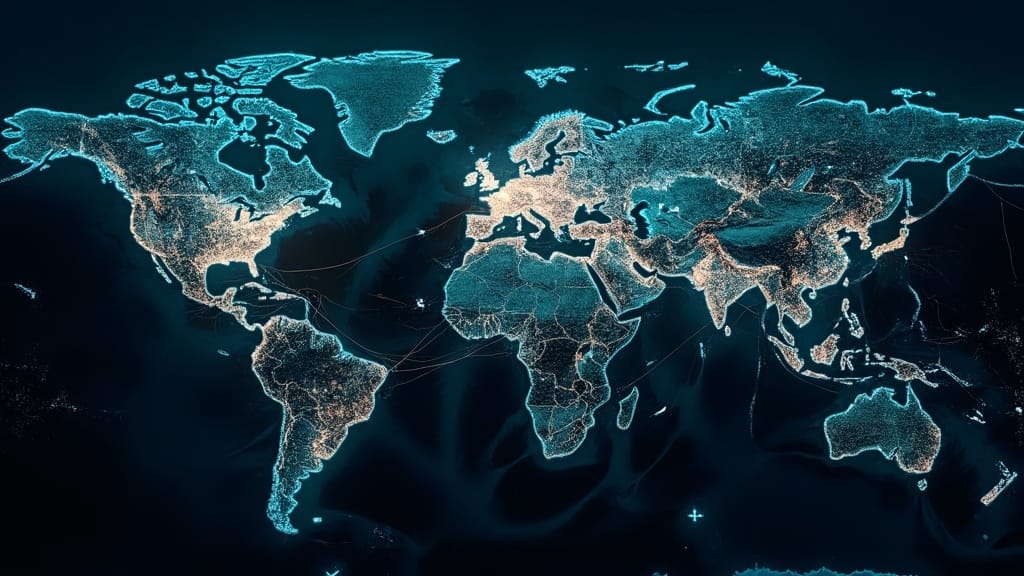
Benchmark wars get the headlines. Usage data is the real scoreboard.
According to Securities Times, citing OpenRouter weekly token consumption data, global AI model usage has grown for five consecutive weeks — and Chinese domestic models have outpaced American ones in total weekly token volume for four straight weeks. The latest week reached 289 billion tokens on the cited tracker, with DeepSeek-V4-Flash at number one globally. Kimi K2.6 dropped off the list entirely. [Source: Securities Times — Chinese]
Token consumption is a revealed-preference metric — it measures what developers actually run in production, not what they say they prefer. The price math explains the migration: per Fortune's coverage of DeepSeek's V4 launch, DeepSeek-V4-Pro costs $3.48 per million output tokens against OpenAI's $30 and Anthropic's $25. V4-Flash is $0.28. DeepSeek told Fortune it expects further price cuts later this year as Huawei scales Ascend 950 production.
What changes if this trend holds: the AI cost gap stops being a procurement conversation and becomes a national security file. The signal that it's flipping: the first U.S. enterprise to disclose DeepSeek-via-Baidu or DeepSeek-via-Alibaba in its production stack. The signal that Washington is treating it as such: a Commerce Department advisory naming Chinese model APIs as restricted infrastructure.
Boston Dynamics Is Teaching Atlas to Move by Watching Soccer
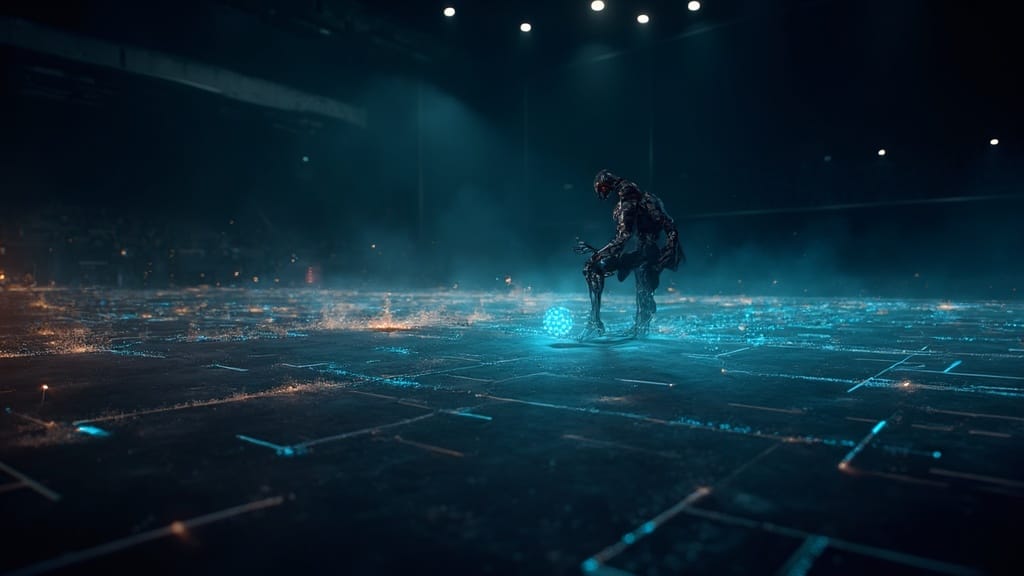
The interesting thing isn't the robot kicking a ball. It's the training method.
Hyundai Motor Group released a video on Tuesday titled "School of Football — Can Robots Learn Movement Through Soccer?" showing Atlas analyzing player movements from past World Cup clips, then appearing to kick a ball itself, according to Seoul Economic Daily. Hyundai previewed an Atlas display at the 2026 FIFA World Cup in North America and said "Atlas's soccer journey begins now."
The underlying technical bet is worth tracking. Boston Dynamics is moving toward robots that learn fluid movement from watching humans rather than from hand-coded rules — the same paradigm shift that made large language models work. A robot trained on 10,000 hours of unstructured soccer footage might generalize to chaotic factory floors better than one trained only in simulation.
Success looks like Atlas demonstrating recovery behaviors at the World Cup that weren't explicitly programmed — improvisation under contact. Failure looks like a scripted ceremonial kickoff and no follow-up videos. The latter would tell you the soccer footage was marketing, not training data.
xAI's Grok V9-Medium Finished Training — Coding Is the Target
While Anthropic shared a stage with the Pope, xAI moved product. Elon Musk confirmed on Sunday that Grok V9-Medium, a 1.5 trillion parameter model, completed training with positive internal evaluations, with public release roughly two to three weeks away, per Techloy and Basenor's coverage of his post. Basenor notes that a significant volume of Cursor data was incorporated into supplementary training.
Claude leads coding right now — Techloy cites Ryz Labs testing showing Claude at ~95% accuracy, GPT-5.5 at 88.7%, and xAI's own number for Grok 4 at 72–75%. V9-Medium is three times the parameter count of the current public Grok, and training on Cursor data means xAI learned from real developer workflows, not just public GitHub. That's a meaningful data advantage if it translates.
These are Musk's own numbers, unverified independently, and xAI's self-reports have historically lagged third-party evaluations. The observable test: independent SWE-Bench results within two weeks of release. If V9-Medium lands within five points of Claude, the coding-agent market has a third serious player. If it doesn't, the gap narrative dies and xAI's developer push needs a new pitch.
The Heretic Situation Reaches the Financial Times
Last week we covered Meta's legal notice to Heretic, the tool that strips safety alignment from Llama models. The Financial Times has now picked it up, and the r/LocalLLaMA thread tracking the coverage suggests the story is escaping niche AI circles.
The central tension hasn't moved: once you release model weights under an open license, can you actually enforce safety constraints on what people do with them? Meta pulled the specific Heretic repository from Hugging Face. It cannot pull the weights from every server that already downloaded them.
What changes if FT-tier coverage sticks: the EU AI Act's "general purpose AI" provisions get a concrete example to point at, and open-weight releases start attracting different regulatory treatment than closed APIs. The signal to watch is whether Meta updates Llama's acceptable use policy within 30 days. That would mean they're trying to get ahead of regulators rather than react.
Treat the FT framing as Tier 2; the Reddit thread is Tier 3 atmosphere, not evidence.
Olah Claimed AI Models Show "Evidence of Introspection" — From the Vatican Pulpit
The buried signal from the Vatican event is what Chris Olah said while standing next to the Pope. According to The Decoder, Olah described Anthropic's interpretability findings as "mysterious, even unsettling" — structures that mirror human neuroscience results, "evidence of introspection," and internal states that "functionally mirror joy, satisfaction, fear, grief, and unease."
The encyclical itself is more cautious. The Decoder notes the document explicitly warns against "equating this type of 'intelligence' with that of human beings." That gap — between what Anthropic's co-founder said and what the document actually argues — is where the next AI consciousness debate will ignite.
These are one researcher's remarks at one event, not peer-reviewed findings. Treat them as a signal about where Anthropic's interpretability team thinks it is, not as confirmed science. The observable next step: whether Anthropic publishes the underlying research within 60 days. If they don't, this was a stage moment, not a technical disclosure.
A New Paper Maps Where Coding Agents Actually Break
An arXiv preprint posted in the last day, Constraint Decay: The Fragility of LLM Agents in Back End Code Generation, argues that multi-step LLM agents systematically forget or violate earlier constraints when generating real back-end code. On realistic tasks — database interactions, APIs, business logic — agents drift away from initial requirements as they iterate, producing security and correctness failures that single-shot benchmarks don't catch.
If this replicates, it's the technical underpinning of the Microsoft-killed-its-Claude-Code-pilot story from last week. Agent loops amplify subtle model failures into production-breaking bugs. The fix isn't a better model — it's explicit constraint tracking, formal checks, or type-level guarantees inside the orchestration layer.
The observable signal that this matters: LangChain or LlamaIndex shipping shared-constraint memory primitives within 60 days. That would mean the framework layer is solving the problem before the model vendors price it in.
⚡ What Most People Missed
- Chinese telecoms are selling AI by the token: According to Sohu coverage, all three of China's major state telecoms launched consumer "token packages" simultaneously — mobile data plans, but for AI inference. It bypasses app stores and embeds AI in the same billing relationship people have with their phone. No Western carrier has tried this. [Source: Sohu — Chinese]
- A Chinese drone company shipped an AI-native flight controller: Zi Guang Tianxia released its "Tianhe" smart flight controller alongside a multimodal model that allows drones to make autonomous decisions and conduct open-domain search, per Beijing News. This is the physical AI story getting zero English coverage — an AI-native flight controller shipping as a product, during an active period of Chinese drone export expansion. [Source: Beijing News — Chinese]
- OpenAI quietly made agents administrable: ChatGPT Business now exposes Agent IDs, run analytics, connected apps, memory files, and schedules in the global admin console, per OpenAI's own release notes. Boring on the surface, structurally important underneath — agents are becoming software objects IT departments can govern, not chat sessions with extra steps.
- GitHub trending is full of "make agents cheaper and less forgetful" tools: Repos like CodeGraph (a local code knowledge graph for Claude Code, Cursor, and others) and ECC (an "agent harness performance optimization system") are racking up thousands of stars in a day. The developer market is converging on the same diagnosis as the Constraint Decay paper: the bottleneck is now the harness, not the model.
- The Vatican's quiet education ask: Beyond "disarm AI," Magnifica Humanitas calls for rethinking how young people are educated in AI and its implications, per the National Catholic Register's full text. Catholic schools enroll roughly 60 million students worldwide. If even a fraction update their AI curricula in response, it's one of the largest AI literacy interventions in history.
📅 What to Watch
- If Anthropic publishes interpretability research backing Olah's "introspection" and "functional emotion" claims within 60 days, the AI consciousness debate moves from philosophy departments into product safety review boards — and Anthropic owns the framing.
- If LangChain or LlamaIndex ships shared-constraint memory primitives within 60 days, the Constraint Decay problem gets solved at the framework layer before model vendors price it in — and agent pricing economics flip in favor of orchestrators over labs.
- If a U.S. enterprise discloses DeepSeek-via-Baidu or DeepSeek-via-Alibaba in its production stack while the four-week Chinese usage lead holds, Commerce moves from monitoring to action within the same quarter.
- If Atlas demonstrates unscripted recovery behavior at the 2026 FIFA World Cup, observational training for humanoids gets a public proof point — and every robotics company without a video corpus strategy falls behind a year.
- If Meta updates the Llama acceptable use policy within 30 days of FT coverage, open-weight releases are about to attract a different regulatory tier than closed APIs — and Llama 4's licensing terms preview where the line lands.
The Closer
The Pope and an Anthropic co-founder shared a microphone, a 1.5 trillion parameter model learned to code by watching Cursor users, and a Boston Dynamics robot studied World Cup footage to figure out how legs work. Somewhere in Mississippi, a state AI guide is being quietly photocopied by consultants who have not yet realized it will end up regulating them. Tomorrow's news starts now.
Forward this to the friend who keeps asking what's actually going on.