The Lyceum: Brain & Mind Weekly — Apr 15, 2026
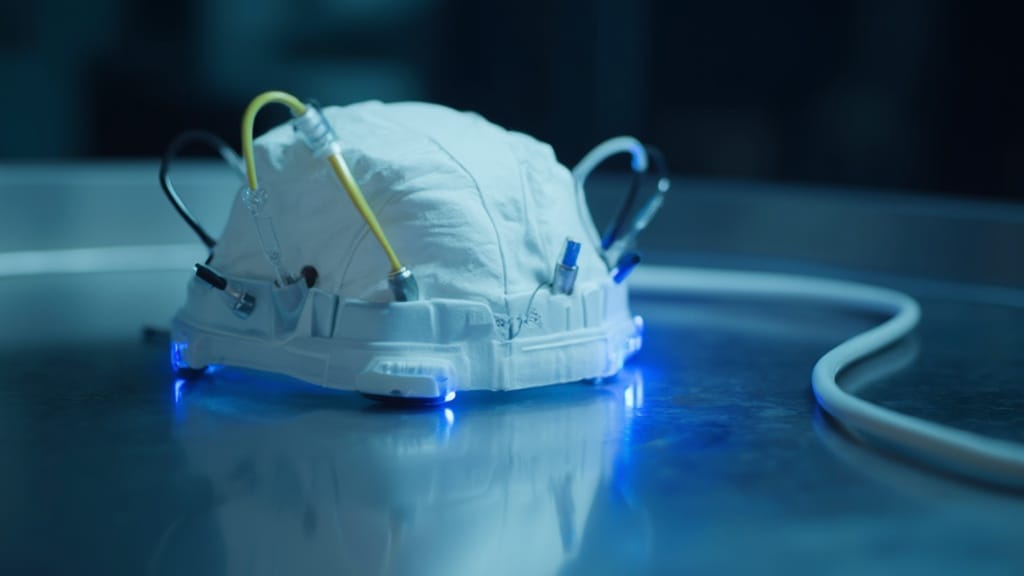
Photo: lyceumnews.com
Week of April 15, 2026
The Big Picture
The brain's wiring isn't just anatomy — it's destiny. A landmark Nature Neuroscience paper this week showed that whether TMS actually works for your depression depends on the length of the white matter highway between the magnet and your mood circuit. Meanwhile, the BCI field stopped being a one-horse race: Paradromics completed its first human implant, Colorado surgeons went upstream into association cortex, and Synchron launched an AI model trained on real intracranial data. And from Hong Kong, a 969-family birth cohort revealed that the right gut bacteria, arriving at the right time, can partially rewrite a baby's neurodevelopmental risk. This was a genuinely dense week.
What Just Shipped
- Connexus BCI — First-in-Human Recording (Paradromics): 420-micro-needle electrode array implanted in the temporal lobe; first human neural recording completed in the Connect-One trial.
- Chiral™ Cognitive AI Brain Foundation Model (Synchron): Foundation model trained on longitudinal human intracranial BCI data; company reports ~20% cursor-control speed improvement in internal benchmarks.
- Brain-DiT fMRI Foundation Model (multi-institution preprint): Diffusion-transformer pretrained on ~350K fMRI sessions across 24 datasets; code and model weights released.
- NeMO Analytics Platform (Allen Institute / collaborators): Browsable portal compiling public neocortical transcriptomic datasets for biologists without heavy computational training; highlighted in Nature Neuroscience April issue.
This Week's Stories
Your TMS Outcome Depends on Your Brain's Road Network
Transcranial magnetic stimulation has been FDA-cleared for depression for years, but its dirty secret is inconsistency — some patients improve dramatically, others barely respond, and clinicians have had limited tools to predict which outcome a given patient will get. A study published April 14 in Nature Neuroscience by Caio Seguin and colleagues at the University of Melbourne offers the clearest mechanistic explanation yet.
The team used connectome modeling — computational reconstruction of the brain's white matter highway system from diffusion MRI — to trace how TMS pulses travel from the stimulation site on the dorsolateral prefrontal cortex (just behind your forehead, involved in executive control) to the subgenual cingulate cortex (a mood hub buried deeper in the brain). The critical finding: the total length of the polysynaptic white matter route between those two regions predicts whether TMS will work. Shorter routes, better outcomes. This was validated in two independent patient cohorts — a rarity in psychiatric neuroimaging.
What changes if this succeeds: before starting a six-week TMS course, a patient's brain scan could tell clinicians whether the treatment is likely to help — and potentially guide them to the prefrontal spot with the shortest route to the mood circuit. That's personalized psychiatry with a structural, not just functional, basis. What failure looks like: if the route-length metric doesn't replicate across diverse populations and scanner types, it joins the graveyard of neuroimaging biomarkers that worked in two cohorts but not the third. The signal to watch is whether major TMS clinics begin ordering diffusion MRI scans before treatment.
Your Baby's Gut Bacteria Can Rewrite Their Neurodevelopmental Risk
A study published April 10 in Cell Press Blue tracked 969 families from birth through age three, pairing cord blood DNA methylation — molecular tags that turn genes on or off without changing the underlying DNA — with gut microbiome data collected at 2, 6, and 12 months. The team at The Chinese University of Hong Kong found that children with hypermethylated genes in neurogenic and neurotransmission pathways showed higher autism spectrum disorder and ADHD scores at age three.
The remarkable part: that risk wasn't fixed. Infants who acquired Lachnospira pectinoschiza or Parabacteroides distasonis during their first year were less likely to show signs of ASD or ADHD, respectively, even when their epigenetic starting conditions were unfavorable. Caesarean delivery — which disrupts normal maternal-to-infant bacterial transfer — was associated with differential methylation of immune and neural development genes.
The gut microbiome may partially compensate for unfavorable epigenetic starting conditions. Important caveats: outcomes were assessed by behavioral questionnaire, not clinical diagnosis, and the researchers explicitly note that laboratory experiments are needed to confirm causation. But the specificity — named bacterial species, named methylation loci, named pathways — is a genuine step beyond "gut health matters." If this holds, probiotic intervention trials in high-risk infants become the obvious next move. If it doesn't replicate, the signal to watch is whether the specific bacterial species fail to associate in non-Chinese cohorts, which would suggest population-specific confounders.
The BCI Field Just Got a New Serious Contender
Paradromics, the Austin-based startup, completed its first human implant this week as part of the Connect-One Early Feasibility Study. The Connexus BCI — smaller than a dime, equipped with 420 micro-needle electrodes — was placed in the temporal lobe of a patient with severe motor impairment, with signals routed to a chest-mounted receiver that wirelessly transmits data through the skin. Per Paradromics' announcement, the device successfully recorded neural activity.
This matters amid what had been a de facto Neuralink monopoly on ultra-high-bandwidth human implants. Paradromics' architecture is fundamentally different — dense penetrating microelectrode arrays (the "bed-of-nails" approach) versus Neuralink's flexible polymer threads placed robotically. Those differences affect surgical workflow, chronic signal stability, and regulatory pathways. Per Paradromics' FDA filing materials, the company claims an industry-leading 200+ bits per second information transfer rate in preclinical models.
What to watch: the first participant data readouts comparing cursor or speech control performance to existing Neuralink and Synchron benchmarks. If Paradromics delivers meaningfully higher bandwidth in humans, it validates the penetrating-array approach for speech restoration. If the device shows signal degradation over months — the chronic stability problem that plagues rigid probes — the flexible-thread camp gains ground. As Nature reported, this trial is specifically aimed at restoring speech, which is the hardest decoding challenge and the most clinically valuable.
A BCI Goes Upstream — Into the Thinking Brain, Not Just the Moving One
On April 9, surgeons at CU Anschutz performed Colorado's first implanted BCI surgery on a 41-year-old man paralyzed from the neck down. The distinguishing feature isn't geography — it's anatomy. While most BCI efforts target primary motor cortex (essentially a translator for muscle commands), this team placed the device in higher-level association areas responsible for planning, rule-learning, and decision-making. Per CBS Colorado, this is described as the first surgery in the world to implant a BCI at this level of the cortical hierarchy.
Going upstream means the signals are more abstract — intentions and plans rather than movement commands — which is harder to decode but potentially far more powerful. The device will remain implanted for years, with the research conducted in collaboration with Richard Andersen's lab at Caltech (the intellectual home of "cognitive BCI" for over a decade), Blackrock Neurotech hardware, and USC.
One technical wrinkle worth noting: a recent Northwestern study suggests high gamma activity — the broadband signal many BCI teams rely on — may reflect spatially distributed postsynaptic potentials rather than tightly localized spiking. That doesn't invalidate the approach, but it changes the decoding calculus. If association-cortex signals turn out to be spatially broad but temporally rich, decoders will need to lean harder on timing patterns than spatial maps. The signal to watch: whether the first decoded outputs from this implant reveal cognitive variables (like rule identity or planned action) that motor cortex implants simply cannot access.
Your Brain May Recognize a Smell Before the Sniff Is Even Half Over
Coffee smells like coffee whether it's faint or overwhelming — and now we know part of why. In Nature Neuroscience on April 14, Dmitry Rinberg, Shy Shoham, and colleagues showed that the olfactory bulb — the brain's first major smell-processing station — uses a very brief early time window to lock in odor identity across different concentrations. The earliest-activated glomeruli and their mitral/tufted cell outputs carry the most concentration-stable information; later in the sniff cycle, responses become much more concentration-dependent.
In plain English: the brain trusts the first arrivals and treats the rest as detail, not identity. The team used mice, optical tools, and carefully timed circuit perturbations to demonstrate this "first-spike wins" logic.
If this principle generalizes beyond olfaction — and there's theoretical reason to think it might — it suggests that sensory systems broadly may use early-arriving spikes as a coding strategy, with implications for how BCIs and neuromorphic sensors should sample signals. The failure mode: if the timing advantage is specific to olfactory bulb architecture (which has unusually direct receptor-to-cortex wiring), it stays a smell story rather than a general principle. Watch for replication attempts in visual or auditory systems.
A Worm Just Showed How Tiny Brains Turn "Maybe" Into a Movement Sequence
C. elegans has 302 neurons. You'd think its behavioral repertoire would be simple. In Nature Neuroscience on April 10, Talya Kramer, Steven Flavell, and colleagues tracked brain-wide activity in these worms and showed that directed turning is built from neural sequences — multiple identified neurons firing in a stereotyped order — not a single "turn now" command.
Using cell-specific silencing, optogenetic activation, and recurrent neural-network decoding, the team showed that future turning direction can be read out from ongoing activity before the movement fully unfolds. Even a 302-neuron brain uses sequences, not simple switches. The compact system lets researchers see the entire machine in action, offering templates for how larger motor systems might sequence actions like speech or reaching.
What changes if this generalizes: sequence-based control becomes a universal principle of motor planning, not a worm oddity, and motor BCI decoders may need to look for sequential motifs rather than static patterns. The observable test: whether similar sequence structures appear in rodent or primate motor planning data.
Trauma Memories May Be Stored More by Meaning Than by Movie-Like Replay
Pop psychology treats traumatic memory as a horrifying video file stuck on loop. New work in Neuropsychopharmacology on April 14, by Josh Cisler, Joseph Dunsmoor, and colleagues, points in a subtler direction: in people with PTSD, the hippocampus appears to encode the semantic content — the meaning structure — of autobiographical trauma memories, not just sensory flashbacks.
Using narrative-based memory tasks and pattern analyses, the study found that hippocampal subfields (CA1, dentate gyrus) carried enough information to distinguish trauma from neutral memories based on conceptual structure. Trauma memory may be meaning-rich, not just image-rich.
The treatment implication is direct: targeting the interpretive frame of a memory — its semantic structure — could be as important as dampening its emotional intensity. If this replicates, it strengthens the case for narrative-based therapies over purely exposure-based approaches. The failure signal: if the semantic encoding effect disappears in larger, more diverse PTSD cohorts, it may reflect the specific task design rather than a general property of trauma memory.
Alcohol Cravings May Be an Energy Crisis — and Ketones Might Fill the Gap
A study that hit nearly 900 upvotes on r/science this week — now peer-reviewed in Psychiatry Research: Neuroimaging — reframes alcohol cravings as partly a fuel shortage. Chronic heavy drinking rewires the brain to rely on acetate (a metabolic byproduct of ethanol) as its primary energy source. When drinking stops, the sudden acetate deficit creates a localized energy crisis that drives craving and relapse.
The University of Pennsylvania team gave five people with alcohol use disorder and five healthy controls a single dose of ketone ester, then measured brain metabolism with FDG-PET. Whole-brain glucose metabolism dropped 17% during the PET scan in both groups, with the largest reductions in frontal, occipital, and cingulate cortices, hippocampus, amygdala, and insula. In the AUD group, ketone ester reduced alcohol craving scores compared to baseline.
This is a five-person crossover study — hypothesis-generating, not practice-changing. But the mechanistic logic is sound: ketone bodies use the same monocarboxylate transporters as acetate and feed the same metabolic cycle, so they can substitute for the missing fuel without the alcohol. A prior trial from the same group showed a ketogenic diet reduced benzodiazepine requirements during detox. The convergence of rodent data, a diet trial, and now PET pharmacokinetics makes the mechanism credible. The missing piece: a proper randomized controlled trial testing whether metabolic bridging supports sustained remission over weeks, not hours.
A Universal Translator for Brain Scans
Functional MRI is powerful but fragmented — different scanners, preprocessing pipelines, tasks, and populations make it nearly impossible to generalize models across datasets. A preprint posted April 14 proposes Brain-DiT, a diffusion-transformer foundation model pretrained on roughly 350,000 fMRI sessions drawn from 24 datasets spanning resting state, task scans, naturalistic viewing, disease cohorts, and sleep.
The key idea: rather than pretending all brain scans are the same signal, Brain-DiT conditions on metadata (age, task type, scanner parameters) to separate intrinsic neural dynamics from nuisance variation. The authors report 15–20% improvements over prior baselines on state reconstruction and classification in their held-out benchmarks, and have released code and model weights.
If those numbers survive contact with other labs, fMRI may be entering its "general-purpose backbone" phase — where the bottleneck shifts from training a bespoke model for every dataset to asking better biological questions of a shared representation. This is a preprint with no outside validation yet; the failure mode is overfitting to the specific datasets used for pretraining. The signal to watch: whether independent groups reproduce the gains on their own data without retraining.
New Products & Launches
Synchron's Chiral™ is the week's most ambitious product claim — a foundation model for BCI decoding trained on real human intracranial data, per Synchron's announcement. The promise: instead of training a decoder from scratch for each patient (weeks of calibration), a foundation model could generalize across users and adapt quickly, potentially enabling phrase-level predictions rather than letter-by-letter typing. The company reports ~20% cursor-control speed improvement in internal comparisons. Treat this as a company claim until independent validation appears.
Peking University's ultrathin flexible neural probe, reported in Chinese electronics engineering press, advances the chronic recording problem by using polymer substrates that flex with the brain rather than scraping against it. The key metric: months of stable recordings rather than weeks, achieved by minimizing the mechanical mismatch that drives immune scarring. Not yet a clinical product, but the technology directly addresses the signal-degradation problem that limits every current human BCI.
⚡ What Most People Missed
- A blood test for Alzheimer's just got sharper. New data highlighted by Neuroscience News shows the pTau217 blood test can flag Alzheimer's pathology and predict cognitive decline years before brain imaging picks up the same signal. FDA-cleared versions exist; the bottleneck is now insurance coverage. If a major insurer announces reimbursement, this enters routine care almost overnight.
- China published its first national medical device standard for BCIs. The NMPA released unified technical terminology and follow-on reliability-testing guidance, building the regulatory infrastructure for commercial BCI approval at scale. Combined with a reported "green channel" fast-track process, Beijing is hardening the commercial pathway faster than most Western observers realize. [Source: NMPA / Caijing News — Chinese]
- Brain organoids need rules before they get weird. A Nature editorial argued that organoid technology is transformative but governance is lagging. This isn't a discovery paper, but it's one of the better signals that organoid neuroscience is crossing from "cool technique" into territory where society should probably decide some boundaries.
- The ventral visual stream isn't as feedforward as textbooks say. A preprint using simultaneous multi-array recordings in macaques argues that information exchanged between V4 and inferotemporal cortex changes content within the first 100 milliseconds — meaning recurrent feedback loops are doing significant work at every stage, not just at the top. Most deep learning vision models are purely feedforward, which may explain some of their failure modes.
- Monkeys revealed how cortex talks reward to the basal ganglia. A Nature Communications paper used optogenetically identified projection neurons in the frontal eye field to show that reward information is embedded in action channels earlier than most models assume — strengthening mechanistic theories of habit formation and motivational disorders.
📅 What to Watch
- If Paradromics releases early participant data showing speech-decoding performance in bits/sec, it will be the first head-to-head comparison possible between penetrating arrays, flexible threads (Neuralink), and endovascular approaches (Synchron) — the moment the BCI field gets an objective leaderboard.
- If major TMS clinics begin ordering diffusion MRI before treatment based on the Seguin et al. paper, it signals that structural connectomics is displacing functional correlation as the basis for personalized psychiatry — a methodological regime change.
- If any group announces a probiotic intervention trial in high-risk infants using Lachnospira or Parabacteroides, it would be the first direct causal test of whether the gut can rescue neurodevelopmental risk — moving the microbiome field from association to intervention.
- If independent labs reproduce Brain-DiT's gains on their own fMRI data without retraining, foundation models become the new default analysis layer for neuroimaging — and the bottleneck shifts permanently from data collection to question design.
- If China's NMPA links its new BCI terminology standard directly to device approval decisions, expect a measurable acceleration in Chinese BCI trials and domestic manufacturing capacity within 12 months.
The Closer
A magnet that works only if your brain's plumbing is short enough, a baby whose gut bacteria are editing their neurological destiny in real time, and a worm making sequential decisions with fewer neurons than you have in a single taste bud. The week's quiet punchline: we built AI foundation models for brain scans before we figured out that high gamma signals aren't as local as everyone assumed — which is a very on-brand order of operations for a species that keeps building the telescope before checking the lens.
Stay wired.
If someone you know would enjoy this, send it their way — brains are more interesting with company.
From the Lyceum
Tariff policy is reshaping pharmaceutical supply chains, with implications for neurological drug pricing and availability. Read → Tariff Earthquake Lands