The Lyceum: Brain & Mind Weekly — Mar 25, 2026
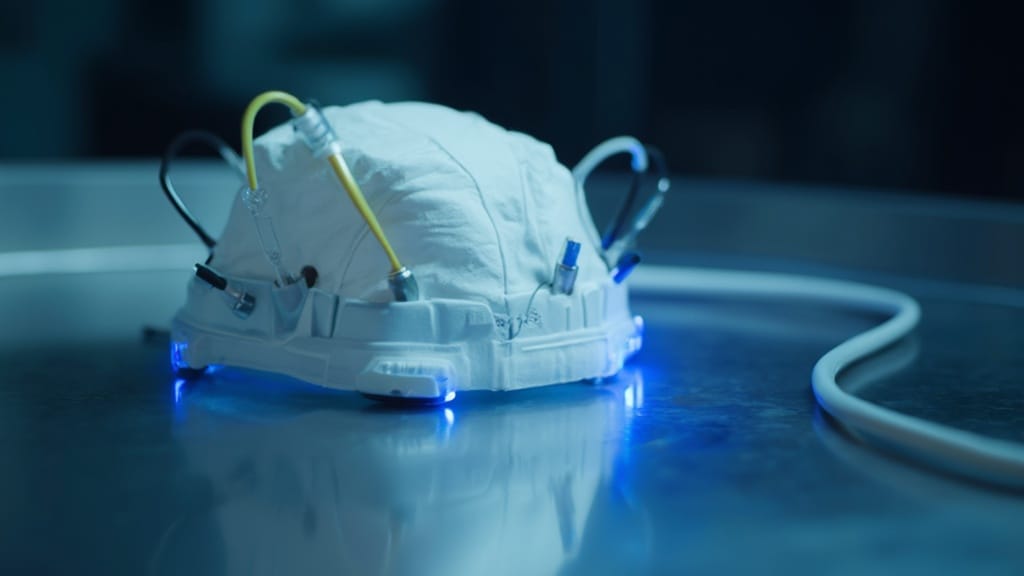
Photo: lyceumnews.com
Week of March 25, 2026
The Big Picture
Two paralyzed people typed from their couches at near-normal speed using only imagined finger movements — and the paper landed in Nature Neuroscience, not a press release. Meanwhile, scientists finally figured out how the biggest Alzheimer's drug actually works (it recruits the brain's own immune cells, not just scrubs plaque), a Finnish dataset linked common infections to dementia risk at a scale that's hard to dismiss, and researchers found the literal tunnels that toxic proteins use to crawl between brain cells in Huntington's disease. This was a week where mechanism met clinic in ways that will redirect drug design, trial strategy, and how we think about what a brain cell even does.
This Week's Stories
Two People With Paralysis Typed at Near-Normal Speed — From Home
The BrainGate consortium implanted electrode arrays in the motor cortex of two people — one with ALS, one with a spinal cord injury — and decoded their attempted finger movements onto a standard QWERTY keyboard. One participant hit 110 characters per minute (about 22 words) with a word error rate of 1.6% during testing, which is on par with able-bodied typing accuracy. Both used the system at home, not in a lab.
The interface logic matters as much as the speed. Instead of learning a novel control scheme, participants typed the way they always had — imagining their fingers on a familiar keyboard. That's a patient-centered design insight the field has largely ignored. The researchers also note that decoding fine-grained finger movements could be a step toward restoring complex reach and grasp, not just communication. A separate UC Davis team, reported alongside this work, went further: their implant synthesizes spoken output using the patient's own pre-illness voice, shifting the goal from throughput to identity.
What changes if this succeeds: the bottleneck moves from technology to regulation and reimbursement. If the FDA creates an explicit home-use category for BCIs, the commercialization timeline compresses dramatically. What failure looks like: if decoder stability degrades over months without recalibration, at-home use stays a demo. The signal to watch is whether the team releases open decoder architectures — that would accelerate cross-lab replication and force regulators to engage with a broader evidence base.
⚡ China's First Commercial BCI Implant Signals a Global Regulatory Race
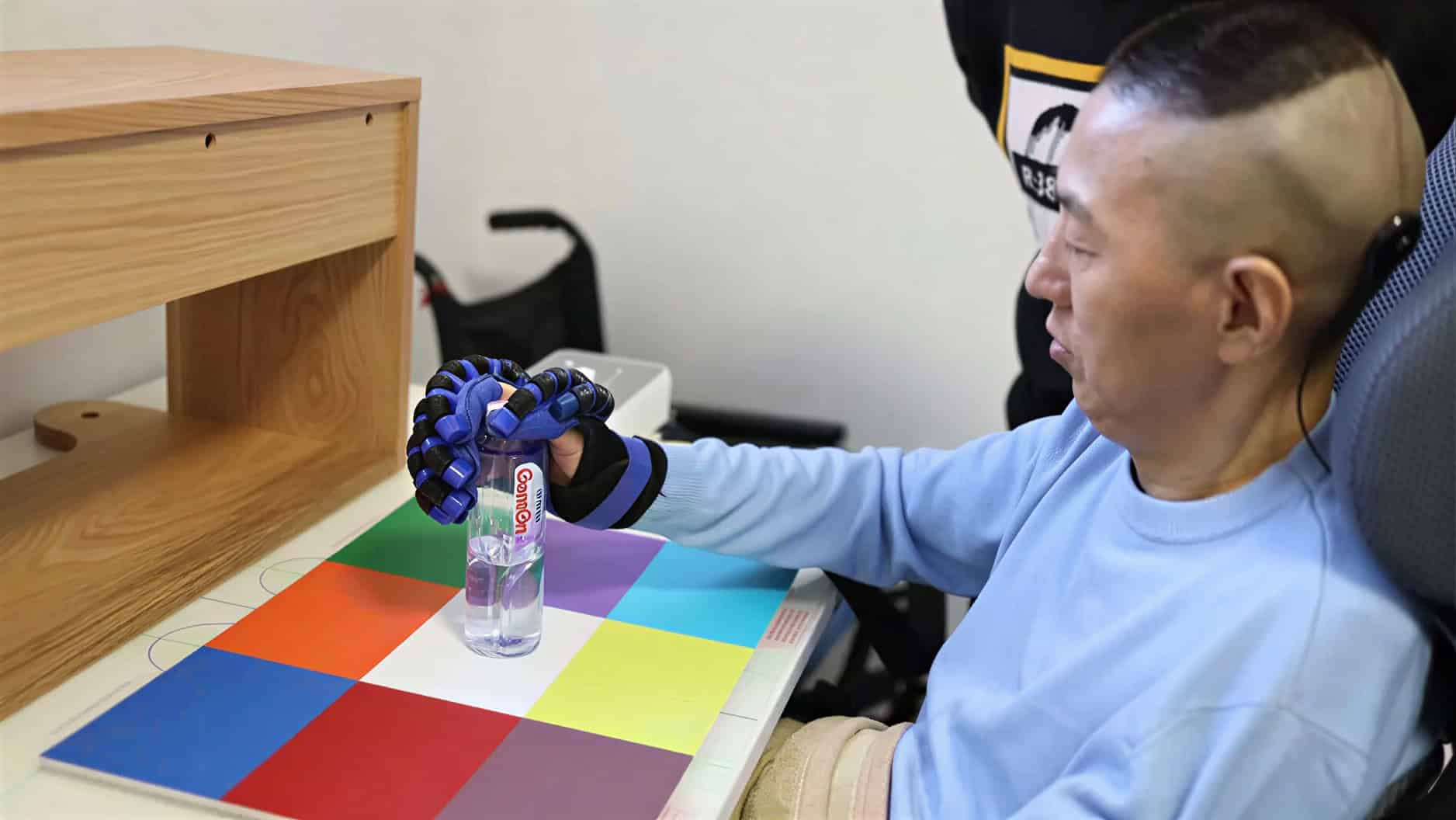
While U.S. coverage fixated on BrainGate, Chinese regulators cleared what appears to be the first commercial brain implant for restoring hand movement in paralysis. The device, NEO by Borui Kang Medical, uses a minimally invasive surface implant coupled to a robotic glove; early company-mediated data from roughly three dozen patients claim measurable grasp recovery, with some users showing signs of neurological improvement after repeated BCI-driven practice. Separately, NeuCyber Neurotech's Beinao-1 — a "semi-invasive" mesh placed on the brain's outer membrane — has been implanted in seven patients with plans for 50 in 2026.
What changes: we get longitudinal, real-world data on motor cortex stability from devices used outside elite research centers. If outcomes hold, it pressures the FDA and EU regulators to clarify their own commercial pathways — or risk ceding the norms-setting role. What failure looks like: thin post-market surveillance and adverse-event reporting that undermines trust in the entire field. The signal is whether independent peer-reviewed outcomes appear within the next year, or whether the data stays company-controlled.
We Finally Know How the Big Alzheimer's Drug Actually Works
Lecanemab (Leqembi) is one of the first drugs to meaningfully slow Alzheimer's progression, and millions of patients are already on it or considering it. The problem was that nobody fully understood why it worked. New research reveals the answer: lecanemab activates the brain's resident immune cells — microglia — through a specific part of the antibody called the Fc fragment. The drug isn't just scrubbing amyloid plaques; it's recruiting the brain's own cleanup crew.
Both papers this week point to immune- and cell-death–related mechanisms beyond simple plaque removal. This is quietly radical for drug design. Next-generation antibodies that strip the Fc fragment to reduce side effects may have inadvertently gutted the therapeutic mechanism. It also raises the possibility that pairing anti-amyloid antibodies with microglial-boosting therapies could outperform either alone. Separately, a Cell paper this week identified a protein pair that triggers necroptosis — programmed cell death — in Alzheimer's models, offering a non-amyloid therapeutic target.
If this reframes the pipeline: watch for Phase 2 readouts from companies developing microglial activators as combination therapies. If microglial activation is required for amyloid clearance to improve cognition, the combination approach jumps the queue. If it doesn't replicate in donanemab data, the mechanism may be antibody-specific rather than class-wide — a different but still important finding.
Common Infections Raise Dementia Risk — and the Scale Is Unsettling
A large Finnish study covering hundreds of thousands of people found that hospitalization for cystitis, pneumonia, or tooth decay was significantly associated with developing dementia — including early-onset forms — within six years. A complementary PLOS Medicine paper analyzing over 300,000 Finnish health records showed the link held even after adjusting for 27 other diseases that could predispose someone to both infections and dementia.
These aren't exotic infections. They're the mundane ones that land people in the hospital every day. Researchers suggest the mechanism may be systemic infections triggering neuroinflammation — the brain's immune response, mediated by microglia — that accelerates neurodegenerative processes in people already on a trajectory toward dementia. The risk climbs with the number of infections, per earlier work from the same teams.
If replicated in UK Biobank or VA datasets, this becomes actionable — potentially reshaping dementia prevention guidelines to include aggressive infection treatment in midlife. If it doesn't replicate outside Nordic registries (which are unusually complete), the finding may reflect healthcare-system artifacts rather than biology. Watch for prospective trials on anti-inflammatory intervention after infection in at-risk populations.
Scientists Found the Tunnels That Spread Huntington's Disease Between Brain Cells
How does toxic huntingtin protein march through the brain? A Florida Atlantic University team found the getaway route: tunneling nanotubes — microscopic tube-like structures that let toxic protein pass directly between neurons. The protein Rhes partners with SLC4A7 to build these cellular highways. When researchers disrupted that partnership in mouse models, the spread of toxic huntingtin was significantly reduced.
This moves the goalposts from symptom management to potentially halting disease progression by blocking the physical pathways of spread. If the Rhes–SLC4A7 interaction proves druggable, expect small-molecule or antibody screens within the year. If the mechanism turns out to be one of several redundant spread pathways, blocking it alone won't be enough — but even partial reduction of cell-to-cell transfer could slow progression meaningfully. The observable signal: whether other neurodegenerative diseases (Parkinson's, ALS) show the same nanotube-mediated spread.
AI Decodes Brain Waves Into Text at 70% Accuracy — No Surgery Required
No implants, no surgery — just brain imaging and machine learning. Researchers used non-invasive recordings (fMRI or high-density EEG) to translate neural signals into coherent sentences at roughly 70% accuracy on the study's held-out test data. The engineering advance isn't a better scanner; it's large language models that fill gaps in ambiguous brain signals using context, much the way autocorrect works.
For patients with locked-in syndrome who can't tolerate surgery, even 70% accurate communication would be transformative. But the architecture is clearly heading toward higher accuracy, and the question of whether decoded neural signals constitute "speech" deserving privacy protections hasn't been answered legally anywhere. The critical test: whether accuracy holds on participants who haven't been extensively trained on the system, and whether groups move from offline decoding to real-time closed-loop output.
A Potassium Channel Acts as a "Fear Brake" in Mouse Panic Circuits
Why do some fears stick while others fade? A Nature Neuroscience paper pinpointed a potassium channel in the amygdala — the brain's fear hub — that dials down panic responses. Using optogenetics (light-activated proteins in targeted cells), researchers tweaked this channel in mice, reducing exaggerated fear after mild shocks by 40% in the mouse experiments without touching memory itself. Mice with the modification explored open spaces fearlessly.
If this channel proves conserved in humans, it's a molecular target for anxiety disorders that separates fear regulation from memory — a distinction current anxiolytics can't make. If it's mouse-specific or too embedded in other circuits to target cleanly, it joins a long list of elegant rodent findings that don't translate. The signal: whether human genetic studies find anxiety-linked variants in the same channel family.
Your Dopamine Neurons Owe Their Existence to Specialized Radial Glia
Where do dopamine neurons actually come from? A Karolinska-led team used single-cell RNA sequencing and lineage tracing to show that distinct subtypes of radial glia — stem-like scaffolding cells in the developing brain — give rise to different flavors of midbrain dopaminergic neurons with different projection patterns and gene-expression signatures.
For Parkinson's cell-replacement therapies, this is a practical problem: making "generic" dopamine neurons from stem cells may not be enough. You may need lineage-appropriate precursors to rebuild the right circuits. If confirmed, it forces a redesign of stem-cell differentiation protocols currently in clinical development. If lineage turns out to matter less than microenvironment after transplantation, current approaches survive. The signal: whether transplant studies using lineage-matched precursors show better circuit integration than generic ones.
Human Brain Tissue Can Now Be Kept Alive in the Lab for Days
The Allen Institute reports maintaining small pieces of human brain tissue — obtained during surgery — alive and functionally responsive on the bench for up to three days. Long enough to run viral gene delivery, label neurons, and watch them fire. Published in Scientific Reports, the work creates a platform to test drug responses and gene therapies directly in human neurons, bypassing some of the translational uncertainty of animal models.
If this scales to more tissue types and longer windows, it becomes the standard validation step before clinical trials — dramatically reducing the gap between mouse data and human biology. If tissue from neurosurgical patients proves too atypical to generalize, the platform stays niche. Watch for whether other labs replicate the protocol with tissue from different brain regions and pathologies.
Electron Microscopy Connectomics Is Finally Revealing the Brain's True Wiring Diagram
For a century, neuroscience operated with the equivalent of a blurry road map. Electron microscopy-based connectomics now reconstructs neural circuits in 3D at nanometer resolution — sharp enough to see every single synapse. Labs are using it to link wiring directly to function, turning circuits into testable diagrams. Nature Methods highlighted the approach as a breakthrough methodology, and the datasets being released are already enabling machine-learning teams to mine for computational motifs.
This shifts neuroscience from correlation toward causation. If connectomics datasets become standard references (the way genome databases are), experimental design changes permanently — you test specific wiring hypotheses instead of probing regions. If the datasets stay locked in a few elite labs, the democratization stalls. The signal: whether open-access connectomics repositories attract the same community uptake that genomics databases did a decade ago.
New Products & Launches
- Merge Labs non-invasive BCI prototype: OpenAI-backed Merge Labs unveiled a wireless EEG headset claiming about 80% reliability in company tests decoding motor intentions, targeting everyday consumer use. Independent scientists note the ultrasound-based approach remains early-stage; peer-reviewed data from Forest Neurotech's UK safety trial is the credibility test to watch.
- BCI classroom training kit: A Frontiers paper describes a curriculum where systems engineering students use consumer EEG caps as hands-on lab instruments — designing control algorithms that treat the human brain as a noisy, adaptive element. BCI hardware is now cheap enough to be teaching material, not just grant-funded equipment.
⚡ What Most People Missed
- A dopamine neuron that rewrites its own neighborhood. A bioRxiv preprint shows that VTA dopamine neurons release cholecystokinin from their cell bodies — not their terminals — simultaneously strengthening their brakes and weakening their accelerator, and reshaping synapses on neighboring neurons up to 100 µm away. If confirmed, it's a fundamentally different picture of how reward circuits self-organize.
- TMS discomfort is contaminating a quarter of your data in psychiatric patients. A large multi-site study found that discomfort-related brain activity accounted for 12% of TMS-evoked responses in healthy participants and 25% in those with elevated psychiatric symptoms in the study. If discomfort-confound becomes standard to control for, a non-trivial chunk of prior TMS literature will need reinterpretation.
- Grid cells have an ultraslow rhythm that might be editing your memories. A preprint reports that grid cells in the entorhinal cortex — the brain's GPS — exhibit rhythmic drift on very long timescales, potentially acting as a natural separator that keeps distinct memories from bleeding together. Early and rodent-only, but ultraslow rhythms as a memory-organization mechanism is an underexplored idea.
- Legal scholars are framing neurotech as cognitive warfare infrastructure. An Opinio Juris essay argues BCIs and non-invasive stimulation devices should be treated as dual-use technology under international humanitarian law — one of the first serious attempts to drag concrete decoder specificity and stimulation protocols into the legal architecture of surveillance and warfare.
- The theta rhythm paper nobody's talking about. A Journal of Neuroscience study found a shared theta-rhythmic process for both sampling information from the environment and retrieving memories — the brain uses one oscillatory gating mechanism for looking outward and looking inward. Immediate implications for ADHD (where theta dysregulation is well-documented) and age-related memory decline.
📅 What to Watch
- If the FDA creates an explicit "home-use" regulatory category for BCIs, the commercialization timeline for the entire field compresses by years — and reimbursement conversations with insurers begin in earnest rather than hypothetically.
- If UK Biobank or VA datasets replicate the Finnish infection-dementia link, expect dementia prevention guidelines to recommend targeted post-infection anti-inflammatory trials and to shift preventive-care priorities (for example, vaccination and dental-care strategies) in midlife — changes that would refocus clinical trial design and public-health resource allocation.
- If connectomics repositories achieve genomics-level community uptake, experimental neuroscience pivots from probing brain regions to testing specific wiring hypotheses — changing what counts as a publishable finding.
- If Merge Labs or Forest Neurotech publish peer-reviewed decoder accuracy data, it will determine whether consumer non-invasive BCI startups can sustain large private investment rounds and progress to regulated clinical studies — shifting where funding and regulatory attention flow.
- If discomfort-confound correction becomes standard in TMS research, a significant portion of published therapeutic efficacy data will need reanalysis — particularly in depression and OCD trials where psychiatric patients showed the largest confound.
The Closer
A paralyzed man typing from his couch by imagining his fingers on a keyboard he can't touch; a toxic protein crawling through secret tunnels between neurons like a burglar using the building's own ductwork; a quarter of TMS-evoked responses in psychiatric patients in that study quietly measuring how much the zap hurts rather than what it treats.
Somewhere, a dopamine neuron is rewriting its neighbors' synapses via peptide broadcast, and honestly, that's the most relatable thing in neuroscience — who among us hasn't reshaped an entire social circle just by showing up and being a little too activated.
Until next week, stay curious and stay skeptical.
If someone you know would enjoy learning that their brain's GPS has a slow rhythm that might be editing their memories, forward this their way.
From the Lyceum
The White House released a formal AI legislative blueprint and urged states to stand down on their own rules. Read → The White House Hands Congress an AI Rulebook