The Lyceum: Critical Minerals Weekly — Apr 02, 2026
Week of April 2, 2026
The Big Picture
This was the week governments stopped pretending that owning the rock is the same as owning the supply chain. Australia legislated a strategic reserve that explicitly targets processed materials, not just ore. The U.S. turned on an actual magnet factory. Europe fired up a real battery recycler. Indonesia rattled nickel markets by simultaneously approving and delaying export taxes. And China kept quietly tightening gallium licenses while the "suspension" of its export controls technically remains in effect. The through-line: midstream capacity is finally catching up to the rhetoric — but not at anything close to the scale or speed required to change the math before November 2026.
What Just Shipped
- USA Rare Earth Phase 1a Sintered NdFeB Magnet Line (USA Rare Earth): First commercial sintered rare earth magnet production line operating in the U.S., ramping toward 600 tonnes/year in Stillwater, Oklahoma.
- tozero Industrial Battery Recycling Plant (tozero): Europe's first industrial-scale hydrometallurgical battery recycler, recovering lithium, nickel, cobalt, and graphite near Munich.
- Australia Critical Minerals Strategic Reserve (Export Finance Australia): A$1.2 billion legislative authority to stockpile and finance processed critical minerals — oxides, metals, alloys — not just raw ore.
- American Rare Earths Pilot Plant Acceleration (American Rare Earths): Halleck Creek pilot plant producing pre-production rare earth concentrate with 94% gangue rejection and ~70% TREO recovery in initial test work.
- Energy Fuels Terbium Oxide Production (Energy Fuels): First U.S. primary production of heavy rare earth oxide (terbium) in decades, from domestic monazite ore at White Mesa Mill, Utah.
This Week's Stories
Australia Creates a Critical Minerals Strategic Reserve — With Processing Front and Center
Canberra just told the market that "just-in-time" no longer applies to critical minerals.
On March 29, the Australian Parliament approved the Export Finance and Insurance Corporation Amendment (Strategic Reserve) Bill 2026, giving Export Finance Australia authority to build an A$1.2 billion Critical Minerals Strategic Reserve and to finance projects across mining, processing, and stockpiling. The law explicitly links reserves to supply chain disruption — not just price spikes — and folds this into Australia's broader export finance toolkit alongside cooperation with U.S. and Japanese financing bodies. The critical detail: officials are signaling preference for material closer to usable form — oxides, metals, alloys — and for projects that embed more processing onshore. This isn't about warehousing random concentrates. It's about making Australia more than a rock quarry in allied strategies.
What changes if this works: allied defense and manufacturing buyers get a buffer against Chinese supply disruptions, and Australian processing projects get a government-backed floor that makes private financing easier. What failure looks like: the reserve buys raw concentrates nobody can use, or the funding gets spread so thin across commodities that no single stockpile reaches a meaningful buffer size. The signal to watch is whether Export Finance Australia's first reserve-backed deal targets a processed material or just ore.
USA Rare Earth's Oklahoma Magnet Plant Starts Up — An Actual Non-Chinese NdFeB Line
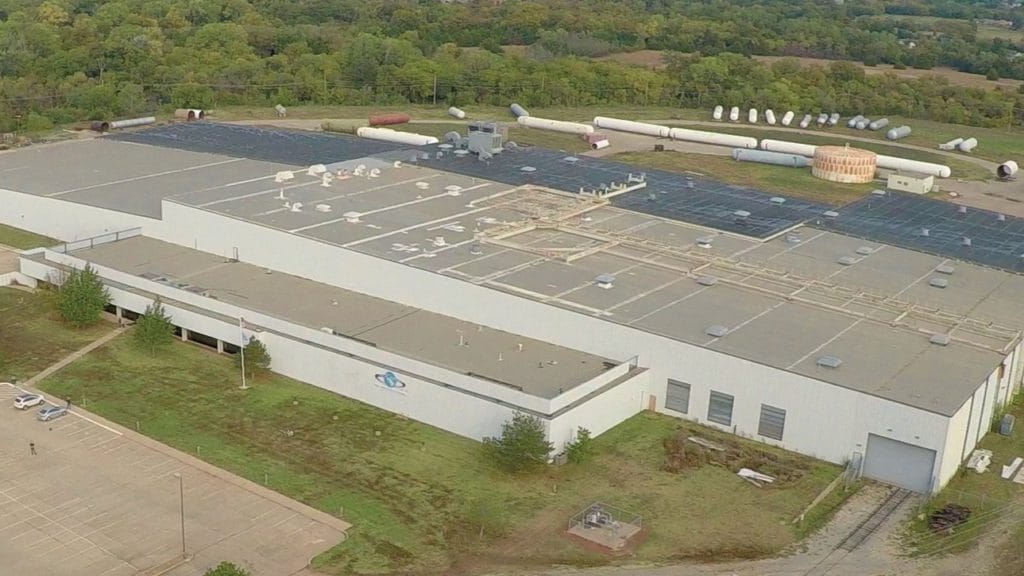
For once, a Western rare earth project skipped the "MOU and vibes" stage and jumped straight to making magnets.
On March 26, USA Rare Earth commissioned Phase 1a of its commercial neodymium-iron-boron sintered magnet production line in Stillwater, Oklahoma. The line is designed to ramp toward roughly 600 tonnes per year, with first customer shipments expected in Q2 2026, targeting defense, EV, wind, and industrial buyers. This is operating manufacturing capacity — not a pilot — sitting in a planned mine-to-magnet chain that includes the Round Top rare earth deposit in Texas and the pending acquisition of UK alloy producer Less Common Metals. In a market where China still controls the overwhelming majority of global magnet production, a real Western magnet line actually shipping product is a non-trivial strategic shift.
If named offtake customers appear on the next earnings call, it means U.S. defense primes and automakers are ready to pay a premium for non-Chinese magnets. If the customer list stays vague through Q3, it means the "buy American" rhetoric hasn't yet overcome the price gap. Watch for named contracts, not tonnage projections. (Additional coverage)
China Quietly Tightens the Gallium Spigot Again
The gallium "truce" is looking less like a thaw and more like a managed choke point.
Customs data and trader reports show March gallium exports dropping to their lowest level since late 2023, despite the formal suspension of expanded export controls last October. Traders tell Reuters that licenses are taking longer and volumes are smaller, particularly for European buyers, even as shipments to select Asian partners remain relatively stable. Independent datasets suggest that, in March versus February, license issuance dropped roughly 25%. China doesn't need new laws to move this market — it just has to change the pace and pattern of license approvals on a product where it controls the vast majority of primary production as of recent years.
For compound semiconductor fabs, defense radar suppliers, and high-speed optics manufacturers, the planning implication is blunt: treat every tonne from China as discretionary, not guaranteed. The formal suspension runs through November 10, 2026, but the licensing architecture is already doing the work of a restriction. If April MOFCOM data shows another 10–25% decline, assume license frictions are becoming semi-permanent. (Context: Rare Earth Exchanges; Legal analysis: Pillsbury)
Indonesia's Nickel Tax Shuffle Keeps Stainless and Battery Markets on Edge
If your cost model assumes stable Indonesian nickel policy, you haven't learned from the last five years.
Jakarta this week postponed a windfall tax on nickel exports that had been slated for April 1, even as Bloomberg reported the president had already approved an export tax framework for intermediate nickel products — ferronickel and nickel pig iron. The mixed signals are the story: delays, draft frameworks, and separate reports of presidential sign-off mean market participants must model a range from modest levies to structural export repricing. Regional stainless prices are already responding — Taiwan's Yieh United Steel (Yusco) hiked sheet prices for the fifth consecutive month, citing higher NPI costs tied to the tax overhang.
What success looks like for Jakarta: more onshore processing investment and higher fiscal capture. What failure looks like: producers shift investment to the Philippines or other jurisdictions, and Indonesia's nickel dominance erodes without capturing the value it wanted. The observable signal is whether major smelter FIDs in Indonesia accelerate or stall in Q2. (Bloomberg; Asia Times)
Germany's tozero Switches On Europe's First Industrial Battery Recycling Plant
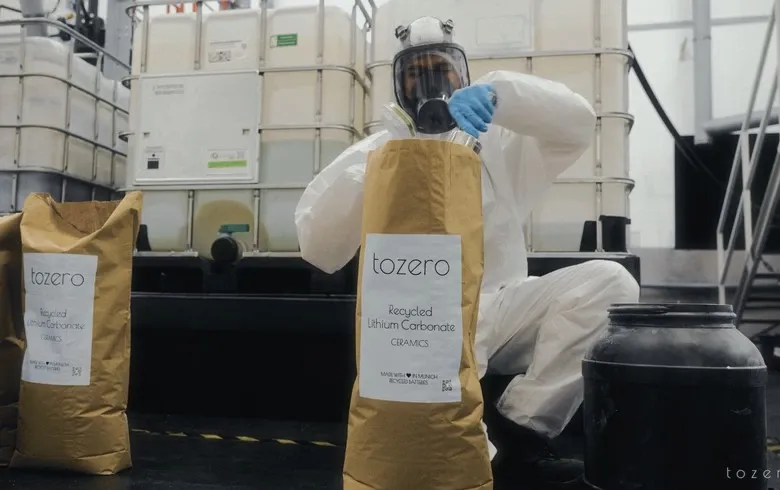
Europe finally has a serious battery recycler that isn't just a pilot line in a press release.
On March 27, Munich-based tozero inaugurated what it calls Europe's first industrial-scale hydrometallurgical battery recycling plant — a facility integrating mechanical shredding with chemical processing to recover lithium, nickel, cobalt, and graphite from spent EV and stationary batteries. Unlike many "announced" projects, this plant is operating, with initial capacity geared to demonstration scale but engineered for modular expansion. European OEMs now have a local option for black mass processing — the shredded remnants of dead batteries — that keeps strategic materials within the bloc instead of shipping scrap to China or South Korea.
If tozero scales to its reported target capacity and other EU recyclers follow, Europe could meet Battery Regulation recycled-content mandates with domestic material. If feedstock collection logistics remain fragmented and the plant runs below capacity, the mandate becomes a compliance headache rather than a supply chain solution. Watch whether major automakers sign offtake agreements with tozero in the next two quarters. (Tech.eu coverage)
Michigan's Data Center Battery Mandate Locks In Long-Term LFP Demand
AI data centers don't just eat power — they now hard-wire long-term demand for lithium and phosphate.
On March 27, the Michigan Public Service Commission approved six energy storage contracts totaling 1,332 MW tied to data center and grid-support projects, with specifications heavily favoring lithium iron phosphate (LFP) batteries. LFP chemistries use no nickel or cobalt but are hungry for lithium and rely on natural and synthetic graphite for anodes. Market analysts translate the pipeline into roughly 10–15 GWh of cell demand per year once projects commission. Roughly 332 MW of the approved capacity is reportedly tied to a large data center development pursued by an Oracle subsidiary — the kind of concentrated, predictable metal demand that reshapes regional procurement.
If interconnection bids clear quickly, this LFP demand hits the market within 18 months and strains cell procurement cycles. If grid connection timelines slip — as they often do — the demand cliff softens. Watch interconnection milestone announcements in Q3 for timing signals.
Wyoming's Halleck Creek Pilot Plant Accelerates — and the Metallurgy Is Interesting
Two technical announcements in 48 hours from the same project is the kind of quiet acceleration that precedes a financing conversation.
American Rare Earths announced on April 1 that it's accelerating its pilot plant to produce pre-production rare earth concentrate from Halleck Creek ore in Wyoming, and has named metallurgical engineer Jaye T. Pickarts to support the program. The headline is speed, but the more interesting detail is the flowsheet: GradePro Reflux Classifier for density-based separation and IRMS units for magnetic separation, with preliminary test work showing roughly 94% gangue rejection — the waste rock removal step where most non-Chinese projects bleed cost — about 70% total rare earth oxide recovery, and about 10x grade enrichment. Separately, on March 30, the company commissioned an oxide-to-metal study for heavy rare earths through Tetra Tech, explicitly exploring molten salt electrolysis and calciothermic reduction routes. (Taiwan News)
This is still exploration-stage ore going into a pilot plant, not a financed production facility. But the company that cracks low-cost domestic concentration first has a real first-mover advantage in the DOE midstream funding queue. If pilot results hold at scale and the oxide-to-metal study identifies a viable route, expect a financing conversation by late 2026. If gangue rejection drops below 85% at volume, the economics unravel.
Energy Fuels Proves a Mine-to-Oxide Heavy Rare Earth Chain on U.S. Soil
On March 25, Energy Fuels produced high-purity terbium oxide at its White Mesa Mill in Utah from monazite ore mined in Florida and Georgia — a full mine-to-heavy-rare-earth-oxide chain entirely within the United States. Per the company's announcement, this represents the first U.S. primary production of critical heavy rare earth material in decades. (PR Newswire)
Right now this is pilot-scale — tens of kilograms of dysprosium and a kilogram-class batch of terbium oxide — with a Phase 1 expansion targeting commercial-level output by around 2027. The immediate significance isn't tonnage; it's proving the chemistry, permitting, and logistics work outside China. Multiple magnet manufacturers have reportedly requested samples for qualification testing. If those qualifications succeed and Energy Fuels scales to commercial volumes, U.S. defense and EV magnet makers get a domestic HREE source. If yields plateau at pilot scale or permitting complications slow the expansion, it remains a demonstrator rather than a supply solution.
Aclara's Louisiana HREE Separation Plant Moves Toward Construction — From South American Feedstock
Aclara Resources plans to begin construction in 2026 on a $277 million heavy rare earth separation facility in southwest Louisiana, processing ionic clay feedstock from its deposits in Brazil and Chile. Per Louisiana Economic Development, CEO Ramón Barúa cited the urgency of establishing reliable HREE supply. Aclara is already running a pilot at Virginia Tech using a dual-phase flowsheet treating light and heavy rare earths separately. (Yahoo Finance)
The feedstock geography is the interesting part. This isn't a mine-to-magnet domestic story — it's Latin American ore feeding a U.S. separation plant, a different supply chain architecture than what most allied frameworks envision. If construction begins on schedule and the Virginia Tech pilot chemistry transfers to commercial scale, this would be the first purpose-built HREE separation facility in the continental U.S. If financing doesn't close or permits stall, it joins the long list of announced-but-never-built Western processing plants. Treat it as "announced, pre-construction" until there's a financing close.
⚡ What Most People Missed
- China's whitelist system is the real export control story. The framing keeps defaulting to "open or closed," but Beijing's case-by-case licensing for rare earth materials used in advanced technologies gives it discretion to reward compliant buyers and squeeze adversarial ones — all while maintaining plausible deniability. For OEM procurement teams, the question isn't whether you're on the whitelist; it's whether your Tier 2 suppliers are. (CSIS analysis)
- S&P Global Platts has launched non-Chinese HREE price assessments, and buyers are already referencing a measurable "security premium" for traceable, non-Chinese heavy rare earth deliveries. That premium rewrites project economics for separation plants built on the strategic-buyer model rather than commodity tonnage — shortening payback for anyone who can certify provenance.
- The allied minerals credibility problem nobody is naming: a Peterson Institute analysis argues the core challenge isn't resources or capital but credibility — allies must accept near-term costs to diversify from China, and for the first time in decades, U.S. political stability and policy continuity are themselves part of allies' risk calculations. (PIIE)
- India's seventh critical mineral auction round launched March 23, quietly expanding the geographic menu for non-Chinese feedstock. New Delhi is now running a conveyor belt of auctions while experimenting with exploration licenses and AI-assisted geological targeting — positioning as a potential supplier, not just a refining customer. (TIOL)
- ReElement Technologies and Mitsubishi Materials entered a strategic collaboration to commercialize chromatography-based rare earth separation in the U.S. and Japan — a lower-waste alternative to traditional solvent extraction that could become the preferred route for recycling-heavy feedstocks and smaller, distributed refining nodes. (PR Newswire)
📅 What to Watch
- If Indonesia publishes a finalized nickel export tax rate in April, watch whether major smelter FIDs in-country accelerate or shift to the Philippines — that's the real test of whether resource nationalism captures value or repels capital.
- If Export Finance Australia's first Strategic Reserve deal targets a processed material rather than raw concentrate, it signals Canberra is serious about being a midstream player, not just a mine.
- If April MOFCOM data shows another gallium license decline of 10–25%, expect European fabs and defense suppliers to accelerate alternative sourcing, recycling, and inventory builds; assume the "suspension" is functionally irrelevant.
- If Saskatchewan's SRC Rare Earth Processing Facility hits its September substantial-completion target, the first non-Chinese heavy rare earth metal production outside a lab becomes a 2027 event — and the offtake agreements being negotiated now will determine who captures that output.
- If DOE's midstream processing funding round (applications reportedly due April 24) oversubscribes heavily, expect a second tranche and a political argument about whether $500 million is enough — or whether the real bottleneck is permitting speed.
The Closer
An Oklahoma factory pressing rare earth magnets nobody thought would ship this decade, a Munich startup shredding dead batteries Europe used to send back to China, and Canberra building a strategic petroleum reserve — except for rocks.
The nicest thing you can say about the allied minerals strategy right now is that the pilot plants are multiplying faster than the whitelists can screen them.
Until next week — keep your supply chains short and your planning horizons long.
If someone in your orbit sources, finances, or worries about materials that come out of the ground, forward this their way.
From the Lyceum
Two jury verdicts in two days just turned social media "design defect" into a replicable litigation playbook for every platform. Read → Two Verdicts in Two Days