Critical Minerals Weekly — Apr 15, 2026
Photo: lyceumnews.com
Week of April 15, 2026
The Big Picture
Beijing just pulled three levers at once: a 44.6% rare-earth price increase for Q2 versus Q1, confirmation of the world's second-largest producing light rare earth mine, and a whitelist system that's now actively sorting global buyers into "approved" and "everyone else." Meanwhile, lithium futures surged 12% over three trading days amid African export bans and Australian mine hiccups, and the DOE's $500 million midstream funding window closes on April 24, 2026. The gap between Western policy ambition and Western processing capacity has never been more measurable — or more expensive.
What Just Shipped
- Rivian × Redwood Materials Second-Life Battery System (Rivian/Redwood Materials): ~10 MWh of repurposed EV battery packs deployed at Rivian's Normal, Illinois factory for peak-shaving and grid reliability.
- EU Raw Materials Mechanism — First Call (European Commission): Demand-aggregation platform launched April 13 for rare earths, defense materials, and battery inputs; registration open through end of April.
- DOE Critical Minerals Accelerator — $69M Funding Opportunity (U.S. Department of Energy): Opened April 7 for pilot and prototype projects in extraction, separation, and processing — specifically targeting cost-competitive DLE and midstream chemistry.
- Benchmark Mineral Intelligence Rare Earth Permanent Magnet Spot Prices (Benchmark): First-ever independent spot price series for NdFeB permanent magnets, aimed at improving contract transparency and project finance benchmarking.
- Lumafield Battery CT Scan Dataset (Lumafield): Non-destructive CT scans of 1,000+ commercial lithium-ion cells published, revealing high defect rates in lower-cost suppliers.
This Week's Stories
China's Rare Earth Price Hike Is the Biggest in Three Years — and It's Not Random
China Northern Rare Earth (600111.SH) and Baogang Steel (600010.SH) raised the Q2 2026 price for rare earth concentrate to RMB 38,804 per tonne — a 44.6% jump from Q1's RMB 26,834. According to SunSirs, this is the seventh consecutive quarterly hike and the largest single-quarter increase since the pricing mechanism reform in 2023. In dollar terms, per Geomechanics.io, the new benchmark sits at roughly $5,390 per tonne for 50% REO material — more than double a year ago.
What changes: every non-Chinese rare earth buyer's cost model just shifted. EV motor makers, wind turbine manufacturers, and defense contractors sourcing NdPr magnets face immediate margin pressure. According to Kalkine, global buyers have been accelerating restocking on export restriction fears, which reinforces the price floor. A secondary pressure point flagged by Alcircle: China plans to restrict sulphuric acid exports from May, which would raise costs for every non-Chinese separator that depends on acid-leach processing.
What to watch: if this price floor holds through Q3, expect Western OEMs to accelerate engineering shifts toward rare-earth-light motor architectures. The observable signal is procurement RFQs specifying externally excited synchronous machines or ferrite alternatives — that's the tell that the price hike is changing design, not just budgets.
China Just Confirmed the World's Second-Largest Light Rare Earth Mine — and It's Already Producing
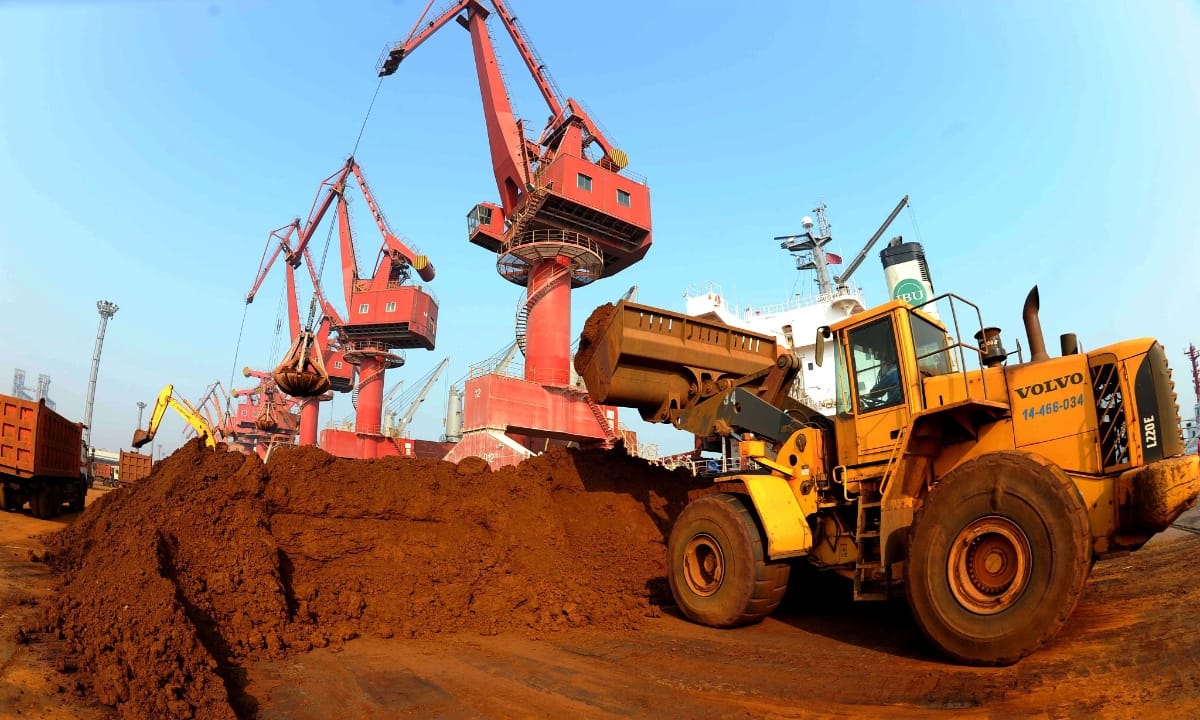
China's Ministry of Natural Resources confirmed 9.67 million tonnes of rare earth oxides at the Maoniuping mining area in Sichuan Province — the world's second-largest light rare earth deposit after Bayan Obo, representing a more than 300% increase over previously reported reserves. Per People's Daily, this isn't a greenfield find: Maoniuping is already producing. CGTN confirmed it as the world's second-largest producing light rare earth mine.
The co-located minerals may matter more. Survey crews quantified 27.1 million tonnes of fluorite and 37.2 million tonnes of baryte — both classified as "super-large" deposits, per Indian Defence Review. Fluorite is the primary industrial source of fluorine, essential for semiconductor wafer etching and lithium-ion electrolyte formulations. This single site now anchors Chinese dominance across rare earths, fluorochemicals, and industrial drilling minerals simultaneously.
Failure to diversify looks like this: allied nations continue sourcing from a market where one country controls the ore, the processing, and the co-products — and can price or restrict any of them independently. The signal that diversification is working would be non-Chinese fluorite processing capacity appearing in project pipelines within 18 months.
Lithium Carbonate Futures Surge 12% in Three Days — Zimbabwe's Export Ban Is the Trigger
Chinese lithium carbonate futures jumped 12% over three trading days, driven by Zimbabwe's raw lithium ore export ban taking effect and production hiccups at Australia's Pilgangoora and Greenbushes hard-rock operations. Per Shanghai Metals Market, battery-grade lithium carbonate in China rose roughly 2.95% on the April 14 session to about $20,874/tonne. The Rare Earth Exchanges index noted domestic PrNd oxide approaching $120–125/kg, the highest since 2022.
The Zimbabwe angle is a preview of resource nationalism propagating into battery supply chains. Zimbabwe holds major hard-rock lithium deposits, and its ban — designed to force in-country processing — is visibly moving spot prices in China, where most of that ore was headed. Chinese companies with local processing agreements are reportedly better positioned than pure traders.
An underappreciated demand driver: grid-scale energy storage procurement in China — not just EV restocking — has been absorbing previously surplus volumes, tightening the market faster than EV-focused models predicted. If Chinese spot prices hold above about $21,000/tonne through April, expect marginal brine and DLE projects to accelerate financing conversations.
Rivian's Illinois Factory Will Run on Recycled EV Batteries
Rivian and Redwood Materials announced a formal partnership deploying more than 100 second-life Rivian battery packs as an initial ~10 MWh energy storage system at Rivian's Normal, Illinois assembly plant. Redwood supplies pack-management and dispatch technology for peak-shaving and factory reliability. This follows Toyota's similar proof-of-concept with Mazda's production line, covered here in March.
What changes if this scales: automakers with large battery return streams discover that second-life stationary storage is cheaper than grid power contracts. That delays the volume of packs entering the recycling stream by years, potentially creating competition between grid operators and recyclers for end-of-first-life packs — a structural shift in urban-mining economics. The reuse-first model also reduces near-term feedstock for dedicated recyclers like Li-Cycle and Ascend Elements.
The signal to watch: if Rivian expands beyond 10 MWh or a second OEM announces a similar behind-the-meter deployment within 60 days, the factory-as-energy-storage-operator model becomes a template. If it stays a one-off, it's a press release.
DOE's April Clock: $500M for Midstream Processing — Deadline Matters
The Department of Energy's $500 million funding round for domestic critical mineral processing, battery-material manufacturing, and recycling hits its full-application deadline on April 24, 2026. The money targets three buckets: raw-feedstock processing, recycling, and battery materials/component manufacturing — spanning lithium, graphite, nickel, copper, aluminum, and other battery-linked minerals.
This deadline functions as a sorting mechanism. Projects that can't assemble a credible application in the window probably aren't construction-ready. If a strong field of named, financeable projects emerges, U.S. midstream capacity finally has a bench. If the field is thin, the bottleneck is worse than advertised — and the November 10 export control expiration becomes considerably more dangerous.
The observable signal: watch for DOE's awardee announcements in Q3. The names on that list will tell you which U.S. processing routes are closest to commercial relevance.
China's Tungsten/Antimony/Silver Whitelist Goes Live — and Non-Approved Buyers Are Already Feeling It
This is getting almost no coverage outside compliance circles, but it's operationally significant now. China's whitelist system for tungsten, antimony, and silver is fully activating in April–May 2026, according to Skillings.net. Companies with whitelist status have contracted supply at one price; everyone else pays a premium on secondary markets or goes without. Japan is absorbing the sharpest pressure, with manufacturers dependent on rare earth magnets and semiconductor components navigating access constraints in real time.
The whitelist is more strategically durable than an outright ban — it lets Beijing reward cooperative buyers and punish adversarial ones without triggering WTO complaints. A two-tier market is forming in real time, and the price divergence between approved and non-approved channels is the clearest indicator of how much leverage Beijing actually holds.
The counter-signal: if allied processing capacity and logistics hardening (see U.S.-Australia and African shipping stories) actually deliver alternative supply within 18–24 months, the whitelist's leverage decays. If not, it becomes the permanent architecture of Chinese mineral diplomacy.
Saskatchewan's Rare Earth Metals Plant Is Seven Months From Commissioning — and Almost Nobody Is Watching
The Saskatchewan Research Council's rare earth processing facility — funded by the governments of Saskatchewan and Canada, under construction since 2020 — is scheduled for substantial completion in September 2026 and commissioning by December 2026. It integrates hydrometallurgy, separation, and metal smelting to produce magnet-grade NdPr metal and dysprosium/terbium oxides using proprietary in-house technology.
The timing is extraordinary: commissioning lands almost exactly when China's export control suspension expires on November 10, 2026. The plant's first commercial output would arrive into a potentially much tighter market for non-Chinese NdPr metal and heavy rare earth oxides.
Realistic caveats: ramp-up timelines for first-of-kind processing facilities routinely slip, and early output will be modest relative to global demand. "Commissioned by December 2026" should be read as an optimistic target. The signal that this is on track: construction milestone announcements from SRC through summer. Silence is the warning sign.
U.S. Industry Pushes Commerce to Lock Down Tungsten Scrap Exports
A domestic coalition led by AMERMIN filed a formal request with the U.S. Department of Commerce for export licensing requirements on tungsten scrap bound for China, Russia, and other adversarial nations. The USGS reports the U.S. has not commercially mined tungsten since 2015 — so scrap is the most immediately available domestic feedstock, and it's being vacuumed up by the country Washington is trying to reduce dependence on.
This petition is essentially an admission that the U.S. doesn't yet have the processing infrastructure to compete for its own material on price. It's pre-decisional — a trade group letter, not a rule — but the political environment is aligned, and China's whitelist for tungsten going live this month adds urgency.
What to watch: if Commerce opens a formal rulemaking within 90 days, tungsten scrap becomes the first recycled critical mineral subject to U.S. export controls. That would set a precedent for cobalt, lithium, and other materials where secondary supply is strategically valuable.
Washington Is Starting to Look at Mineral Pricing Power, Not Just Physical Supply
A Federal Register notice posted for public inspection on March 30 announces an April 16 hearing by the U.S.-China Economic and Security Review Commission titled "Pricing the Future: China's Ambitions for Commodities Derivative Markets." The hearing will examine China's push to build domestic futures exchanges for critical minerals and how those contracts may affect global price discovery.
This is a bigger shift than it sounds. If policymakers start treating benchmark formation as part of supply-chain control, strategic planning moves from "who mines and refines" to "who sets the reference price the tonnes are priced on." No sanctions or tariffs are attached — this is a hearing notice — but these forums often preview where later trade policy language originates.
The signal: if the hearing produces recommendations that reference Benchmark Mineral Intelligence's new magnet price index or call for allied commodity exchanges, pricing infrastructure becomes an explicit policy tool. That changes how projects get financed and how contracts get written.
⚡ What Most People Missed
- CT scans of 1,000 lithium-ion cells reveal alarming quality gaps in cheaper batteries. Industrial X-ray firm Lumafield published non-destructive imaging showing misaligned electrodes, contamination, and electrolyte irregularities concentrated in lower-cost suppliers. Procurement teams buying spot-market bargains to cover shortages are buying thermal-runaway risk they can't see from the outside.
- Brussels launched a minerals matchmaker and nobody noticed. The European Commission's Raw Materials Mechanism aggregates demand from smaller European buyers for rare earths, defense materials, and battery inputs — the plumbing that determines whether non-Chinese refineries can get enough committed offtake to justify construction.
- The U.S. and Australia may have expanded their critical minerals commitment to $3.5 billion. If confirmed, this would represent a major jump from the original ~$1 billion framework and would specifically target midstream processing — HPAL nickel and heavy rare earth separation — rather than raw extraction. Verify with Treasury or Australian government announcements; the scale matters because only multi-billion-dollar packages change the near-term supply picture.
- DOE's $69 million accelerator targets the valley of death between lab chemistry and bankable plants. The new funding window is specifically aimed at pilot-scale extraction and separation — the step where promising DLE and hydrometallurgy processes either graduate to commercial relevance or quietly die.
📅 What to Watch
- If China's sulphuric acid export restriction is formally confirmed by MOFCOM before May, non-Chinese rare earth separators face an immediate input-cost shock that could delay or kill projects currently in feasibility — watch for emergency procurement announcements from Lynas, Energy Fuels, and MP Materials.
- If DOE's April 24 application deadline draws fewer than a dozen credible midstream proposals, the U.S. processing bottleneck is structural, not just underfunded — and the November 10 export control expiration becomes a genuine supply crisis rather than a negotiating deadline.
- If the U.S.-China Economic and Security Review Commission's April 16 hearing produces recommendations referencing allied commodity exchanges or pricing infrastructure, expect pricing power to become an explicit policy tool within 12 months — changing how every non-Chinese mining project gets financed.
- If SRC's Saskatchewan plant goes quiet on construction milestones through summer, assume the December 2026 commissioning target is slipping — and the window where non-Chinese NdPr metal arrives just as China's export truce expires narrows to nothing.
- If a second OEM announces a behind-the-meter second-life battery deployment within 60 days of Rivian's, the factory-as-energy-storage-operator model becomes a template that delays recycling feedstock volumes and reshapes urban-mining economics for the rest of the decade.
The Closer
China Northern Rare Earth hiked prices 44.6% while sitting on a freshly confirmed mega-deposit; AMERMIN filed to ask Commerce to stop U.S. tungsten scrap from leaving the country; and the Saskatchewan Research Council is quietly building the only non-Chinese NdPr metal plant that might actually commission before the export truce expires.
The world's most important supply chain runs on chemistry nobody wants to finance, through ports nobody's secured, priced on exchanges nobody in Washington controls — but at least we're holding a hearing about it tomorrow.
Clear satisfactions and muddled anxieties until next week.
If someone in your orbit makes decisions that touch magnets, batteries, or anything that comes out of the ground — forward this their way.
From the Lyceum
The reciprocal tariff proclamation imposed broad duties on most U.S. trading partners, with chips and pharma getting a temporary — not permanent — carve-out. Read → Tariff Earthquake Lands — Chips and Drugs Get a Temporary Pass, Not a Permanent One