The Lyceum: Critical Minerals Weekly — Jul 07, 2026
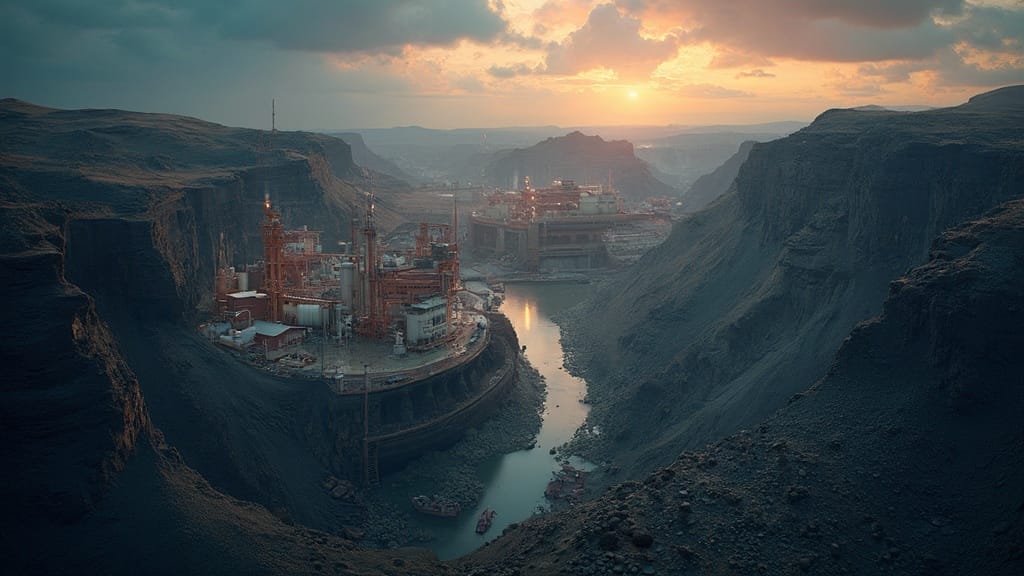
Photo: lyceumnews.com
Week of July 7, 2026
The Big Picture
This was the week the gap between announcing supply chain independence and building it stopped being rhetorical. Canada put $400 million into an operating smelter that already makes the exact metals China restricts; the U.S. Army committed its own land — not grants, not studies — to heavy rare earth processing; and China quietly activated a civilian informant network for export violations on July 1 while the Western press was looking elsewhere. The through-line: everyone downstream is now moving at once, with the clock running on China's November enforcement deadline.
This Week's Stories
Canada Bets $400M on the Smelter That Already Makes What Everyone Wants
If you wanted to design the ideal facility to counter China's export controls on gallium and germanium, you'd end up building something that looks a lot like Teck Resources' Trail Operations smelter in British Columbia — which has been quietly producing both metals for decades. (Canada Bets $400M on the Smelter That Already Makes What Everyone Wants)
On Tuesday, Canada's Minister of Energy and Natural Resources Tim Hodgson launched the Canada Critical Minerals Accelerator at a ceremony at Teck Trail, alongside a Strategic Investment Agreement signed by Teck, the Accelerator, and the Canada Growth Fund. The framework establishes an equity-like investment of up to C$400 million directly into the facility — the first deal under the new program, which sits inside a broader C$2 billion federal minerals fund announced this week. Reuters reporting on the deal said it could support expanded production of germanium and other strategic metals.
The strategic logic is unusually tight. As part of its Strategic Metals Initiative, Teck plans an $850-million expansion adding gallium and potentially doubling germanium and antimony output — precisely the three metals China has placed under export licensing controls since 2023. And Trail is an operating facility, not a slide deck: 1,400-plus employees, already refining zinc, lead, and byproduct critical minerals. (Canada Bets $400M on the Smelter That Already Makes What Everyone Wants)
The caveat matters. This is a framework agreement, not a final investment decision. The "up to" language means disbursement is conditional on milestones. The observable signal that this money is actually moving: an FID announcement on the gallium/germanium expansion in the next 30–60 days. Without it, this is a very well-attended press conference. (Canada Bets $400M on the Smelter That Already Makes What Everyone Wants)
Nigeria Opens West Africa's Largest Lithium Processing Plant — Built by China
The headline is Nigeria's win. The fine print is China's.
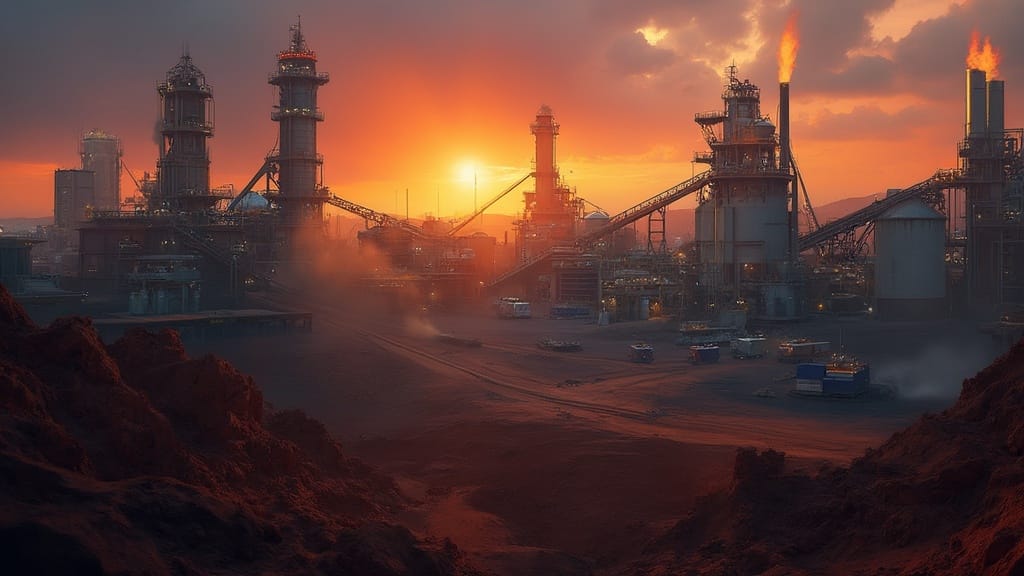
Last Wednesday, President Bola Ahmed Tinubu commissioned Africa's largest lithium processing plant in Nasarawa State — a $250 million facility built by Chinese firm Diamond New Energy in partnership with the state government, in cooperation with Chinese companies Jiuling and Canmax, whose combined capacity accounts for over 20% of the global lithium market. Nigerian reporting puts direct employment above 1,000 jobs, with more than 2,000 indirect. Nigeria's federal government has declared it will no longer permit the export of raw minerals without local processing — resource nationalism that, in practice, has drawn Chinese capital to build the infrastructure. (Nigeria Opens West Africa's Largest Lithium Processing Plant — Built by China)
That's the unresolved tension. A Chinese-built, Chinese-operated plant processing Nigerian ore still routes value — and technology, and offtake — through Chinese corporate structures. For Western OEMs hoping to source battery-grade lithium outside China's control, this facility solves geography without solving dependency. (Nigeria Opens West Africa's Largest Lithium Processing Plant — Built by China)
What tells you which way this goes: whether any non-Chinese battery manufacturer signs an offtake agreement here, and whether lithium carbonate holds above roughly $15,000/tonne — the threshold at which the plant's economics work and more Chinese-backed African processing follows. Below it, the model gets difficult fast.
The Army Puts Its Own Land Behind Heavy Rare Earth Separation
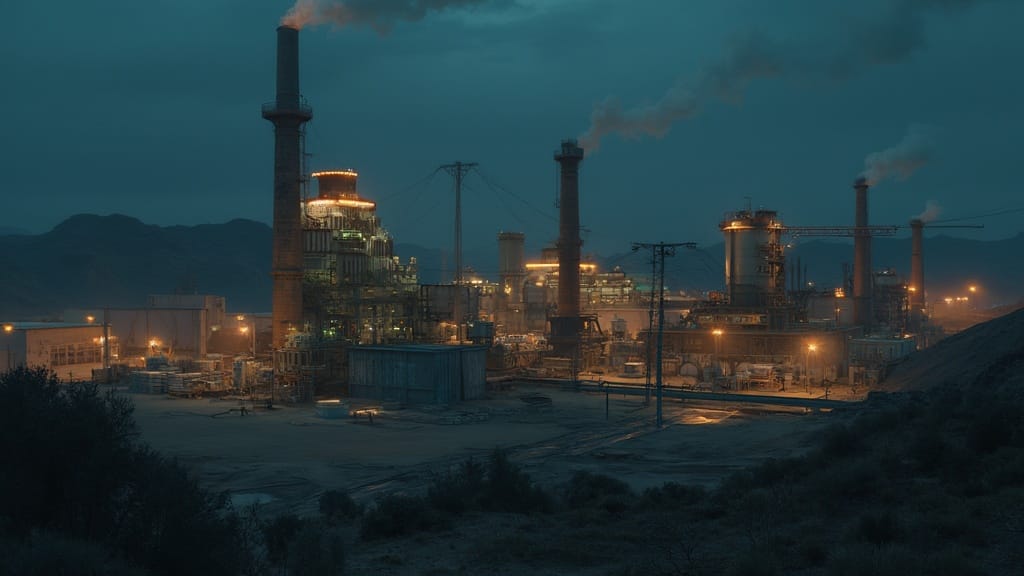
The U.S. Army's June 25 announcement — four companies, four bases, roughly $2 billion in expected private investment — is the Pentagon moving from stockpiling to actually building. The detail worth your attention: REalloys (NASDAQ: ALOY) drew the assignment for dysprosium and terbium processing at Tooele Army Depot in Utah. (REalloys’ Army site win quietly extends an already forming heavy rare earth chai)
These are heavy rare earth elements, categorically harder to source than the light rare earths that get the press. REalloys itself calls domestic dysprosium and terbium capacity "one of the most strategically scarce links in the Western rare earth supply chain." The deal structure is genuinely clever: rather than lease payments, the Army takes a share of processed output, plus infrastructure improvements to the base, giving the military direct access to materials used in drones, missiles, and body armor without a procurement budget line. Companies get subsidized land and a de facto government anchor customer.
The other three: Titan Mining's Empire State Mines for graphite at Anniston and Pine Bluff, EnergyX for lithium at Red River, and Ioneer USA for boron at Tooele. (secureenergy.org)
The pressure is real — the Pentagon's ban on Chinese materials kicks in January 2027, and the broader export-restriction truce expires in November 2026. But this is company press release plus Army public affairs, and REalloys' inclusion remains subject to definitive agreements and environmental review. The thread to pull: REalloys intends to draw on allied feedstock, including Canadian heavy rare earths. If no Canadian HREE mine reaches commercial production before 2028, Tooele has a feedstock problem no lease negotiation can fix.
China's Rare Earth Licensing Gets a New Weapon: The End-User Clause
The most consequential rare earth development this week wasn't a new ban — it was tighter paperwork that makes the existing system bite harder. (China's Rare Earth Licensing Gets a New Weapon: The End-User Clause)
Chinese-language reporting confirmed Beijing is now enforcing a requirement that export licenses specify end-user information, closing a loophole where licenses were granted without detailed downstream disclosure. The application is filed by the Chinese exporter — but in practice, suppliers depend on their foreign customers to hand over accurate end-use data, per Taylor Wessing's trade analysis. The burden shifts West. Under extraterritorial provisions, a manufacturer sourcing controlled Chinese material could face consequences if that material is later used in restricted applications — even operating entirely outside China, per Certivo's compliance breakdown. (China's Rare Earth Licensing Gets a New Weapon: The End-User Clause)
Enforcement of those extraterritorial provisions is delayed until November 2026 — a compliance window, not a reason to defer. The November deadline is the real clock for every defense and automotive OEM that hasn't yet mapped its rare earth exposure. Japan is already feeling it: multiple Chinese-language outlets reported China's dual-use export controls on Japan have been stalled six months, with Japanese manufacturers' inventories running critically low — so low that some are reportedly recovering neodymium and dysprosium from scrapped air conditioners. That's not a metaphor; that's what "no alternative supply" looks like operationally. [Source: Shanghai Observer / Lianhe Zaobao — Chinese] (China's Rare Earth Licensing Gets a New Weapon: The End-User Clause)
Ucore Moves Heavy Rare Earths to Testing at Its Louisiana Separation Facility
Separation — the step between mining ore and producing the purified oxides that go into magnets — is where China's dominance is most complete and hardest to replicate. Ucore Rare Metals is one of the few Western companies actually building it. (Ucore Moves Heavy Rare Earths to Testing Phase at Alaska Separation Facility)
Per Metal Tech News and Mining Weekly this week, Ucore has moved heavy rare earth elements — dysprosium and terbium, the strategically sensitive category — into active testing at its Strategic Metals Complex in Louisiana, and announced a collaboration with the Strategic Offshore Minerals Alliance on supply chain development. The complex is in construction and commissioning, not yet at commercial scale. (Ucore Moves Heavy Rare Earths to Testing Phase at Alaska Separation Facility)
Here's why this milestone matters: light rare earths like neodymium have alternative sources, but heavy rare earths come almost entirely from Chinese ionic clay deposits. Getting HREE separation working outside China is the actual proof point for defense magnet independence — the thing the Army's Tooele bet ultimately depends on someone achieving. Watch for Ucore's first commercial-scale separation run. Until then, testing is testing. (Ucore Moves Heavy Rare Earths to Testing Phase at Alaska Separation Facility)
⚡ What Most People Missed
China activated a civilian informant network for export violations on July 1: MOFCOM Announcement No. 26 formalizes a mechanism encouraging organizations and individuals to report suspected dual-use export violations — including third-country routing, the workaround many firms quietly rely on. It coincides with two Japanese nationals detained in Dalian over alleged rare-earth smuggling (confirmed by Japan's government) and a Chinese optics executive placed under compulsory measures for mislabeling germanium lenses as ordinary glass. Third-country routing just got significantly riskier. [Source: Morgan Lewis / Japanese govt confirmation]
The Renault rare-earth-free motor going viral is a demand-destruction signal: A Renault explainer on its electrically-excited synchronous motors — copper windings instead of neodymium magnets — hit 717 points on Hacker News, unusual traction for an OEM technical post. The irony: Renault's path to rare-earth independence now runs through a Chinese stator supplier, having ended its Valeo collaboration. But if EESM scales for Renault's 2028 compact EVs and others follow, the long-run automotive case for dysprosium and terbium weakens — exactly the metals the Army just committed to processing.
REalloys' heavy-rare-earth chain is becoming a real industrial map: Beyond the Tooele win, the company's May 20 offtake agreement with Critical Metals Corp. locks in 15% of Tanbreez Phase 1 production from Greenland, plus a processing relationship with the Saskatchewan Research Council and an Ohio metallization platform. Greenland feedstock, Canadian separation, Utah and Ohio metal-making — a chain in formation, not yet proven, but heavy rare earth integration is moving from concept slides to named nodes.
The UK folded its first lithium hydroxide refinery into national economic projections: Industrial Info reports Britain's inaugural battery-grade facility now counts for roughly £2.1 billion in GDP impact and ~1,700 jobs, plugging the processing gap between imported spodumene and European cell plants. If financing closes, Britain shifts from raw-material customer to midstream player — non-Chinese hydroxide capacity in yet another jurisdiction. Single market report, but aligned with broader UK industrial policy.
Brazil is reportedly selling rare earths at a loss to undercut China: Chinese financial media claim Brazilian producers are offering Western buyers prices at losses of up to $200,000 per tonne, explicitly to displace Chinese supply. Unverified at the primary level — treat as market signal, not fact — but if accurate, it's producers absorbing short-term losses to lock in Western relationships before Chinese pricing reasserts. [Source: Sina Finance — Chinese]
📅 What to Watch
- If Teck announces FID on the gallium/germanium expansion within 60 days, Canada's $400M becomes real capacity — not just the flagship demo for a C$2 billion fund that needs a success story.
- If a non-Chinese battery maker signs offtake at the Nasarawa plant, it proves Chinese-built African processing can actually serve Western supply chains — otherwise it's dependency with a new address.
- If no Canadian HREE mine hits commercial production before 2028, the Army's Tooele facility inherits a feedstock gap that undercuts the entire base-leasing thesis.
- If China's Dalian detentions are followed by more foreign-national enforcement actions, expect Western firms to abandon third-country routing entirely — which tightens the squeeze faster than the November deadline itself.
- If LFP patent expiry drives battery-grade lithium carbonate demand higher, watch cobalt and high-grade nickel producers in the DRC and Indonesia absorb a structural, not cyclical, headwind.
The Closer
Picture it: Japanese engineers unscrewing air conditioners to harvest magnet dust, a Canadian smelter that's been quietly making the world's most contested metals since before it was fashionable, and a U.S. Army depot in Utah where the rent is paid in dysprosium. (Ucore Moves Heavy Rare Earths to Testing Phase at Alaska Separation Facility)
The best part is that Renault's escape from Chinese rare earths — the one the internet spent all week applauding — runs directly through a Chinese stator supplier, which is either the most honest thing anyone did this quarter or proof that nobody has actually escaped anything yet. (Ucore Moves Heavy Rare Earths to Testing Phase at Alaska Separation Facility)
Watch the feedstock, not the ribbon-cuttings.
Forward this to the procurement lead who still thinks third-country routing is a strategy.