The Lyceum: Critical Minerals Weekly — May 06, 2026
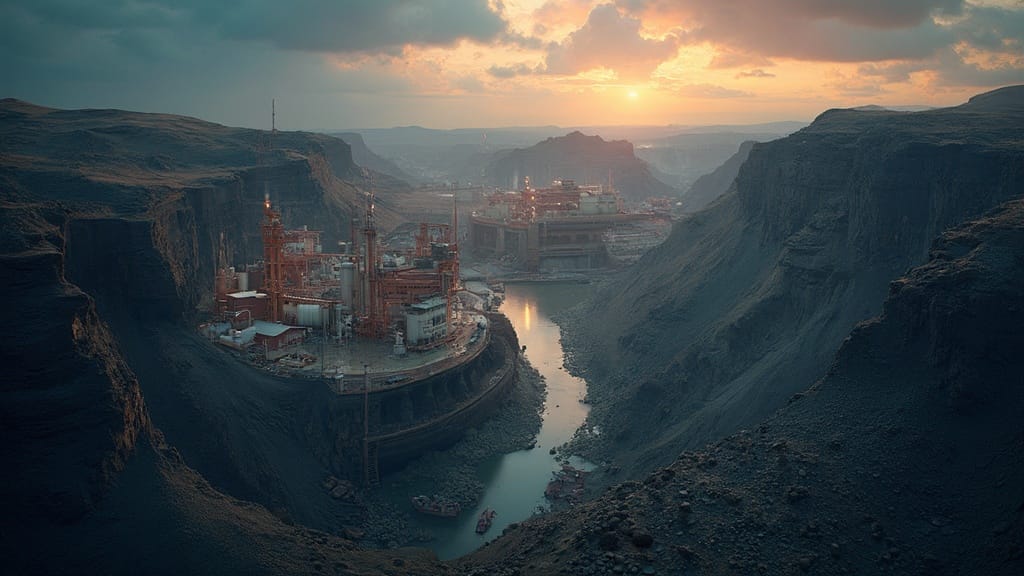
Photo: lyceumnews.com
Week of May 6, 2026
The Big Picture
The story this week isn't a single mine, deal, or price print — it's that the allied minerals architecture has stopped pretending to be unipolar. France is convening a G7 ministerial in Paris ahead of a June leaders' summit at Evian to build a magnet-and-alloy chain anchored at Lacq. Washington is rolling out FORGE. Brussels and Delhi just put real euros behind battery recycling. Lithium carbonate has crossed CNY 175,000 per tonne in May. And underneath all of it, China quietly published a unified supply-chain security framework on March 31 that makes every individual export-control suspension feel like theater above an unchanged stage.
It's a rich week. The pieces are starting to click together — and the gaps between them are getting easier to see.
What Just Shipped
- FORGE (Forum on Resource Geostrategic Engagement) (U.S. State Department): Successor to the Minerals Security Partnership, chaired by South Korea through June, launched alongside 11 new bilateral critical-minerals frameworks.
- €15.2 million EU–India battery recycling joint call (European Commission / Government of India): Funds a joint pilot line in India targeting mixed-chemistry recovery and integration of informal collection logistics.
- NOAA full-compliance determination for TMC USA's deep-seabed mining application (NOAA / The Metals Company): Procedural clearance moves the consolidated application into substantive review under the Deep Seabed Hard Mineral Resources Act.
- U.S.–EU Strategic Partnership on Critical Raw Materials (European Commission / U.S. government): April 27 action plan covering exploration, refining, recycling, and — for the first time — explicit demand-side instruments including price floors and offtake architecture.
- State Council Order No. 834 — Provisions on the Security of Industrial and Supply Chains (China State Council, effective March 31): China's first unified supply-chain security framework, integrating export controls, countermeasures, data security, and investment screening into one whole-of-firm compliance regime.
This Week's Stories
The G7 Is Quietly Building a Minerals Bloc Without Washington at the Center
Japan, France, and Canada are working on alternatives to a U.S.-led trade bloc to secure critical minerals and reduce reliance on China, according to three senior officials cited by Reuters. The options on the table are concrete: import quotas on certain rare earths, subsidies for diversification, and a Canada-led G7 buyers' club committing collective offtake to non-Chinese projects.
The "why" behind each player is sharper than the joint communiqué suggests. France lacks substantial reserves but has processing capacity, industrial financing muscle, and a growing political conviction that swapping Beijing-dependence for Washington-dependence is not actually a strategy. Japan has been at this since China's 2010 Senkaku/Diaoyu rare-earth squeeze; its dependence on Chinese rare earths has fallen from roughly 90% to around 60% over fifteen years through investments in Australia, Southeast Asia, recycling, and partnerships. Canada brings the geology and the diplomatic convening power.
If this works, the buyers' club becomes the first commercially actionable mechanism in years to address the offtake gap that has stranded Western refineries. If it fails, it joins the long list of allied minerals communiqués that produced binders rather than barrels. The signal to watch: whether France uses its G7 chair to convert concept into binding commitments before the June leaders' summit at Evian.
France Convenes the G7 to Try to Rebuild a Magnet Chain at Lacq
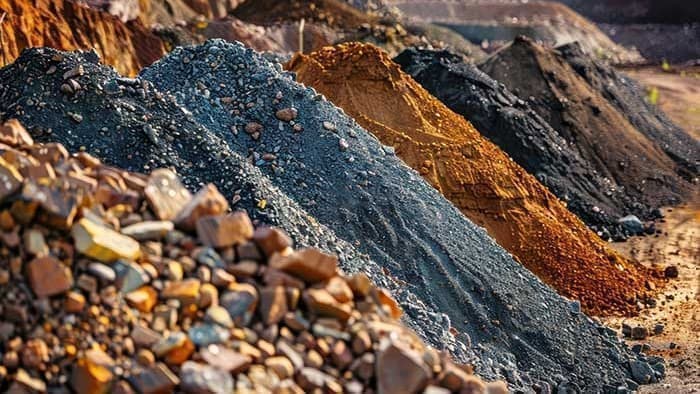
The corollary to the bloc-building story landed this week as actual policy. Reuters reported on May 5 that French Finance Minister Roland Lescure convened a G7 critical-minerals ministerial in Paris to prepare the June Evian leaders' summit, with an explicit plan to rebuild a domestic rare-earth and permanent-magnet chain at Lacq spanning feedstock, refining, alloying, and magnet manufacture.
The Lacq detail is what makes this different from a press release. Most Western rare-earth strategies stop at oxide separation — the step that produces a powder you can sell to someone in China who actually makes the magnets. France is pointing further downstream, at alloy and magnet production, which is where defense buyers and OEMs actually need supply. The difference between separating oxides and producing finished magnets is roughly the difference between announcing a strategy and shipping a product.
Watch for project financing announcements, sovereign guarantees, or named industrial partners tied to Lacq before Evian. Without those, the plan is rhetoric. With them, France becomes the first G7 country to commit to the full magnet stack outside Asia.
Lithium Carbonate Breaks CNY 175,000 — and Data Centers Are Now in the Demand Stack
Chinese lithium carbonate prices crossed CNY 175,000 per tonne in May, up roughly 50% year-to-date and at three-year highs. Three developments coincided with the move: BYD raising its 2026 overseas sales forecast to 1.5 million units, Beijing's "anti-involution" campaign cancelling 27 mining permits in the Jiangxi lithium hub and suspending activity at CATL's Jianxiawo mine, and — newly visible in this cycle — data center operators buying lithium for stationary storage that uses more lithium per kWh than EV packs.
The CME lithium carbonate futures contract reached its second consecutive record monthly volume in April, per Fastmarkets. That matters less for the price level than for what it enables: liquid futures are the precondition for bankable long-term offtake contracts denominated outside Chinese spot benchmarks. Western project finance has been waiting for this.
The signal to watch: if prices hold above CNY 160,000 through Q3, expect mothballed Australian spodumene operations — Pilbara Minerals and Mineral Resources are the obvious tells — to start announcing restart timelines. If prices retrace below CNY 140,000, this rally gets remembered as a Zimbabwe-and-Jiangxi supply spasm rather than a structural floor.
Honda Shelves Its $11 Billion Canadian EV Plant — and the Battery Supply Chain Feels It
Reuters, citing Nikkei, reported that Honda is set to shelve its planned roughly $11 billion EV and battery project in Ontario as weak U.S. EV demand pushes the company back toward hybrids. Honda has not formally confirmed the report through its own channels at time of writing, but the reporting is sourced and consistent with broader OEM hesitation.
This matters for the Ontario plan's role as an anchor for a regional battery ecosystem — the qualified-buyer cluster that justifies upstream lithium chemicals, cathode plants, anode plants, and recycling investment. Pull the OEM, and every project upstream has to recalculate what "North American demand" really means.
The lesson: a refinery doesn't care about EV rhetoric. It cares about creditworthy offtake. Watch Canadian lithium hydroxide and cathode-precursor projects — particularly those still in the financing phase — for quiet schedule slips in the next quarter.
The U.S. and EU Start Talking About Price Floors Out Loud
The April 27 EU–U.S. strategic partnership on critical raw materials reads on the surface like another transatlantic communiqué — exploration, processing, recycling, the usual taxonomy. The interesting part is buried in the demand-side language: the action plan directs review of border-adjusted price floors, price-gap subsidies, stockpiling cooperation, and offtake instruments.
That's a different conversation than "more mines." It's the first formal allied acknowledgment that the binding constraint on Western processing isn't geology, it's the gap between Chinese spot prices and the cost of operating a clean, compliant refinery. Price floors are the tool that closes that gap; until now, they were discussed in think tanks and avoided in policy documents.
If this produces concrete instruments — a security premium, a floor price guarantee, a strategic offtake fund — every uneconomic Western refinery becomes potentially bankable overnight. If it stays a study item, the gap closes the slow way, through five more years of stranded projects. Watch joint project designations and shared financing tools for the signal.
REalloys Locks Down U.S. Rare Earth Feedstock Ahead of China's Suspension Expiry
Pentagon-linked processor REalloys secured a long-term domestic feedstock supply agreement this week to anchor U.S.-based separation and alloy production, per coverage in The Globe and Mail. The November 10, 2026 expiry of China's suspended rare-earth controls is now six months out, and the architecture beneath the suspension — Order No. 834, the licensing system, the dual-use framework — remains fully operative.
The point isn't the deal size. It's the structural shift it represents: where commercial buyers won't sign long-term offtake at premium prices, defense procurement is doing it instead. That changes the financeability math for every Western midstream project that's been stuck waiting for a buyer willing to pay for security.
The risk: defense demand alone isn't enough volume to amortize a commercial-scale separation plant. The opportunity: if defense offtake gets paired with the EU–U.S. price-floor architecture, the combined revenue stack might finally clear a private-capital hurdle.
Memory Card Prices Spike 124% — and the Processing Bottleneck Becomes Visible to Consumers
Tom's Hardware reports median price increases of about 124% since 2025 for consumer flash storage products, with individual SKUs spiking as much as 261%. The mechanism is straightforward: NAND manufacturers are prioritizing higher-margin AI and enterprise customers, and consumer storage is getting the leftovers.
This is the most legible early example of a dynamic that's about to play out across processed critical minerals. When midstream capacity is tight, the lowest-margin buyer loses access first. For NAND, that's the consumer aisle at Best Buy. For battery-grade lithium and rare-earth magnets, it'll be — eventually — the marginal OEM, the smaller defense contractor, the consumer-electronics line that doesn't have a long-term contract.
The canary signal: if consumer flash prices keep climbing through Q3, expect similar prioritization patterns to show up in lithium hydroxide allocation and NdFeB magnet pricing.
⚡ What Most People Missed
- Indonesia is two weeks from breaking ground on a rare-earth processing plant — and the technology question is still open: PT Timah will break ground at Tanjung Ular on May 20, with President Prabowo expected to officiate. As recently as May 2025, PT Timah's president director told parliament the company hadn't been able to secure separation technology from any of the four named suppliers in discussions (LCM, SRE, SREC, Taza Metal). If a technology partner isn't named at the ceremony, this is a building, not a process. [Source: Indonesia Business Post — English]
- China's April 24 ban on dual-use exports to seven European entities widened the perimeter: The action targeted entities tied to Taiwan-related arms sales, and Reuters' reporting explicitly notes "dual-use items" can include rare-earth applications. The signal: Chinese controls are increasingly calibrated to end-use and counterparty rather than country lists, which makes compliance materially harder for any multinational with European defense exposure.
- The Fujairah strike has a sulfuric-acid dimension nobody's pricing yet: Sulfuric acid — produced from Gulf petrochemical sulfur — is the workhorse reagent for HPAL nickel, copper heap-leach, spodumene conversion, and rare-earth separation. Indonesian HPAL is particularly exposed. The connection is inferential rather than confirmed by any single source, but it's the kind of second-order effect that gets priced in late and painfully.
📅 What to Watch
- If FORGE produces a project-level financing commitment before South Korea hands the chair off in June, the framework has crossed from architecture into an operational tool and bilateral MOUs start carrying real weight rather than ceremonial weight.
- If France announces named industrial partners or sovereign guarantees tied to Lacq before the June Evian summit, the EU has its first credible domestic magnet chain — and Western OEMs gain a non-Chinese alternative for the first time in a decade.
- If PT Timah names a separation-technology partner at the May 20 groundbreaking, Indonesia just compressed a fifteen-year tech-access gap; if it doesn't, this is the nickel-playbook ceremony without the nickel-playbook capability.
- If Pilbara Minerals or Mineral Resources guides toward restarts before Q3 ends, the lithium price floor is likely to be treated as a structural support and the 2024–2025 financing winter for spodumene projects will materially ease.
- If consumer NAND prices keep climbing through Q3, expect preferential allocation to EV and data-center contracts, small OEMs to face product delays or forced vertical integration, and warranty-cost pressure on consumer-branded storage products before retail price effects fully show.
- If the EU–U.S. action plan produces a named price-floor instrument or security premium before year-end, every uneconomic Western refinery on the drawing board becomes a different conversation with its lenders.
The Closer
This week, France pitched a magnet factory in a town most people couldn't find on a map, Honda quietly walked away from eleven billion dollars of Canadian concrete, and a state-owned Indonesian tin miner prepared to break ground on a rare-earth plant it admitted last May it didn't know how to operate.
Somewhere in Beijing, a lawyer is reading Order No. 834 and smiling, because the architecture doesn't care which controls are suspended this month — and the rest of us are still arguing about whether the November deadline counts.
Stay sharp.
Forward this to the procurement lead who's still modeling Chinese supply as unconstrained — they need it more than they think.
From the Lyceum
FERC's new grid interconnection rule will be litigated immediately, and the outcome shapes where battery storage and mineral-intensive transmission infrastructure actually gets built. Read → FERC's Deadline Is Today — and the Rule It Publishes Will Be Litigated Before the Ink Dries