Defense Tech Daily — Apr 28, 2026
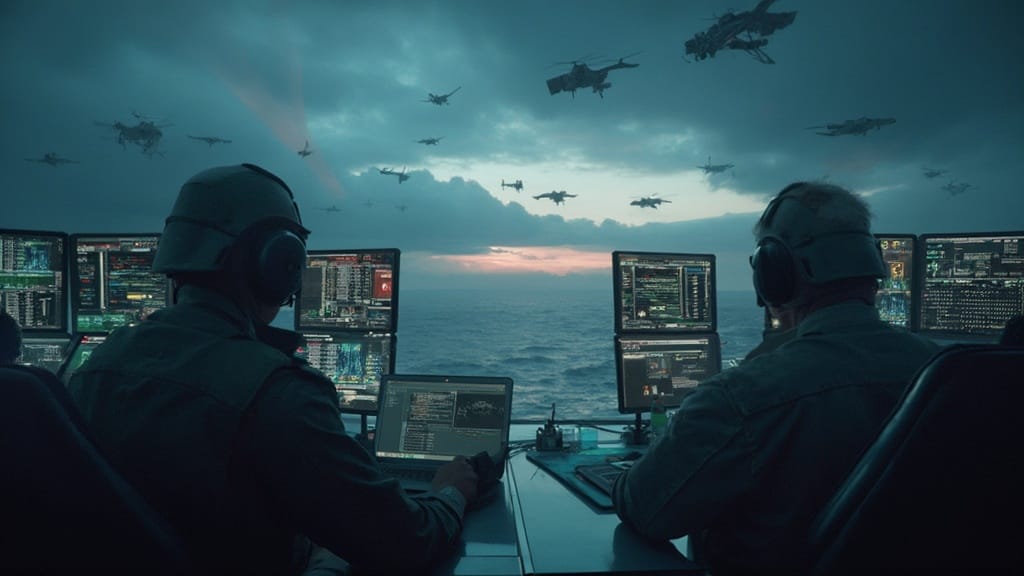
Photo: lyceumnews.com
Tuesday, April 28, 2026
The Big Picture
The drone war is teaching everyone the same lesson at once: cheap, persistent, and software-driven beats expensive, exquisite, and slow. Ukraine struck the same Russian refinery for the third time in two weeks, overnight into April 28 — before crews could put out the last fire. Germany is quietly rebuilding the legal scaffolding for conscription without ever using the word. And the Pentagon's contract notices are starting to read like a single sentence: turn weapons into software.
What Just Shipped
- P1-SUN interceptor drone, air-launched from An-28 (SkyFall / Ukrainian Unmanned Systems Forces): A $1,000 interceptor now launches from a 1969-era turboprop carrying up to six rounds per sortie.
- Glide Phase Interceptor contract acceleration (Northrop Grumman / Missile Defense Agency): A $475.3M contract increase on April 3 pushes the program past $1.3B with a June 2028 milestone for catching hypersonics mid-glide.
- Blackbeard hypersonic strike weapon, F/A-18 integration (Castelion / U.S. Navy): A nearly $105M Navy contract puts a Mach 5+ missile on Super Hornet decks targeting 2027.
- IdZ-ES soldier system, expanded buy (Rheinmetall / Bundeswehr): A €1.04 billion contract wires up 8,600 soldiers into Germany's D-LBO infantry network through 2029.
- Qwen3.6-27B open-weights model (Alibaba): A 27B-parameter dense model small enough to run on a single GPU — meaning capable AI that never has to phone home.
- iCMOSS AI-enabled electronic warfare contract (Pacific Defense Strategies / U.S. Navy): A $9.1M Navy R&D award treats jamming as a software refresh problem, not a hardware swap.
Today's Stories
Ukraine's Drone-Hunting Turboprop Just Got an Upgrade — It Now Launches Drones
● Ukraine · Russia
The most creative counter-drone solution in the world right now isn't a billion-dollar system. It's a Soviet-era twin-turboprop with pylons bolted to its wings.
Footage published April 23 by Ukrainian pilot Tymur Fatkullin shows an Antonov An-28 — a 1969-vintage utility plane — fitted with at least three underwing mounting points per side, capable of carrying up to six P1-SUN interceptor drones built by Ukrainian company SkyFall. The economics are brutal for Russia. A Shahed costs $40,000 to $100,000. A P1-SUN costs about $1,000; SkyFall says its interceptors have downed more than 1,500 Shaheds in four months. Hanna Hvozdiar, adviser to Defense Minister Mykhailo Fedorov, told the European Business Summit the interceptor has destroyed more than 3,000 Shaheds in 2026 alone.
The physics matter too. Ground-launched interceptors burn battery climbing to altitude. An air-launched drone starts the chase already at 300 km/hr, already up where Shaheds fly, with its battery untouched. Ukraine's Unmanned Systems Forces confirmed the world's first sea-launched interceptor kill on April 20, downing a Shahed from an unmanned surface vessel. Air, land, sea — the same $1,000 weapon, three launch platforms.
If this scales: the cost curve underlying Russia's drone campaign inverts, and other militaries get a template for base and convoy defense that costs almost nothing to copy. If it stalls: Russian countermeasures — and there are early reports Russia is arming Shaheds with R-60 air-to-air missiles and MANPADS — outpace SkyFall's production. Watch for whether the An-28 program gets formally adopted by Ukraine's military rather than remaining a volunteer-flown initiative.
Ukraine Hits Tuapse a Third Time — Before the Last Fire Was Out
● Russia · Kyiv, Ukraine
Overnight into April 28, Ukrainian drones struck the Rosneft-owned Tuapse refinery on Russia's Black Sea coast. It was the third strike in two weeks. The fire ignited four days after local crews finished extinguishing the previous one.
The refinery had already stopped operations after the April 16 attack, so this isn't an attempt to knock it offline — it's already offline. According to OSINT analysis published by the Oko Gora Telegram channel and aggregated by Militarnyi, 24 of the facility's storage tanks have been destroyed (52% as of April 28 OSINT analysis), four more damaged, and only 18 remain intact. Russia's Defense Ministry said air defenses intercepted 186 Ukrainian drones across southern regions overnight, per Kyiv Independent — a saturation profile, not a stealth one.
The strategic logic is what's new. Ukraine appears to be timing strikes to overlap repair and firefighting cycles, treating the recovery operation itself as part of the target set. Hit the tanks, wait for crews to arrive, hit again. If this doctrine holds: persistent denial replaces decisive strike as the dominant logic of the air war, and every Russian energy node becomes an open-ended commitment. The signal to watch is whether Russian throughput at undamaged Black Sea terminals starts dropping too — that would mean operators are pre-emptively shutting down rather than waiting their turn.
The Pentagon Admitted It Can't Stop Hypersonic Missiles — Here's What It's Doing About It
● United States · Russia · China
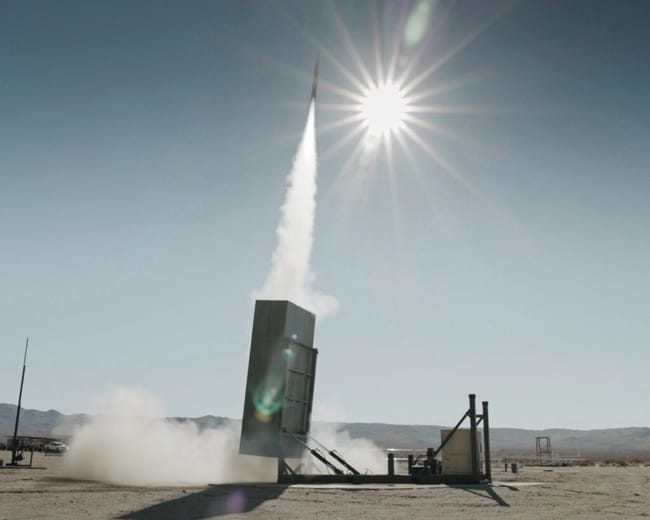
Pentagon officials acknowledged this week what war planners have known privately for years: the United States has no reliable way to intercept the hypersonic missiles Russia and China already field. Russia operates the Avangard and Zircon. China fields the DF-17 and YJ-21. Both maneuver throughout flight in an atmospheric corridor that legacy U.S. radars and interceptors were never built to cover.
The response is a two-track sprint. On offense, Castelion — a SpaceX-influenced California startup — won a Navy contract worth nearly $105M to integrate the Blackbeard Mach 5+ weapon onto F/A-18E/F Super Hornets, targeting 2027 carrier deployment. Castelion's pitch is industrial-rate production at commercial unit costs, the opposite of the boutique programs that defined U.S. hypersonics for a decade. On defense, Northrop Grumman's Glide Phase Interceptor got a $475.3M contract increase from the Missile Defense Agency on April 3, pushing the program past $1.3B with a June 2028 milestone.
Sitting above both is Golden Dome — the $17.9B FY2027 missile defense initiative, with $24.4B already obligated as a "down payment" under the FY2025 reconciliation law. Increasingly the program looks less like a single interceptor and more like an orbital sensor mesh — Starshield-style persistent tracking from low earth orbit. If Golden Dome works: the commercial-satellite industry becomes the most important segment of the defense industrial base. If it slips: the U.S. spends the late 2020s in the most dangerous gap in modern deterrence — your opponent has the weapon, you don't have the shield.
China's Navy Is Practicing Something More Specific Than "Exercises"
● Taiwan Strait · Philippines · Washington DC, USA · Taipei, Taiwan · China · Tokyo, Japan
The PLA Southern Theatre Command staged naval drills east of Luzon — the northernmost major island of the Philippines — calling them "a necessary action taken in response to the current regional situation," per the South China Morning Post. The timing was the message. The drills coincided with Balikatan 2026, the 19-day U.S.-Philippines exercise that for the first time includes operational Japanese forces, with the Japan Maritime Self-Defense Force preparing a live-fire sinking exercise using Type 88 anti-ship missiles in waters facing the Taiwan Strait.
The Diplomat reads the southward movement of the carrier Liaoning, paired with a PLA Navy task group in the Western Pacific, as a coordinated signal aimed simultaneously at Tokyo, Manila, and Washington. The composition matters more than the count: ships, aircraft, electronic warfare, and information operations stress-tested together. Add to this PLA drone footage of Taipei 101 broadcast as cognitive warfare — Taiwan's military called it "typical cognitive warfare" per Hong Kong 01 — and you get a picture of integrated coercion that isn't just kinetic.
If Japan's Type 88 live-fire proceeds without a PLA close encounter: allied military activity in the first island chain has a new normal. If China responds with another exercise: the escalation ladder gained a rung this week, and nobody is climbing back down.
Germany Just Quietly Introduced Military Travel Permits for Men Under 45
● Germany · France · Poland · Italy
Under Germany's Military Service Modernization Act — which was considered by the Bundestag's Defence Committee and passed in a full-plenary (floor) vote on December 5, 2025, and cleared the Bundesrat on December 19, 2025 — men aged 17 to 45 must now obtain Bundeswehr approval to leave Germany for more than three months. In practice, the permit is granted automatically as long as service remains voluntary. The point isn't the bureaucracy. The point is the database.
Previously this requirement only applied during a declared national emergency. The 2025 reform made it permanent and peacetime. The law also creates a fast-track mechanism: if voluntary recruiting falls short, the Bundestag can activate "needs-based conscription" through separate legislation — a switch that didn't exist in this form before January 2026.
Germany has not reinstated the draft. It has built the machinery to reinstate the draft quickly. That's the story. Hardware is the visible layer of European rearmament; this is the invisible one — reserve systems, mobilization frameworks, registries of who is where. Watch for whether France, Poland, or Italy introduce parallel administrative measures. If they do, Europe's rearmament has crossed from procurement into mobilization infrastructure.
Rheinmetall Gets €1 Billion to Wire Up 8,600 German Soldiers
● NATO Europe
The Bundeswehr awarded Rheinmetall a €1.04 billion contract on April 27 under the IdZ-ES ("Infantry Soldier of the Future – Enhanced System") program, with deliveries running November 2027 through December 2029. When complete, Germany will operate 353 IdZ-ES platoon systems and more than 12,000 individual soldier kits.
The interesting part is the wiring. Updated hardware connects directly to D-LBO — Germany's "Digitisation of Land-based Operations" network, the Bundeswehr's equivalent of the U.S. JADC2 concept (a system that ties every sensor and shooter into one operating picture) at the squad level. The bet: networked infantry sharing a common picture outperforms larger, unconnected forces. It's the same lesson Ukrainian drone operators have been demonstrating for three years, applied to ground troops.
If this works: procurement shifts decisively toward software-upgradeable, modular soldier systems across NATO. If it stalls: Germany joins the long list of militaries that bought "future soldier" kit and watched it sit in storage. The signal to watch is whether call-off orders against the €1.3B parliamentary authorization come quickly, or whether the program drags into the 2030s.
The Navy Just Funded AI to Run Electronic Warfare Like Software
● Jerusalem
Buried in a Defense Department contract digest: Pacific Defense Strategies received a $9.1 million Navy R&D contract for an AI/ML-enabled "common EW sensor-effectuator" under the iCMOSS open standard, with development and demonstration due November 2026. Translation: the Navy wants jamming and sensing to behave like an app layer running on common hardware, not a bespoke pod hand-built for each platform.
If that architecture works, electronic warfare becomes a software refresh problem — measured in weeks, not the years it takes to design, certify, and field new hardware. Pair this with the recent Google–DoD agreement that, according to the Jerusalem Post, lets the Pentagon adjust the company's AI safety filters on classified systems on demand, and a clearer pattern emerges: the Pentagon is systematically removing friction from AI deployment.
If software-defined EW reaches the fleet: adversary jammers age out of relevance every few months, and the procurement advantage flips to whoever ships updates fastest. If it stays in demo: the Navy keeps fielding hardware that takes a decade to replace, against threats that mutate quarterly. Watch the November 2026 demonstration milestone.
⚡ What Most People Missed
- Russian Shaheds are being up-armed, changing engagement rules. Per The War Zone, there are reports Russia has begun fitting Shahed/Geran drones with MANPADS and R-60 air-to-air missiles; if confirmed, interceptor crews and rules of engagement will have to change because operators can no longer treat these loitering munitions as unarmed, single-use targets.
- The Pentagon's autonomous warfare command is seeing a 24,166% year-to-year increase from FY2026 to FY2027. Per The Cipher Brief, the Departmental Autonomous Warfighting Group goes from $225M in FY2026 to $54.6B in FY2027 — larger than the entire U.S. Marine Corps budget. This is structural reorganization, not a new program: Washington is consolidating drones, autonomous aircraft, and uncrewed vessels under a single command before the services build any more incompatible systems.
- The U.S.–Japan dual-use production framework may shift manufacturing abroad as early as 2026. Per Global Times, the framework — launching as early as 2026 — opens with U.S. startups designing drones for production in Japanese factories. Read this as Washington admitting U.S. industry can't scale fast enough alone, and recruiting allied manufacturing capacity to fill the gap.
- Russia's volunteer defense ecosystem has been absorbed or shut down; Ukraine's remains because Kyiv tolerates it. War on the Rocks reports that the volunteer Telegram-and-workshop ecosystem that papered over Russian procurement failures in 2022 has been absorbed, regulated, or shuttered by the Kremlin. Ukraine's volunteer ecosystem still thrives because Kyiv lets it — a structural political choice with operational consequences.
- Xi-era personnel moves matter more than hardware counts for Taiwan planning. War on the Rocks argues the PLA's hardware is formidable, but purges that punish initiative and reward loyalty degrade the force's ability to improvise under pressure. The key question for Taiwan planners is whether officers commanding missiles will improvise in crisis or wait for centralized orders.
📅 What to Watch
- If Ukraine's An-28 air-launched interceptor concept gets formally adopted by another military within 90 days, the $1,000-per-kill counter-drone playbook has gone from improvisation to doctrine — and Western primes are about to get undercut by their own customers.
- If Russian throughput at undamaged Black Sea oil terminals drops in coming weeks, operators are pre-empting strikes rather than waiting — meaning Ukraine has achieved deterrence by repetition without needing new hits.
- If France, Poland, or Italy introduce Germany-style peacetime travel registries, Europe has crossed from rearmament into mobilization infrastructure — and the legal scaffolding for a continent-wide draft is being assembled in administrative quiet.
- If Pacific Defense Strategies' iCMOSS demonstration ships on time in November 2026, the half-life of every adversary jammer in the Pacific just collapsed from years to weeks.
- If the U.S.–Japan dual-use framework's first drone deliveries route through third countries (Philippines, Australia), this isn't offshoring — it's the start of an allied production cartel for uncrewed systems.
- If China's Liaoning carrier group lingers near Luzon past the Balikatan exercise window, the PLA has decided coercion-by-presence works, and the South China Sea has a new permanent fixture.
The Closer
A 1969 Soviet passenger plane dropping $1,000 drones over Ukrainian skies; German bureaucrats cataloging every man under 45 who wants to take a long vacation; a Russian refinery's firefighters becoming the next target before the smoke clears. The future of warfare turns out to be a database, a turboprop, and the patience to wait four days between matches. Stay sharp.
If you know someone who'd want to read this with their morning coffee, forward it along.