The Lyceum: Defense Tech Daily — Mar 22, 2026
Photo: lyceumnews.com
Sunday, March 22, 2026
The Big Picture
This is not an incremental week. Iranian ballistic missiles struck cities next to Israel's nuclear research center after interceptors fired and missed — a sentence that rewrites assumptions about layered air defense. Trump gave Iran 48 hours to reopen the Strait of Hormuz or he'll bomb their power grid; Iran responded by threatening every desalination plant in the Gulf. Both sides are now openly naming civilian infrastructure — water, electricity, IT systems — as targets. Meanwhile, Ukraine used drones to strike the headquarters of Russia's anti-drone unit, and the Pentagon is handing billion-dollar prime contracts to startups. The logic of these conflicts is converging: whoever controls the algorithms, the pipes, and the interceptor math wins.
What Just Shipped
- Skydio X10D (Skydio): Army awarded $52M for 2,500 GPS-free, vision-navigated quadcopters in under 72 hours — fastest major drone buy on record.
- Anduril Lattice Counter-UAS Framework (Anduril): 120+ prior orders consolidated into a 5–10 year enterprise agreement worth up to $20B, with an initial $87M task order.
- MADIS Counter-Drone System (USMC): Marines fast-tracking truck-mounted jam-and-kill system to front-line units against $500 FPV drone swarms.
- Patriot Production Ramp (RTX): Expanded Patriot manufacturing to meet Ukraine and allied demand, with parallel investment in hypersonics and directed energy.
- Shield AI Hivemind Integration (Shield AI / Ukrainian firms): Hivemind autonomy stack being embedded into Ukrainian-built drones for swarm behavior and GPS-denied navigation.
- Autonomous Black Hawk Transfer (DARPA → U.S. Army): Optionally piloted Black Hawk formally handed to the Army for operational testing in resupply and contested-area missions.
Today's Stories
The Missile Got Through — and That Changes the Math
Iranian ballistic missiles struck the southern Israeli cities of Dimona and Arad on Saturday, wounding nearly 200 people — 11 seriously — after Israeli air defenses fired interceptors that failed to knock down at least two incoming rounds. Dimona sits roughly 20 kilometers from the Shimon Peres Nuclear Research Center. The IDF confirmed it is formally investigating the failure.
Here's the uncomfortable part: the IDF spokesman stressed these weren't exotic new weapons. Iran broke through with hardware Israel already knew about — which points to saturation, interceptor conservation, or system failure at the worst moment. The Jerusalem Post reported that THAAD — the American-made system that intercepts missiles in the upper atmosphere — also missed an identical missile type in an earlier incident at Beit Shemesh. Two misses by the same system against the same threat is a pattern, not bad luck.
If the investigation reveals Israel is rationing interceptors rather than suffering a technical glitch, that's an admission the economics of missile defense are tilting toward the attacker. Each interceptor costs $3–20 million; Iranian ballistic missiles cost a fraction of that. Watch whether Israel quietly changes its intercept priorities — and whether the Pentagon publicly addresses THAAD performance. The AP's analysis suggests software, sensor fusion, and command-and-control fixes are the next places defense ministries will look. If those patches don't arrive before the next salvo, Saturday was a proof of concept.
Trump Threatens Iran's Grid. Iran Threatens the Gulf's Water.
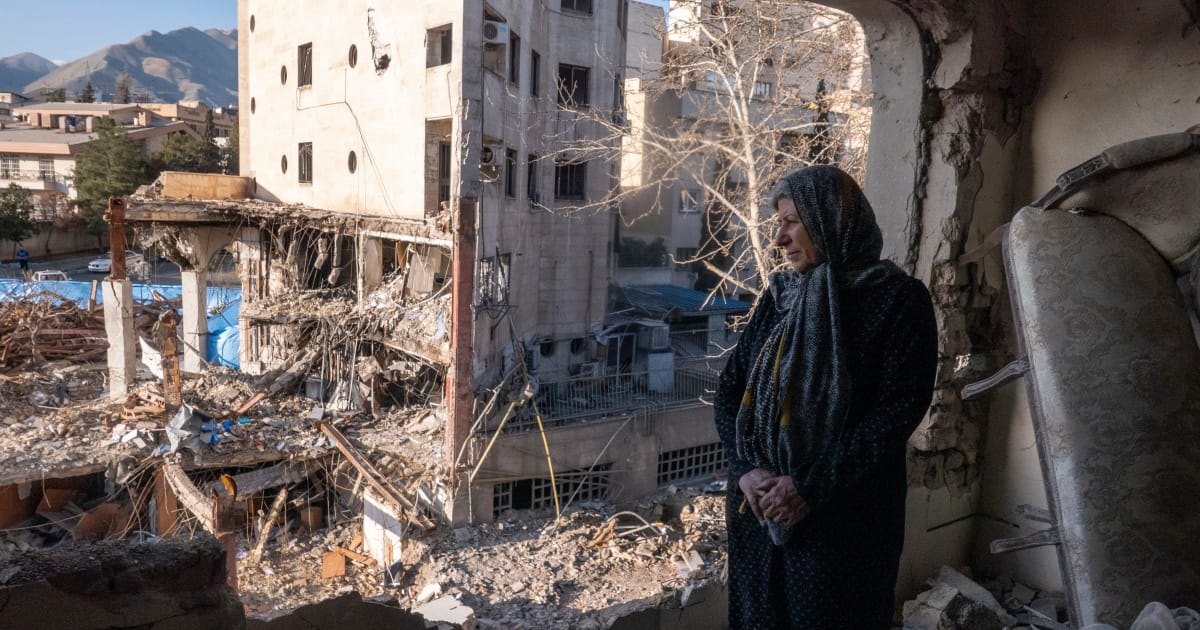
Trump posted a 48-hour ultimatum on Truth Social: reopen the Strait of Hormuz or the U.S. will "obliterate" Iran's power plants, "starting with the biggest one first." Iran's military spokesman responded by naming "fuel, energy, information technology systems and desalination infrastructure used by America and the regime in the region" as counter-targets.
That last word — desalination — is doing enormous work. The Gulf produces 40 percent of the world's desalinated water. Saudi Arabia, the UAE, Kuwait, and Qatar depend on a handful of large coastal plants for the overwhelming majority of their drinking water. None of them are parties to the direct conflict. Targeting their water supply isn't collateral damage — it's coercion aimed at neutral states through civilian infrastructure.
This matters structurally: both sides are now openly naming civilian utilities as legitimate military targets, establishing a doctrine that will template every future conflict. The deadline expires Monday evening. If Trump strikes, watch for immediate Iranian retaliation against Gulf energy and water facilities — the threat is specific and pre-announced. If he blinks, every American red line for the next decade loses credibility. The Axios reporting notes Trump floated "winding down" the war just 24 hours before this ultimatum — domestic gas prices, which have risen 93 cents per gallon year-to-date, are a political pressure point.
Ukraine Used Drones to Strike Russia's Anti-Drone Headquarters
Overnight March 21–22, Ukraine launched nearly 300 drones against targets across thirteen Russian regions. Russia's Defense Ministry claimed it intercepted 283. What got through matters more than what didn't.
Ukraine struck the command post of the Rubikon Center for Unmanned Technologies in Mariupol — Russia's elite unit that specializes in hunting Ukrainian drone pilots and shooting their drones out of the sky. Ukraine didn't just use drones; it used drones to degrade Russia's ability to stop drones. Separately, drones hit an oil refinery in Saratov Oblast, and Reuters confirmed fires near refineries in Ufa — roughly 1,300 kilometers from the front line, corroborated by UNITED24 Media.
If Rubikon's operational capability is meaningfully degraded, Ukraine's drone success rates should climb measurably in coming weeks — that's the observable signal. The broader pattern: Ukraine carried out roughly 40 major deep-strike attacks in the first half of March alone, about 50 percent more intense than any full month during the war to date. This is no longer raiding — it's a sustained air campaign at strategic depth, run on propeller drones that cost less than a used car.
Iran's Selective Blockade Is a Surveillance Operation Disguised as a Closure
The Strait of Hormuz isn't physically mined shut. Iran is running a selective-access blockade: Chinese, Indian, and Pakistani-flagged vessels have reportedly been allowed through, while Western-linked shipping is stopped. Iran's foreign minister even offered safe passage to Japan-related ships — though Tokyo quickly clarified it wasn't negotiating unilaterally.
Executing this requires Iran to identify, track, and make real-time decisions about vessel nationality across one of the world's most congested shipping lanes. That's a meaningful maritime domain awareness capability being demonstrated live. If it holds, Iran has proven it can weaponize access to a chokepoint with surgical precision — splitting U.S. allies by offering favorable terms to some while punishing others. South Korea faces the sharpest dilemma: cut a deal with Tehran for safe passage and fracture the U.S. alliance, or refuse and watch its energy imports crater. The geopolitical fracture lines this is exposing haven't settled — and they're moving faster than diplomacy.
Hungary Was Moscow's Ear Inside Every EU Meeting for Years
The Washington Post, sourced to European intelligence officials, reported that Hungary's foreign minister Péter Szijjártó allegedly called Russian counterpart Sergei Lavrov during breaks at EU meetings to brief him on what had been discussed. One source told the Post: "Every single EU meeting for years has basically had Moscow behind the table." Poland's Prime Minister Tusk confirmed he has been self-censoring in EU meetings for an extended period because he assumed a leak existed.
Budapest denies it. But if confirmed, Russia had real-time intelligence on EU sanctions strategy, weapons discussions, and Ukraine support packages for years. The failure mode here isn't technical — it's institutional trust. If a major NATO member's leader was already operating under the assumption that the room was compromised, that damage is already baked into years of Western strategic planning. Watch whether EU information-sharing protocols change in the next quarter — that's the signal that allies are treating this as confirmed rather than alleged.
The Army Just Bought 2,500 GPS-Free Drones in 72 Hours
The U.S. Army awarded Skydio a $52 million contract for 2,500 X10D drones — quadcopters that navigate using onboard vision AI instead of GPS, streaming thermal video through multiband radios. The procurement took under 72 hours. In a system where major acquisitions routinely take years, that timeline is the story.
GPS jamming is now standard on every active battlefield — Ukraine, the Gulf, the Strait of Hormuz. A drone that can't navigate without satellites is a drone that dies the moment an adversary turns on an electronic warfare system. If the X10D performs in jammed field tests expected this summer, it becomes the template for allied procurement. If it doesn't, 72-hour buys will be remembered as panic purchases. Either way, the speed signals the Pentagon can move fast when the gap is existential — and that structural shift favors proven domestic autonomy suppliers over legacy procurement timelines.
A‑10s and Apaches Are Hunting Swarm Boats in the Strait — and That's a Live Experiment
To reopen the Strait of Hormuz, the U.S. has deployed A-10 Thunderbolt IIs for anti-boat missions and AH-64 Apaches to intercept low-flying one-way attack drones skimming the water. It's a striking pairing: the A-10's heavy cannon and loiter time against fast-attack craft, Apaches bringing sensors tuned to small, low-radar-cross-section targets.
This is effectively a live counter-swarm experiment. If these platforms produce consistent kill rates against Iranian fast boats and drone swarms, expect doctrine and acquisition to follow — manned-unmanned teaming optimized for littoral swarm threats becomes a funded program. If they struggle, the case for purpose-built autonomous counter-swarm systems accelerates dramatically. The data coming out of this deployment will quietly shape naval procurement for a decade.
⚡ What Most People Missed
- Iran explicitly named "information technology systems" alongside power and water as targets — and that changes commercial risk models. State-level inclusion of IT and control systems in a kinetic target list forces Gulf utilities, insurers, and energy traders to reclassify industrial control systems as wartime risk, accelerating emergency procurement and contingency contracting for hardened SCADA and offline fallback modes.
- MADIS deployment shifts counter‑UAS responsibility downward in the force structure. Fielding truck-mounted jam-and-laser systems to frontline Marine units would redistribute responsibility for swarm defense to lower echelons, complicating logistics, training, and rules-of-engagement while reducing the need for centralized, high-cost interceptors.
- Iran claims it can double its missile range using "satellite-like" two-stage launchers. The Jerusalem Post reported retired IDF officials flagging this capability. If verified, it would extend Iran's reach without new engine technology — compressing warning timelines for bases and carriers far beyond the Gulf. Treat as a significant allegation requiring confirmation.
- Shield AI's Hivemind integration into Ukrainian drones raises export-control and oversight dilemmas. Embedding cooperative autonomy and GPS-denied navigation into Ukrainian-built airframes accelerates allied capability but also creates pressure to revise export controls, fielding rules, and post‑conflict accountability for autonomous effects.
📅 What to Watch
- If Trump's Monday evening deadline passes without strikes, public ultimatums will lose deterrent value and adversaries may increasingly discount U.S. threats — pushing policymakers toward covert interdiction, reliance on economic sanctions, and less public signaling in future crises.
- If Ukraine's drone success rate against Russian targets rises measurably in the next two weeks, the Rubikon command post strike had real operational effect — and counter‑drone headquarters will become priority targets in every future drone war.
- If Gulf states begin emergency procurement of hardened, distributed desalination capacity, expect a reallocation of capital spending toward redundancy and regional procurement of modular desalination tech, shifting timelines for infrastructure projects and regional trade in water services.
- If THAAD's investigation reveals interceptor rationing rather than technical failure, the economics of layered missile defense shifts — and demand for cheaper alternatives like directed energy and cheaper interceptors accelerates.
- If Iran's selective-passage blockade holds without fracturing, Tehran will have demonstrated a coercion model that uses access control to split alliances and impose political costs without kinetic escalation.
The Closer
An interceptor that fired and missed near a nuclear site. A drone that flew 1,300 kilometers to strike facilities belonging to the people whose job was to stop drones. A foreign minister allegedly phoning Moscow during coffee breaks at EU summits for years.
The 48-hour ultimatum to reopen Hormuz expires Monday evening, which means the most consequential deadline in global security is currently being enforced by a Truth Social post.
Until satisfactory intercept rates return —
If someone you know is still treating "infrastructure" as boring, forward this.