The Lyceum: Defense Tech Daily — Mar 31, 2026

Photo: lyceumnews.com
Tuesday, March 31, 2026
The Big Picture
The Iran war crossed two thresholds overnight. The U.S. dropped bunker-buster bombs that reportedly damaged an ammunition depot near Isfahan — a city of 2.3 million — while an Iranian drone struck a fully loaded supertanker that caught fire within sight of Dubai. Both sides are now attacking infrastructure that keeps civilians alive: Trump threatened Iran's desalination plants, and Iran attacked a Kuwaiti power and desalination facility. Meanwhile, Spain closed its airspace to U.S. military aircraft involved in the conflict, Poland refused a U.S. request to lend Patriot batteries, and the White House suggested it might not prioritize reopening the Strait of Hormuz. The war is reshaping alliances as fast as it's destroying targets.
Today's Stories
The Bunker-Buster Strike on Isfahan — and What It's Actually Targeting
● Iran · United States
A 2,000-pound bunker-buster bomb is designed to do one thing: punch through reinforced concrete and explode inside a buried structure. The U.S. dropped a significant number of them overnight on an ammunition depot near Isfahan, according to the Wall Street Journal via Xinhua; the strikes reportedly caused large fires. The city is also home to Iran's Badr military airbase and, reportedly, underground facilities where Iran may have moved roughly 540 kilograms of highly enriched uranium.
Analysts say destroying the ammunition stockpiles that sustain Iran's missile and drone campaigns could slow the rate of fire. Secondary explosions visible in the footage suggest the bombs reached stored munitions — but satellite imagery from Maxar or Planet Labs in the next 48 hours will tell us whether the penetrators actually cracked the hardened bunkers or just cratered the surface.
If the depot served as a regional logistics node, this strike degrades Iran's ability to sustain attacks across multiple fronts. If it didn't reach the deepest bunkers, expect heavier munitions — the U.S. has 5,000-pound and 30,000-pound penetrators in inventory — in follow-on waves. The observable signal: whether Iranian launch rates drop measurably this week. Iran reportedly shot down a U.S. MQ-9 Reaper drone over the same city, which suggests Iranian air defenses are actively contesting the airspace where the U.S. conducts its most sensitive strikes.
Iran's Drone Hits a Supertanker at Dubai's Front Door
● Strait of Hormuz · Kuwait · London, UK · Tehran, Iran · Dubai, UAE · United Kingdom
When a single drone can find and ignite a 332-meter oil tanker anchored near one of the world's busiest commercial ports, the insurance math for every ship in the Gulf changes overnight.
An Iranian drone struck the Al Salmi — a fully laden Kuwaiti supertanker carrying roughly two million barrels of oil worth over $200 million — approximately 30 miles from Dubai's anchorage, according to Bloomberg. The UK Maritime Trade Operations confirmed a projectile hit the starboard side, igniting a fire. The crew was unharmed. The tanker had been loaded more than a month ago and was stuck — like hundreds of other vessels — because the Strait of Hormuz is effectively closed to much traffic.
This is Iran's asymmetric economic weapon. Tehran can't stop American air power, but it can make every tanker captain and shipping insurer recalculate whether the Gulf is worth the risk. U.S. gasoline prices crossed $4 a gallon for the first time in three years as of March 30, 2026, with Brent crude trading above $101 per barrel on March 30, 2026. If insurers begin excluding Dubai-area anchorages — not just the Hormuz transit — the practical no-sail zone expands dramatically, and the economic shock compounds. Watch Lloyd's of London war-risk pricing this week for the first signal.
Trump's Infrastructure Ultimatum — and the Retaliation Math That Should Terrify Everyone
● Strait of Hormuz · Saudi Arabia · Washington DC, USA · Kuwait · Iran · Oman
Trump added desalination plants to his target list Monday — the first time he's explicitly threatened Iran's water supply alongside its power grid and oil infrastructure. The April 6 deadline for Iran to reopen the Strait of Hormuz or face massive strikes on civilian systems remains active, now six days away.
Legal experts were blunt: striking water infrastructure violates the laws of armed conflict. But the deeper danger isn't what the U.S. might do to Iran — it's the retaliation math. Iran gets only a small share of its water from desalination. Kuwait gets roughly 90%. Oman, 86%. Saudi Arabia, about 70%. Iran threatening their plants in response would be a humanitarian catastrophe of a different order — and attacks on Gulf civilian infrastructure have already begun. On March 30, one person was killed in an Iranian attack on a Kuwaiti power and desalination facility.
If this escalatory logic holds — each side targeting the other's civilian water and power systems — the war stops being about military objectives and becomes a contest over which population breaks first. The signal to watch: whether Gulf states hosting U.S. forces begin publicly pressuring Washington to de-escalate, because their populations are now paying the price.
Spain Blocks U.S. Air Force Overflight Rights — NATO's Cracks Go Operational
● Middle East · Portugal · France · Greece · Italy · Libya · Spain · Iran · NATO Europe · United Kingdom · United States
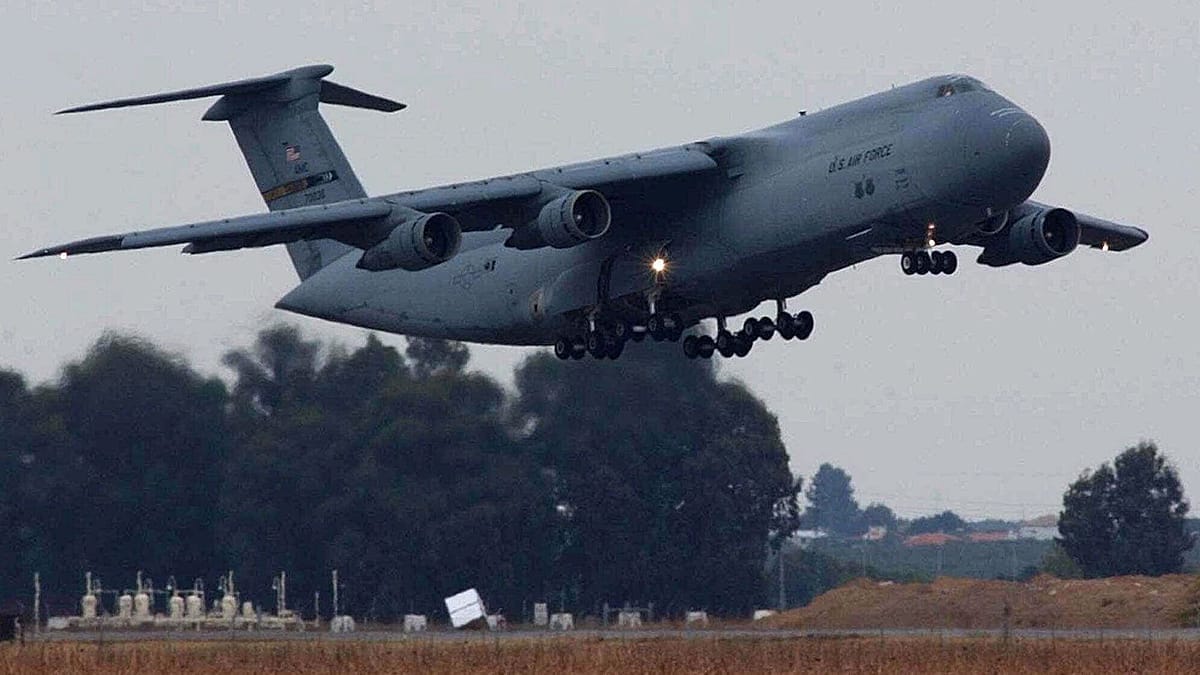
Spain closed its airspace to every U.S. military aircraft involved in the conflict — including planes stationed in the UK and France that merely transit Spanish skies. Defence Minister Margarita Robles confirmed the closure extends to the Rota and Morón bases previously used for U.S. operations.
The last time a European ally did this was 1986, when France and Italy blocked U.S. flights targeting Libya. But Spain's move is broader — it applies to aircraft from third countries transiting Spanish airspace, not just planes based on Spanish soil. That forces bombers, tankers, and support aircraft flying from England to route around the entire Iberian Peninsula to reach the Middle East, adding hours and fuel costs to every sortie.
If Portugal, Italy, or Greece follow Spain's lead, the logistics of the campaign become a genuine operational problem. If they don't, Madrid becomes an outlier rather than a trend. Watch for quiet diplomatic pressure from the Pentagon this week — and whether any other southern European government makes a similar announcement.
Ukraine's Drones Are Doing Something No Army Has Done to Russia: Cutting Off Its Money
● Russia · Iran · Kyiv, Ukraine · United Kingdom
While the world watches the Gulf, Ukraine is running what may be the most effective economic warfare campaign in modern history — with cheap drones. Ukrainian strikes have knocked out roughly 40% of Russia's oil export capacity, disrupting major Baltic and Black Sea ports in what Reuters called the most severe oil supply disruption in modern Russian history. On Sunday, fresh attacks hit Ust-Luga port again, with 36 drones downed and fires still burning.
The timing is almost surgical: oil prices spiked past $100 thanks to the Iran war, and Ukraine's drones ensured Russia couldn't cash in. Kyiv is simultaneously field-testing bomber drones built to survive heavy electronic jamming, and frontline units are using fiber-optic tethered FPV drones — some with 3D-printed spools — that bypass radio-frequency jamming entirely.
If this model scales, it rewrites how future wars are fought: target the adversary's revenue streams with expendable weapons rather than its armies. The UK Ministry of Defence has already launched a market engagement seeking ways to counter fiber-optic drones — a sign the innovation is moving faster than the countermeasures.
⚡ What Most People Missed
- Poland told Washington "no" on Patriot batteries — and that's a five-alarm signal for global air-defense supply. Warsaw spends 5% of GDP on defense and sits on NATO's most exposed flank. If Poland won't lend back the systems it just spent billions acquiring, the inventory crisis is no longer theoretical. Expect accelerated interest in cheaper interceptor layers — from DroneShield's new kinetic interceptor partnership to Airbus's purpose-built "Bird of Prey" drone-killing drone, which just completed demonstration flights in Germany.
- The White House signaled that reopening Hormuz isn't "vital." If that holds as policy rather than posture, it means Washington is willing to let the strait stay closed longer than markets expect — with cascading consequences for every economy running on $100+ oil and every fleet resupplying through the Indian Ocean.
- The Houthis are threatening to strangle a second chokepoint. With Hormuz already constricted, a renewed Houthi campaign at Bab el-Mandeb — the gateway between the Gulf of Aden and the Red Sea — could put two of the world's most critical shipping arteries at risk simultaneously. Watch whether Maersk or Hapag-Lloyd pause Red Sea transits.
- Varda launched its W-6 capsule as a hypersonic reentry and autonomous navigation testbed on SpaceX's Transporter-16. A commercial startup doing iterative hypersonic R&D on cheap rideshares blurs the line between space commerce and weapons-relevant research — and Europe is simultaneously pivoting hard into space as a defense priority.
- Ukrainian companies are standing up their own air-defense units to protect factories from drone strikes — radar, jammers, and shooters bought and operated by critical infrastructure owners. Air defense is drifting from an exclusively national function toward corporate self-defense.
📅 What to Watch
- If other NATO members follow Spain's airspace closure, the Iran campaign's logistics become an operational crisis, not a political headache — and the Pentagon will be forced to consolidate around fewer, more distant hubs.
- If Trump's April 6 deadline passes without a Hormuz deal or a major strike on Iranian power infrastructure, it signals the ultimatum was leverage, not policy — and future threats lose credibility with Tehran and allies alike.
- If satellite imagery shows the Isfahan bunker-busters only cratered the surface, expect the U.S. to escalate to heavier penetrators — and Iran to accelerate dispersal of remaining stockpiles underground.
- If Lloyd's of London extends war-risk exclusions to Dubai-area anchorages, the practical no-sail zone will have expanded well beyond Hormuz, trapping more cargo and compounding the oil price shock.
- If Ukrainian fiber-optic drone tactics proliferate to Iranian proxies, every RF-jammer-based counter-drone system in the Gulf becomes partially obsolete overnight — and the UK MOD's urgent market engagement becomes a template for NATO-wide procurement.
The Closer
A 2,000-pound bomb punching into an ammunition bunker while a city of 2.3 million sleeps above it; a $200 million floating bomb that can't leave port because the strait is closed; a NATO ally physically locking the door on American bombers mid-war.
Somewhere in Poland, a defense minister is staring at a Patriot battery and doing the math on whether the alliance that sold it to him still exists in any meaningful sense.
Clear, satisfying skies ahead — for nobody.
If someone you know is trying to make sense of this war, forward this to them.
From the Lyceum
A Los Angeles jury found Meta and YouTube liable in a social media addiction trial — the "design defect" theory just became a litigation playbook with real verdicts. Read → Two Verdicts in Two Days