The Lyceum: Healthspan Weekly — Mar 22, 2026

Photo: lyceumnews.com
Week of March 22, 2026
The Big Picture
Three findings this week converge on an uncomfortable truth: the machinery of aging is more inherited, more systemic, and more measurable than most of us have been told — and the tools we're using to track it may not be ready for prime time. A Science paper doubling the estimated genetic contribution to lifespan is reshaping research priorities. Stanford showed that the gut literally dials cognitive aging up or down through a specific nerve pathway. And a preprint demonstrated that your smartwatch's "biological age" score can collapse into nonsense the moment it meets a new population. The week's message: the biology is getting sharper, the measurements are getting better, and the gap between the two is where the real action is.
This Week's Stories
Your Genes Own About Half of How Long You Live — And That Changes Everything
For decades, the working number was comfortable: genetics accounts for maybe 20–25% of lifespan variance in earlier estimates. A study from the Weizmann Institute of Science, published in Science, upends that: after stripping out historical confounders — infectious disease, accidents, environmental exposures that killed people before their genes had a say — heritability of human lifespan lands around 50% (in this analysis).
The old studies were measuring how long people survived their environment, not how long their biology would let them live. Once you remove the noise of extrinsic mortality, the genetic signal doubles.
Before you cancel your gym membership: the paper's own authors stress that lifestyle still shifts your outcome within whatever range your genome sets. The bigger consequence is for research funding. As a Science commentary notes, a substantial genetic contribution strengthens the case for large-scale efforts to identify longevity-associated variants, refine polygenic risk scores, and link genetic differences to the biological pathways that regulate aging.
What changes if this holds: longevity genetics funding accelerates sharply; polygenic risk scores for lifespan become clinically actionable; pharma targets shift toward the pathways those variants illuminate. What to watch for: a replication attempt in non-Scandinavian, more diverse cohorts — if the 50% number shrinks significantly, the viral coverage will need a correction. Expect that paper within 12 months.
Your Gut Is Literally Dialing Down Your Memory — Stanford Found the Switch
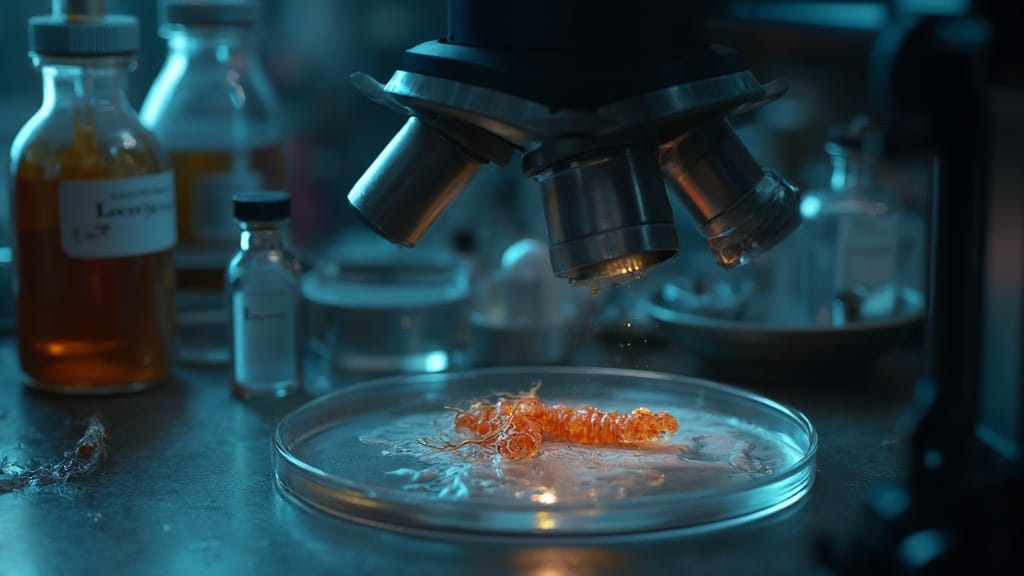
Stanford Medicine reported that aging reshapes gut bacteria in mice in ways that degrade signaling along the vagus nerve — the information highway connecting your intestines to your hippocampus. When researchers restored that communication using tauroursodeoxycholic acid (TUDCA), a bile-acid compound already used in other clinical contexts, old mice formed new memories with the efficiency of young animals.
The mechanism is specific: age-associated microbiome shifts trigger local gut immune activation that effectively short-circuits vagus nerve signaling to the brain. Block the inflammatory signal locally, and hippocampal function comes back online. This isn't vague "gut health" talk — it's a defined gut → immune → vagus → brain pathway with a named intervention.
What changes if this translates: TUDCA is off-patent and cheap, meaning human trials could move fast. Cognitive aging interventions could start in the gut, not the skull. What failure looks like: mouse-to-human translation for cognition is notoriously difficult. The signal to watch is whether Stanford announces a human pilot design — if they do, the gut-brain memory connection is being taken seriously at the clinical level.
A New Organ-Age Clock Just Tied Brain Age to Alzheimer's Risk — as Strongly as Your Genes

A proteomic study of 44,498 UK Biobank participants used 2,916 blood proteins to estimate how quickly individual organs are aging — separately from each other. The Alzheimer's finding is striking: having a biologically old brain carried a hazard ratio of 3.1 for Alzheimer's disease, roughly equivalent to carrying one copy of APOE4, the strongest known genetic risk factor. A biologically young brain (HR 0.26) provided protection comparable to two copies of the protective APOE2 variant — independent of actual APOE genotype.
Translation: your brain's biological age, measured from a blood draw, carries the same risk signal as the most feared Alzheimer's gene — and you don't need a genetic test to find it.
What changes if this scales: organ-specific biological age replaces whole-body epigenetic clocks as the clinical standard. Commercial platforms like TruDiagnostic, Elysium, and GlycanAge race to incorporate protein-based organ panels. The signal to watch: if any of those companies announces a protein-based organ-age product in the next 12–18 months, this Nature Medicine paper is why.
Wegovy Gets a Higher Dose as the GLP-1 Arms Race Escalates
On March 19, the FDA approved Wegovy HD — a 7.2 mg dose of semaglutide, triple the previous 2.4 mg maximum — for adults who tolerated the standard dose but need more weight reduction. Pivotal trials showed roughly 19% mean weight loss in the higher-dose arms versus about 16% on the lower dose in the pivotal trials, with a safety profile still dominated by GI side effects but with higher rates of adverse events and dysesthesia at the new ceiling.
This matters for aging amid evidence that durable metabolic improvement shifts cardiovascular, kidney, and inflammatory risk curves — all age-related. But the longevity-relevant question isn't whether more weight loss is possible. It's whether pushing adiposity lower with higher doses meaningfully shifts long-term organ aging or simply increases dropout and side effects.
What changes: clinicians get another lever for patients who plateau; payer debates intensify as availability expands in April 2026. What to watch: if real-world adherence data at 7.2 mg shows high discontinuation rates, the dose ceiling may have overshot the tolerability floor.
GLP-1 Drugs Don't Work How We Thought They Did — And That Changes Everything
The more consequential GLP-1 story this week isn't about dose — it's about mechanism. Heart muscle cells and liver cells don't appear to express GLP-1 receptors in significant amounts, yet these drugs protect both organs. The answer, emerging from UAB and University of Toronto research: GLP-1 receptors on brain neurons and immune cells appear to mediate the anti-inflammatory and organ-protective effects. When brain GLP-1 receptors were blocked in mice, the drugs' ability to reduce systemic inflammation vanished.
If GLP-1's benefits are substantially brain-mediated, that rewrites assumptions about dosing, delivery, and who benefits most. It also raises an unanswered question: what does sustained GLP-1 receptor activation in the brain do over years? Receptor downregulation hasn't clearly emerged, but no one has long-term data.
What changes if confirmed: brain-targeted GLP-1 delivery becomes a research priority; the drugs get reframed from metabolic tools to neuroimmune modulators. The failure signal: if tolerance or receptor desensitization emerges in long-term cohorts, the "aging drug" narrative deflates quickly.
The Slow Fire in Your Blood: Scientists Found the Missing Metabolite That Starts Inflammaging
Inflammaging — the chronic, low-grade inflammation that accumulates with age and underlies virtually every disease of aging — has been described for decades without a satisfying molecular explanation for why it ignites. A Nature Aging study now points to phosphoenolpyruvate (PEP), a metabolite your cells produce during normal energy metabolism. PEP directly inhibits cGAS, a key inflammation-triggering enzyme. As you age, PEP levels collapse. The brake releases. Inflammation climbs.
In Alzheimer's disease mice, restoring PEP reduced inflammation and improved cognition. Crucially, PEP levels correlate with healthy traits in humans — elevating this from mouse curiosity to potential human target. A complementary finding: itaconate, another metabolic brake on immune activation, also fails with age, suggesting multiple non-redundant metabolic checkpoints collapse simultaneously.
What changes: metabolic health gets reframed as the upstream dial for immune aging, not just weight and blood sugar. What to watch: any company or academic lab announcing a small-molecule program targeting the PEP-cGAS or itaconate pathways in humans.
Mixing Up Your Exercise Is Linked to Living Longer — Even at the Same Total Volume
Large prospective cohort studies are converging: people who mix walking, resistance training, gardening, and aerobic modalities survive longer than single-activity exercisers — even when total weekly minutes are identical. A Harvard analysis of roughly 100,000 Americans followed for decades reported a 19% lower risk of premature death for high exercise variety versus low variety during follow-up, independent of volume.
The biological logic is straightforward: different movement patterns recruit different fibers, stress different metabolic pathways, and challenge balance systems that pure cardio ignores. A complementary review in The Journal of Physiology adds a cellular mechanism: certain exercise paradigms reduce senescent cell burden and blunt their inflammatory secretions, sometimes approximating the effects of pharmacologic senolytics.
What changes: exercise prescription shifts from "how much" to "how varied." If you're a dedicated runner, adding two resistance sessions a week isn't supplementary — this data suggests it may be the most important edit you make this year. The signal to watch: human trials matching specific exercise prescriptions to senescence biomarkers, which would make "diversity training" clinically precise.
Senolytics Find an Unexpected New Address: Immune Cell Aging in Cancer
After weeks of safety warnings about dasatinib plus quercetin (D+Q) — the most popular senolytic cocktail — here's a genuinely surprising data point from the other direction. The Phase II COIS-01 trial tested D+Q combined with anti-PD-1 immunotherapy in 24 patients with head and neck squamous cell carcinoma. The combination achieved a 33.3% major pathological response rate in the trial with only one patient experiencing grade 3–4 adverse effects, compared with more than half in the chemoimmunotherapy comparison group.
The mechanism: senolytics appear to clear exhausted, senescent immune cells and restore younger T-cell profiles that can actually respond to checkpoint inhibitors. That's a fundamentally different framing — not "take this to live longer" but "clear zombie immune cells so your cancer therapy works."
What changes if confirmed in larger trials: senolytics become standard immunotherapy adjuncts; the field shifts from longevity supplement to precision oncology tool. What failure looks like: if the 24-patient safety profile doesn't hold at scale, the D+Q safety debate gets even more complicated. Watch for Phase III enrollment announcements.
ARPA-H Commits $144M to Validate Aging Biomarkers and Run Human Trials
ARPA-H announced $144 million to create validated surrogate biomarkers of aging and fund pragmatic human trials of candidate geroprotectors — rapamycin among them. This is infrastructure, not a single experiment, and it matters more than most flashier announcements.
The bottleneck in aging research has never been candidate drugs. It's been the absence of validated endpoints that regulators accept. If you can't measure whether an intervention slowed aging in a two-year trial, you need a 20-year trial — which no one funds. ARPA-H is building the measuring sticks.
What changes if it works: human geroprotector trials become faster and cheaper; regulatory pathways for aging interventions open. Funding documents also reveal plans for a consumer-facing "intrinsic capacity" kit combining wearables, blood tests, and functional assessments. The signal: if ARPA-H-funded rapamycin trials show functional improvements within months using these new endpoints, the surrogate-endpoint approach gets validated and the entire field accelerates.
⚡ What Most People Missed
- Your smartwatch's "biological age" may be fiction outside its training population. A preprint benchmarked a PPG-based vascular age model trained on 212,000 UK Biobank participants and found predictions collapsed into a narrow 38–67 band in an external clinical cohort. Startups are already racing to build "pace of aging" products on top of wrist data — treat any device-generated age score as a fun trend line, not a diagnostic.
- The aging gut may be wrecking ovarian function — not just digestion. A Nature Aging study found that transplanting gut microbiota from old female mice to young females triggered measurable ovarian deterioration; reversing the transplant restored hormone profiles and fertility markers. If old microbiomes can accelerate ovarian aging in young animals, microbiome rejuvenation may have broader female healthspan relevance than anyone has formally argued.
- A telomere-transfer preprint is making investors nervous — and scientists more so. A preprint bypassed peer review to claim exceptional mouse lifespan extension via a telomere transfer mechanism. The telomere hypothesis has never cleanly translated into a therapeutic. The only signal that will matter is whether an independent lab attempts replication — everything else is investor theater.
- The people stressing you out are literally accelerating your biological aging. A PNAS study found each persistent stressful person in someone's life was associated with roughly a 1.5% increase in the rate of biological aging (in the study). Small per person, large over decades — and it puts social environment squarely into the same conversation as drugs and devices for population-level longevity.
- A killifish atlas just quietly built the infrastructure for sex-specific aging research. A Nature Aging paper mapped RNA sequencing across 13 tissues at six ages in male and female African turquoise killifish — one of the first sex-balanced, tissue-resolved aging atlases in any vertebrate. Almost every foundational aging dataset has been male-dominated. Papers will cite this atlas for the next five years.
📅 What to Watch
- If the Stanford gut-brain team announces a human pilot using TUDCA, it means the gut-memory connection is being taken seriously enough to bet clinical resources on — and a cheap, off-patent compound could leapfrog expensive neurodegeneration drugs.
- If oral orforglipron gets a fast regulatory green light in Q2, non-peptide GLP-1 agonists go mainstream overnight — dramatically widening access to metabolic aging interventions beyond injectable-only patients.
- If the Berlin World Congress on Targeting Longevity (April 8–9) produces any human senolytic trial data or rapamycin readouts, the field crosses from animal-only evidence to clinical-grade proof for the first time.
- If the Weizmann heritability finding fails to replicate in diverse, non-Scandinavian cohorts, expect a sharp correction in the longevity genetics narrative — and a funding recalibration within 18 months.
The Closer
A worm's lifespan extended by taking out its RNA trash; a smartwatch confidently telling a 70-year-old she's 52; a killifish sacrificing its brief life so we can finally study female aging properly.
Somewhere a biohacker is self-dosing dasatinib plus quercetin while his Apple Watch insists he's biologically 34 — and the preprint proving it can't tell the difference just posted to arXiv.
Stay curious. Stay skeptical. Stay moving — in at least three different ways.
If someone you know cares about living longer and thinking clearly about it, send them this.