The Lyceum: Industry Weekly — Apr 17, 2026
Photo: lyceumnews.com
Week of April 17, 2026
The Big Picture
CinemaCon wrapped in Las Vegas this week, and it was the most consequential edition in years — not because of the trailers (though those were enormous), but because of what the studios were actually selling: a future where theaters matter again. Paramount pledged 45-day exclusive windows and 30 films a year post-merger. Disney unveiled the first Avengers: Doomsday footage and a new premium-format brand. Universal's longer theatrical windows, announced last month, set the table. The through-line is unmistakable: the blank-check streaming era is over, and Hollywood is rebuilding around theatrical scarcity, franchise events, and strategic licensing — while simultaneously fighting an AI copyright war and navigating C-suite chaos that could rewrite any of these plans overnight.
This Week's Stories
Marvel Drops the *Doomsday* Trailer — and the Business Case Is Enormous
Robert Downey Jr. walked onstage in Las Vegas and played the first full Avengers: Doomsday trailer twice — for a room of theater owners who hadn't had a proper Avengers-scale event since 2019's Endgame. He's playing Doctor Doom, not Iron Man. The Russo Brothers are directing. The cast is a kitchen sink of the MCU and newly integrated X-Men: Pedro Pascal as Mister Fantastic, Ian McKellen as Magneto, Chris Evans back with the hammer, Tom Hiddleston as Loki, and many more, according to Variety and The Hollywood Reporter.
The financial stakes are hard to overstate. The last time Marvel assembled the full roster, Endgame opened to $357 million domestic opening weekend and $1.2 billion worldwide opening weekend. The brief teasers released before CinemaCon had already generated a combined 1 billion views online prior to CinemaCon, according to The Hollywood Reporter — the kind of organic reach that used to cost $150 million in marketing spend. And Doomsday opens December 18 on the same day as Warner Bros.' Dune: Part III, which Denis Villeneuve shot with IMAX cameras for an exclusive three-week IMAX run, per ComingSoon.net. Two of the year's most anticipated films, fighting for the same premium screens on the same weekend.
If Doomsday delivers, it validates Marvel's multi-year rebuilding strategy and proves event-scale team-ups still print money. If it disappoints — if audiences have moved on from the Multiverse Saga's complexity — it confirms that even the biggest IP on earth can't coast on nostalgia. The observable signal: opening-weekend presales, which should appear by October. If they track below Endgame's pace, expect Disney to start managing expectations publicly.
*Avengers: Endgame* Is Coming Back to Theaters — With New Footage
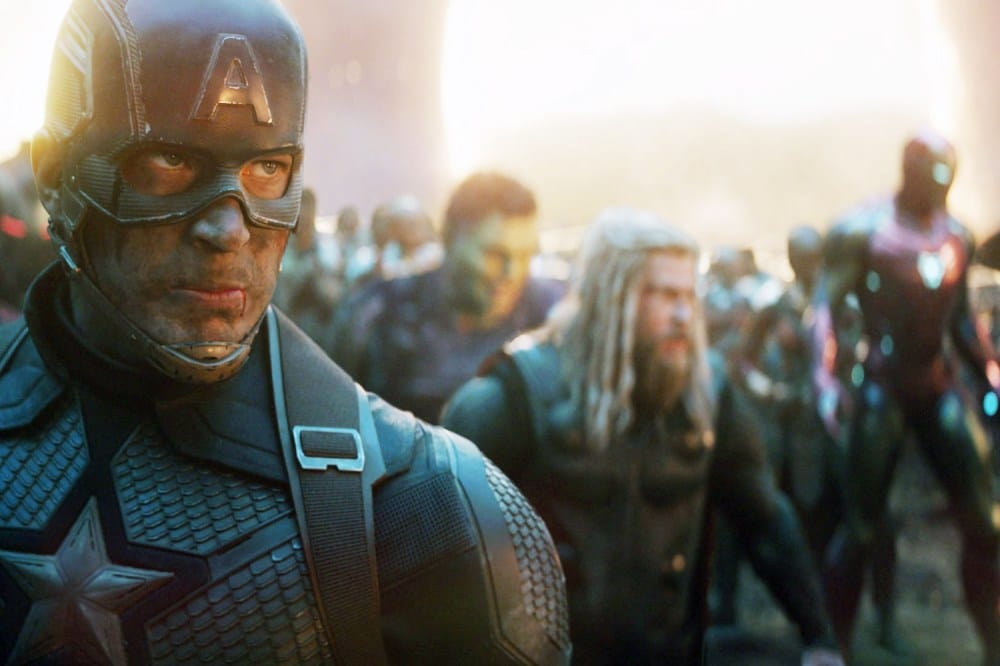
Disney announced at CinemaCon that Avengers: Endgame will return to theaters on September 25, 2026 — three months before Doomsday — with brand-new footage, including deleted scenes and what's expected to be a new post-credits scene (the original had none) that bridges directly into Doomsday, according to Variety and fan-site Bam Smack Pow. Both Endgame and Doomsday will screen in Disney's new "Infinity Vision" format — a premium large-format certification with over 75 domestic and 300 global exhibitors already certified, per El-Balad.
This is a textbook move: make audiences pay to see the promotional bridge to a blockbuster, generating incremental box office from a film that cost nothing new to produce. It's marketing disguised as content — and it's brilliant. If it works (meaning strong per-screen averages for a seven-year-old movie), every studio with a legacy franchise will copy the playbook. If audiences shrug, it signals that even Marvel nostalgia has a ceiling. Watch the first-weekend gross relative to other 2026 re-releases; anything above $30 million domestic would be a clear win.
Top Gun 3 Is Official — and It Tells You Everything About Where Paramount Is Headed
Paramount film co-head Josh Greenstein announced at CinemaCon that Top Gun 3 is officially in development with a script well underway, reuniting Tom Cruise and producer Jerry Bruckheimer, according to The Hollywood Reporter. No director was named. Maverick co-writer Ehren Kruger is writing the script. Director Joseph Kosinski previously teased, per Consequence, that this would be Cruise's "last ride" as Maverick, built around an "existential crisis" for the character.
The business logic is airtight: Top Gun: Maverick grossed $1.5 billion globally from a $170 million budget, and Steven Spielberg publicly credited Cruise with saving the theatrical business post-pandemic. David Ellison — who produced Maverick through Skydance and has positioned himself as a key strategic figure at Paramount — specifically cited Top Gun 3 as a top priority, per The Hollywood Reporter. This is Ellison planting a flag about what the new Paramount looks like: franchise-first, theatrical-committed, Cruise-anchored.
The risk is real, though. Cruise's compensation deals historically include heavy backend participation, meaning Paramount may be paying sizable first-dollar-gross waterfalls before the film breaks even. And whether a third film can recapture the specific post-pandemic emotional frequency that made Maverick a cultural phenomenon — rather than just a good sequel — is the question nobody at CinemaCon wanted to ask out loud. The signal to watch: casting announcements. If Miles Teller and Glen Powell return, it's a full-franchise play; if neither does, the creative direction has shifted significantly.
Paramount Uses CinemaCon to Sell Theater Owners on a Merger They're Actively Fighting
The most revealing tension at CinemaCon wasn't in a trailer — it was in the hallways. Cinema United head lobbyist Michael O'Leary announced his trade group will continue to oppose the proposed Paramount-Warner Bros. merger, calling it "harmful to exhibition, consumers and the entire entertainment ecosystem," according to GM Today. Meanwhile, in the same building, Paramount CEO David Ellison pledged a 45-day theatrical window and 30 films per year post-merger, per The Manila Times.
Exhibitors have seen this movie before — literally. When Disney absorbed Fox, the promised output never materialized at scale. Theater owners are now building a legal and lobbying strategy at both state and federal levels, and if the merger can't be blocked, Cinema United intends to secure enforceable commitments about film volume and marketing spend, per GM Today. The 30-films-a-year pledge sounds like abundance, but against the roughly $79 billion in combined debt and expected cost cuts, exhibitors are right to be skeptical.
If the merger closes with binding theatrical commitments, it becomes a genuine structural win for exhibition. If those commitments are handshake-only — as CinemaCon pledges historically tend to be — theater owners will have traded opposition for promises that evaporate once the accountants arrive. The tell: whether Paramount files any commitments with regulators, or whether these remain conference-stage rhetoric.
Jeff Shell's Exit Is a Reminder That Hollywood's C-Suite Chaos Isn't Over
Jeff Shell is out as president of Paramount Skydance, according to Variety. Shell was brought in by David Ellison as a senior operator with major-studio experience; his departure followed a legal dispute with R.J. Cipriani.
This matters: executive exits during mergers often function as strategy reveals. When a key operator departs, internal factions get louder, projects get re-ranked, and rivals smell weakness. For a company simultaneously promising 30 films a year, a 45-day window, and Top Gun 3, losing a seasoned operator creates real execution risk. If Ellison fills the role quickly, it signals stabilization. If he doesn't, assume he's centralizing decision-making — which may be efficient but concentrates risk in a single point of failure during the most complex integration in recent Hollywood history.
The WGA Deal Is Done — Now Watch the SAG-AFTRA Clock
The WGA West and the AMPTP reached a surprise four-year tentative agreement after roughly three weeks of negotiation — a speed that stunned an industry still scarred by 2023's months-long standoff, according to Fortune. The deal is expected to include improved healthcare and expanded AI protections, per Fortune, though precise terms haven't been publicly released.
Here's what matters next: SAG-AFTRA and DGA contracts expire at the end of June, per U.S. News. The WGA deal sets a template, but SAG-AFTRA's AI exposure is categorically different — it covers digital likeness, voice replication, and background-performer replacement in ways the writers' contract doesn't touch. A group including Natasha Lyonne, Joseph Gordon-Levitt, and writer David Goyer has already formed the Creators Coalition on AI to organize outside the formal bargaining cycle, according to Mars Magazine's industry analysis.
If SAG-AFTRA reaches a deal before summer production season, the 2026 slate stays on track. If talks stall, expect production delays that ripple into 2027 release calendars — exactly the kind of disruption that would make every CinemaCon promise moot. The June deadline is approaching.
Hollywood's AI Fight Just Got Less Theoretical
The Motion Picture Association sent ByteDance a cease-and-desist over alleged copyright infringement tied to Seedance 2.0, according to Variety. This isn't about artistic principle — it's about balance-sheet protection. Franchise characters and actor likenesses are among studios' most valuable assets, and tools that can replicate that value at industrial speed represent a direct financial threat.
The escalation from letters to potential litigation is the real inflection point. And it's happening against a backdrop of global AI regulation that could impose mandatory compliance obligations — transparency requirements, consent frameworks, risk assessments — regardless of what unions and studios negotiate privately. Regulatory primers from EY and Stanford's Cyber Policy Center describe frameworks where deepfakes and synthetic likenesses of real people face special scrutiny — mapping directly onto SAG-AFTRA's bargaining agenda.
If another major studio escalates from cease-and-desist to lawsuit, Hollywood's copyright fight enters a much more expensive — and potentially precedent-setting — phase. If studios stay at the letter-writing stage, expect AI tool developers to interpret that as tacit permission to keep pushing.
⚡ What Most People Missed
- Disney's "Infinity Vision" is a pricing play, not just a tech standard. The new premium large-format certification — with over 75 domestic and 300 global exhibitors already certified, per El-Balad — is Disney creating its own branded tier above IMAX and Dolby. Translation: another premium ticket surcharge is coming, and the studio that already charges the most for its films is building infrastructure to charge even more.
- Bad Robot's downsizing is a Peak TV obituary. Variety reported that J.J. Abrams' production company is shrinking and relocating to New York, with several once-hyped projects stalled or scrapped. When a marquee producer with deep studio ties pares back, it signals a broader purge of expensive overhead built for an era of unlimited streaming budgets. Expect fewer vanity overall deals and more finance-driven partnerships across the industry.
- A24's HBO Max deal renewal is proof that licensing is back — with better taste. HBO Max renewed its movie deal with A24, according to Variety. Selective licensing of curated, high-signal catalogs is replacing the "own everything" mentality. It's a safer way for streamers to buy prestige without remaking their entire content economics.
- NBC's franchise triage is the network TV playbook now. NBC renewed Law & Order: SVU for Season 28 while canceling Organized Crime after five seasons, according to Deadline. This isn't about the franchise — it's about which branches still justify their cost against declining linear ratings. The survivors are the ones with decades of audience loyalty baked in. Everything else is on borrowed time.
📅 What to Watch
- If SAG-AFTRA and the AMPTP reach a deal framework before June, it removes the single biggest production risk hanging over the 2026 slate; if talks stall, every CinemaCon promise about volume and windows becomes aspirational.
- If the Avengers: Doomsday trailer's first-24-hour YouTube view count approaches the billion-view pace of its teasers, presale tracking will follow — and the December 18 collision with Dune: Part III becomes a genuine test of whether two mega-tentpoles can coexist or one blinks.
- If Paramount files enforceable theatrical-window commitments with merger regulators rather than relying on CinemaCon speeches, it signals exhibitors won a real concession; if not, the 30-films-a-year pledge is a press release, not a contract.
- If another major studio escalates from cease-and-desist to an actual AI copyright lawsuit, the cost of deploying generative tools in production changes overnight — watch for filings in the next 60 days.
- If Universal's longer exclusive windows boost holdover grosses by 20% or more in the next box-office cycle, expect every other major studio to match the approach before year-end.
The Closer
Robert Downey Jr. playing the trailer twice for a room of theater owners who haven't felt hope since 2019; Tom Cruise at 63 signing up for one more ride; and J.J. Abrams packing boxes for New York because Peak TV forgot to leave a forwarding address.
Disney just invented a way to charge you a premium ticket price for a seven-year-old movie with a post-credits scene that's technically an ad for the next one — and honestly, it might be the most elegant business model in Hollywood right now.
See you next week.
If someone you know cares about where the money goes in entertainment, send this their way — they'll thank you before the second story.