The Lyceum: Macro & Markets Daily — Apr 03, 2026

Photo: lyceumnews.com
Friday, April 3, 2026
The Big Picture
U.S. markets were closed for Good Friday — and the war didn't care. The last confirmed equity closes are from Thursday: the S&P 500 closed at 6,582.69 on Thursday, the Dow closed at 46,504.67 (down 0.13% on Thursday), and the Nasdaq closed at 21,879.18 (up 0.18% on Thursday), with the 10-year Treasury yield around 4.31% as of Thursday's close. Those numbers are already stale. After the bell, an F-15E Strike Eagle was shot down over Iran, a second U.S. aircraft reportedly went down near the Strait of Hormuz, Iran rejected a 48-hour ceasefire, and WTI crude rose 11.4% on Friday to $111.54 — all while the exchanges sat dark and the March jobs report (178,000 vs. 65,000 expected) landed into a void with no cash market to absorb it. The DXY firmed to 100.19 on Friday. When New York reopens Tuesday, traders will price four days of escalation in a single morning.
Today's Stories
The F-15E Goes Down — and Markets Can't React Until Tuesday
What happened. A U.S. Air Force F-15E Strike Eagle was shot down over southern Iran on Friday. One crew member has been rescued; a search continues for the second. The wreckage — confirmed by defense analysts at The Aviationist, with tail markings traced to the 494th Fighter Squadron out of RAF Lakenheath — is the first hard evidence that Iran's air defenses remain operational, directly contradicting prior U.S. claims of having destroyed them. The Washington Post and others report a second U.S. aircraft, an A-10, also went down with its pilot recovered. Iran's statement framed the shootdown as proof of its "advanced naval air defense system." Trump responded that the U.S. military "hasn't even started destroying what's left."(https://us.cnn.com/2026/04/03/world/live-news/iran-war-us-trump-oil)
What changes. If Iran can still contest U.S. air superiority — even sporadically — the conflict timeline extends. Longer wars mean sustained oil disruption, higher defense spending, and a wider risk premium across every asset class. S&P 500 futures slipped 0.3% in overnight trading to 6,604.50 on Friday; the real repricing comes Tuesday.
What to watch for. Pentagon briefings over the weekend will either confirm or walk back the second aircraft loss. Two shootdowns in a single day would fundamentally alter the market's assumptions about how quickly this war ends. Trump's April 6 deadline for Iran to reopen the Strait of Hormuz — still active as of this writing — now carries dramatically higher stakes.
Oil Surges Into Triple Digits Again — Then the War Gets Worse
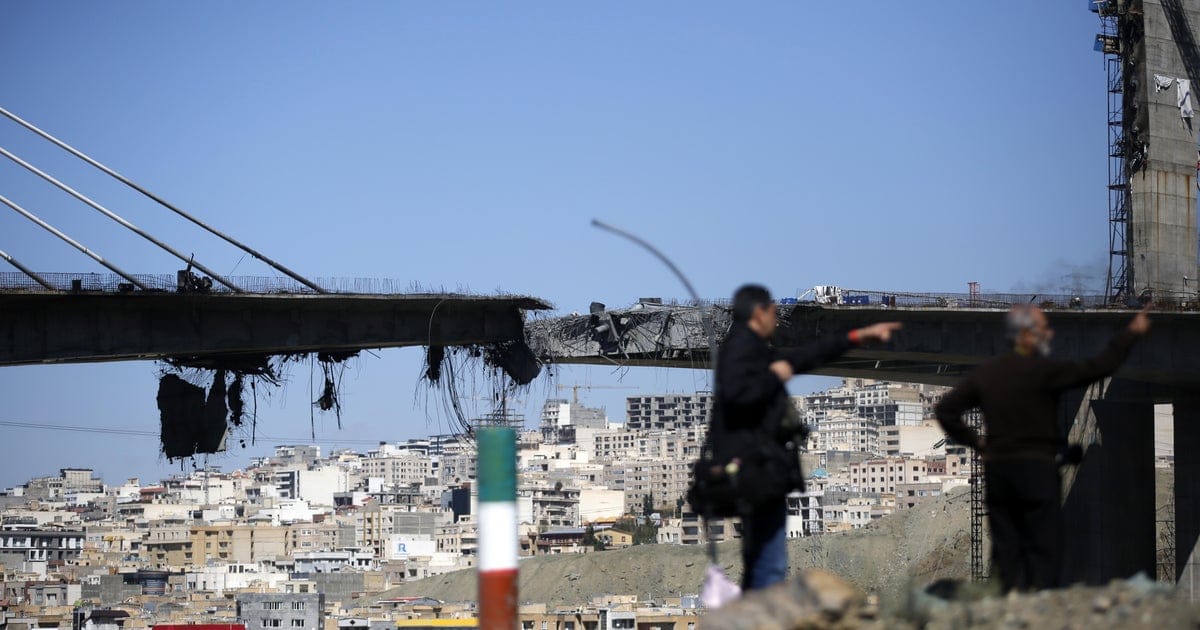
What happened. WTI crude rose 11.4% on Friday to $111.54; Brent jumped 7.8% on Friday to $109.03. That followed Thursday's 10% surge after Trump warned of further military action against Iran in the next two to three weeks. The physical market is even uglier: Fortune reported spot Brent cargoes clearing near $140–$145 as buyers scramble for immediate delivery — a gap of $30+ above futures that signals acute physical supply stress, not just speculative froth. Iran rejected a 48-hour U.S. ceasefire, damaged a Kuwaiti desalination plant and refinery, and fresh strikes were reported across the UAE, Saudi Arabia, and Bahrain.
What changes. The Strait of Hormuz blockade has effectively choked about 20% of global oil and LNG flows as of Friday. The spot-futures gap (called backwardation — when today's barrel costs far more than next month's) means companies that need physical fuel now are paying crisis prices, which feeds directly into transportation costs, airline margins, and eventually grocery bills. BMO's market commentary argues this is a "stuck barrels" problem — prices can fade if shipping resumes — but that's a bet on diplomacy that just got harder to make.
The signal to watch. If Brent futures break above $120 and stay there into midweek, the market is pricing a protracted blockade, not a negotiated reopening. That's the threshold where demand destruction and recession risk start dominating the inflation story.
178,000 Jobs Into a Closed Market — The Stagflation Setup Is Complete
What happened. The March employment report landed at 8:30 a.m. on Good Friday: 178,000 nonfarm payrolls added, nearly triple the 65,000 consensus, with unemployment ticking down to 4.3%. Initial jobless claims earlier in the week fell to 202,000 — the lowest in 18 months. But the BLS tables reveal nuance: roughly 70,000–80,000 of the gains reflect healthcare workers returning from strikes and other one-offs, the labor force shrank by nearly 400,000 in March, and Reuters noted that the labor force participation rate fell to 61.9% while aggregate private take-home pay was nearly flat month-over-month (+0.09%). The headline is hot; the internals are lukewarm.
What changes. A labor market this tight, colliding with $110+ oil, gives the Fed zero room to cut rates. Markets had been quietly pricing in second-half cuts; FinancialContent reported those expectations are now effectively dead. This is the stagflation setup in real time: employment data that would normally be bullish instead locks in higher rates while energy costs eat margins. The Fed's next meeting is May 6; the CME FedWatch tool shows a 99% probability of no change as of April 3.
The signal to watch. March CPI is due Friday, April 10. If core inflation prints above 3.5%, the "wait and see" posture Powell articulated at Harvard last week becomes untenable — and the conversation shifts from "how long do we hold" to "do we hike."
⚡ What Most People Missed
- The calendar collision is the story. Jobs Day landing on Good Friday means the most market-sensitive data of the month was digested without real-time equity pricing. Three days of information — a blowout payroll number, a downed fighter jet, an 11% oil spike, and a rejected ceasefire — will all get marked to market in a single Tuesday morning open. That's not normal volatility; it's a liquidity crunch by design.
- Food inflation is already transmitting the oil shock. The FAO Food Price Index hit 128.5 in March, up 2.4% month-on-month, with vegetable oils up 5.1% in March and sugars up 7.2% in March. Vegetable oil prices have retraced to 2022 highs as biofuel diversion pulls agricultural output into energy — the classic crude-to-grocery-bill pipeline is already running.
- Copper won't crack. COMEX copper is holding above $4.50/lb as of Friday, near one-week highs — unusual resilience for a metal that usually flinches at recession talk. That firmness leans the macro read toward margin-squeeze stagflation rather than an imminent hard landing.
- France told Washington NATO isn't its Hormuz air force. A top French defense official publicly stated that NATO's mandate covers Euro-Atlantic security, not Strait of Hormuz operations. Russia's Putin and Turkey's Erdogan called for an immediate ceasefire. The coalition is fracturing in real time — a U.S. bearing the full cost alone changes both the conflict timeline and the fiscal math.
- Netflix just got a European pricing problem. An Italian court ruled Netflix's 2017–2024 price hikes unlawful, ordering refunds of up to €500 per long-tenured subscriber. Netflix will appeal, but the ruling creates a legal playbook copyable across the EU — a nontrivial risk for a business model built on regular price increases.
📅 What to Watch
- If Trump acts on the April 6 Hormuz deadline (still active as of this writing), expect an immediate repricing of oil above $120 and a VIX spike at Tuesday's open — the market is not positioned for enforcement.
- If the March CPI print (Friday, April 10) shows core above 3.5%, the remaining rate-cut narrative for 2026 is dead and the conversation shifts to whether the Fed needs to hike into a war — a scenario few market participants are pricing.
- If FOMC minutes (Wednesday, April 8, 2pm ET) reveal any members argued for a hawkish tilt in March, it would signal the "wait and see" consensus is thinner than Powell let on — moving the front end of the curve.
- If Delta's earnings commentary (reporting next week) shows fuel-cost pass-through failing — meaning they can't raise ticket prices fast enough to offset $110 oil — it's the first concrete read on how the energy shock is compressing corporate margins in real time.
The Closer
An F-15E in pieces on Iranian soil, 50,000 Teslas sitting in parking lots nobody asked for, and a jobs report that landed like a tree falling in a forest where every trader was at brunch.
The Strait of Hormuz is closed, the stock market is closed, and the only thing open is the question of who pays for all of this — which is exactly the kind of problem that gets solved on a Tuesday morning at 9:30 with everyone's limit orders stacked on top of each other.
Have a weekend. It won't be quiet.
If someone you know is going to stare at futures all weekend anyway, forward them this so they at least know what they're staring at.