The Lyceum: Macro & Markets Daily — Apr 17, 2026

Photo: lyceumnews.com
Friday, April 17, 2026
The Big Picture
Iran declared the Strait of Hormuz open for commercial shipping, oil had its worst single session since the war began, and Wall Street responded by sprinting to new records — the S&P 500 closed up at 7,126.06 on the session (+1.20%), the Nasdaq closed up at 24,468.48 on the session (+1.52%), and the Dow closed up at 49,447.43 on the session (+1.79%), with the Russell 2000 closing up at +2.11% on the session. WTI crude fell nearly 12% on the session to $83.34, Brent fell 8.5% on the session to $90.90, and the 10-year Treasury yield fell 6.3 basis points on the session to 4.25% as traders repriced the inflation outlook in real time. The catch: the U.S. naval blockade of Iranian ports remains in full force, the world's largest shipping companies haven't actually resumed transits, and the ceasefire is explicitly temporary — so the market is pricing the announcement, not the tankers.
Today's Stories
The Strait Is Open — and Oil Just Had Its Worst Day Since the War Began
What happened. Iran's Foreign Minister Abbas Araghchi announced Friday that the Strait of Hormuz — the narrow waterway between Iran and Oman through which roughly a quarter of the world's seaborne oil flows — is open to all commercial vessels for the duration of the Lebanon ceasefire. WTI crude plunged 12% on the session to $83.34; Brent dropped 8.5% on the session to $90.90. Both benchmarks hit their lowest levels since March 10, according to BNN Bloomberg.
What changes if this holds. Lower oil can feed into lower headline CPI — the mechanism market participants cite for why the Fed has paused since March. Airlines, cruise lines, and logistics companies see hundreds of millions in annualized fuel savings materialize overnight. The IEA had warned Thursday that Europe had roughly six weeks of jet fuel supply remaining, so this wasn't just a relief trade — it was a near-emergency averted for European aviation. If oil stays below $85, the Fed's rate-cut calculus could reopen as early as the June meeting.
What failure looks like. Maersk, the world's second-largest container line, said it continues to follow security partners' guidance to avoid the Strait. SEB Research analyst Ole Hvalbye noted it takes roughly 21 days for Gulf cargoes to reach Rotterdam, according to BNN Bloomberg. The signal to watch: whether Maersk, MSC, or BP Shipping issue operational transit announcements next week. If they don't, the physical supply chain hasn't actually reopened — and oil bounces.
Airlines and Small Caps Explode Higher — the Fuel-Cost Trade Unwinds in One Session
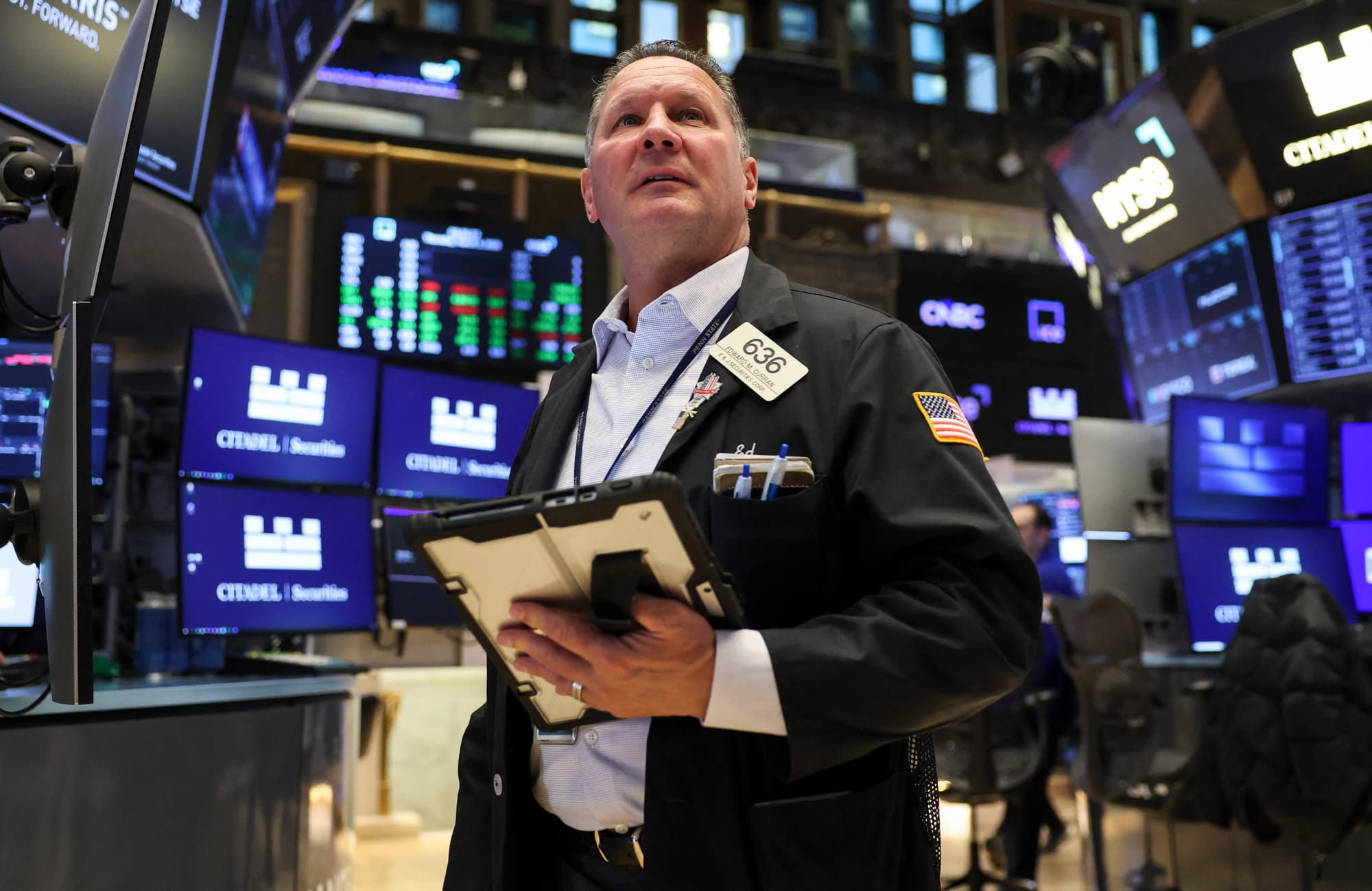
What happened. Companies with massive fuel bills posted some of Wall Street's largest gains. United Airlines surged 8.8% on the session, Norwegian Cruise Line jumped 7.8% on the session, and Royal Caribbean gained 9.5% on the session, according to BNN Bloomberg. The Russell 2000 hit a new all-time high, bouncing roughly 14% since its March 30 lows and outperforming the S&P 500 over that stretch. Consumer discretionary and industrials led the advance — a classic risk-on rotation away from defensive positioning.
What changes if this broadening sustains. Small caps outperforming large caps on an oil shock is a signal that investors are pricing domestic economic relief, not just a geopolitical headline. Cheaper energy lowers input costs across transportation, food logistics, and manufacturing — the sectors where small and mid-cap companies live. If breadth holds into next week, it validates the thesis that this rally has legs beyond the handful of mega-cap tech names that carried the first two weeks.
What failure looks like. Much of Friday's breadth came from short-covering and retail momentum, according to Tastylive — positioning flows that can reverse fast without institutional follow-through. Today was also April options expiration, which amplifies moves as dealers rebalance gamma. The signal: if Monday opens flat or negative on normal volume, Friday's breadth was mechanical, not fundamental. Watch whether institutional flows into small-cap ETFs confirm the retail bid.
Bond Yields Drop and the Fed Rate-Cut Clock Just Restarted
What happened. The 10-year Treasury yield fell 6.3 basis points on the session to 4.25% — its sharpest single-session decline in weeks — as traders repriced inflation expectations on the oil drop. The VIX fell to 17.48, its lowest close since before the war escalated. According to Bloomberg, traders are now wagering the Fed will be able to resume cutting rates before year-end.
What changes if this holds. The market reaction on Friday appeared consistent with this transmission chain: lower oil, softer inflation expectations, lower Treasury yields and cheaper borrowing costs for mortgages and corporate debt. Housing and auto companies got immediate relief, per the Anchorage Daily News. If oil sustains below $85 through May, the April and May CPI prints could come in soft enough to give the Fed cover for a summer cut — a scenario the market had nearly abandoned after March's 0.9% monthly CPI spike.
What failure looks like. New York Fed President John Williams said Wednesday that the current policy stance is "well positioned," projecting inflation between 2.75%–3.0% this year before returning to target in 2027, per his April 16 remarks. That's patient language, not dovish. Fed funds futures still price the overnight rate ending the year at 3.50%–3.75%, per the CME FedWatch Tool — unchanged from December, according to CNBC. The signal: if the 10-year yield climbs back above 4.30% next week despite lower oil, it will be occurring amid political risk around the Fed leadership transition, including Kevin Warsh's expected confirmation hearing before the Senate Banking, Housing, and Urban Affairs Committee — a sign that long-duration assets face headwinds beyond energy.
⚡ What Most People Missed
- Iran's reopening includes a "coordinated route" requirement that constrains which passages vessels can use, a detail most headlines skipped. Araghchi said vessels must transit through a route announced by Iran's maritime authorities — and security partners continue to advise caution. The price moved; the ships haven't.
- U.S. industrial production fell 0.5% in March and capacity utilization slipped to 75.7%, per the Fed's G.17 release — a softening in real economic activity that got completely buried by the oil story. If factory output doesn't bounce in April, the rally is celebrating cheaper inputs while the engine is losing power.
- The AAII sentiment survey has shown more bears than bulls for nine consecutive weeks, as of the April 16, 2026 AAII survey, during a historic rally, per TheStreet. That persistent bearishness means a large pool of sidelined cash hasn't chased the move yet, which historically precedes further upside, not reversals.
- A floated $20 billion U.S.-Iran "cash-for-uranium" deal is circulating in diplomatic channels, though Iran's Foreign Ministry spokesperson explicitly said Tehran refuses to transport enriched uranium abroad, per Wall Street CN. Treat this as a negotiating signal, not a done deal — but uranium spot prices reportedly slipped about 3% on the session after the leak.
- Netflix dropped about 9.7% on the session despite beating earnings because it didn't raise full-year revenue guidance — and co-founder Reed Hastings announced he'll leave the board in June, per the AP via NV Daily. In this market, guidance is the earnings report; the actual print is almost secondary.
📅 What to Watch
- If Maersk or MSC announce Strait of Hormuz transit resumptions next week, it means the physical supply chain is actually reopening — not just the futures market. Without that, oil's drop is a paper trade vulnerable to reversal.
- If the 10-year yield climbs back above 4.30% despite lower oil, it will be occurring amid political risk around the Fed leadership transition, including Kevin Warsh's expected confirmation hearing before the Senate Banking, Housing, and Urban Affairs Committee — a signal that long-duration assets face headwinds beyond energy.
- The FOMC meeting is scheduled for April 28–29, with GDP and personal income/outlays printing April 30, meaning the Fed may need to signal policy with incomplete visibility on the data investors most want to see. That sequencing compresses the reaction window dangerously.
- If March durable goods orders (April 23, 8:30 a.m. ET) come in negative again, it confirms industrial production's weakness wasn't a one-month blip — and the "soft landing" thesis starts requiring a footnote about manufacturing recession.
The Closer
Iran opens a strait it still controls, the market celebrates fuel savings on planes that haven't flown through it yet, and Netflix loses 10% for the crime of meeting expectations without exceeding ambitions.
Nine straight weeks of bearish retail sentiment during a 12-session Nasdaq win streak — the crowd is so busy being scared they haven't noticed they're standing in the middle of a bull market.
Have a good weekend. Don't trade the announcement; wait for the tankers.
If someone you know is still refreshing oil prices on their phone, forward them this — they need the full picture.