The Lyceum: Macro & Markets Daily — Mar 24, 2026

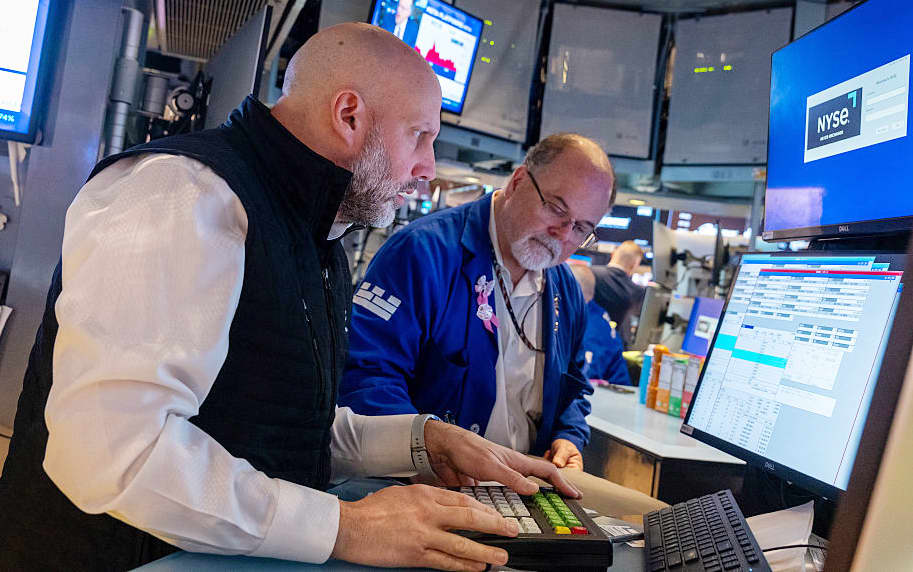
Photo: lyceumnews.com
Tuesday, March 24, 2026
The Big Picture
Monday's ceasefire rally lasted exactly one session. Iran's parliament speaker told the world "no negotiations have been held with the US," oil clawed back above $104 on the session, the 10-year yield hit a 7.5-month high at session highs, and the Pentagon ordered 82nd Airborne paratroopers toward the Gulf — all in the same trading day. The market is now pricing a conflict that's escalating on the military track while the diplomatic track may not exist at all, and the five-day pause on power-plant strikes Trump announced Monday is the most visible restraint on a fresh repricing.
Today's Stories
Iran Says There Are No Talks, the Pentagon Says Pack Your Bags
What happened. Iran's parliament speaker Mohammad Bagher Qalibaf flatly denied any negotiations with Washington, calling Trump's claim of "productive conversations" a market-manipulation tactic. Hours later, Bloomberg reported the administration ordered roughly 2,000 soldiers from the 82nd Airborne toward the Middle East — corroborated by Military Times, The Intercept, and The Spokesman-Review. An Israeli official told CNN a deal "does not appear to be tangible right now." The S&P 500 closed down at 6,557 on the session, giving back Monday's gains. The Nasdaq closed down 0.8% on the session to 21,762. The Dow closed down 0.2% on the session to 46,124.
What changes if this path continues. Every additional soldier deployed is a signal that the diplomatic window may be smaller than optimists think. Trump's five-day pause on strikes against Iranian power plants — the concession that powered Monday's rally — expires late Thursday or Friday. If no concrete progress materializes by then, oil could retest its $120 peak, defense stocks (Raytheon, Lockheed, Northrop) could re-lead, and the Fed's rate-cut timeline would likely be pushed out for 2026. Iran's Defense Council has separately warned that any coastal attack would trigger mine-laying across Gulf sea lanes, which would disrupt maritime traffic far beyond the narrow Strait.
What to watch for. The observable signal is simple: either a named Gulf-state mediator emerges before Thursday, or it doesn't. If Friday arrives without a framework, expect Brent above $110 and a VIX push back toward 30.
Oil Rebounds Above $104 — and the Stagflation Math Gets Harder to Ignore
What happened. Brent crude bounced 4.6% on the session to settle at $104.49, clawing back nearly half of Monday's 10.9% plunge. Market participants said the rebound reflected continued conflict and Iran's denial of talks, which reminded traders that a single social-media post doesn't resolve a multi-month supply hole in the Gulf. Energy was the only S&P 500 sector in the green for March. Meanwhile, Iran has begun charging ad-hoc transit fees of up to $2 million per vessel on ships passing through the Strait of Hormuz — effectively inventing a toll booth on the world's most important energy chokepoint. Some vessels have paid; the mechanism and currency remain unclear.
What changes if oil stays here. Oil above $100 is an inflation input that bleeds into freight, jet fuel, petrochemicals, and eventually headline CPI — which would make it harder for the Fed to cut rates even as growth cools. That's the stagflation trap: prices rising and activity slowing simultaneously. Citi's conditional stress case, cited by 24/7 Wall St., puts $200 oil on the table if Strait disruptions persist through June. AAA's national average pump price has now risen for 23 consecutive days to $3.96/gallon — the highest since 2022, as of March 24.
The failure case. If Brent falls back below $95 and stays there, it would signal that physical shipping is normalizing faster than the headlines suggest. The signal to watch: tanker tracking data through the Strait. Goldman Sachs flagged that physical flows remain near 5% of normal capacity — until that number moves, price relief is likely to be short-covering, not supply recovery.
The Bond Market Didn't Buy the Ceasefire Either — 10-Year Yields Hit 7.5-Month Highs
What happened. The 10-year Treasury yield climbed more than 5 basis points on the session to 4.39% — its highest since July 2025. The 2-year auction landed in the high-3s, and the curve stayed only mildly inverted. Treasuries are supposed to rally on geopolitical fear. They're doing the opposite, because oil above $100 is an inflation signal, and inflation is what keeps the Fed from cutting — so bond investors demand higher yields to compensate, pushing prices down. The classic "flight to safety" has been overridden by the inflation math.
What changes if yields keep climbing. Corporations that had been waiting for "rate-cut season" to refinance are now forced to accept higher coupons, which will weigh on capital expenditure and hiring through the second half of 2026. High-growth tech stocks — essentially long-duration assets whose value is concentrated in future earnings — get hit hardest. The Magnificent Seven are already down 12-13% year-to-date and significantly underperforming the broader index. Oracle fell 4.7% on the session; Walmart gained 1.5% on the session. The rotation from growth to defensives is now explicit.
The signal that changes the story. Friday's PCE inflation print — the Fed's preferred gauge — is the next hard data point. If energy hasn't yet bled through to the February number, Powell gets cover to hold without hawkish rhetoric. If it's hot, the market effectively prices zero rate cuts for 2026, and the 10-year could push toward 4.75%.
⚡ What Most People Missed
- Iran is selectively letting ships through the Strait — and the criteria are geopolitical, not commercial. Turkey and India have both reported vessels receiving passage; countries perceived as neutral get preferential access to the world's most important oil lane. According to NPR, India's ambassador says talks are underway for more. This selective passage is quietly rewiring global energy trade relationships in ways that will likely outlast the conflict.
- Apollo's private credit fund was hit with redemption requests totaling 11.2% of shares in the latest redemption period — more than twice its 5% quarterly cap — and will distribute roughly 45 cents on the dollar. Ares also capped redemptions. When a $15 billion fund pays out less than half, it means institutional investors are scrambling for cash elsewhere. Watch whether Blackstone and Blue Owl report similar pressure.
- Estée Lauder confirmed merger talks with Spain's Puig, a deal that would create a ~€35 billion cosmetics group housing MAC, Clinique, and Charlotte Tilbury. Estée Lauder dropped nearly 10% on the session; Puig surged 13-15% on the session. Cross-border consumer consolidation in the middle of a sanctions-heavy geopolitical cycle adds regulatory complexity nobody's pricing yet.
- Australia's consumer confidence plunged to 63.1 — a multi-decade low — with inflation expectations spiking to 6.9% as petrol prices surged, per Roy Morgan (March 2026 survey). The oil shock's consumer transmission isn't theoretical anymore; it's showing up in household surveys in oil-importing economies.
- U.S. investment-grade corporate debt reopened with roughly $7 billion in deals printing across utilities and insurers on the session — the first meaningful issuance window in several sessions. The plumbing for blue-chip borrowers still works. The question is whether it stays open.
📅 What to Watch
- If Trump's five-day power-plant strike pause expires late Thursday or Friday without a named mediator or framework, oil could retest $110+ and the VIX could push back toward 30 — the market would shift from pricing "maybe diplomacy" to pricing "confirmed escalation."
- If Friday's PCE inflation print (8:30am ET) comes in hot, the bond market would effectively close the door on 2026 rate cuts and the tech-to-defensives rotation would accelerate — watch for forced selling in duration-heavy ETFs and long-duration growth funds.
- If tanker tracking data shows Strait of Hormuz flows rising above 10% of normal capacity, that's the first physical signal that oil's war premium can sustainably deflate — market moves after that are more likely to reflect supply fundamentals than headline noise.
- If more private credit funds report redemption caps in the next two weeks, it would signal the liquidity stress is systemic rather than idiosyncratic to Apollo — that's when credit spreads widen meaningfully and the "funding shock" narrative becomes real.
- If NATO or U.S. intelligence confirms Iran struck Diego Garcia, Europe's defense posture would shift overnight and the conflict's geographic scope would expand — repricing European defense equities and EUR risk premia.
The Closer
A ceasefire that neither side confirms, a toll booth on the world's most important shipping lane that accepts payments in an unclear currency, and a $15 billion credit fund paying 45 cents on the dollar while its managers insist everything is orderly.
Iran just invented congestion pricing for oil tankers — Manhattan's MTA should take notes on the revenue model.
Oil runs the tape. Everything else is commentary.
If someone you know is making decisions with money right now, forward this their way.