The Lyceum: Macro & Markets Daily — Mar 25, 2026

Photo: lyceumnews.com
Wednesday, March 25, 2026
The Big Picture
Markets rallied on a ceasefire proposal that the other side already rejected. The S&P 500 closed up 0.54% on the session to 6,591.90, oil fell below $103 at session lows, and the 10-year yield closed at 4.32% on the session — all amid the U.S. sending Iran a 15-point peace plan through Pakistan, and traders treating the paperwork as new information. Iran called it "maximalist and unreasonable," demanded sovereignty over the Strait of Hormuz, and said Washington is "negotiating with itself." The gap between what equities are pricing and what diplomats are actually saying is the widest it's been since the war started.
Today's Stories
The 15-Point Plan Tehran Rejected — and Why Markets Bought It Anyway
What happened. The U.S. delivered a comprehensive 15-point peace proposal to Iran through Pakistani intermediaries, according to the Associated Press and the New York Times. The plan reportedly demands dismantlement of key nuclear sites, transfer of enriched material to the IAEA, withdrawal of proxy support, and guaranteed open passage through the Strait of Hormuz. Iran's Foreign Minister Abbas Araghchi told Al Jazeera the proposal was "not beautiful even on paper" and issued a five-point counter demanding Iranian sovereignty over the Strait — a non-starter for Washington. Pakistan, Egypt, and Turkey have been pressing for a face-to-face meeting in Islamabad by Thursday. If that meeting doesn't materialize, today's rally could prove a head fake. The Dow closed up 305 points (0.66%) on the session to 46,429.49, the Nasdaq closed up 0.77% on the session to 21,929.83, and the Russell 2000 closed up roughly 1.2% on the session. Meanwhile, fresh Israeli air attacks reportedly damaged facilities in and around Tehran, and smoke rose from Kuwait International Airport after a drone strike that damaged fuel storage — the conflict is widening into Gulf infrastructure even as diplomats exchange paper. Watch for any named Iranian official (not a spokesperson) to confirm direct contact; that would be the clearest signal this is real.
Oil's Third Reversal This Week — and the Goldman Assumption Doing All the Work
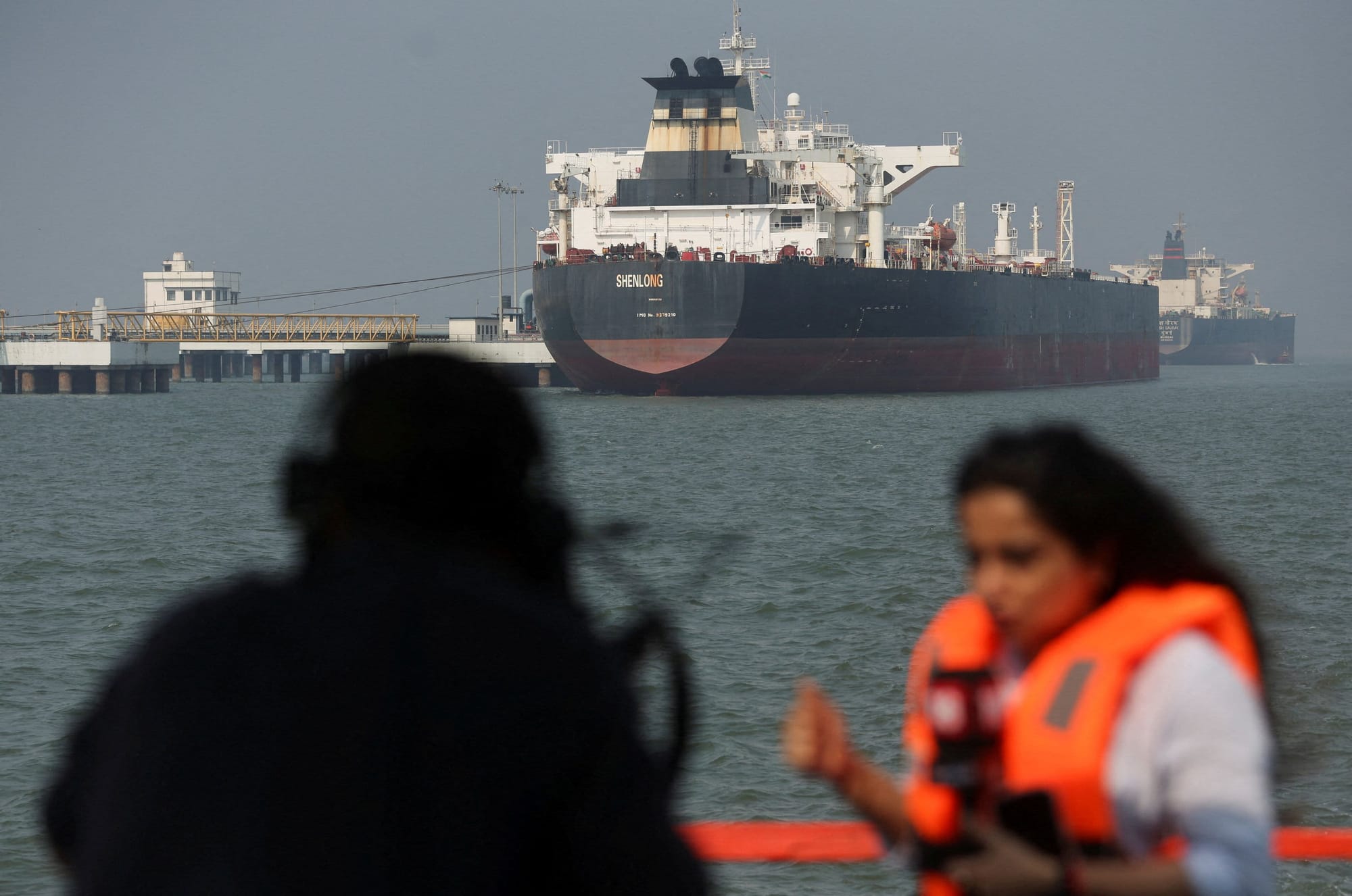
What happened. Brent crude closed down 2.2% on the session to $102.22 per barrel; WTI closed down 2.2% on the session to $90.32. Investing.com's historical data showed settlement prints even lower — near $95.90 for Brent — underscoring how different data feeds produce different headlines in volatile sessions. Either way, it's the third meaningful directional swing in five days. Brent has traded a $50 range since the war began — from about $70 pre-conflict to $119.50 at the peak — making jet fuel contracts, shipping rates, and manufacturing input costs difficult to budget.
What changes if de-escalation holds. Goldman Sachs's base case assumes Hormuz flows normalize over four weeks starting in April. If that timeline holds, Brent could drift toward the EIA's forecast of below $80 by Q3, corporate energy hedges unwind profitably, and the Fed's "transitory" oil-shock narrative would regain viability. Saudi Arabia is already rerouting exports through Red Sea ports — Yanbu shipments reached nearly 4 million barrels per day last week — buying time but burning surge capacity that isn't sustainable for months.
What breaks Goldman's model. NPR reports Iran is selectively allowing ships from Pakistan and India while negotiating passage with China and Iraq — that's discretionary, not structural. Separately, Russia's Baltic ports of Primorsk and Ust-Luga suspended crude loadings Wednesday after Ukrainian drone strikes. Two simultaneous supply disruptions — Persian Gulf and Baltic — is the scenario that pushes Brent back above $115 and erases today's equity gain by Thursday's open. Watch tanker traffic data through Hormuz, not headlines.
Import Prices Just Posted Their Biggest Monthly Jump in Four Years — Before the Worst of the Oil Shock Hit
What happened. The Bureau of Labor Statistics reported U.S. import prices rose 1.3% in February on the month, the largest monthly gain since May 2022, while export prices climbed 1.5% in February on the month. The nonfuel component is what makes this uncomfortable: broader import costs across electronics, chemicals, and manufactured goods accelerated alongside energy, suggesting inflationary pressure is embedding across supply chains, not just at the gas pump. This is February data, compiled before the oil shock intensified in mid-to-late March. The March print could be considerably worse.
What changes if this trend continues. A 2026 Fed rate cut becomes nearly impossible to justify. When only energy costs rise, policymakers can argue it's temporary. When nonfuel imports accelerate too, that argument collapses. As of March 25, 2026, CME FedWatch shows rate-cut odds at roughly 9% on the session — down from about 95% a month ago — with futures pricing a 17% chance of at least one hike over the coming year, including an 8% chance of a hike at the Fed's April meeting. For CFOs, the practical consequence is that floating-rate debt costs aren't coming down, and the 30-year mortgage rate reached 6.54% today, a six-month high.
The observable signal. Friday's PCE inflation print (the Fed's preferred measure, 8:30am ET) is the week's most important number. Prior reading was 2.5% year-over-year. Any upside surprise would effectively close the door on 2026 easing and reopen the hike conversation. If PCE comes in soft despite import-price pressure, the "transitory" camp gets one more month of breathing room — but only one.
⚡ What Most People Missed
- Paychex beat estimates and reaffirmed full-year guidance — adjusted EPS of $1.71 on revenue of $1.81 billion, topping consensus of $1.67 and $1.78 billion respectively. Paychex processes payroll for small and mid-size businesses, making it one of the cleanest real-time reads on the U.S. small-business labor market. This guidance reaffirmation suggests clients writing paychecks haven't started cutting in a visible way.
- The Dallas Fed's energy survey flipped sharply positive — the business activity index for the energy sector jumped to 21.0 in Q1 2026 from −6.2 in Q4 2025. Texas producers are expanding activity because of elevated prices; if Hormuz normalizes and oil falls back toward $70, that expansion would likely reverse quickly and take a material piece of U.S. energy capex with it.
- Tower Semiconductor is taking full ownership of a 300mm fab in Japan with plans for a multi-fold capacity expansion focused on silicon photonics — the specialized optical chips used in data-center networking and sensors. While headlines chase AI compute, the photonics supply chain is quietly becoming a strategic bottleneck for data-center interconnects and sensor suppliers.
- A jury found Alphabet and Meta liable in a first-of-its-kind social media child-harm lawsuit. Alphabet slipped 0.2% on the session, Meta rose 0.3% on the session. The muted stock reaction suggests the market is not yet pricing structural legal liability; a precedent-setting verdict gives plaintiff attorneys a faster runway to build on.
📅 What to Watch
- If the Islamabad peace meeting doesn't materialize by Thursday, the 15-point proposal risks remaining a press release rather than a negotiating framework, and today's equity rally could reprice — watch the Nikkei open for the fastest read on Asian energy-import anxiety.
- If initial jobless claims (Thursday, 8:30am ET, consensus 211K) surprise meaningfully higher, it would be the first hard evidence the oil shock is hitting hiring decisions — the labor market is the last domino between "slowdown" and "recession."
- If Friday's PCE inflation comes in above 2.5% year-over-year, the Fed's "transitory" oil-shock framing would break and rate-hike odds — currently about 8% for next month as of March 25, 2026 — could rise sharply overnight.
- If Russia's Baltic port loadings don't resume by Thursday, traders will start pricing two simultaneous supply disruptions, and Brent's path of least resistance would flip back above $110.
- If Treasury auctions this week tail (clear at higher yields than expected), corporate borrowing costs reset higher before most CFOs have updated their Q2 budgets — watch the 5-year and 7-year results specifically.
The Closer
A peace plan nobody agreed to, oil trading a $50 range on vibes, and import prices screaming inflation from data collected before things got worse.
Somewhere in Tehran, a diplomat is reading a 15-point proposal and drafting a five-point response that includes "give us the Strait" — and the S&P closed up 0.54% on the session.
Until tomorrow. —The Lyceum
If someone you know is trying to make sense of a market that rallies on rejected ceasefires, forward this their way.