The Lyceum: Power & Infrastructure Weekly — Aug 15, 2026
Photo: lyceumnews.com
Week of August 15, 2026
The Big Picture
This week’s strongest signal was procedural, not cinematic: grid operators are turning data-center access into a contract with real obligations. California wants proof that enormous loads will actually arrive. PJM wants backup generators available when supply tightens. Illinois is putting long-duration contracts behind more than a gigawatt of storage. The industry is moving beyond “we need more infrastructure” toward harder questions: which project, whose money, and what happens when the system is stressed?
This Week's Stories
California Wants Data Centers to Bring Receipts
A speculative data-center reservation can distort a utility plan almost as effectively as a working campus. The California Independent System Operator is trying to separate projects with land, financing and credible schedules from developers simply holding a place in line. (California Wants Data Centers to Prove They Are Real Before the Grid Builds Arou)
CAISO posted its proposed large-load framework on August 12 in response to the Federal Energy Regulatory Commission’s effort to reform how regional grids connect data centers and other enormous customers. The process remains open, with a stakeholder meeting scheduled for August 19 and comments due September 2. (California Wants Data Centers to Prove They Are Real Before the Grid Builds Arou)
If the framework succeeds, developers will gain faster access to power in exchange for stronger financial commitments, reliable forecasts and potentially flexible service. Utilities could plan around fewer phantom megawatts, while serious developers would gain an advantage over queue squatters. (California Wants Data Centers to Prove They Are Real Before the Grid Builds Arou)
Failure would mean more paperwork without less speculative demand. Watch whether CAISO ultimately requires meaningful deposits, milestone-based cost recovery or enforceable curtailment rights. Without them, the queue may become better documented but no more real. (California Wants Data Centers to Prove They Are Real Before the Grid Builds Arou)
PJM Wants Backup Generators to Become Grid Equipment
Backup generators were built to protect data centers from the grid. PJM Interconnection wants them to help protect the grid from data centers.
Reuters reported on August 13 that PJM proposed requiring large data centers to use onsite generation when electricity supply becomes tight. PJM could also direct utilities to reduce or transfer large-load demand before taking more severe emergency measures. The proposal is not yet an operating rule.
The economics are stark. Reuters reported that PJM’s latest capacity auction hit its $325-per-megawatt-day price cap and still cleared roughly 6.8 gigawatts short of the region’s reliability requirement. If PJM’s proposal advances, a data center’s diesel engines, gas generators, batteries or fuel cells become part of its interconnection bargain—not equipment waiting passively for a blackout.
That could reward campuses designed for sustained islanded operation. It could also create new air-permitting, fuel-supply and maintenance costs. Non-adoption would leave PJM relying more heavily on scarce generation and emergency demand reductions. Watch whether PJM specifies how long facilities must run, which backup technologies qualify and who verifies that the equipment actually starts.
San Diego Just Bought Four Hours of Breathing Room
California’s newest large battery creates no new electrons. It shifts existing electricity from hours when the grid has too much to hours when everyone wants it back.
REGlobal reported that Arevon Energy’s Nighthawk Energy Storage Project entered commercial operation in Poway on August 12. The lithium-iron-phosphate system is rated at 300 megawatts and 1,200 megawatt-hours: enough stored energy to discharge at full output for four hours. Nighthawk has a long-term agreement to provide energy and resource adequacy—capacity promised for periods of grid stress—to Pacific Gas and Electric. (arevonenergy.com)
The timing matters. Reuters reported that California curtailed 4.5 million megawatt-hours of solar and wind generation during the first half of 2026, already exceeding the state’s full-year 2025 total. Curtailment means available generation was deliberately reduced because the system could not use or transport it at that moment.
Nighthawk will succeed if it charges during oversupplied hours and remains available through the evening peak. It will not solve prolonged heat waves, multi-day shortages or transmission outages. The revealing numbers are no longer nameplate capacity and ceremonial “homes powered,” but charging hours, dispatch frequency and availability during the hottest evenings.
Virginia’s Data-Center Boom Has Reached the Household Bill
Electricity prices rarely arrive with a name tag. In Virginia, data-center demand is becoming impossible to miss.
Reuters reported on August 11 that Dominion Energy’s fuel costs in Virginia have risen nearly 90% over five years as rising demand pushed the utility further into volatile wholesale markets. A Dominion filing cited by Reuters said an average monthly customer bill could rise as much as 13%, from $173 to $195.
The national context is harsher. Reuters has documented rising transmission congestion, including nearly $1.8 billion in PJM congestion costs during May and June. Reuters has also reported that the United States may require more than $1 trillion of grid investment, while utility executives collectively hold substantial stock-based compensation tied to the companies undertaking that expansion. Meanwhile, Reuters found that manufacturers in Ohio and Pennsylvania are considering overnight production, direct gas supplies and relocation as power costs rise.
If regulators can isolate the generation, transmission and fuel exposure created by specific campuses, data-center growth can proceed without automatically socializing every cost. Failure means residential customers and factories financing infrastructure for projects that arrive late, shrink or never connect. Watch Dominion’s fuel proceeding for any attempt to separate large-load costs from the general rate base.
Amazon’s Texas Campus Is Also a 7.65-Gigawatt Cooling Project

Nearly every watt delivered to a server becomes heat. Amazon’s planned Pecos County campus is therefore not merely a power project, but a heat-rejection system of extraordinary scale.
The New York Times reported that Amazon is investing in an onsite natural-gas plant that could reach 7.65 gigawatts using 35 turbines. The project’s permits reportedly allow as much as 33 million metric tons of annual greenhouse-gas emissions. Those figures describe a permitted maximum, not an operating facility or guaranteed buildout.
If Amazon builds anything close to that scale, the campus will need gas pipelines, switchgear and turbines—and a cooling system capable of moving comparable thermal energy away from its computers. Direct-to-chip liquid cooling can collect heat efficiently, but the heat still has to go somewhere: through dry coolers, chillers, cooling towers or another rejection system.
Amazon has not disclosed a complete cooling architecture or annual water budget in the available reporting. Success therefore requires more than installing turbines. It requires a phased design that can secure fuel, remove heat and meet local environmental limits. Watch for Amazon’s construction schedule, cooling design and water accounting; without them, 7.65 gigawatts remains a permit envelope with a very large fence around it.
Illinois Has Put 1,038 Megawatts of Storage Into Procurement
Illinois has moved energy storage from a planning target to a contracting process.
The Illinois Power Agency required developers to submit final project documentation, excluding prices, on August 12 for the state’s first utility-scale storage procurement. The agency is seeking 1,038 megawatts of standalone storage across the PJM and Midcontinent Independent System Operator regions. Price proposals remain due August 26, and selected projects must enter commercial operation by December 31, 2029.
Winning facilities would receive 20-year Indexed Storage Credit contracts. The structure is intended to stabilize project revenue while preserving exposure to wholesale-market performance, potentially making storage easier to finance than a fully merchant battery dependent on unpredictable price spreads and grid-service revenue.
Competitive bids would give Illinois a repeatable path from state target to bankable project. High prices or thin participation would reveal how much contractual support developers require. Watch the bidder count, winning duration and clearing prices—not merely the announced megawatts.
Fort Lauderdale’s $666 Million Water Plant Approaches the Tap
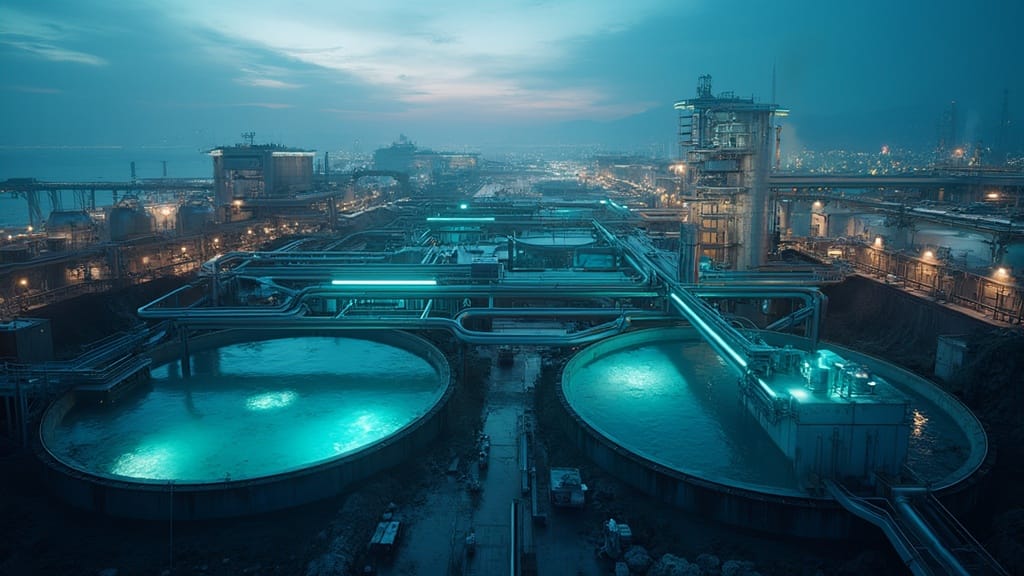
The highest compliment a water utility can receive is that nobody thinks about it. Fort Lauderdale is spending $666 million to make its drinking water boring again. (Fort Lauderdale’s $666 Million Water Plant Is Ready for Its First Glass)
Axios reported that the Prospect Lake Clean Water Center is moving through commissioning and is scheduled to begin operating in September. The facility will serve Fort Lauderdale and neighboring communities including Oakland Park, Tamarac, Wilton Manors, Davie and Lauderdale-by-the-Sea, replacing aging treatment infrastructure associated with longstanding discoloration complaints.
IDE Technologies and Ridgewood Infrastructure helped deliver the plant through a public-private partnership, while approximately 40 Fort Lauderdale employees will operate it. If that model works, Fort Lauderdale will have transferred part of the delivery risk without outsourcing the utility’s operating knowledge. (Fort Lauderdale’s $666 Million Water Plant Is Ready for Its First Glass)
Failure would be less dramatic than a dry tap but nearly as damaging: difficult startup, excessive chemical or electricity use, unresolved discoloration or higher-than-planned operating costs. Watch the acceptance tests and first months of water-quality data after the scheduled September startup.
⚡ What Most People Missed
- Aurora is turning water scarcity into a cooling specification: Aurora City Council rejected a six-month data-center moratorium but directed city staff to develop permanent rules that include restrictions on water-consuming evaporative cooling. The decisive detail will be whether Aurora allows limited evaporative use during extreme heat or requires dry heat rejection year-round, which can increase peak electricity demand.
- Australia’s “waterless” data center moved the burden onto electricity: Reuters reported in July that developers of an OpenAI-linked data center dropped a recycled-water cooling plan in favor of a no-water cooling system described as more energy-intensive. “Waterless” is not the end of an environmental calculation; it is the beginning of a different one.
- Maui is discussing desalination as regular supply infrastructure: Maui County is evaluating desalination options for West and South Maui, including a brackish-water reverse-osmosis concept near Kīhei. Before procurement can begin, Maui still needs a credible answer on electricity, concentrate disposal, siting and customer cost.
- Refrigerant compliance is becoming a spare-parts problem: AFS Cooling says commercial operators are encountering limited availability of lower-global-warming-potential refrigerants in service cylinders, alongside longer lead times for drives, compressors and heat exchangers. That is vendor-sourced field intelligence, not market-wide measurement—but it suggests the refrigerant transition may be constrained by service logistics as much as equipment design.
- Mortlake’s battery is caught between commissioning and commercial operation: Trade reporting described Origin Energy’s 300-megawatt, 650-megawatt-hour Mortlake battery as commercially operating on August 14, while Origin Energy’s project page still described it as commissioning. Until Origin Energy updates the project status, commissioning is the safer description.
📅 What to Watch
- If the six regional grid operators meet FERC’s still-active August 17 deadline with binding readiness and cost-recovery rules, large-load interconnection will begin to resemble project finance rather than queue administration.
- If CAISO offers faster connections in exchange for mandatory curtailment, flexible electricity will become a distinct product that data centers can buy instead of an emergency concession.
- If PJM permits batteries and fuel cells to satisfy its proposed backup-power obligation, cleaner onsite systems will gain value from grid access rather than carbon claims alone.
- If Illinois receives strong bids across multiple storage durations, state contracts may begin shaping battery design instead of merely subsidizing a standard four-hour product.
- If Amazon publishes a closed-loop cooling design and annual water budget for Pecos County, data-center permitting will have moved from counting megawatts to auditing the whole power-and-thermal system.
- If Fort Lauderdale’s plant meets water-quality targets without exceeding operating-cost assumptions, public-private water delivery will gain a politically useful reference project.
The Closer
California is checking data centers’ homework, PJM is eyeing the diesel generator behind the loading dock, and Fort Lauderdale is preparing to pour a $666 million glass of water.
Somewhere in Aurora, a cooling tower has just learned that city council knows what it does for a living.
Keep the pumps primed.
Forward this to the person who still thinks electricity, cooling and water are separate industries. (Fort Lauderdale’s $666 Million Water Plant Is Ready for Its First Glass)