The Lyceum: Power & Infrastructure Weekly — Jun 06, 2026
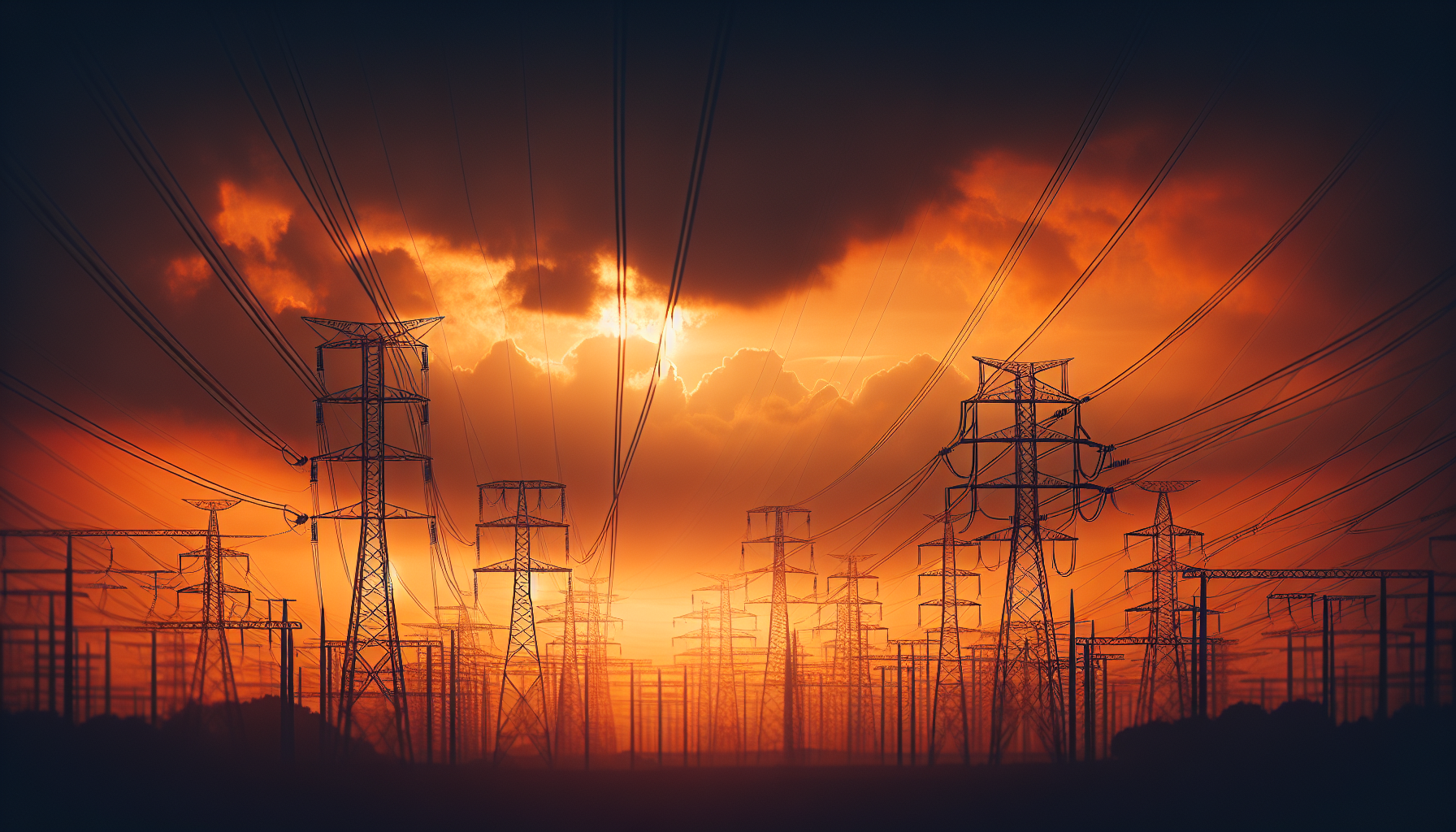
Photo: lyceumnews.com
Week of June 6, 2026
The Big Picture
This was a loud week. Texas confirmed that city-sized data centers keep tripping off the grid the moment voltage wobbles, the White House invoked a 1950 war-mobilization law to pump $700 million into coal, and a private microreactor in Idaho achieved the first advanced-reactor criticality on U.S. soil in over half a century — at zero power. The through-line underneath all of it is the same: data centers have become the organizing force in infrastructure planning, dragging power, cooling, water, and policy into a single conversation that nobody is yet equipped to manage.
What Just Shipped
- Mark-0 microreactor (Antares Nuclear): First privately developed advanced reactor to achieve criticality under the DOE Reactor Pilot Program — a sodium heat-pipe-cooled design running on HALEU TRISO fuel.
- Vera Rubin NVL72 rack (CoreWeave / Nvidia / Dell): Claimed first live deployment of Nvidia's 72-GPU rack-scale system — and it's 100% liquid-cooled out of the gate.
- 100 MW PJM virtual power plant (Google / Voltus): Aggregating EVs, smart thermostats, and batteries into a dispatchable resource in the grid most distorted by data-center demand.
- Bidirectional V2X charger demo (Massachusetts): Hardware in the field across residential, municipal, and school-bus use cases, with school buses projected to earn ~$12,000 per summer in the state's VPP.
- $58M WIFIA loan close (EPA / Amador Water Agency): One of the year's quieter but cleaner signals that water capital projects are converting from plans to steel.
This Week's Stories
Texas Data Centers Are Failing the Grid's Most Basic Safety Test
Want to know what happens when a city-sized power customer suddenly vanishes from the grid? ERCOT just showed you — and the answer is not reassuring.
Four groups of large electricity users, including data centers and crypto sites, abruptly disconnected during a test of how they'd handle routine voltage disturbances, per an ERCOT report dated May 21. The test measures "voltage ride-through" — whether a facility can stay running through a brief grid hiccup instead of instantly cutting power to protect its servers. ERCOT found that four groups could each trigger more than 5,000 MW of demand tripping under certain fault conditions — drops equivalent to the electricity consumption of a city the size of Boston, intraday.
This is a worsening pattern, not a one-off. Since 2023, ERCOT has logged at least 26 events where data centers or crypto facilities abruptly disconnected because they couldn't ride through a disturbance. The operator reviewed roughly 20 GW of large customers seeking connection, including eight projects totaling ~3.9 GW aiming to energize before July 1.
The core problem: data centers are engineered to protect their servers, not the grid. When their protection trips, the sudden load loss can cascade into wider outages. If ERCOT tightens ride-through standards before summer peak, developers face higher costs and slower hookups; if it doesn't, the grid absorbs more sudden load losses just as demand climbs. Watch whether the ERCOT board adopts mandatory ride-through standards before July 1 — that's the signal that tells you which way this goes.
Trump Invokes Cold War Emergency Powers to Rescue Coal — $700 Million Worth
The Defense Production Act was written in 1950 to mobilize American industry against Soviet threats. This week it got a new job: keeping coal plants alive in an era of cheap gas and cheaper solar.
At a Thursday White House briefing, President Trump steered nearly $700 million to coal power and exports — aiming to refurbish 13 plants, build two new ones, and stand up a West Coast export terminal. The breakdown, per CBS News: $425 million for 13 existing plants across 10 states, $75 million for a coal export terminal in Oakland, and up to $350 million in DOE grants for two new plants in Alaska and West Virginia, a Puerto Rico modernization, and a restart of a Cumberland, Maryland plant that closed in 2024.
The framing is explicitly AI-driven. The administration argues reliable generation is critical as the U.S. meets surging data-center demand while competing with rivals. The context cuts the other way: coal supplied more than half of U.S. electricity in 2000; today it's under one-fifth.
What changes if it succeeds: aging thermal capacity stays online to serve hyperscaler load.
What failure looks like: the Oakland terminal dies in California's permitting gauntlet — a fight already over a decade old — and the targeted plants never execute upgrade contracts. The claimed $50 billion in ratepayer savings is an unverified administration projection; the NRDC argues these investments will raise rates, not lower them. Watch whether any of the 13 plants sign actual contracts.
America's First New Advanced Reactor in 50 Years Just Went Critical — Sort Of
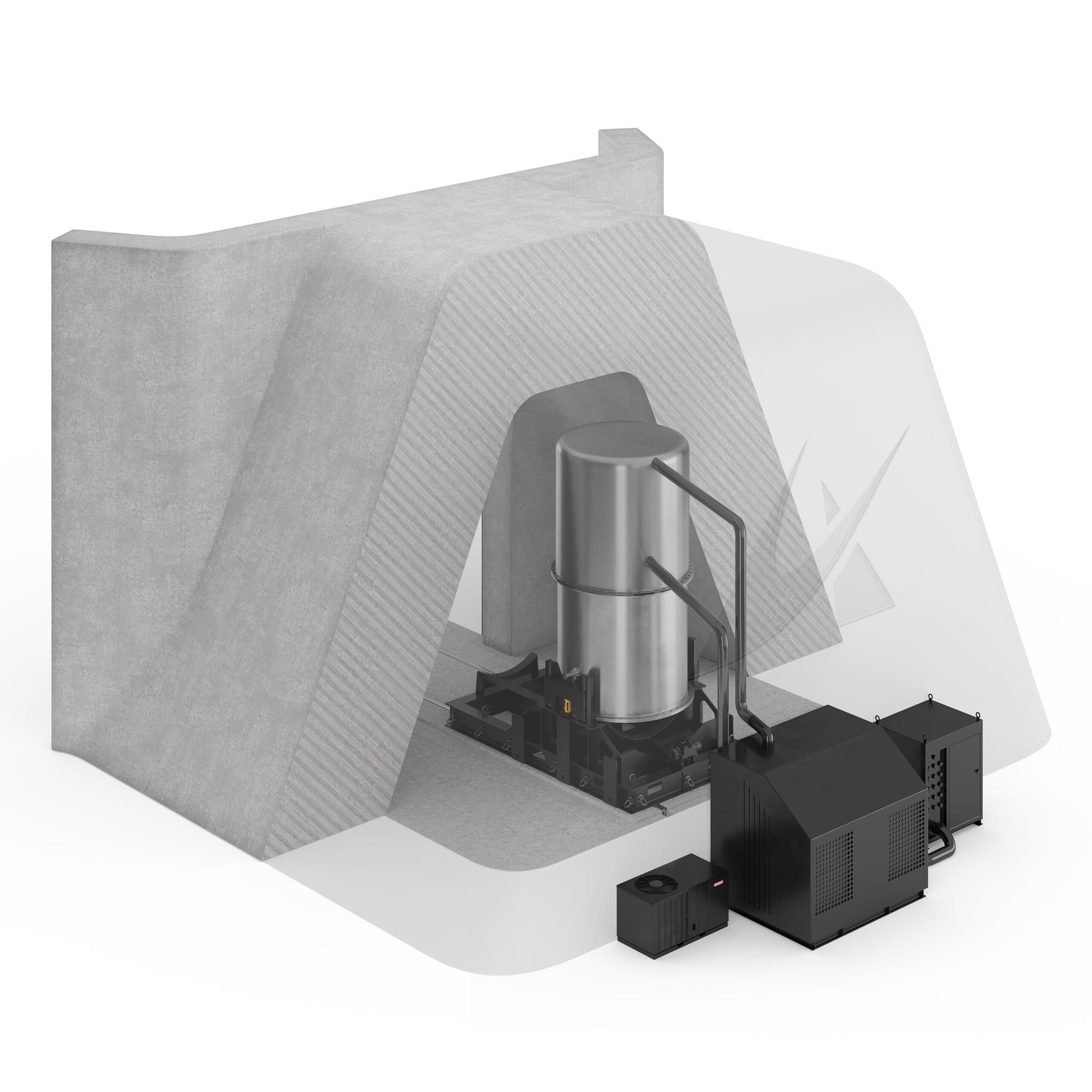
The nuclear industry has promised a renaissance for decades. This week a startup called Antares delivered something real — with an important asterisk.
Antares' Mark-0 microreactor achieved initial criticality at Idaho National Laboratory under DOE authorization, making it the first private company to bring an advanced reactor critical under the DOE Reactor Pilot Program. That program, established under Executive Order 14301 in May 2025, targets at least three advanced-reactor criticalities by July 4, 2026. Antares beat the deadline by a month.
Now the asterisk: this is zero-power criticality — a chain reaction sustained at essentially no measurable output. No electricity. No full-power operation. It's proof the physics works, the validation every subsequent step depends on. The Mark-0 is a sodium heat-pipe-cooled design running on TRISO fuel — ceramic-coated uranium pellets originally developed for military use. Antares targets electricity in 2027 and military-installation deployments in 2028, with BWXT continuing as its TRISO supplier.
This is the first novel reactor design to go critical at INL in more than 50 years — genuine progress, even if the path to a grid connection is still measured in years and billions. Watch whether the two remaining pilot participants hit criticality before July 4: if only Antares makes it, the deadline becomes a political embarrassment rather than a program milestone.
North Carolina Wants Data Centers to Pay for Their Own Grid Upgrades
The "who pays" fight over data-center grid costs is spreading state by state. North Carolina just joined it with a bill that could reshape Southeast site selection.
Legislation moving through the North Carolina General Assembly would require data centers and other large electricity users to directly fund the transmission and distribution upgrades their connections require, rather than spreading those costs across all ratepayers. The cost-causer principle — you built it, you pay for it — already exists in Oregon (covered May 30) and is under active consideration in California. North Carolina matters because it's one of the fastest-growing data-center markets in the Southeast, with Duke Energy facing a swelling hyperscaler pipeline.
What changes: within 18 months, the states hosting the most data-center growth may all have some flavor of cost-causer tariff in place — shifting site economics toward markets with existing transmission headroom over those needing new lines. The bill is proposed legislation, not law. The observable signal: whether Virginia's State Corporation Commission — home to the world's largest data-center cluster via Dominion — moves to adopt a similar framework before North Carolina finishes. Whoever finalizes first writes the template.
China's Data Center Power Demand Is About to Double
The U.S. grid debate gets the coverage. The largest single infrastructure buildout running right now is in China — with direct implications for global equipment supply chains and cooling markets.
Per Rystad Energy, China's data-center capacity is set to top 60 GW by 2030, driving a near-doubling of power demand from the sector alone. For scale: 60 GW is roughly the entire installed generating capacity of the United Kingdom. The buildout is state-directed, with Alibaba, Tencent, Huawei, and ByteDance all expanding simultaneously and Beijing treating data-center capacity as strategic infrastructure on par with ports and highways.
At that scale, China becomes the single largest market on the planet for liquid cooling — direct-to-chip cold plates, immersion tanks, and the precision chillers feeding them. Chinese OEMs including Midea, Gree, and Envicool are already scaling production that will eventually compete with Vertiv and Schneider Electric in third-country markets. The signal to watch: whether China accelerates domestic battery procurement to firm the renewables feeding these campuses — a move that would tighten global LFP cell supply further.
Constellation Eyes Nuclear Uprates to Power Surging Data Center Demand
New reactors take 15 years and $20 billion. Constellation Energy, the largest U.S. nuclear operator, is betting the faster path to serving AI load runs through the plants it already owns.
The company is exploring significant fleet upgrades — advanced fuel designs and operational efficiency changes — to squeeze out additional megawatts and sell them directly into long-term data-center contracts. A confirmed step underscores the strategy: on June 1, FERC approved a waiver letting Constellation transfer 760 MW of Capacity Interconnection Rights from the retiring Eddystone plant to the Christopher M. Crane Clean Energy Center (formerly Three Mile Island Unit 1), supporting the reactor's targeted second-half-2027 restart and its 20-year PPA with Microsoft.
Existing nuclear becomes the near-term bridge for buyers who want carbon-free, always-on power now, not in a decade. The signal to watch is contract volume — how many uprate-derived megawatts actually land under signed PPAs versus staying as press-release ambition.
Europe Logged Another Week of Record Solar — And That's Now a Grid Design Problem
Cheap solar is wonderful right up until noon power is worth less than lunch. Europe got another reminder this week that adding generation without matching flexibility turns success into a systems-engineering headache.
Pv magazine, citing AleaSoft, reported that France, Germany, Portugal, and Spain all set new daily solar records the prior week — Germany at 503 GWh on May 28, France at 179 GWh the same day, Spain at 265 GWh on May 29, Portugal at 32 GWh. Power prices still rose in several markets because wind output fell and demand climbed. The system is producing enormous solar, just not always at the hours or places that solve the whole balancing problem.
The next phase of renewables is a storage, transmission, and thermal-flexibility story — more batteries, more interconnection, more controllable loads, and more heat pumps soaking up midday surplus. Watch Europe's negative-price hours and storage buildout; those are now better indicators than nameplate solar totals.
⚡ What Most People Missed
- FERC's RM26-4 deadline is this month — and nobody knows if it's a rule or a notice: FERC's large-load interconnection order is expected by end of June. The critical unknown, nearly absent from coverage: whether it lands as a Notice of Proposed Rulemaking (which starts another comment clock and pushes binding rules into 2027) or a final rule with teeth. That single variable decides whether the 2,060+ GW queue gets real rules before the 2028/2029 capacity auction. Watch the docket around June 30.
- EPA's PFAS split-rule is in public comment, and July 7 is the tell: EPA proposed upholding the PFOA/PFOS limits while offering a two-year extension to 2031 — and separately moving to rescind limits on four other PFAS including GenX. Written comments run through July 20, with a virtual hearing July 7. If New York or California publicly disclaim the federal extension at that hearing, the rulemaking becomes regionally irrelevant and utility capex schedules stay on the 2029 clock.
- ERCOT is building a real curtailed-load tool for giant co-located loads: Buried in ERCOT's summer materials: the operator is nearing filing a Large Load Curtailment framework, with phase one for net-metering and future use cases including Senate Bill 6 co-located loads. Once a data center is expected to curtail on command, its cooling architecture, backup strategy, and water profile all change — you're no longer designing for flat, always-on draw.
- The TRISO supply chain is the binding constraint nobody's discussing: BWXT is currently the only U.S. commercial TRISO fuel manufacturer. If the DOE program gets three reactors critical by July 4, fuel — not reactor design — becomes the bottleneck on the entire advanced-reactor timeline. No second production line is under construction.
- Utilities are being pushed to fold water into data-center planning: Evaporative cooling can consume millions of gallons annually, and as data centers push into drought-stressed regions, a holistic power-cooling-water view is becoming a hard site-selection filter — driving scrutiny of direct-to-chip and closed-loop systems.
📅 What to Watch
- If ERCOT's board adopts mandatory voltage ride-through standards before July 1, several of the 3.9 GW of summer-startup projects face immediate compliance costs — and the Texas pipeline slows before year-end.
- If FERC's June order arrives as a NOPR rather than a final rule, the interconnection framework slips to 2027 and the queue keeps growing under current rules through another capacity auction.
- If a fourth state — Virginia, Texas, or Georgia — moves to cost-causer before RM26-4 drops, the federal rule ends up chasing state law rather than setting the template.
- If only Antares hits criticality by July 4, the deadline reads as political theater; if two more make it, the pilot program earns real credibility and the TRISO bottleneck becomes the next fight.
- If New York or California disclaim the PFAS extension at the July 7 hearing, water-utility capex stays locked on the 2029 clock regardless of what EPA finalizes.
The Closer
A microreactor that went critical without making a single watt, a 1950 war law repurposed to revive a fuel the market spent a decade burying, and four data centers vanishing from the Texas grid like a city that forgot to pay its electric bill. The funniest part is buried at the bottom: we're racing three reactors to a July 4 finish line while exactly one company in America can make the fuel they all run on — a renaissance with a single-supplier choke point.
Stay grounded out there.
Forward this to the engineer in your life who already knew the cooling loop would be the problem.