The Lyceum: Power & Infrastructure Weekly — Mar 14, 2026
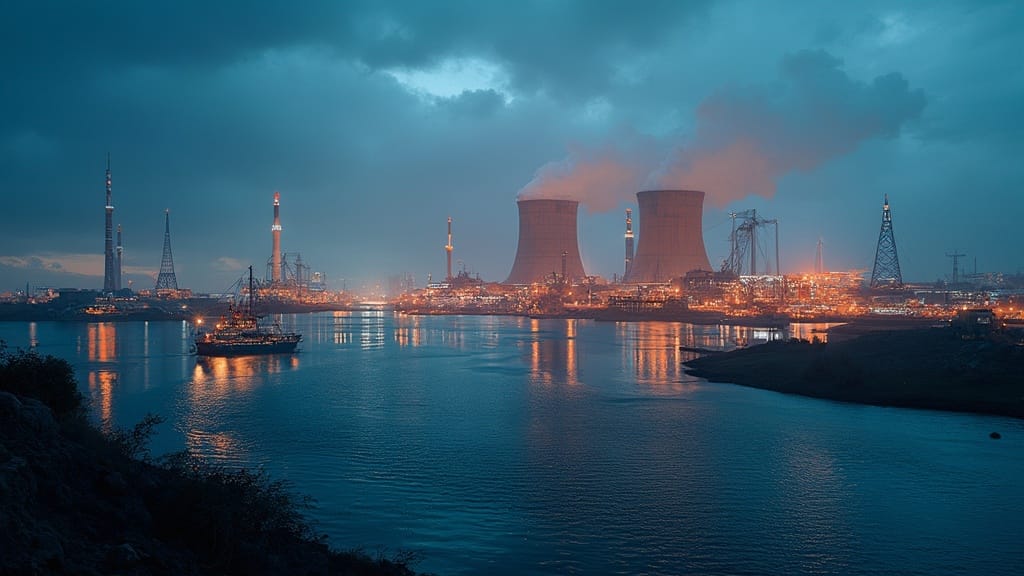
Photo: lyceumnews.com
Week of March 14, 2026
The Big Picture
The hardest infrastructure problems of the next decade aren't about scarcity — they're about density, chemistry, and contamination arriving simultaneously. This week, sodium-ion batteries debuted on the MISO grid without needing a cooling system, Trane Technologies moved to own the entire data center thermal stack from chiller to chip, and PFAS lawsuits and state grants kept exposing a water contamination bill that nobody budgeted for. Meanwhile, the political fight over who pays for AI's physical footprint — the wires, the cooling loops, the water pipes — moved from back rooms to the White House podium and FERC dockets at the same time, pointing in opposite directions.
This Week's Stories
Sodium-Ion Batteries Debut on the MISO Grid — No Cooling System Required
Most grid-scale battery announcements are bigger versions of something we've already seen. This one is structurally different.
Peak Energy and RWE Americas are piloting a passively cooled sodium-ion battery system in eastern Wisconsin — the first sodium-ion deployment on the MISO network, which manages power across 15 states and Manitoba. The chemistry matters: unlike lithium-ion systems that need active thermal management (fans, chillers, HVAC enclosures), sodium-ion cells operate across a wide temperature range without losing performance. That simpler design eliminates cooling hardware entirely.
Peak Energy claims its system cuts lifetime stored-energy costs by $70/kWh — roughly half the total system cost of a typical battery as of 2026. The company says the savings come from removing energy-hungry cooling systems, eliminating routine maintenance, and reducing the need to overbuild capacity to compensate for degradation. These are vendor-sourced numbers; independent validation from the RWE pilot is the reason to watch this project, not the press release.
If the pilot holds up through a Wisconsin summer and winter, this chemistry becomes immediately interesting for utilities across the Midwest and Southeast, where hot ambient temperatures eat lithium-ion performance and where active cooling is itself a significant operational cost. RWE operates about 13 GW of energy assets in the U.S. — they're not running this as a science experiment.
Trane Buys LiquidStack, and Data Center Cooling Gets Its First True Vertical Stack
When a traditional HVAC giant acquires one of the world's leading liquid cooling specialists, it's a signal about where the thermal management industry thinks AI compute density is heading — and it's heading past the point where air alone can handle the heat.
Trane Technologies announced a definitive agreement to acquire LiquidStack, a Carrollton, Texas-based leader in direct-to-chip and immersion cooling for data centers. Building on a minority investment Trane made in 2023, the deal creates an end-to-end thermal platform: chillers, heat rejection, controls, liquid distribution, and on-chip cold plates — all from one vendor. A hyperscaler deploying NVIDIA GB200 clusters at 120 kW per rack doesn't want to buy each of those components from a different supplier and pray they work together. They want one partner who can spec the whole thermal envelope.
This follows Trane's recently announced acquisition of Stellar Energy (expected to close in Q1 2026), meaning the company is assembling a full data center thermal portfolio in rapid succession. Financial terms were not disclosed. The strategic signal is clear: direct-to-chip liquid cooling is graduating from specialty product to standard infrastructure line item. Watch for Carrier, Johnson Controls, and Vertiv to respond with similar portfolio moves — or risk ceding the integrated-thermal market to Trane.
Dell'Oro Group's January 2026 forecast projects the data center liquid cooling market will approach $7 billion by 2029, and colocation RFPs are increasingly requiring liquid-ready rack infrastructure as a baseline spec, not a premium tier.
The White House Pledged Big Tech Would Pay Its Own Power Bill. FERC Had Other Ideas.
Two things happened this week that belong in the same paragraph, even though they point in opposite directions.
On March 4, President Trump announced a voluntary "Ratepayer Protection Pledge" in which Amazon, Google, Meta, Microsoft, OpenAI, Oracle, and xAI agreed to "build, bring, or buy" the new generation and pay for all transmission upgrades needed to serve their data centers — rather than socializing those costs across households. The pledge is nonbinding and PR-forward, but it sets a political expectation.
Days later, Public Citizen flagged a set of FERC orders approving transmission rate agreements between ComEd and several data center operators that allow some upgrade costs to be recovered through general transmission charges — meaning households are still exposed to higher rates associated with AI-related load growth, despite the administration's rhetoric. The New York Times documented the downstream consumer impact the same week.
Senator Ed Markey and colleagues piled on with a letter to NARUC — the association representing state public utility commissions — calling the pledge "vague and insufficient" and urging commissions to require large-load customers to shoulder the full marginal cost of generation and transmission. For utilities and IPPs, this means you'll be negotiating not just with hyperscalers but with increasingly assertive PUCs that now have political cover to demand detailed cost allocation studies and community benefit agreements.
Dayton Sues Wright-Patterson for $300 Million — the PFAS Cost-Shifting War Goes Federal
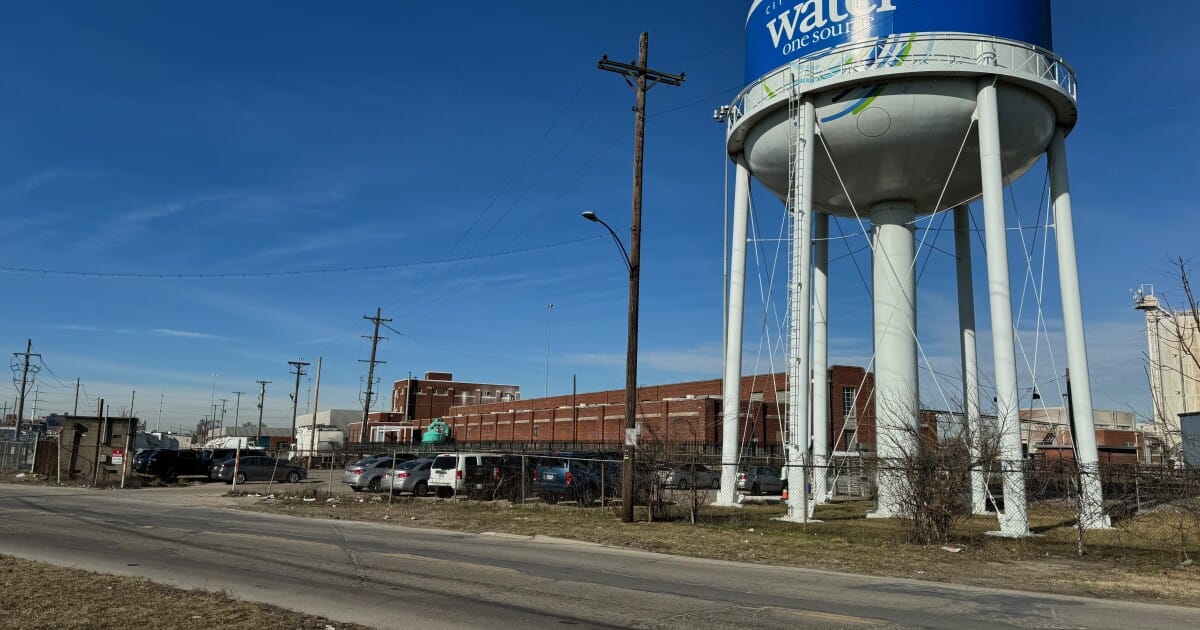
The federal PFAS drinking water standards may still be in regulatory limbo, but the bills are arriving at local utilities right now.
Dayton, Ohio filed a lawsuit claiming Wright-Patterson Air Force Base is liable for the hundreds of millions it will cost to remove PFAS — per- and polyfluoroalkyl substances, the synthetic "forever chemicals" found in firefighting foam the military used for decades — from its drinking water. The city's Ottawa treatment plant has PFAS levels "three to four times above" EPA's new standards (effective June 2029), with monitoring wells showing concentrations migrating from the base into Dayton's wellfield at "several hundred times" the limit.
This case is a template. Hundreds of municipalities near military installations face the same math: contamination from decades of base operations, a compliance deadline they didn't cause, and a capital program they can't finance alone. Meanwhile, North Carolina dropped $17 million to extend waterlines connecting 300+ homes with contaminated wells to clean supply in the Cape Fear basin — where more than 75% of sampled wells exceeded health-based PFAS standards (as of March 2026 sampling). Governor Josh Stein's office framed it as part of $472 million in statewide water infrastructure grants, and it reflects a broader pattern: states are accelerating their own timelines regardless of whether the federal framework firms up.
⚡ Amazon's $12 Billion Data Center Deal Rewrites the "Good Neighbor" Playbook
The largest infrastructure deals are starting to come with strings that would have been unthinkable five years ago — and those strings are about water and power, not just dollars.
Amazon's $12 billion data center agreement in Louisiana reportedly includes coordination with local utility SWEPCO to fully fund necessary grid upgrades, a commitment to use only "verified surplus water" for cooling, and up to $400 million in local water and sewer infrastructure investment. That combination of binding water commitments and direct infrastructure funding is already shaping what communities will demand of future hyperscaler deals.
The shift matters because it's happening in both directions. In Apex, North Carolina, a proposed hyperscale data center was scrapped this week after residents and local officials pushed back on water consumption and grid strain — a concrete example of how local resource constraints can act as a de facto siting veto. A Columbia/MIT preprint proposes a "Water Capacity Neutral" model — essentially importing transmission-planning logic into water — where large new loads finance equivalent new water capacity so incumbent customers aren't subsidized. If that framing moves from academia into permitting conditions, it will change how data centers get sited and financed. The era of "data center as economic development win" is becoming "data center as infrastructure obligation."
New Products & Launches
GS Yuasa / Sustech Maibara BESS — GS Yuasa and Sustech announced a grid-scale lithium-ion battery project in Maibara City, Shiga Prefecture, Japan, targeting commercial operation in September 2026. The system will test revenue-stacking across both high-frequency services (primary frequency control) and multi-hour energy shifting — the exact business model U.S. ISOs are trying to validate as AI-driven peaks reshape load profiles.
A2L Refrigerant-Compatible Equipment — Chillers and packaged systems compatible with A2L-class refrigerants — lower global warming potential alternatives to HFCs that are mildly flammable — are being introduced, requiring updated safety procedures, commissioning protocols, and installer training. The global HFC phase-down is making this a near-term equipment decision, not a future one.
⚡ What Most People Missed
Hanover, Massachusetts is making your drinking water on Windows Vista. The town's water superintendent disclosed that its SCADA system — the software brain that operates water treatment plants — runs on a computer from 2000. "If that computer freezes tonight, we can't make water." Hanover is not an outlier. Thousands of small and mid-size utilities run critical infrastructure on end-of-life control systems with known cybersecurity vulnerabilities.
Virginia just told its energy department to go monetize data center waste heat. A budget amendment funds a staff position to "accelerate efforts" using data center waste heat as infrastructure, not trash. It's only $120K, but it's the first time a U.S. state energy office has been explicitly tasked with treating megawatt-scale compute heat as a district energy resource. Every big campus in Northern Virginia just became a potential boiler plant for schools and hospitals.
The PFAS settlement clock is ticking and most utilities don't know it. Up to $13.6 billion is available from PFAS settlements, but Phase 2 water systems must file claims against the DuPont fund by June 30, 2026 and the 3M fund by July 31, 2026. Utilities that miss these windows forfeit settlement funds permanently. If you work with small or mid-size water systems, this is the most time-sensitive action item in the sector.
EV battery makers are quietly becoming grid storage suppliers. LG Energy Solution in Michigan and AESC in Tennessee — which spent over a decade making EV batteries — retooled existing lines for stationary storage after federal policy changes reduced EV incentives while leaving investment tax credits for stationary storage intact. The U.S. is suddenly approaching an oversupply of ESS battery cells — a supply chain shift that changes domestic content and FEOC compliance math for utility-scale projects.
72% of data center water use is hiding at the power plant. Bluefield Research estimates that most water consumption tied to data centers by 2030 will occur upstream at thermoelectric generators, not at the facility fence line (as of March 2026 estimate). Your WUE metric looks clean; your actual water footprint doesn't.
📅 What to Watch
- If FERC publishes a proposed rule on large-load interconnection by the DOE's April 30 deadline, it would push the commission to treat data center load growth as a systemic grid issue — likely forcing standardized interconnection study protocols for large loads and new cost-allocation mechanisms across ISOs, which could accelerate nationwide transmission planning changes and raise near-term planning costs for utilities.
- If spot LNG prices remain elevated through April following the Strait of Hormuz disruption, expect European utilities to accelerate procurement of offshore wind and long-duration storage and to expand hedging and capacity-payment arrangements to insure against fuel shocks — shifting near-term PPA and storage tender timelines.
- If any hyperscaler signs a binding "water capacity neutral" agreement with a host utility — requiring the developer to fund equivalent new water infrastructure — it confirms the Columbia/MIT framework is crossing from academia into contracts, and every future siting negotiation will require concrete financed water-delivery commitments rather than aspirational pledges.
- If RWE's sodium-ion pilot publishes first-cycle performance data showing stable output at Wisconsin ambient temperature extremes, the chemistry moves from interesting to investable for Midwest utilities that currently pay significant O&M just to keep lithium-ion systems cool; developers will start comparing levelized-cost-of-storage models that assume no active thermal management.
- If Virginia's Department of Environmental Quality finalizes BACT guidance requiring selective catalytic reduction on data center backup generators after July 1, 2026, it creates a regulatory template that improves the business case for replacing some diesel runtime hours with battery storage, and it will force campus designs to incorporate cleaner backup or pay higher permitting and operational costs.
The Closer
A battery in Wisconsin that doesn't need air conditioning, a $300 million lawsuit over foam the Air Force sprayed in the 1970s, and a Trane executive somewhere explaining to the board why they just bought a company that makes cold plates for GPUs. The physical world keeps sending invoices to the digital one, and this week the return address was a water treatment plant in Hanover running Windows Vista. Stay safe out there — and forward this to the engineer on your team who thinks "infrastructure" means Kubernetes.
— The Lyceum