The Lyceum: Power & Infrastructure Weekly — May 09, 2026
Photo: lyceumnews.com
Week of May 9, 2026
The Big Picture
Three things happened this week that, taken together, sketch the operating manual for the next decade of grid build-out: Maine's first-in-the-nation data center moratorium died on the vine, FERC's June clock got close enough that the law firms started positioning for litigation, and Google quietly proved that a hyperscaler can shed a gigawatt of load on demand. None of it is theoretical anymore. The grid, the cooling stack, and the water table are now one siting decision — and the regulators, utilities, and developers are all figuring that out at the same time.
What Just Shipped
- Crawfish Creek BESS (TVA / Plus Power): 200 MW / 800 MWh standalone four-hour battery system in Alabama under a 20-year contract — one of the first large-scale batteries in TVA territory.
- Extended Day-Ahead Market (EDAM) (CAISO): Western day-ahead market began operating May 1; first-week prices and transfer volumes are landing inside expected ranges.
- Wichita & Mustang Creek Solar PPAs (TotalEnergies / Google): Two 15-year PPAs totaling 1 GW (805 MW + 195 MW) for Google's Texas data centers; construction starts Q2 2026.
- 1 GW Demand Response Portfolio (Google): Aggregate demand response capacity now integrated into long-term contracts with Indiana Michigan Power, TVA, Entergy Arkansas, Minnesota Power, and DTE Energy.
This Week's Stories
Maine's Data Center Moratorium Is Dead — and the Project That Killed It Is Moving Forward
The most closely watched state-level data center fight in the country is over, and the way it ended is more instructive than the result.
Governor Janet Mills vetoed LD 307, which would have prohibited data centers larger than 20 megawatts until November 2027 — the first statewide ban of its kind. On April 29, 2026, the Maine House of Representatives on the House floor voted 72–65 on an override attempt, falling short of the two-thirds threshold required to override a gubernatorial veto.
The veto stuck amid a single project: a planned $550 million data center at the shuttered Androscoggin Mill in Jay, sitting on an 82-megawatt allotment from Central Maine Power, in a town that has been losing paper-mill jobs for a decade, according to ITBrew. Mills cited the project explicitly. Hours after the override failed on April 29, 2026, she signed an executive order creating a Maine Data Center Advisory Council and signed LD 713, which strips data centers from the state's business development tax incentive programs.
What changes if this template holds: the moratorium fight becomes the trailer, not the movie. The durable policy outcome is the tax-incentive carve-out plus a permanent advisory body — both of which survive any future veto. More than 300 data center bills were filed in state legislatures in the first six weeks of 2026, per ITBrew, and Maine just demonstrated that the path of least resistance is permanent regulatory architecture rather than temporary bans. What failure looks like: the Advisory Council becomes a venue for industry capture and produces standards weaker than what the moratorium would have imposed. Watch the council's composition.
FERC's June Clock Is Now Close Enough That Law Firms Are Positioning for Litigation
We've covered the June rulemaking deadline since April. The shift this week is in tone: the law firm client alerts have moved from "watch this docket" to active positioning documents — a reliable leading indicator that insiders can see the rule's shape.
FERC committed in mid-April to act on Docket No. RM26-4-000 by the end of June 2026, after staff reviewed more than 3,500 pages of public comments. The Commission says it intends to act in a way that is "quick, efficient, and legally durable." Snell & Wilmer's read: federal direction is imminent, jurisdictional clarity will be the decisive design constraint, and projects ready on deposits, cost responsibility, and flexible or co-located configurations will move first.
The number nobody's pricing in: DOE asked FERC to standardize procedures for "large loads" greater than 20 MW interconnecting directly to transmission, per Holland & Knight. A 20 MW threshold pulls in a much larger universe than gigawatt-scale AI campuses — mid-size manufacturers, university campuses, large hospitals — and the compliance implications haven't been modeled in those sectors. If FERC adopts that threshold, the rule reshapes commercial-industrial interconnection broadly. If FERC writes a narrower rule pegged to multi-hundred-megawatt thresholds, the AI campuses get a federal pathway and everyone else stays on the state ladder. The observable signal: whether the final rule names a megawatt floor or punts to RTO discretion.
Google Crossed 1 GW of Demand Response — and Proved AI Compute Can Be a Grid Asset
The conventional wisdom about AI data centers is that they're insatiable, inflexible loads. Google just put a number on the counterargument.
Google has integrated 1 gigawatt of demand response capacity into long-term contracts with U.S. utilities — initial agreements with Indiana Michigan Power and TVA, followed by Entergy Arkansas, Minnesota Power, and DTE Energy. The mechanism: Google can shift batch machine-learning training workloads in time, reducing data center power draw during grid stress without affecting user-facing services. Renewable Energy World notes data centers can be built in 18–24 months but interconnection in some U.S. regions runs 3–7 years; demand response is the bridge.
What changes if this scales: 1 GW is roughly the output of a large natural gas peaker, except it requires no new generation, costs essentially nothing in incremental capex once the controls are wired, and gets cheaper per megawatt as Google builds more campuses. If FERC's June rule creates explicit capacity-market credit for flexible hyperscale load, every other hyperscaler has a financial reason to follow. What failure looks like: the flexibility is real but unpriced — utilities take it as a goodwill gesture and don't pay for it, so the model doesn't propagate. Watch whether the next big PPA from Microsoft, Meta, or Amazon names demand response as a contract term.
TotalEnergies Signs 1 GW of Solar PPAs to Power Google's Texas Campuses
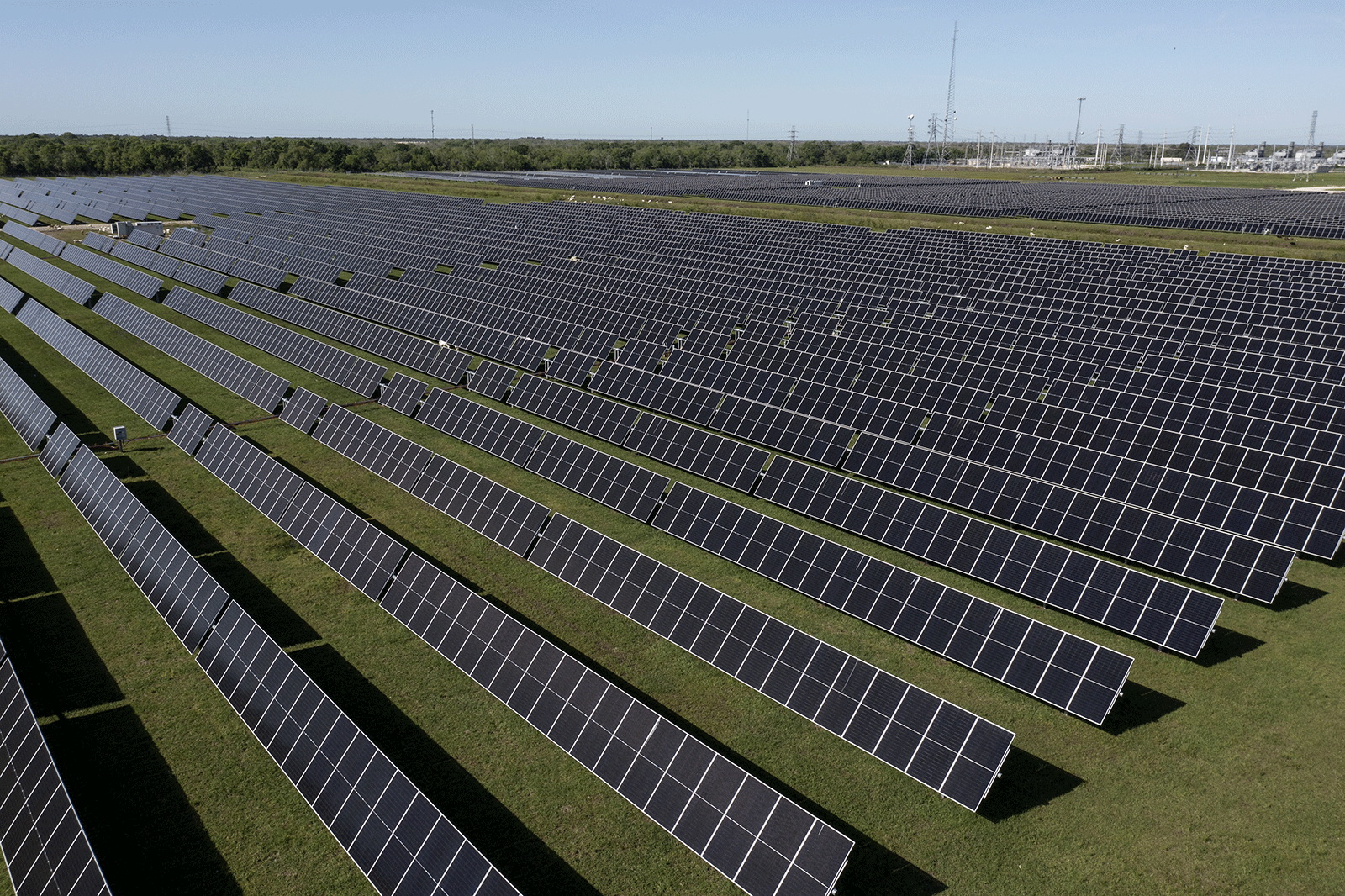
Pair this with the demand-response story and you have the full Google playbook in one week. TotalEnergies announced two 15-year PPAs — Wichita (805 MW) and Mustang Creek (195 MW) — to supply Google's Texas data centers, with construction starting Q2 2026.
The two moves together — flexibility on the load side, gigawatt-scale firm renewable supply on the generation side — are what the "hyperscalers should pay their own way" debate looks like when the developer actually does it. What changes if this becomes the standard contract structure: ERCOT's solar buildout gets explicit demand anchors at 15-year tenors, which is exactly what merchant solar developers have been begging for. What failure looks like: the contracts close but interconnection delays push commercial operation past Google's compute ramp, forcing fallback to gas. Watch the Wichita queue position.
TVA's Alabama Battery Deal Is the Unglamorous Storage Contract That Actually Changes a Grid
Not every consequential storage story comes with a new chemistry deck. TVA and Plus Power signed a 20-year contract for Crawfish Creek, a 200 MW / 800 MWh standalone battery in Alabama — one of the first large-scale batteries in TVA territory, supporting a board-approved plan to deploy up to 1.5 GW of storage by 2029.
TVA is not California or ERCOT. When a slower-moving region starts locking in grid-scale batteries on long contracts, four-hour lithium-ion has crossed from "interesting" to standard utility planning tool. What changes if Southeast utilities follow: the geography of storage stops being a coastal story and the four-hour discharge product becomes the boring default everywhere. What failure looks like: the project hits supply-chain delays on lithium cells (see Lyceum's critical-minerals desk: lithium carbonate broke CNY 175,000/tonne this month) and TVA's 1.5 GW timeline slips into 2030.
DOE Pushes Geothermal as Firm, Lower-Water Power for Dense Compute
The AI-infrastructure conversation keeps getting framed as "more gas" or "more renewables," which skirts the hard parts. The Department of Energy is now formally positioning geothermal — including enhanced geothermal systems — as a firm, low-carbon option for data center loads, with explicit messaging about smaller water and land footprints than thermal alternatives.
What changes if this lands: geothermal moves from a Nevada-and-Iceland niche into the standard short-list for hyperscale siting in the West, and the heat-recovery economics start to matter as much as the electrons. What failure looks like: drilling cost curves don't bend, EGS pilots underperform, and the policy push produces studies rather than megawatts. Watch Fervo Energy's next project announcement and whether any hyperscaler signs a geothermal PPA before year-end.
CAISO's Extended Day-Ahead Market Had a Quiet, Successful First Week
The most important launch this week wasn't a generator. It was market plumbing. CAISO's Extended Day-Ahead Market began operating May 1, and its first week is being described as "solid and stable," with prices and transfer volumes inside expected ranges, per CAISO's own commentary in Utility Dive. CAISO also noted that battery storage is now a major player on the Western grid — operational language, not aspiration.
What changes if more Western utilities join: batteries get better revenue certainty across a wider geographic arbitrage, transmission utilization improves, and the West stops looking like a patchwork of bilateral trades. What failure looks like: a hot summer reveals scarcity-pricing edge cases that cause one or two utilities to withdraw, and the market fragments. Watch which utilities file to join through the summer.
⚡ What Most People Missed
- NERC's Level 3 alert on data center load losses: NERC was in the final stages of issuing a Level 3 essential actions alert — its highest-urgency tier — targeting sudden disconnects of large computational loads in the Eastern and Texas interconnections since 2022, per Utility Dive. The mirror image of the interconnection-queue debate: a 500 MW campus that trips offline doesn't just lose power, it creates a 500 MW frequency excursion that every neighboring balancing authority absorbs instantly.
- The IIJA water funding cliff just appeared in a Federal Register filing: EPA's May 5 ICR renewal for the Clean Water and Drinking Water SRFs notes a 14,966-hour decrease in respondent burden driven by "the end of capitalization grants appropriated by the Infrastructure Investment and Jobs Act to both SRF programs after Fiscal Year 2026." Utilities sizing capital plans around IIJA-enhanced SRF availability are about to face a smaller pool.
- EPA's WIFIA pipeline is filling up with reuse, desal, and PFAS projects: EPA's pending-loans page, updated May 4, shows a populated funnel of projects in LOI/Invited/Applied stages — exactly where capex pressure pivots when SRF grants recede. The project mix tells you where the next decade of municipal water capex is concentrating before the trade press names it.
- ASHRAE's committee calendar shows liquid cooling becoming standards work: Project committee interim meetings on liquid-cooling test methods are now on the calendar, which means procurement comparability, insurance underwriting, and repeatable engineering specs are coming. That's the moment a technology stops being vendor-led and starts being permit-able.
- EirGrid hit a 1 GW grid-scale solar peak and named "large energy users" in the same breath: Ireland's grid operator framed a renewables milestone as inseparable from transmission delivery and large-load planning. That's the same directional pressure visible in PJM and ERCOT, with one tidy difference: EirGrid is saying the quiet part out loud.
📅 What to Watch
- If FERC's June rule names a 20 MW threshold for "large loads," the rule reshapes commercial-industrial interconnection well beyond AI campuses — universities, hospitals, mid-size manufacturers — and pulls a much larger compliance universe under federal procedures.
- If Maine's Data Center Advisory Council includes utility, environmental, and community voices in roughly equal balance, expect enforceable siting standards within 12 months; if it skews toward economic development, expect performative guidance and another moratorium attempt next session.
- If a second hyperscaler signs a demand-response contract north of 500 MW before September, Google's flexibility model becomes the default load profile for new hyperscale interconnection requests — and FERC's capacity-market design has to grapple with how to credit it.
- If NERC's Level 3 alert produces actual modeling-data requirements at the FERC-approved tariff level, data center developers face a new disclosure regime on internal load behavior, which is the kind of operational transparency hyperscalers have spent a decade avoiding.
- If Form Energy's Weirton facility hits production milestones for the 300 MW / 30 GWh Minnesota deployment, iron-air becomes a genuine alternative for multi-day storage and lithium's monopoly on grid-scale batteries finally has a credible challenger; if it slips, long-duration storage stays a deck slide for another two years.
- If a state passes mandatory water-use disclosure for data centers this session, site selection in drought-stressed regions reprices overnight — evaporative cooling stops being the cheap default and closed-loop systems gain a permitting advantage they currently don't have.
From the Lyceum
Brussels just moved the EU AI Act compliance goalposts — only on the hardest parts, only this week. Read → Brussels just moved the AI Act goalposts
The Closer
A vetoed moratorium dies in Augusta while a paper mill in Jay reboots as a server farm; Google teaches a gigawatt to flinch on cue; and somewhere in Alabama, TVA finally signs the boring battery contract that means storage has graduated. The interesting thing about the Maine fight isn't that the moratorium failed — it's that the governor stripped data centers of tax incentives on her way to saving one, which is the policy equivalent of letting your cousin crash on the couch after changing the locks.
Stay grounded. Forward this to the engineer at your utility who keeps muttering about frequency response — they'll know what to do with it.