The Lyceum: Robotics & Automation Weekly — Mar 29, 2026
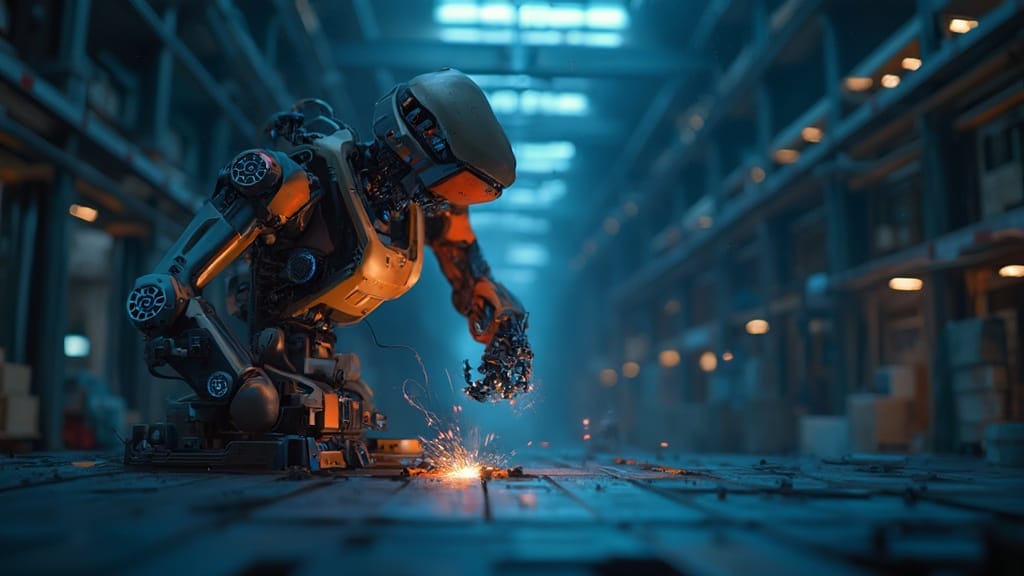
Photo: lyceumnews.com
Week of March 29, 2026
The Big Picture
The capex cycle is back, and this week it showed up with receipts. Fanuc is pouring $90 million into Michigan production space, SK Hynix just wrote ASML an $8 billion check for EUV tools, and GE Vernova filed permits for a $1.2 billion turbine plant wired for robotic welding. Meanwhile, OSHA cited a Rivian warehouse in Normal, Illinois, over a robot-pinning incident — the third enforcement action in EV logistics this year — amid a deployment wave and a tightening safety regime. The money is real, the robots are shipping, and the safety regime is trying to keep up.
What Just Shipped
- ABB RobotStudio + NVIDIA Omniverse Integration (ABB / NVIDIA): Industrial-grade sim-to-real training via Omniverse libraries inside RobotStudio, claiming up to 99% simulation-to-reality correlation.
- Universal Robots + Scale AI Imitation Learning System (Universal Robots / Scale AI): Accelerates cobot manipulation training via demonstration rather than manual programming.
- Venshin Rapid Operator AI (Venshin): Autonomous bin-picking platform debuted at GTC, targeting high-speed unstructured warehouse picks.
- Econ Systems Edge AI Multi-Vision Camera (Econ Systems): Edge-compute multi-camera perception for mobile and manipulation robots in industrial settings.
- Dexterity Foresight Platform (Dexterity): AI world models enabling robots to understand complex warehouse environments for manipulation and navigation.
- Simbi Tally Robot — UL 3300 Safety Certification (Simbi): First retail autonomous robot to achieve UL 3300 safety certification, clearing the way for broader store-floor deployment.
This Week's Stories
Fanuc Pours $90 Million Into Michigan — and It's Production Space, Not Office Space
When the world's largest industrial robot maker starts building domestic production capacity, it's not a press release — it's a demand forecast with a foundation.
Fanuc America will acquire property and construct an 840,000-square-foot facility in Rochester Hills, Michigan, targeted for completion in late 2027 with 225 new jobs. Per Fanuc's announcement, the facility will support engineering, advanced manufacturing, and digital-twin technologies. Local coverage frames this explicitly as "production-ready" robot manufacturing space — not a regional sales office with a demo room.
What changes if this works: Integrators planning North American deployments in 2027–2028 get shorter lead times, reduced tariff exposure, and a local service footprint. Fanuc's Q1 earnings already show a 27% year-over-year jump in cobot orders from North American auto suppliers, per the company's IR filings, with lead times stretching to 14 months. A functioning Michigan line compresses that.
What failure looks like: If the order book softens or construction slips past 2027, it signals the reshoring demand was front-loaded by tariff fear rather than sustained by actual production ramp. Watch for permit filings and equipment orders through Q3.
OSHA Cites Rivian in Robot Pinning Incident — the Third EV Logistics Enforcement This Year
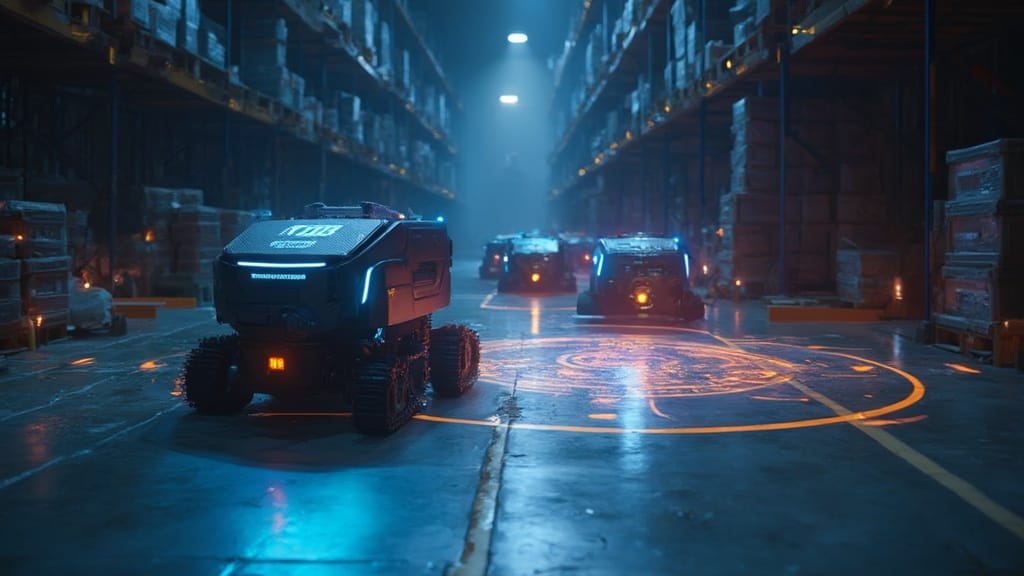
OSHA issued a citation on March 25 in connection with an incident at Rivian's Normal, Illinois, warehouse after a worker was pinned by an AMR dock system. This is the third such enforcement action in EV logistics facilities in 2026, establishing a pattern that insurers and compliance teams can no longer treat as anecdotal.
OSHA's 2026 compliance materials are quietly tightening guidance on machine guarding, human-robot interaction zones, and emergency-stop accessibility — even though no robot-specific federal standard exists yet. Separately, a Chicago delivery robot damaged a CTA bus-shelter glass panel this week in a widely shared clip — no major injuries, but transit agencies and municipal insurers are now in the conversation.
What changes if enforcement accelerates: Workers' comp carriers are already hiking premiums 15–20% for AMR-heavy sites this year, per industry forum chatter. Formal citations create precedent for mandated speed caps, retrofit timelines, and recertification requirements that integrators must model into project economics. Expect "dynamic safety zone" rulemaking within 12 months.
The signal to watch: If OSHA's Amazon fulfillment center investigation (also opened this month) produces large fines and corrective mandates, the ripple will hit every warehouse operator running mixed human-AMR fleets.
SK Hynix Locks $8 Billion ASML EUV Order — the Largest in Lithography History
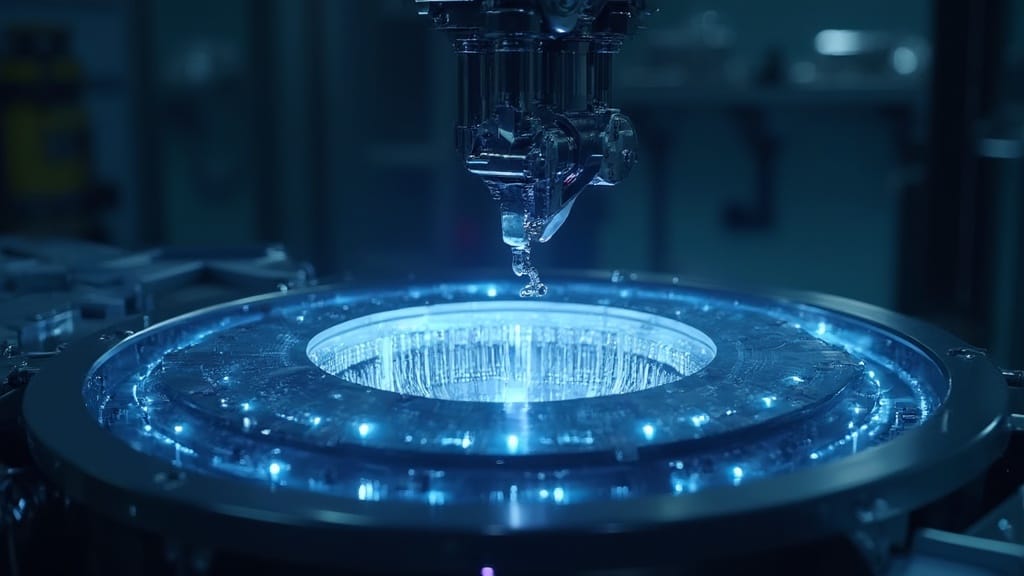
SK Hynix filed on March 27 for the largest EUV tool order ever: $8 billion from ASML, explicitly for automating 2nm wafer fabs in South Korea. This isn't a roadmap slide — it's binding equipment capacity 18 months out, and it includes wafer-transport robot handlers.
The order sits inside a broader fab automation wave. Roland Berger estimates a 35% robot density jump in HBM (high-bandwidth memory — the stacked DRAM chips that power AI accelerators) production lines. A Hong Kong exchange filing from a listed industrial automation company shows a low-billion-RMB backlog with roughly 92% scheduled for 2026–2027 shipment — a statutory disclosure confirming that vanilla industrial robot capacity is already spoken for.
What changes if yields hit targets: If SK Hynix achieves the rumored 85% yield on these new lines, expect integrator RFPs to flood Q3 as other memory makers chase parity. The same actuator and precision-component scarcity stretching cobot lead times applies here — fab automation and factory humanoids are competing for the same motors and safety PLCs.
What failure looks like: Yield misses or ASML delivery delays push the entire HBM capacity expansion right, which cascades into AI chip supply constraints. Watch ASML's Q2 order log and SK Hynix's capital expenditure guidance.
GE Vernova Files Permits for $1.2B Turbine Plant with Robotic Welding
GE Vernova filed permits March 26 for a $1.2 billion greenfield turbine plant in South Carolina — 800 jobs, automated welding cells from Fanuc, and state utility hookups that constitute physical evidence of construction start. The plant targets wind energy components, fueled by IRA tax credits, amid global turbine supply crunches.
What changes if this scales: Heavy-industry reshoring with embedded automation creates a new tier of demand for welding robots, material-handling AMRs, and the integrators who can wire them into turbine production workflows. South Carolina's growing industrial footprint (BMW Spartanburg is nearby) creates a regional automation cluster effect.
What failure looks like: If IRA credits face political headwinds or turbine demand softens, the plant could slow-roll hiring and robot installs. The observable signal: equipment delivery schedules and job postings over the next two quarters.
Skild AI Deploys on Foxconn's NVIDIA Blackwell Assembly Line
Physical AI just landed on one of the hardest manufacturing floors in the world. Skild AI is partnering with Foxconn to run AI-driven dual-arm manipulators on NVIDIA Blackwell server production lines, tackling high-precision assembly tasks. Separately, Lightwheel is codeveloping NVIDIA's Newton physics engine to help Samsung's assembly robots handle cable harnesses in simulation — a deformable-object manipulation problem that has resisted automation for decades.
What changes if sim-to-real transfers reliably: Cable harness handling and similarly fiddly tasks represent billions in manual labor across electronics, automotive, and aerospace. If foundation-model-trained policies work at Foxconn yield standards, it validates the entire NVIDIA physical AI platform thesis and opens a wave of integrator projects.
What to watch: Third-party yield and throughput data from Foxconn's Houston server plant, expected in Q2. If independent numbers confirm the company claims, this is a genuine inflection. If they don't appear, treat the deployment as an expensive pilot.
New Products & Launches
Mantis MR-1 Cobot — Mantis Robotics announced March 28 that its MR-1 passed full ISO 10218 and ISO 13849 certification at TÜV labs, hitting 10 meters per second in clear zones with 360-degree adaptive safety sensing. That's roughly double the speed of most certified cobots, cracking open SME electronics assembly lines where cycle time matters more than payload. Early integrator trials report 98% MTBF, per Mantis.
Allient AMR/AGV Drive Motors — Allient unveiled a line of outer-rotor, low-cogging motors designed specifically for AGV and AMR platforms, targeting higher torque density and smoother motion in compact chassis. Available for order now — the kind of component-level innovation that determines whether your warehouse robot can carry a full pallet without overheating.
VDA 5050 v3.0 — The warehouse robot interoperability standard updated to v3.0 on March 26, adding path-sharing and zone-based traffic rules (speed caps, one-way lanes) for mixed-vendor AMR fleets. Over 40 vendors including Knapp and Dematic support it. Integrators can now swap AMR brands mid-rollout without rewriting fleet management software.
⚡ What Most People Missed
- The battery clock is the humanoid variable nobody's pricing in. Most humanoids run roughly two hours per charge. Covering one role across three shifts requires four units — wrecking simple ROI models. Bain's deployment analysis highlights this, and a new arXiv preprint proposes battery-health-aware fleet scheduling that could reduce the multiplier effect. Swap infrastructure costs rarely appear in pilot budgets.
- South Korea is building a tariff wall around its robot industry. The Trade Commission moved to impose 16–20% duties on industrial robots from China and Japan after finding "serious harm" to domestic manufacturers, per Korea Times. Procurement teams sourcing to or through South Korea need to reprice vendor mixes immediately.
- Germany's automation engine is sputtering. VDMA's robotics group projects another down year for German robotics revenue, driven by weak domestic automotive demand. If German OEMs cut R&D, standards momentum and EU-led automation projects could decelerate — opening share for non-European players.
- Italy's super-depreciation scheme is moving AMR orders today. The 2026 incentive makes autonomous mobile robot investment materially cheaper for Italian warehouses — the kind of quiet fiscal policy that shows up in vendor backlogs before it shows up in headlines.
- Japan is standing up national AI robotics hubs. A draft strategy reported by The Japan News targets logistics, agriculture, and nursing care with subsidized R&D centers and deployment pilots. Expect localization requirements and joint-venture incentives that redirect talent and partnerships toward Japanese programs.
📅 What to Watch
- If OSHA's Amazon AMR investigation produces six-figure fines and mandated retrofits, expect industry-wide speed caps and software-update requirements that add 8–12 weeks to every warehouse automation deployment timeline.
- If Foxconn publishes independent yield data from its Blackwell line in Q2, it validates foundation-model-driven manipulation at production scale — and every electronics contract manufacturer will issue RFPs by Q3.
- If Fanuc's Michigan facility breaks ground on schedule, North American cobot lead times could compress by 3–4 months starting late 2027 — a material advantage for integrators planning brownfield EV plant upgrades.
- If proposed U.S. federal procurement restrictions on Chinese-made robots advance, watch which components and firmware stacks get named — the definitions will determine whether it's a symbolic gesture or a genuine supply-chain restructuring event.
- If BMW releases shift-level uptime data from its Leipzig humanoid pilot, it becomes the first open automotive production benchmark for humanoid robotics — and every OEM's internal business case recalculates overnight.
The Closer
Fanuc pouring concrete in Michigan, SK Hynix writing an $8 billion check for lithography tools, and an OSHA inspector standing in a Rivian warehouse with a clipboard — three snapshots of an industry where the money, the machines, and the regulators are all finally moving at the same speed.
Somewhere in Italy, a warehouse manager is discovering that a tax depreciation schedule is the most exciting document in robotics.
Until next week. —The Lyceum
If someone you know is buying robots, deploying them, or trying not to get pinned by one — forward this their way.
From the Lyceum
Two jury verdicts in two days gave plaintiffs a "design defect" theory against social media — a liability playbook with direct parallels for automation product design. Read → Legaltech