The Lyceum: Semiconductor Weekly — Mar 25, 2026
Photo: lyceumnews.com
Week of March 25, 2026
The Big Picture
Arm made its first chip in 35 years, TSMC told its two biggest AI customers it can't give them everything they want, and the FCC expanded its Covered List to include foreign-manufactured consumer routers. This is not a normal week. The through-line: every slack variable in the semiconductor supply chain — wafer capacity, packaging, materials, memory, even the business models of the companies that supply the IP — has been consumed by the AI infrastructure buildout. The question is no longer whether constraints exist but which one binds first for your particular program.
What Just Shipped
- Kulicke & Soffa Expanded Memory Interconnect Portfolio (K&S): New advanced packaging interconnect solutions targeting HBM and high-bandwidth memory applications.
- Atomic Precision Innovation Center (Applied Angstrom Technology): Singapore facility for wafer fabrication equipment and Angstrom-era process solutions, focused on AI hardware production.
- Analog Devices Thailand Manufacturing Facility (Analog Devices): New advanced manufacturing site strengthening global supply chain resilience for analog and mixed-signal semiconductors.
- Siemens Fuse EDA AI Agent (Siemens Digital): Autonomous AI agent that plans and orchestrates multi-tool semiconductor, 3D IC, and PCB system workflows.
- TI 800V DC Data Center Power Architecture (Texas Instruments): 800V DC power architecture for AI data centers built with the NVIDIA 800 VDC reference design.
This Week's Stories
Arm Makes Its First Chip — and Everything It Sells Is Now a Competitor
For 35 years, Arm's business was the most elegant arrangement in tech: design the architecture, license it to Apple, Nvidia, Qualcomm, and Amazon, collect royalties on every processor shipped, and never compete with any of them. That arrangement ended this week.
Arm announced the AGI CPU — a 136-core data center processor built on TSMC's 3nm node, targeting AI inference and what the company calls "agentic" workloads: multi-step, autonomous AI workflows that coordinate fleets of accelerators. Meta is the first customer. OpenAI, Cloudflare, Cerebras, and SAP are among the other seven launch partners. Per TechCrunch, Arm has working test chips in hand and plans volume production in H2 2026.
The specs are aggressive: up to 64 CPUs — roughly 8,700 cores — fit in a single air-cooled rack, with 96 PCIe Gen6 lanes and CXL memory expansion support per chip. Per The Register, the chip competes directly with Nvidia's standalone Vera CPUs. Arm claims twice the performance-per-watt of an x86 server rack — a self-reported benchmark, not independently verified.
The business model rupture matters more than the specs. Every company that licenses Arm IP and builds server chips — Nvidia, Qualcomm, Ampere, Amazon's Graviton team — just learned their IP supplier is now a product competitor. The royalty relationship doesn't vanish, but the negotiation posture has permanently changed. If this succeeds, Arm captures silicon margins on top of licensing fees and becomes a power in the data center. If it stumbles — yields miss, Meta's deployment underwhelms, or licensees accelerate RISC-V hedges — it could damage the trust model that made Arm's ecosystem possible. The signal to watch: whether Qualcomm or Amazon publicly accelerate RISC-V server investments within the next two quarters.
TSMC Tells Nvidia and Broadcom: There Isn't Enough
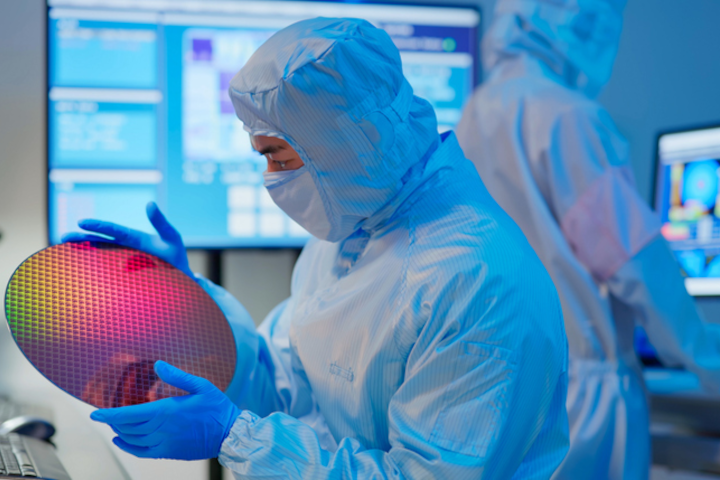
TSMC has informed Nvidia and Broadcom that it cannot meet all of their growing demand for AI processors at its most advanced nodes, according to The Information. This is the thesis sentence for the entire AI infrastructure buildout: the world's dominant contract chipmaker is telling its two largest AI customers to expect less than they ordered.
The numbers frame the squeeze. February revenue hit roughly $10.1 billion, up 22.2% year-over-year. Per Blockonomi, Nvidia now claims approximately 19% of TSMC's total revenue, overtaking Apple's 17% — the first time in over a decade that Apple isn't the foundry's anchor customer. The constraint isn't wafers alone; it's the combination of leading-edge logic and CoWoS (Chip-on-Wafer-on-Substrate) advanced packaging. AI accelerators consume vastly more wafer area per unit than smartphone SoCs, meaning fewer AI customers can absorb a disproportionate share of output. Per MacRumors, Apple is now competing directly with AI-focused customers for supply at the most advanced nodes.
TSMC's capex response is massive — expected between $52 billion and $56 billion in 2026, per Culpium — but fabs take 3–4 years to build. The capacity being announced today won't flow to customers until 2029. If TSMC's March revenue clears $11 billion (reported in early April), N2 demand is already eating into its own schedule. If it misses, the "AI digestion pause" thesis gets real. Watch the April revenue release.
Iran's War Just Became a Fab-Floor Problem for Korean Memory Makers
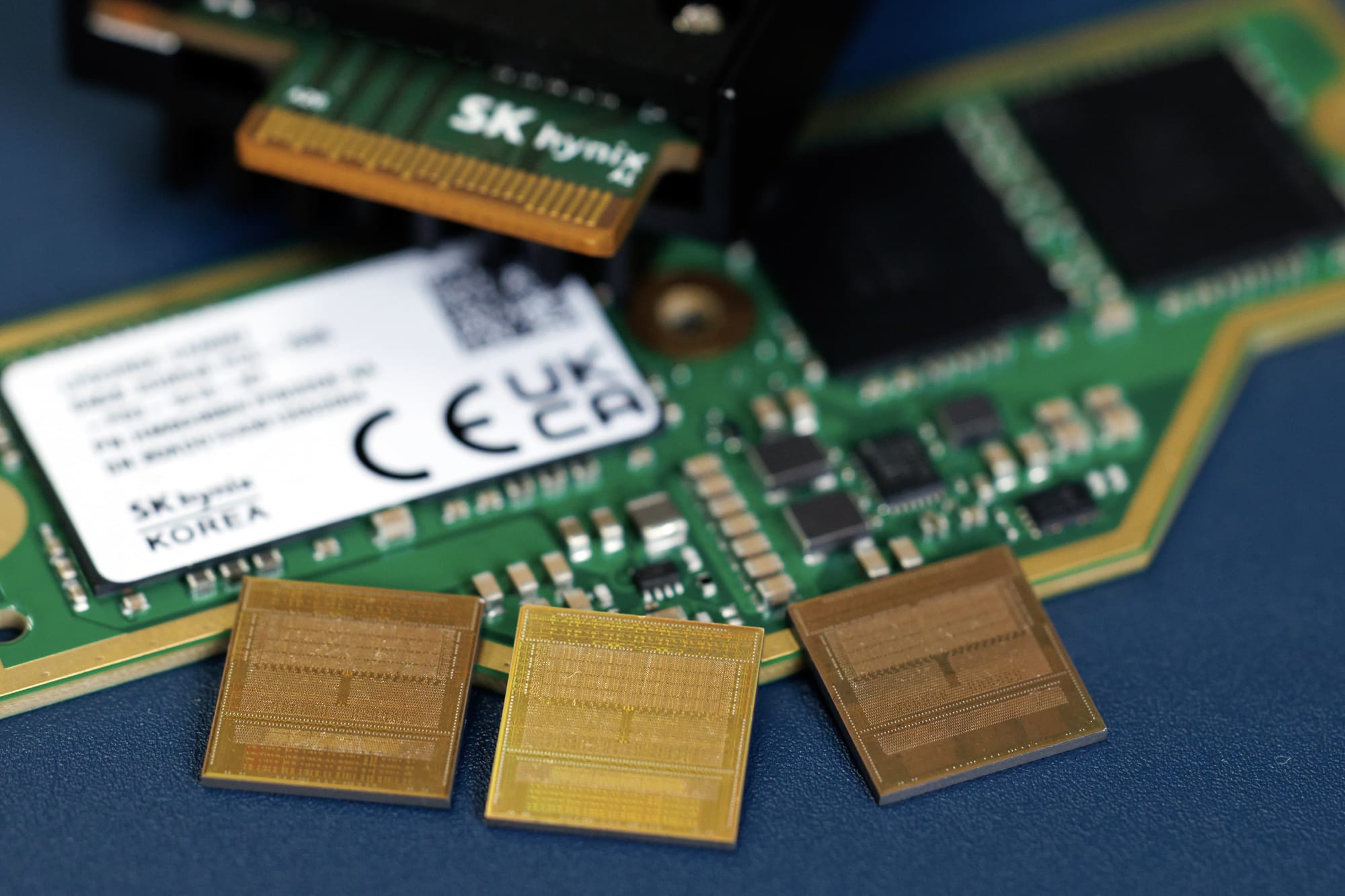
As the U.S.-Israel conflict with Iran stretches into its third week, the semiconductor industry faces two material chokepoints that are moving from abstract risk to procurement reality.
Qatar produces over a third of the world's helium — the gas used to transfer heat during wafer processing and to keep EUV lithography optics from fogging. There is no viable substitute. Per Bloomberg, the conflict is casting doubt on global chip supply chains. Israel and Jordan produce roughly two-thirds of the world's bromine, used in flame retardants for packaging and as an etch-process cleaning agent. GlobalWafers has flagged that prolonged disruptions to regional oil supplies could threaten 300mm wafer production — an upstream chokepoint that compounds the helium and bromine risks.
Helium consultant Phil Kornbluth told CNBC he sees a minimum two-to-three month production shutdown and four-to-six months before supply normalizes. Samsung and SK Hynix have lost more than $200 billion in combined market value since the war began, though both have rallied in recent sessions. Per CNBC, both companies have HBM supply contracts locked in and sufficient reserves for now. SEMI Taiwan said chemical costs are rising but there's no immediate helium shortage — yet. The six-month clock is what matters: fabs that haven't stress-tested their helium inventory against Kornbluth's timeline should do it this week.
SK Hynix Places an $8 Billion ASML Order — the Largest in EUV History
When a memory maker writes an $8 billion check to a single lithography equipment vendor, it's not ordering today's capacity — it's reserving tomorrow's.
SK Hynix placed what multiple accounts describe as the largest single EUV equipment order in the industry's history. EUV (extreme ultraviolet) lithography tools use light wavelengths around 13.5 nanometers to print the finest circuit features possible — they're the single gating item for HBM4, the next-generation stacked memory that will sit next to every future AI GPU. ASML's lead times for these systems run 18–24 months from order to installation.
SK Group's chairman publicly warned that global DRAM wafer supply could trail demand by more than 20% until approximately 2030, per Tom's Hardware. That reframes this order: it's not just about HBM4 market share but about defensively locking capacity for the next half-decade. If SK Hynix executes and maintains its HBM lead, it cements a near-monopoly position in the highest-margin memory segment. If Samsung and Micron don't match with comparable orders in the next two quarters, the gap widens. Watch ASML's next quarterly order disclosure — the absence of matching commitments would be as telling as their presence.
The FCC Just Made Foreign-Made Consumer Routers a National Security Item
Export controls usually restrict what leaves the U.S. This week, the FCC moved in the other direction.
On March 23, the FCC expanded its Covered List — the register of equipment deemed to pose unacceptable national security risk — to include foreign-manufactured consumer routers. Per The CommLaw Group, this applies categorically based on place of production, not manufacturer identity. All new models of foreign-produced routers will be ineligible for FCC equipment authorization and therefore cannot be imported or sold in the U.S. According to The Register, the BBC noted that practically all routers are manufactured abroad — the one known exception is Starlink's Wi-Fi router, built in Texas.
The semiconductor angle is underappreciated. The Wi-Fi and networking SoC ecosystem — Qualcomm, MediaTek, Broadcom — now faces pressure to support ODM partners who must either relocate assembly to the U.S. or navigate an undefined "Conditional Approval" path through DoD or DHS. Per Help Net Security, without government support, it's "not realistic for manufacturers to shift their supply chains in a timely enough fashion to avoid disruption." If the compliance window is short, expect qualification backlogs and possible SoC spec changes. If it's long, the ban is symbolic. The FCC comment period timeline will determine which.
TSMC's N2 Yield Is Running Ahead of Schedule — and That Changes the Capacity Queue
The most underappreciated data point in semiconductor manufacturing right now is a yield number.
Per Blockonomi, TSMC's 2nm (N2) manufacturing yields have already achieved 65–75% — remarkably strong for such an early stage. For context, 40–50% is considered acceptable for a new process node entering production. This accelerates everyone's ramp timeline, starting with Apple's A20 chip for the iPhone 18 and extending to Nvidia's next-generation Rubin GPU tapeouts and Broadcom's custom ASIC programs.
But strong yields don't solve the allocation problem. Per MacRumors, Apple is no longer the primary driver of TSMC's capacity expansion decisions. Trade press reports suggest N2 is effectively booked through 2027, with large customers claiming majority shares of inaugural volumes. If Apple secures its N2 allocation smoothly, iPhone 18 ships on time and the consumer cycle holds. If Nvidia and hyperscaler demand forces Apple into N3E fallbacks, the ripple effects hit automotive and industrial OEMs who depend on mature-node capacity that gets displaced. The observable signal: Apple's fall product announcements will tell you whether they got the silicon they needed.
China's Second 7nm Foundry Is About to Come Online
If your mental model of Chinese advanced chipmaking is "SMIC plus export controls equals hard stop," update it.
Per Oplexa, Hua Hong Group is preparing to bring 7nm production capacity online at a Shanghai facility — making it China's second domestic foundry capable of producing at that node. This won't match TSMC's N3/N2 performance, but 7nm is more than sufficient for many AI accelerators, SoCs, and server-class chips.
The strategic implication: redundancy inside China reduces the leverage of export controls as a blunt instrument at the 7nm tier. Multiple local options change design, yield, and procurement dynamics for China's fabless ecosystem. Beijing is also pushing "localize half your tools" mandates that accelerate domestic equipment adoption, per Oplexa's analysis. If this succeeds, China builds a parallel semiconductor ecosystem that's resilient at mature-to-mid nodes. If yields disappoint or tool quality lags, the gap with TSMC widens further. Watch whether Chinese fabless designers begin dual-sourcing tapeouts across SMIC and Hua Hong — that's the confirmation signal.
DRAM Prices Flip the Market — Samsung and SK Hynix Ration Supply
Samsung and SK Hynix have moved from gentle price discipline to active rationing, hiking DRAM prices for Q2 and allocating HBM and commodity DRAM toward hyperscale contracts first. Mid-tier OEMs and industrial buyers report 20–50% higher quotes; several smaller purchasers are being pushed into spot markets at even steeper premiums.
TrendForce data shows Q1 conventional DRAM contract prices rose 90–95% quarter-over-quarter. Per TrendForce, spot prices remain above contracts and Q2 negotiations haven't concluded — a pattern that historically precedes another contract increase. NAND is moving in parallel: enterprise NAND prices are climbing 85–90% quarter-over-quarter as AI clusters consume flash for local model stores, per FTC Electronics.
If you're a procurement team that hasn't pre-negotiated Q2 allocations, you're walking into those conversations from a weak position. If the rationing holds, expect project delays and margin compression across servers, PCs, automotive ECUs, and industrial controllers. The relief valve — new capacity from SK Hynix's ASML order and Micron's Taiwan fab acquisition — won't produce wafers until 2027 at the earliest.
Terafab — A Vertically Integrated AI Megafab Reported Near GigaTexas
Reports describe "Terafab" as a planned semiconductor complex under the Tesla/xAI/SpaceX umbrella targeting over 1 terawatt of AI compute per year and an eventual 1 million 300mm wafer starts per month, numbers on par with a top-five logic foundry. The plan envisions collapsing design, lithography, wafer fab, memory production, advanced packaging, and test under one roof using a ~2nm-class process, starting with a pilot line at the GigaTexas site.
The interesting technical bet isn't the scale — it's the vertical integration. Collapsing the entire stack into one co-located manufacturing loop to shorten iteration cycles is a radical challenge to today's hyper-specialized, multi-site semiconductor model. If Terafab actually orders EUV scanners and advanced etch tools from ASML and Applied Materials, it adds a previously unmodeled demand vector to an already oversubscribed equipment market. If those purchase orders don't materialize within 12–18 months, this is a roadmap, not a fab. Watch the ASML order book.
New Products & Launches
- Arm AGI CPU: Arm's first production silicon — a 136-core, 300W data center processor on TSMC N3 targeting agentic AI workloads. Working test chips confirmed; volume production planned H2 2026. Meta is lead customer; OpenAI, Cloudflare, Cerebras, and SAP among launch partners. Per Arm's announcement, the reference server configuration packs 272 cores per 1U blade with CXL memory expansion.
- Siemens Fuse EDA AI Agent: An autonomous AI agent system that orchestrates multi-tool semiconductor, 3D IC, and PCB workflows — Siemens Digital's first product targeting fully automated chip design planning.
- TI 800V DC Data Center Power Architecture: Texas Instruments shipped an 800V DC power architecture for AI data centers, built with Nvidia's 800 VDC reference design, targeting the power delivery problem that scales with GPU density.
⚡ What Most People Missed
- The CPU is the new AI bottleneck, and there's a paper proving it. A Georgia Tech paper (arXiv:2603.22774) shows that under-provisioned host CPUs cause kernel-launch delays and stalled inter-GPU communication that leave expensive accelerators idle. This is exactly the operational niche Arm's AGI CPU targets — and it means "CPU for AI" is a real device category, not marketing.
- Gold prices are inflating packaging BOMs right now. Wire bonds, gold plating, and connector materials are pushing packaging costs up 15–25% for some assemblies, per Aozora Wireless. This hits HBM stacks and CoWoS substrates directly — a second-order cost pressure that wafer-focused models miss entirely.
- Backend and test equipment spending is outpacing front-end. Bishop & Associates data shows semi-related connector sales and equipment billings into Asia-Pacific up >40% year-over-year for six straight months, with test and packaging as the strongest sub-segments, per their February report. The constraint is drifting from "do you have enough 3nm wafers?" to "can you actually assemble and test these packages at yield?"
- Samsung's union voted 93% in favor of a general strike. Korean press reports say Samsung Electronics' semiconductor union approved strike action that could disrupt Hwaseong and Pyeongtaek fab operations as early as May — right when HBM4 qualification runs should be accelerating. [Source: ZDNet Korea, 뉴스핌 — Korean]
- AMD CEO Lisa Su visited Samsung's Pyeongtaek fab this week. Chosun Ilbo and other Korean outlets report the visit focused on HBM4 supply and foundry partnerships. Samsung is positioning to supply HBM to both Nvidia and AMD — a dual-customer strategy that would reshape the memory landscape if it executes. [Source: Chosun Ilbo, 디일렉 — Korean]
📅 What to Watch
- If TSMC's March revenue clears $11 billion (reported early April), N2 demand is ahead of consensus and CoWoS pricing pressure for Blackwell Ultra builds intensifies — if it misses, the AI digestion thesis gets real.
- If Samsung and Micron don't match SK Hynix's $8B ASML order in the next two quarters, the HBM4 capacity gap widens into a structural advantage that reshapes memory market share through 2030.
- If Terafab places EUV and advanced etch tool orders within 12 months, it creates a new, non-foundry buyer competing for the same scarce equipment as TSMC, Samsung, and Intel — repricing the entire tool order book.
- If the FCC's router ban compliance window is under 12 months, networking SoC vendors face emergency qualification cycles and potential spec changes; if it's 18+ months, the policy is symbolic until proven otherwise.
- If Samsung's union strike proceeds in May, it disrupts HBM qualification runs at the exact moment Samsung is trying to prove it can supply both Nvidia and AMD — the timing couldn't be worse for Samsung's credibility pitch.
The Closer
Arm spent 35 years insisting it would never make a chip, then made one and handed it to Meta; TSMC told its two biggest customers there isn't enough of itself to go around; and the FCC decided your $80 TP-Link router is a national security threat but offered no plan for where the next one comes from.
Somewhere in a Samsung cleanroom, a union steward is calculating whether a May walkout or a gold-price BOM shock will be the thing that finally makes HBM4 qualification interesting.
Until next Tuesday —
If someone on your team is still modeling Arm as "just an IP company," forward this.
From the Lyceum
The White House published a six-principle AI governance blueprint that preempts state laws — worth reading if the FCC router ban has you thinking about how hardware and software regulation are converging. Read → The White House Hands Congress an AI Rulebook — and Tells the States to Stand Down