The Lyceum: Space Economy Weekly — May 21, 2026
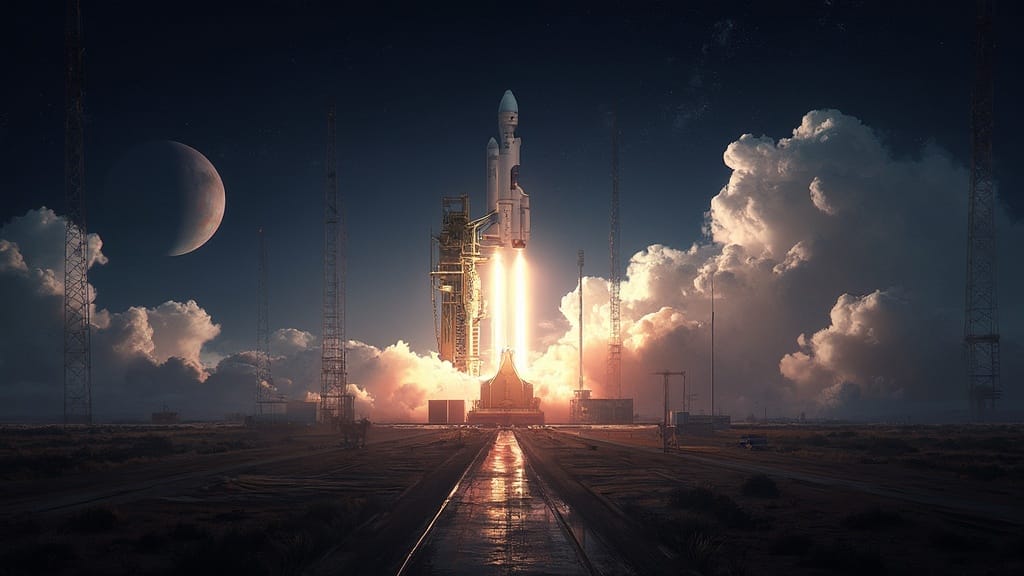
Photo: lyceumnews.com
Week of May 21, 2026
The Big Picture
Two rockets tell the story of the week. One — Starship V3 — is fully stacked at Starbase, fresh off a wet dress rehearsal, with the FAA's blessing and a license that now allows five times as many flights per year as before. The other — Japan's H3 — is grounded after losing Michibiki-5 in December, with JAXA naming June 10 as the date that decides whether Japan's Mars moons mission survives. Sitting on top of both: a SpaceX S-1 filing that, for the first time in the company's history, puts Starlink's economics on the legal record — and effectively resets the valuation conversation for every broadband constellation trying to raise money this year.
What Just Shipped
- Starship Flight 12 (V3, Ship 39 / Booster 19) (SpaceX): wet dress rehearsal completed May 20; stacked at Pad 2 with 20 Starlink V3 simulators and a planned in-space Raptor relight.
- FAA Starship License Update (FAA): increases authorized Starbase launches from 5 to 25 per year, effective May 15.
- Landsat 10 Draft RFP (NASA): published May 19; targets a Launch Readiness Date no later than December 2031 and mandates AI-use disclosure from offerors.
- SpaceX S-1 Registration (SpaceX / SEC EDGAR): filed May 20 — first audited disclosure of Starlink segment financials.
- Rocket Lab Multi-Launch Agreement (Rocket Lab): five Neutron and three Electron launches booked by a confidential customer, missions running 2026–2029.
This Week's Stories
Starship V3 Is on the Pad, and the FAA Said Yes — With a Caveat
Ship 39 and Booster 19 — the first Version 3 Starship stack — completed a wet dress rehearsal at Starbase on May 20 and is stacked on Pad 2 awaiting launch. The flight will carry 20 Starlink V3 simulator satellites, attempt an in-space Raptor relight, and deliberately fly with one heat shield tile removed so SpaceX can measure aerodynamic loading on adjacent tiles during reentry. Two of the simulator satellites are instrumented to scan the heat shield itself — a real-time diagnostic loop for the unsolved problem standing between Starship and rapid reusability.
The FAA cleared the flight on May 22, stating SpaceX "implemented all corrective actions" from the March Flight 8 mishap. The caveat, per Spaceflight Now: the mishap investigation itself is still open. The FAA's return-to-flight determination rests on public safety, not on closing the full accounting. And a week earlier, on May 15, the same license was modified to raise Starbase's annual launch ceiling from 5 to 25 — meaning the cadence authorization and the return-to-flight ride on the same paperwork.
If Flight 12 nails payload deployment and the Raptor relight, SpaceX validates the architecture that Starlink V3 and Artemis HLS both depend on, and a 25-flight-per-year cadence becomes a credible 2027 trajectory rather than a regulatory ceiling no one will hit. If it loses another ship, the political envelope is now larger: the Caribbean airspace question is already live — the UK government minister responsible for the Turks and Caicos has contacted the U.S. State Department about flight profile changes — and a second consecutive failure would put cadence growth on the table for review. Watch the payload door and the in-space relight; those are the two signals that separate "test article" from "operational system."
Japan Names June 10 for H3's Return — With Mars in the Balance
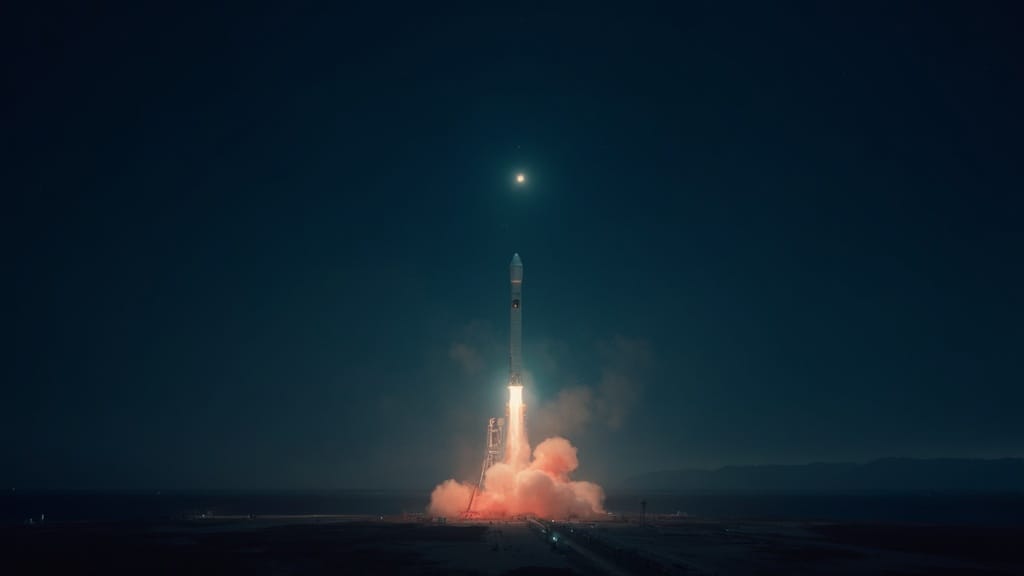
JAXA's May press conference confirmed preparations for H3 Flight 6 targeting June 10 — the first concrete return-to-flight date since December's loss of the Michibiki-5 navigation satellite. The traced cause, per JAXA: an anomaly during payload fairing separation that produced abnormal acceleration and a likely pressure drop in the second-stage hydrogen tank. Both the satellite and the upper stage re-entered over Brazil.
What's underappreciated outside Japan: the Martian Moons eXploration (MMX) sample-return mission to Phobos and Deimos has a launch window of November–December 2026. Miss it, and the next opens roughly two years later. June 10 isn't just a return-to-flight — it's the first of what needs to be a clean run of H3 missions to keep MMX on the manifest. Michibiki-5's loss also stalls Japan's seven-satellite sovereign positioning network, originally targeted for completion by March 2026 to reduce dependence on U.S. GPS.
A clean June 10 flight restores confidence in Japan's only heavy-lift option and keeps both MMX and the Michibiki constellation alive. A second anomaly puts H3 at two failures in nine flights, forces Japan to reconsider its planetary science cadence, and accelerates Mitsubishi Heavy Industries' need to demonstrate that the fairing fix actually worked under flight conditions. The observable signal is fairing separation cleanly executed — the exact phase that failed in December.
SpaceX's S-1 Puts Starlink's Economics on the Record

SpaceX filed its S-1 with the SEC on May 20. The valuation and IPO mechanics are everywhere in the coverage; the operational disclosures matter more. According to the filing, 2025 revenue reached $18.67 billion with a $4.9 billion net loss, Starlink crossed 10 million subscribers, and the connectivity segment posted a $1.19 billion quarterly profit — the first time SpaceX has put Starlink unit economics into a document with legal accountability attached. The filing also notes the company has launched roughly 7,400 metric tons to orbit across ~650 orbital launches with a 99%+ Falcon mission success rate, and plans approximately 170 Starlink launches this year. (The S-1 also consolidates results from xAI Holdings Corp., acquired by SpaceX effective February 2, 2026, which complicates reading the pure-play launch and satellite numbers.)
If the IPO proceeds, every competing LEO broadband operator — Amazon's Kuiper, Telesat Lightspeed, Eutelsat OneWeb — gets measured against audited Starlink financials in every investor meeting from here forward. The competitive question shifts from "can anyone catch Starlink?" to "what's the viable niche that isn't Starlink?" If SpaceX withdraws or delays, the filing still exists in the public record — the financials don't un-disclose. Either way, the comparator is now real. Watch for a roadshow date — Hey Go Trade has flagged June 11 as a window in retail-investor materials, though SpaceX has not confirmed.
Amazon Kuiper's Next Atlas V Slips Days, Not Weeks
A ULA Atlas V is now targeted to launch 29 Amazon Kuiper satellites from SLC-41 at Cape Canaveral, slipped from May 22 to repair a flight component. It's the penultimate Atlas V on Amazon's Kuiper manifest. Days don't matter here — but the context does. Amazon has an FCC requirement to have half of its 3,236-satellite constellation operational by mid-2026, and every Atlas V slot lost or delayed compresses the runway for New Glenn and Ariane 6 to pick up the slack.
If Amazon hits the FCC milestone, Kuiper becomes a credible second-source LEO broadband operator at exactly the moment Starlink's financials go public — useful leverage in regulatory and customer conversations. If Amazon misses it, the FCC has discretion to modify or revoke spectrum authorizations, which would be a structural blow. The observable signal here isn't the launch itself — it's whether Amazon issues any public statement on deployment-milestone compliance in the next few weeks. Silence is its own data.
LatConnect 60 Raises for an AUKUS-Aligned SWIR Constellation
LatConnect 60, a Perth-based Earth observation and AI company, announced May 21 that it has opened a growth investment round to accelerate development of what it describes as the highest-resolution shortwave infrared (SWIR) satellite constellation explicitly aligned with the AUKUS defense partnership between Australia, the UK, and the US. SWIR — wavelengths just beyond visible light — is the band that defense customers pay a premium for: it sees through haze and smoke, distinguishes materials, and exposes camouflage. A small number of U.S. providers currently dominate the capability.
If LatConnect 60 closes the round and delivers, AUKUS gets a sovereign non-U.S. SWIR source for ISR (intelligence, surveillance, and reconnaissance) — useful for both operational diversification and for the political optics of "Australia builds, not just buys." If it stalls, AUKUS partners default back to U.S. commercial providers, and Australian sovereign space capability remains more aspiration than asset. The funding amount was not disclosed; the signal worth watching is whether LatConnect 60 names a launch vehicle partner. Geography points to Rocket Lab's New Zealand site as the natural fit.
⚡ What Most People Missed
- The 25-flight-per-year Starship authorization is the bigger story than Flight 12 itself: The FAA's May 15 license modification quintupled Starbase's annual launch ceiling. SpaceX has flown eight Starships total. The cadence isn't operational reality yet — but the legal envelope is now larger than any competitor (Vulcan, Ariane 6, New Glenn) can respond to in the medium term. That's a forward-looking signal about manifest, not just regulation.
- Rocket Lab is selling Neutron flights before Neutron has flown: The May 7 confidential-customer deal — five Neutron and three Electron missions, 2026–2029 — pushed Rocket Lab's backlog above $2.2 billion. Selling slots on an unflown rocket is either extraordinary customer confidence or evidence that medium-lift supply is so tight that buyers will accept schedule risk to lock in capacity. Probably both. The customer's identity remains the most interesting unknown in the sector.
- NASA's Landsat 10 RFP requires AI-use disclosure: The May 19 draft RFP targets a Launch Readiness Date no later than December 2031, with anticipated award by end of 2026 — but the buried detail is that offerors must disclose any intent to use artificial intelligence during contract performance. That's a quiet first for major NASA Earth observation procurement, and a template other agencies will likely copy.
- India's "Shakti" ASAT test is drawing U.S. criticism, per BBC reporting via Chinese-language news feeds. The diplomatic friction is notable because Washington has been willing to apply its anti-destructive-ASAT-testing position to a close strategic partner. The operational question for satellite operators is whether any new debris field intersects with the 400–600 km shells where most LEO constellations live. [Source: BBC via 卫星 反卫星 太空车 — Chinese (Simplified)]
- The SpaceX S-1's xAI consolidation muddies the read. The filing incorporates xAI Holdings Corp. results from the February 2, 2026 acquisition, which means pure-play launch-and-satellite economics now require backing xAI out of the numbers. For analysts modeling Starlink and Falcon separately, the headline revenue figure is no longer a clean proxy.
📅 What to Watch
- If Ship 39 successfully deploys its payload door and completes the in-space Raptor relight on Flight 12, the Artemis HLS timeline becomes defensible — and Blue Origin's HLS contract loses one of its political justifications.
- If H3 Flight 6 has any fairing-separation anomaly on June 10, MMX's November–December 2026 Mars window likely closes, putting Japan's most ambitious planetary mission on a two-year hold and reopening questions about heavy-lift sovereignty.
- If SpaceX sets an IPO roadshow date in the next 30 days, expect Amazon, Eutelsat, and Telesat to accelerate their own financial disclosures defensively — the comparator effect is unavoidable once Starlink's economics are audited.
- If Amazon stays silent on FCC Kuiper milestone compliance through June, that silence is the story — the deadline is mid-2026 and the FCC has discretion to act.
- If U.S. Space Force tracking publishes new debris objects from the Indian ASAT test in the 400–600 km shell, expect a quiet wave of avoidance-maneuver planning across LEO operators and a sharper diplomatic line from Washington.
- If LatConnect 60 names a launch vehicle partner, the choice itself is a sovereignty signal — Rocket Lab from New Zealand versus a U.S. provider says something about how AUKUS partners interpret "aligned."
The Closer
A rocket the size of a skyscraper sitting on a Texas pad waiting on paperwork that's technically still open; a Japanese fairing mechanism that fell off a satellite and took a Mars mission's calendar with it; and a financial document so dense it manages to bury 10 million Starlink subscribers behind an xAI consolidation footnote. Somewhere in the SEC's EDGAR system, an accountant is trying to figure out which line item is Grok and which one is Starship — and the answer matters more to Eutelsat's next funding round than anyone at Eutelsat would like to admit.
Stay grounded.
Forward this to the friend who keeps asking what's actually in the S-1.