The Lyceum: Sunday Edition — Jun 14, 2026

Photo: lyceumnews.com
Week of June 14, 2026
The Big Picture
This was the week the official story and the real story started pulling apart faster than anyone in Washington could manage. There's a ceasefire that isn't stopping the strikes, an ally caught spying on the negotiators trying to end a war it opposes, and a trillion-dollar AI company filing to go public whose actual finances no one has ever seen. The thread running through all of it: what's officially true and what's operationally true are now two different things — and the gap is where every important story this week lives.
What Just Shipped
- Claude Fable 5 and Mythos 5 (Anthropic): The lab's most capable models yet — launched, then pulled from the market three days later on a classified U.S. government order.
- Gemini 3.5 Flash, Omni, and Spark (Google): Unveiled at I/O 2026 alongside an AI overhaul of Search, Android, Workspace, and YouTube, plus new Android XR glasses partnerships.
- Venice EPYC (2nm) (AMD): The first high-performance-computing processor to reach mass production on TSMC's 2nm node, aimed at cloud and AI workloads.
- Alibaba AI accelerator (Alibaba): A next-generation chip the company claims runs three times faster than its predecessor, landing days after Nvidia's earnings.
- Starship V3 (SpaceX): The new iteration central to NASA's Artemis lunar program is being treated as proof-of-concept for the design SpaceX has bet its future on.
This Week's Stories
The War That Won't End — and the Deal That Might Not Either
Every time you filled your tank this week, you paid a war tax. The U.S. average for regular gas sat around $4.29 a gallon — down from the peak, but more than a dollar above the $2.98 it cost just before the U.S. and Israel attacked Iran at the end of February. Trump told reporters the war could wrap up in "two to three weeks." Markets want to believe him. The math doesn't cooperate.
Here's the trap: even a deal signed tomorrow doesn't snap the energy system back. More than 1.2 billion barrels of oil have already been derailed by the war, with the tally rising each day the Strait of Hormuz stays largely closed. GasBuddy analysts told CBS News it's "all contingent on when boats start moving through the Strait of Hormuz," and that normalization will be "a very long, multi-month to multi-year process." The U.S. Energy Information Administration projects it'll take until late 2026 or early 2027 for pre-conflict trade patterns to return. (GOP, Democrats both see incentives in a shutdown ...)
Meanwhile the diplomacy and the fighting are running on separate tracks. The U.S. and Iran have reportedly "mostly agreed" on a 60-day memorandum to extend the ceasefire — still awaiting Trump's sign-off — even as Iranian forces fired ballistic missiles at Kuwait and sent drones toward the Strait. Axios reported the two sides were expected to electronically sign the memorandum Sunday, June 14, reopening Hormuz and starting nuclear talks. Tehran's new Supreme Leader — a 56-year-old cleric who built his career inside the Revolutionary Guards' intelligence apparatus — has given no public sign he endorses what his negotiators agreed. (A More Perfect Peace: Can the Russia-Ukraine War End Justly?)
The deal and the war are not yet the same thing. Until Iranian drones stop flying after a formal signing, the signature is theater. Watch Hormuz vessel traffic over the next two weeks — it's the only metric that touches your gas bill.
Your Ally Is Spying on Your Negotiators
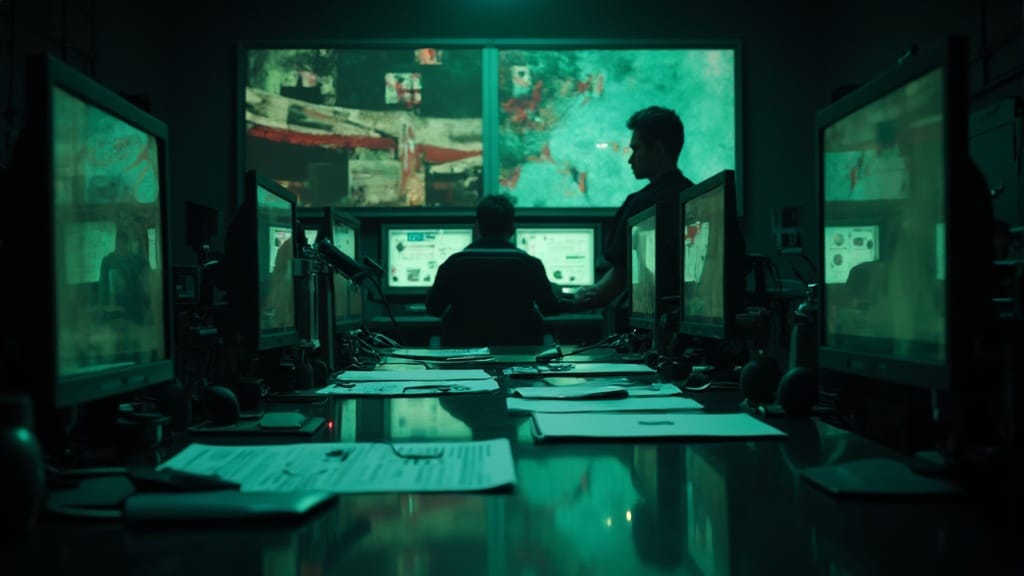
This should be dominating front pages. Washington and Jerusalem have spied on each other for decades and quietly tolerated it as the price of a complicated alliance. What happened this week is different in kind. (Can Spying on Allies Be Right?)
The Pentagon's Defense Intelligence Agency raised its counterintelligence threat assessment of Israel to "critical" — the highest level in its system, the same one reserved for adversaries — according to two U.S. officials and one former official cited by NBC News. The concern, per the New York Times, is that Israel has been trying to surveil top U.S. officials to understand internal White House deliberations about ending the Iran war — including eavesdropping on Steve Witkoff, Trump's lead negotiator. The assessment, RT reported, runs to a seven-page document and a chart rating Israel's intelligence-gathering as "critical." (Pentagon Sees Growing Espionage Threat From Israel)
Officials said Israel's recent efforts have gone "well beyond" typical espionage. Israel's embassy denied it; the White House called the story "completely false." The designation surfaced June 6 — the very week Congress is weighing legislation, per Military.com, to deepen U.S.-Israel defense-technology cooperation. (Pentagon raised threat of Israeli spying on U.S. to highest )
An ally spying on your peace negotiators to derail a deal it opposes is not a footnote — it's a crisis. Watch whether the White House formally acknowledges the DIA assessment or keeps denying it. The answer tells you whether Trump is managing Netanyahu, or the reverse.
The AI IPO That Will Finally Show Us the Books
For years the debate about AI companies has been conducted in the dark — valuations in the hundreds of billions, compute costs estimated by analysts who've never seen a balance sheet. That era is ending. (Wall Street Is About To Test AI's Trillion-Dollar Valuations)
Anthropic, the lab behind Claude, filed a confidential S-1 with the SEC less than a week after raising $65 billion in a Series H round that pushed its valuation to roughly $965 billion. No price, no share count, no ticker yet — a confidential filing lets a company work through SEC feedback before the prospectus goes public, and the IPO can't happen until it does. (OpenAI Confidentially Files S-1 With SEC, One Week After Ant)
Why this matters beyond tech: per Enterprise DNA, Anthropic's training and inference costs alone are projected to exceed $19 billion in 2026. When the full prospectus drops, ordinary investors will see for the first time what a frontier lab actually costs to run — and whether revenue justifies the burn. OpenAI, last valued at $852 billion, is expected to file its own paperwork later in 2026. Together with SpaceX, these listings represent the largest concentration of private tech wealth ever to enter public markets in a single year. (Cheap AI could derail OpenAI and Anthropic's IPOs - CNBC)
If the public S-1 shows compute costs that justify the valuation, the AI-is-printing-money story survives Wall Street. If it reveals a chasm between revenue and burn, the whole IPO wave gets repriced before OpenAI even files. Watch for the public S-1 — that's when the real conversation starts.
The $67 Billion Bet That AI Will Keep the Lights On
The biggest business deal of the week had nothing to do with AI models or peace talks — it was about the electricity that powers both. NextEra Energy announced it will acquire Dominion Energy in a $66.8 billion all-stock transaction, creating the largest electric utility in the United States. The combination pairs NextEra's renewable portfolio with Dominion's grid across Virginia, the Carolinas, and Ohio — a service territory sitting directly on top of the densest concentration of data centers on Earth. (Behind Q3 Earnings: Big Tech's $350B Bet on AI ...)
This is the story underneath the AI story. Every model you've ever used runs on electricity, and the AI buildout is consuming power at a rate that has genuinely caught grid operators off guard. The merger is a bet that whoever controls the grid in AI country controls the economics of AI infrastructure.
It creates a utility with the scale to finance the upgrades AI demands — but also concentrates enormous power over pricing in a region where millions of households and the world's most valuable tech firms share the same wires. The Federal Energy Regulatory Commission, which oversees interstate electricity markets, will scrutinize it closely. Watch whether Virginia and North Carolina regulators approve on terms that protect residential ratepayers — or whether data-center load gets to jump the queue.
The Government Just Pulled Two AI Models Off the Market
Three days after Anthropic launched its most capable models — Claude Fable 5 and Mythos 5 — the U.S. government ordered them pulled. Not for a safety failure or a bias incident, but for a classified reason that Anthropic itself reportedly cannot fully see. The move, reported by NBC News and confirmed by Anthropic, is without precedent in the industry. Picture the FDA ordering a drug pulled from every pharmacy on a Friday afternoon — except the company is never told what the drug did wrong.
The models went dark within hours. Enterprise customers who'd already wired Fable 5 into their workflows lost access with almost no warning. The implications run far past one launch: if the government can pull a frontier model on classified grounds, model access has become an export-controlled good, subject to the same national-security logic as advanced chips. Anthropic's pending public S-1 will now have to disclose this as a risk factor — the first time a frontier lab tells public investors the government can reach into its product line at will.
The question isn't whether this was right — it's whether it's the new normal. Watch whether the models are restored within the week. If they stay dark, every other lab starts pricing in the same risk.
Europe Is Buying Electric Cars Because of a War in the Middle East
Climate policy couldn't do it. Carbon taxes couldn't do it. Years of subsidies moved the needle slowly. Then a war in the Persian Gulf pushed gasoline above €2 a liter — and the economics of electric vehicles suddenly clicked for millions of people who'd been on the fence.
Renault CEO François Provost told Reuters that EV orders are up roughly 50% in markets including France and Germany since the Iran war began, and that the company is weighing extra production teams in Douai, Maubeuge, and Novo Mesto in the second half of the year. The demand is real enough to talk staffing; the capacity changes are still prospective. What makes this more than an auto-industry curiosity is the speed: climate policy nudges behavior slowly, but oil-shock psychology reprices it in days.
This is the demand shift OPEC cannot cut its way back from. If European EV demand holds even after oil eventually falls — and early data suggests it will — the war will have done more for the energy transition in six months than a decade of climate summits. Watch whether U.S. demand shows the same pattern; Americans have historically resisted the switch, but $4-plus gas is a persuasive teacher.
The Cancer Research That Might Change Everything — If It Holds Up
A caveat first: this is early, it's from a single research program, and science has a long history of "master switch" discoveries that got more complicated in practice. With that said — it's worth watching.
The Economist reported this week on pancreatic cancer research that may have inadvertently revealed something larger: a regulatory mechanism controlling whether cancer cells grow or stop. The mechanism centers on a gene called GATA6. In peer-reviewed work, manipulating GATA6 caused pancreatic tumor cells to switch between subtypes — changing both how aggressive they were and how they responded to chemotherapy — establishing the gene as a "master regulator." Nearly all pancreatic cancers are driven by KRAS mutations, one of oncology's most studied and most frustrating targets, and the paper ties the GATA6 switch directly to that pathway.
The finding is trending on Hacker News at over 350 points — notable because that community is technically literate enough to tell genuine insight from hype, and the discussion is cautious rather than credulous. This is published, peer-reviewed work, not a preprint. But the distance from "we found the switch" to "we can flip it in patients" is measured in years and billions in trials. Watch for replication studies and for which drugmakers file Investigational New Drug applications — the FDA's gateway to human trials — targeting GATA6 or the KRAS pathway in the next 12 to 18 months.
The Lens
Real outlet monitoring. Today's coverage gaps — what each side is watching.
What right-leaning outlets are watching
Amazon CEO Andy Jassy's discussions with U.S. officials preceded a government crackdown on Anthropic's models, according to the Wall Street Journal. The report links high-level corporate access and policy contacts to the regulatory action, but does not say Amazon directed the decision.
Also in right-leaning news:
- Rand Paul is pressing on alleged national-security links involving Anthony Fauci and the origins of COVID-19.
- National Review is carrying commentary on Donald Trump and South Carolina's gubernatorial race, but these are opinion pieces rather than hard-news items.
What progressive outlets are watching
Trump said a peace deal with Iran could be signed by Sunday, and that the Strait of Hormuz could reopen shortly afterward. The statement came as fighting and shipping disruptions continued, with oil markets still reacting to the conflict.
Also in progressive news:
- Vox published an explainer on how China is keeping world oil prices down.
- Mother Jones ran a piece about the concentration of extreme wealth around a trillion-dollar tech company, but it is framed as commentary rather than breaking news.
Same story, two lenses — which is which?
Trump and Iran ceasefire timeline. Two treatments. Same facts, genuinely different emphasis. Which perspective is which?
Version A
The reported ceasefire timeline between the United States and Iran — potentially culminating in a signed agreement by Sunday, with the Strait of Hormuz reopening to commercial traffic shortly thereafter — deserves careful scrutiny precisely because the stakes are so high for so many people who have no seat at the negotiating table. Iranian civilians have endured decades of compounding sanctions; Gulf shipping workers, global commodity markets, and energy-dependent developing economies all absorb the shocks when that waterway closes. A durable peace would be genuinely welcome. But progressives are right to ask what institutional architecture surrounds this deal: Was Congress consulted in any meaningful way? What role did multilateral bodies play? Are the terms publicly available for democratic review, or are we being asked to trust a process that has historically rewarded opacity? Diplomacy that reduces the risk of military conflict is a public good — but agreements negotiated without accountability mechanisms, legislative oversight, or allied coordination tend to be fragile. The question is not whether peace is desirable. It is whether this particular peace was built to last, and for whom.
Version B
A ceasefire framework between the United States and Iran, if it holds, would represent a meaningful diplomatic achievement — one that deserves sober assessment rather than reflexive celebration or dismissal. The reported timeline, with a formal agreement potentially signed by Sunday and the Strait of Hormuz reopening shortly after, carries enormous strategic weight. Roughly a fifth of the world's oil supply transits that waterway; its reopening would ease energy markets, relieve pressure on allied economies, and restore a measure of deterrence credibility that years of incremental Iranian adventurism had eroded. Conservatives should evaluate this on its merits: does the agreement constrain Iran's nuclear program with verifiable mechanisms, or does it trade durable security for a photogenic handshake? The Reagan and Bush traditions remind us that diplomacy backed by demonstrated strength can produce lasting order — but that agreements without enforcement architecture tend to collapse on contact with reality. The details of any accord matter more than its announcement. Congress, and the public, deserve transparency about what, precisely, has been conceded and what has been secured before the champagne is poured.
⚡ What Most People Missed
- The Pentagon-Israel espionage contradiction: Congress is legislating deeper defense-tech integration with Israel at the exact moment the DIA is treating it as a "critical" espionage threat. That contradiction doesn't resolve quietly — it either triggers a classified fight over what tech Israel can access, or gets papered over while the spying continues.
- FERC is treating data-center power demand as a grid emergency: On June 9, FERC accepted PJM's Expedited Interconnection Track to fast-track up to 20 "shovel-ready" power plants — but only if states clear the siting bottleneck. The AI power story just turned from "data centers use a lot of electricity" into a live reliability regime change.
- The White House grants rule looks like a control switch for U.S. research: A May 28 OMB proposal would give political appointees final say over federal research awards, with peer review reduced to advisory. It's still trending on Hacker News with little mainstream coverage — and if agencies start acting on it before it's finalized, the comment period becomes theater.
- The House Committee on Foreign Affairs passed an Iran War Powers resolution in committee on June 3, 2026: The full committee voted to halt U.S. military operations against Iran without congressional authorization, with four Republicans crossing over. The first House committee vote to constrain a president's war authority since the conflict began — buried under the ceasefire and spy stories.
- The U.S. banned new foreign-made consumer routers: Per the BBC, the administration moved to prohibit imports of consumer routers made in certain foreign countries, aimed chiefly at Chinese hardware — another brick in the U.S.-China tech wall, and a smaller, pricier router aisle for you. (The underlying FCC action dates to March, so treat this as background, not a fresh event.)
📅 What to Watch
- If a deal is signed but Iranian drones keep flying over Hormuz, the diplomacy and the war are confirmed to be running on separate tracks — and a peace that doesn't lower gas prices within weeks becomes the first test of whether the administration's war framing survives the consumer economy.
- If Anthropic's models stay dark past next week, model access has effectively become an export-controlled good, and every frontier lab's legal team starts rewriting its government-relations playbook.
- If any NDAA defense-tech provisions get quietly stripped in conference, the Pentagon's "critical" Israel assessment won the internal fight that Congress publicly tried to ignore.
- If FERC's end-of-June interconnection action lands as a draft notice rather than a final rule, the framework slips to 2027 and Virginia's state law becomes the de facto national standard by default.
- If U.S. EV demand mirrors Europe's surge, the war permanently repriced American fuel-cost expectations — and the energy transition just got an accelerant no climate summit could supply.
- If Acting DNI Aaron Lukas's first public Iran assessment shifts materially from Tulsi Gabbard's congressional testimony before her June 30 exit, the intelligence community has been quietly realigned toward the hawks.
The Closer
A peace deal being e-signed while missiles land on Kuwait; an ally bugging the phone of the man trying to end the war; two of the world's most advanced AI models yanked off the shelf over a secret nobody's allowed to read. Somewhere in there, a French car executive is the only person this week who got exactly what he wanted — and he didn't even have to ask, because a war in the Persian Gulf did his marketing for him.
That's the week.
Forward this to the friend who still thinks the gas pump and the Middle East are two separate news stories.