The Lyceum: Sunday Edition — Jun 21, 2026

Photo: lyceumnews.com
Week of June 21, 2026
The Big Picture
The week's loudest story was supposed to be peace — a U.S.-Iran deal that reopened the Strait of Hormuz and pulled gas prices back under four dollars. Peel back the headlines and a deeper pattern emerges: governments are no longer just reacting to shocks, they're reaching directly into the wiring underneath them — shipping lanes, electric grids, research grants, even which AI models foreigners are allowed to touch. The Iran ceasefire, FERC's grid order, and Washington's freeze on Anthropic's best models all point the same way. States are becoming operators, not referees — and that makes the machine both steadier and more brittle at once.
What Just Shipped
- Gemini Omni (Google): The flagship multimodal model unveiled at I/O 2026, now anchoring an AI overhaul across Search, Android, and Workspace — though its co-lead just left for OpenAI.
- Claude Fable 5 & Mythos 5 (Anthropic): Anthropic's most capable models to date — launched, then partially disabled days later under a U.S. government order restricting foreign access.
- GLM-5.2 (Zhipu AI): China's best open-weight model got better and remains freely downloadable under an MIT license, just as Washington tightens its grip on closed Western models.
- Venice EPYC (AMD): The first high-performance computing chip to reach mass production on TSMC's 2nm node, aimed squarely at cloud and AI workloads.
- Starship V3 (SpaceX): The new iteration central to NASA's Artemis program moved toward launch, with engineers still ironing out payload-deployment reliability.
This Week's Stories
The Peace Deal That Already Looks Like a Stress Test
If you noticed gas prices easing this week, you were really watching a narrow strip of water off Iran. The U.S. and Iran electronically signed a memorandum of understanding to halt their war, reopen the Strait of Hormuz, and negotiate a broader settlement over a 60-day ceasefire window, per reporting from investing.com and others. Oil dropped, and the Associated Press reported that shipowners began moving tankers through the strait again — the first real test of whether the agreement holds. (Oil prices dip amid optimism over potential US-Iran deal)
The bad news arrived almost immediately. Axios reported that Iran threatened to close the strait again, accusing Washington of failing to restrain Israeli airstrikes in southern Lebanon. President Trump told reporters the war could wrap up in "two to three weeks," but the structure looks less like a durable settlement than a managed truce wired to a second front it can't control.
For ordinary readers, the takeaway is concrete: this is no longer "Middle East diplomacy." It's fuel prices, shipping costs, inflation pressure, and central-bank breathing room. The average U.S. gas price dipped back below $4 a gallon this week, per the Washington Post — but that relief depends on a shipping lane that has become a geopolitical tripwire. The ceasefire is real, but it is not yet sturdy. Watch whether tanker traffic keeps normalizing through the week; if it does, the deal starts to look like policy. If Iran's threat materializes, the inflation scare returns fast.
AI's New Bottleneck Isn't Code. It's the Electric Grid.
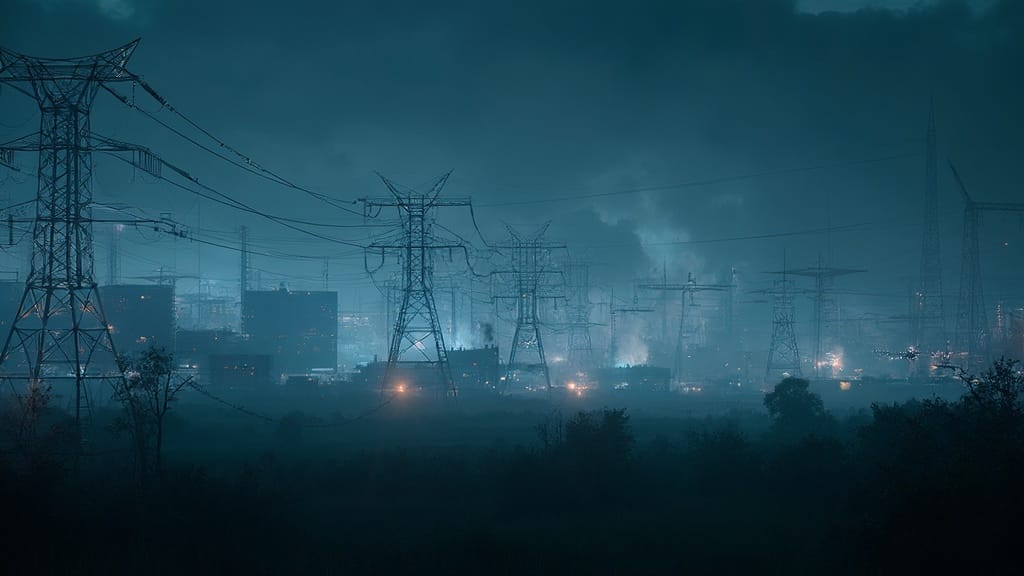
The most important AI story this week didn't come from Silicon Valley — it came from America's power regulator. On June 18, the Federal Energy Regulatory Commission ordered the six regional grid operators under its jurisdiction to justify or rewrite how they handle very large new customers like data centers. Reuters reported the operators have 60 days to respond, and Power magazine reported FERC wants large-load tariffs overhauled outright. (AI doesn't need more power, it needs a smarter energy grid)
Translate the jargon and you get this: the country is hitting the physical limits of the AI boom. A chatbot feels weightless. The warehouse of chips behind it is not — these facilities can draw the electricity of a small city, and the old rules assumed power demand stayed flat. Tom's Hardware reported FERC is pushing for projects to bring their own power or curtail usage during peak demand. AI has become an infrastructure problem. (AI Is About To Run Out Of Power — And It's Not The Chips ...)
The consequences run past tech earnings into questions of who pays for grid upgrades and who gets priority when the wires are tight — with households at risk of subsidizing hyperscale computing. FERC didn't impose one national rule; it told each region to explain itself, which guarantees the next phase is messy, local, and politically charged. Watch for the first regional response: whichever operator files a concrete large-load template first sets the de facto national standard. (Is power grid connectivity the strategic bottleneck for AI?)
Washington Just Treated an AI Model Like Sensitive Hardware
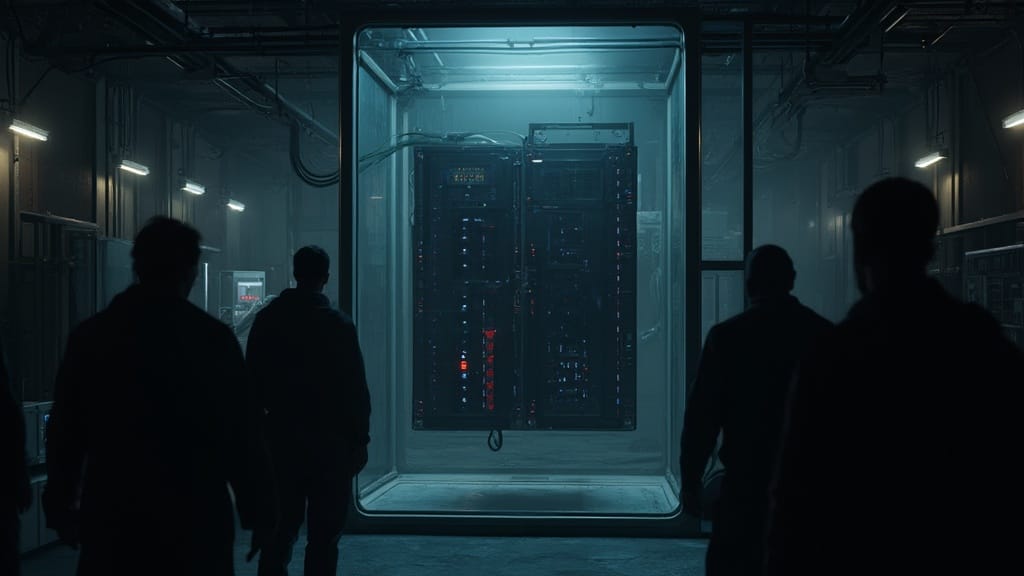
Something striking happened in AI this week: the U.S. government didn't just regulate a company — it reached into the product and switched part of it off. Reuters reported that Anthropic disabled its most advanced models, Claude Fable 5 and Mythos 5, after the government ordered it to suspend foreign-national access on national-security grounds. (The Weekend Washington Switched Off an AI - Hybrid Horizons)
The precedent dwarfs Anthropic. Software has long been treated as something that spreads everywhere, fast. Frontier AI is now being handled more like a missile component or a cryptography system — powerful enough that states decide who gets to touch it. Reuters also reported that G7 leaders discussed whether "trusted partners" might get carved-out access, and that Anthropic and U.S. officials were scheduled to meet Monday to resolve the dispute. AI access is becoming a matter of state policy. (US curbs Anthropic AI access, raising global concerns)
The same week underscored how brutal the underlying race remains. Reuters reported that Noam Shazeer — a Google vice president and Gemini co-lead — is leaving to join OpenAI, while TechCrunch reported OpenAI also brought on former Trump AI-policy official Dean Ball ahead of its IPO. Talent is moving, governments are intervening, and the old assumption that the best model simply wins on merit looks quaint. Watch whether Washington builds an ally-only pathway; if it does, the AI market splits into political blocs.
The Week Washington Moved Closer to Politicizing Science
One of the most consequential domestic stories barely behaved like breaking news — which is probably why it's undercovered. A proposed Office of Management and Budget rule published in late May would require senior political appointees to review discretionary grants before they're issued and would treat peer review as advisory rather than decisive, according to Inside Higher Ed and the regulatory text. (Opinion | A Scientists' March on Washington Is a Bad Idea)
This isn't a budget cut. It's a structural rewiring of how science gets funded, and it would bind future administrations too. The proposal requires that grants "demonstrably advance the President's policy priorities," bans research conditioned on diversity or gender topics, and broadly restricts international collaboration. Supporters argue it aligns spending with elected priorities. Critics warn that once political review becomes standard, researchers self-censor before the review even happens. The fight is over who gets to decide what science gets done. (UW scientists, students rally against proposed federal ...)
This belongs to the same pattern as the AI and grid stories — government moving from referee to operator. Axios reported the overhaul has researchers on edge. Watch whether agencies start handling grant decisions as if the rule is already in force; if they do, the comment period becomes theater and the courts inherit a fait accompli.
Ukraine's Drone War Is Quietly Changing the Shape of the Conflict
The war in Ukraine remains a grinding tragedy, but this week's signal was that Kyiv's long-range drone campaign has gone from symbolic to structural. Reuters reported that Ukraine damaged a Moscow refinery in a major attack on the Russian capital region, with President Volodymyr Zelenskiy describing such strikes as a fair response against facilities fueling Russia's war machine. ([[PDF] HJS 'Military Lessons for NATO from the Russia-Ukraine](https://henryjacksonsociety.org/wp-content/uploads/2024/10/HJS-Military-Lessons-for-NATO-from-the-Russia-Ukraine-War-Report-web-002.pdf))
The logic of the war is shifting. Ukraine still faces the larger army, but drones give it a way to reach into the economic and logistical plumbing behind Russian operations — less "one big breakthrough," more "a thousand cuts to the machinery." Refineries and depots don't move front-line maps, but they affect tempo, repair capacity, and the cost of sustaining the fight. The battlefield is spreading into the supply base. (The New Revolution in Military Affairs)
For Western readers, this intersects with alliance politics: the more cost Ukraine imposes deep inside Russia, the stronger its hand — but also the louder the escalation debates inside NATO capitals already juggling Iran, energy, and rearmament. Watch whether Ukraine keeps hitting Russian energy infrastructure at pace; if it does, Moscow's summer campaign looks less like an offensive and more like an endurance test.
Norway's AI School Ban Is a Small Policy With Big Future Energy
A lot of AI policy is still abstract. Norway's was refreshingly concrete. Reuters reported on June 19 that Norway is imposing a near-ban on generative AI tools for elementary pupils and restricting their use for older students, with Prime Minister Jonas Gahr Støre arguing the goal is to protect the act of learning itself.
On one level this is a local education story. On another, it's an early answer to a question many countries have dodged: what happens when a technology that can write and "help" with homework starts short-circuiting learning? The first phase of the AI era was workplace excitement. The next may be institutional boundary-setting — classrooms, courtrooms, hospitals deciding where the tool belongs. The AI backlash is getting specific.
Restrictions on children are easier to defend than broad limits on adults, which makes schools a likely testing ground for a wider social settlement around AI. If these rules are seen to work, expect other democracies to borrow the template — and ed-tech companies to start negotiating with a global norm rather than a patchwork. Watch whether other European education ministries move from guidance to actual rules before the next school year.
Media Organizations Push Back on Wartime Secrecy
When wars drag on, controlling the story becomes nearly as important as controlling the ground. A broad coalition of major global news organizations — including the Washington Post, the New York Times, and the BBC — publicly called this week on Israel to allow independent foreign reporters direct access to Gaza, arguing that military-escorted visits and local stringer reports are no substitute for on-the-ground press freedom, according to the Washington Post.
Since early in the war, Israel has tightly restricted foreign media access, citing security and hostage-rescue concerns, permitting only choreographed military tours. The coalition argues this has produced a warped public record of civilian casualties and the conduct of all parties inside the strip. The plea lands as Israel continues regular strikes in southern Lebanon and faces mounting criticism over Gaza's humanitarian toll.
Why it matters beyond media circles: what the world believes happened in Gaza will shape war-crimes investigations, diplomatic pressure, and future peace talks for years. Control of images and data today becomes the historical record tomorrow. If Israel eases access in the coming weeks, expect a wave of new investigations; if it doesn't, calls for international inquiries tied to press freedom will only grow.
The Lens
Real outlet monitoring. Today's coverage gaps — what each side is watching.
What right-leaning outlets are watching
Fox News led with a public exchange between President Trump and Italian Prime Minister Giorgia Meloni after Trump said she had 'begged' for a photo at the G7. The dispute escalated further when Italy's top diplomat canceled a planned U.S. trip. The story centers on a visible strain in a U.S.-Italy relationship that had otherwise been managed through formal diplomatic channels.
Also in right-leaning news:
- The Wall Street Journal reported that some Polymarket traders appeared to be making large profits, but those gains were not based on real market activity.
- The New York Post said Iran's Foreign Ministry declared the Strait of Hormuz open after the IRGC had warned it was closed, creating confusion about the waterway's status.
What progressive outlets are watching
The Guardian reported that Texas environmentalists lost a bid to block SpaceX from closing access to a beach near the company's launch site. The case concerns public access and local environmental concerns around the expansion of Elon Musk's space operations. It is a legal and regulatory dispute over how much control the company can exert over the surrounding area.
Also in progressive news:
- Vox ran a piece asking whether ChatGPT could be conscious and what would follow if that possibility were taken seriously.
- The Atlantic published a roundup of music generated by AI that combines large numbers of songs into new outputs.
Same story, two lenses — which is which?
Iran and the Strait of Hormuz. Two treatments. Same facts, genuinely different emphasis. Which perspective is which?
Version A
Iran's competing signals over the Strait of Hormuz last week — the IRGC's closure warning rapidly contradicted by the Foreign Ministry — have been widely read as chaos. A more careful reading suggests choreography. Iran is a state under sustained economic pressure from sanctions, navigating a domestic legitimacy crisis while managing hardline military factions whose interests do not always align with diplomatic ones. The Foreign Ministry's correction was not weakness; it was a signal that channels for negotiation remain open even as the IRGC performs resolve for domestic audiences. Understanding this distinction matters enormously for policy. Treating every Iranian provocation as a unified declaration of intent collapses the internal complexity that diplomacy depends upon. The Strait episode is a reminder that the United States has, historically, achieved more durable stability in the Gulf through engagement that addresses Iranian security concerns — sanctions relief, regional security frameworks — than through postures of maximum pressure that strengthen hardliners by vindicating their narrative. Ambiguity is not always a threat; sometimes it is an invitation.
Version B
The contradictory signals emanating from Tehran last week — the IRGC warning that the Strait of Hormuz was closed, followed swiftly by the Foreign Ministry's insistence that it remained open — were not a communications failure. They were a strategy. Iran has long exploited the gap between its military and diplomatic arms to simultaneously threaten and reassure, extracting leverage without absorbing accountability. Roughly twenty percent of the world's traded oil transits the Strait; the mere suggestion of closure moves markets and rattles allies. What the episode exposes is the cost of treating Iran as a rational negotiating partner whose statements carry face value. A regime that can deploy institutional contradiction as a geopolitical instrument is not confused — it is disciplined. The appropriate Western response is not to parse which ministry speaks authoritatively, but to maintain the credible naval presence and allied cohesion that make closure genuinely costly to contemplate. Deterrence, not interpretation, is the correct answer to deliberate ambiguity. Stability in the Gulf has never been a gift; it has always been a posture.
⚡ What Most People Missed
The Iran deal has a Hormuz footnote that could blow up the whole thing: Iran's foreign ministry said Tehran would set up a new strait-management regime with Oman and "charge fees for services" — directly contradicting the administration's pledge that Hormuz would stay "permanently toll-free." The MOU only guarantees free passage for 60 days. That gap is the next negotiating crisis, arriving exactly when Washington needs to sell the deal as a clean win.
The man who co-invented the transformer just joined OpenAI's IPO team: Noam Shazeer — a lead author of 2017's "Attention Is All You Need," the paper underpinning every major language model — is leaving Google for OpenAI, per Reuters and Yahoo Finance. Google reportedly paid roughly $2.7 billion in 2024 to bring him back from Character.AI; he walked anyway, into a competitor moving toward a public offering. It's being covered as a talent story. It's an IPO story.
The comment period closing July 13 could permanently rewire American science: The OMB grant proposal is at a critical juncture — the public comment window closes Monday, July 13, the last formal leverage point before this becomes a litigation fight. The research community is mobilizing, but the general public hasn't connected it to the concrete things it touches: cancer trials, pandemic prep, climate modeling, AI safety research.
FERC's co-location rework is the buried plumbing of the AI buildout: In the same June 18 meeting that grabbed headlines, FERC also reworked PJM's co-location framework — the rules deciding whether a data center can park next to a power plant and skip the queue. It's technocratic language for who pays when AI wants power now, and it's a binding commission action, not a think-piece.
A new U.S. bill would make it risky for officials to "jawbone" platforms: A bipartisan group in Congress introduced legislation creating a federal right to sue government officials who coerce platforms into silencing lawful speech — targeting the back-channel emails and "suggestions" that have driven takedown pressure since 2016. Still at the introduced stage with no markup, but it signals the censorship fight moving from courts into statute.
📅 What to Watch
- If Anthropic wins a "trusted partner" carveout at Monday's meeting, Washington will have created the first visible club system for frontier AI — and the market starts splitting along political blocs rather than merit.
- If any regional grid operator files a concrete large-load tariff before the 60-day deadline, that single filing becomes the national template every other region is forced to react to.
- If agencies start treating the OMB grant rule as operating policy before July 13, the comment period was theater and the courts are litigating a done deal.
- If Iran moves to enforce its Hormuz "fees for services" regime, the gap between that and Trump's "toll-free" promise becomes the crisis that unravels the ceasefire's domestic sell.
- If Ukraine keeps hitting Russian refineries at pace, Moscow's summer offensive gets re-read as an endurance test — and the escalation debate inside NATO capitals gets louder.
The Closer
A peace deal signed in a French palace that hinges on whether anyone gets to charge a toll for a strip of water; a power regulator quietly admitting the chatbot needs a substation; the co-inventor of the transformer packing up his $2.7 billion office and walking it across the street before the roadshow. The throughline is governments discovering they can reach into the machine and flip switches — turning off an AI model here, gating a research grant there — right up until the moment they realize they've made the machine easier to break. We'll be reading the fine print on that Hormuz footnote so you don't have to.
Forward this to the friend who keeps asking why their gas bill and their 401(k) are both watching the same shipping lane.