The Lyceum: Virginia Daily — Apr 02, 2026

Photo: lyceumnews.com
Thursday, April 2, 2026
The Big Picture
Today is the day Virginia's 2026 congressional battlefield gets locked in — the 5 p.m. filing deadline sets the candidates, even as the districts they're running in might be redrawn on April 21. Meanwhile, Governor Spanberger has signed the initial, largely uncontroversial bills and left the harder measures — guns, the Fairfax casino, data centers — on her desk with 11 days to go, the General Assembly reconvenes today to handle her amendments and vetoes from the 2025 session, and the killing of a Hopewell teenager is the kind of story that makes everything else feel very far from the ground.
Today's Stories
Hopewell Schools Brace for Grief After High School Student's Killing
Hopewell City Public Schools will have grief counselors in the high school library from 10 a.m. to noon today after 18-year-old swim team member Jayden McComber was found dead in a marshy area of Caroline County, days after being reported missing from his Richmond Street home. The Caroline County Sheriff's Office is investigating the death as a homicide. The division called McComber "beloved" and said additional support will be available when classes resume next week.
What matters beyond the immediate tragedy is whether Hopewell — a small, resource-strapped district — can sustain counseling past the first wave. School systems that front-load crisis support and then pull it back within days tend to see secondary effects: attendance drops, behavioral incidents, and a general erosion of trust between families and the institution. The signal to watch is whether the division announces extended services by next week, or whether this becomes another case where the initial response was the whole response.
Spanberger Signs First Bills, but the Hard Decisions Are Still 11 Days Away
Governor Spanberger has begun signing legislation from the 2026 General Assembly — an initial tranche her office describes as largely bipartisan and uncontroversial. The official announcement is here. What remains unsigned are measures that test her governorship: 25 gun reform bills including an assault weapons ban (HB 217, SB 749), the Fairfax casino referendum bill (SB 756), the data center sales-tax exemption measure, and the cannabis regulatory framework — all of which were passed by both chambers of the General Assembly and sent to the governor. She has until 11:59 p.m. on April 13 to sign, amend, or veto each one. Anything she amends or vetoes goes back to the legislature during the special session starting April 23.
UVA Center for Politics analyst Jeff Schapiro frames the stakes well: Spanberger faces the challenge of "reconciling the image she projected as the can-do centrist with the expectation of a party base that tends to be far more reflexively liberal." If she signs the gun package, expect same-day lawsuits — the Virginia Citizens Defense League has said explicitly it will be "standing on the courthouse steps to file" the moment pen hits paper, according to VPM's reporting. If she vetoes or amends, it risks fracturing her base heading into a redistricting referendum where Democratic turnout is the whole ballgame. The silence from the governor's office so far is itself a signal — watch for any movement this week.
The Redistricting Referendum Is 19 Days Out — and the Margin Is Not Comfortable
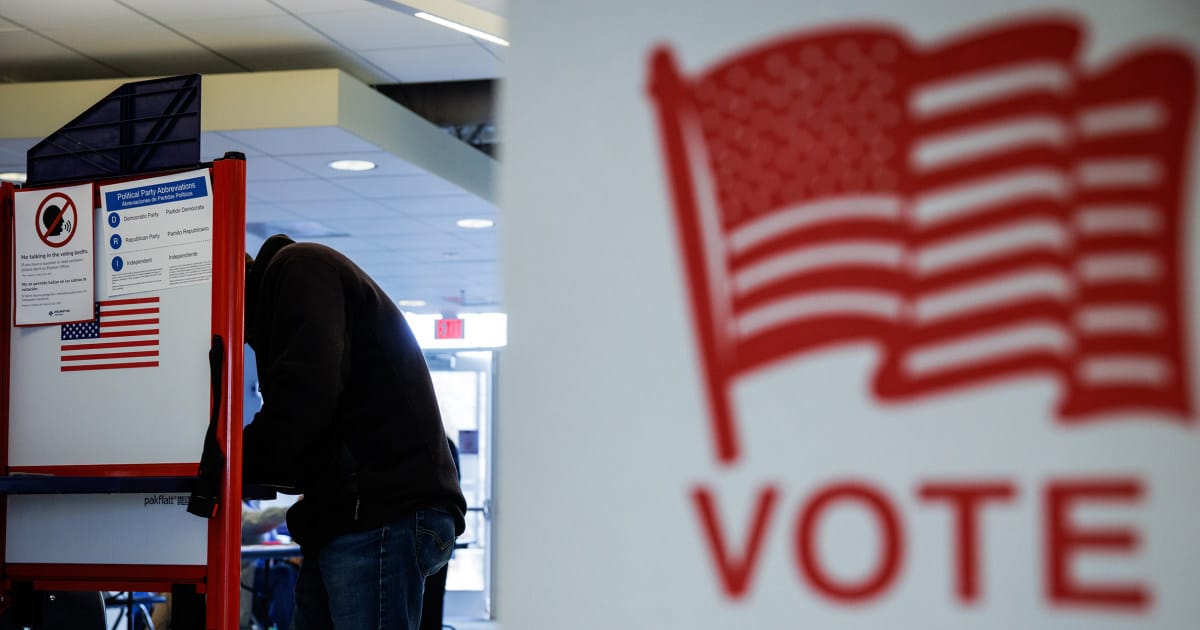
The April 21 special election on whether to temporarily empower state legislators to redraw congressional maps is supposed to be a Democratic layup. It isn't. NBC News reports that Democrats are "starting to sweat" as opposition messaging about "politicians drawing maps" gains traction. The pro-amendment group Virginians for Fair Elections has spent or reserved $17.2 million in ads through April 21; the primary opposition group, Virginians for Fair Maps, has spent or reserved $1 million. The money gap is enormous, but the outcome is genuinely uncertain.
The fight has gotten personal. Former Governor Glenn Youngkin is set to campaign against the referendum in Lynchburg on April 11 alongside Congressman John McGuire (VA-05). Opponents are also wielding past comments from Barack Obama against the amendment. Meanwhile, voter confusion is real — PACs on both sides have adopted nearly identical names (Virginians for Fair Elections, Virginia Fair Elections, Virginians for Fair Maps, No Gerrymandering Virginia), creating a genuine voter-education crisis. Early voting is already underway, and April 10 is the last day to request a mail-in absentee ballot. If turnout craters in a low-salience special election, the money advantage may not matter.
Court Voids Prince William "Digital Gateway" Zoning, Handing Opponents a Legal Playbook
The Virginia Court of Appeals upheld a ruling invalidating Prince William County's zoning approvals for Digital Gateway — the largest proposed data center corridor in the state, near Manassas National Battlefield Park. The three-judge panel found procedural flaws in the county's public-notice process and affirmed that neighbors had standing to challenge the project, a rare win for local challengers in a state where the Dillon Rule and by-right zoning typically favor developers.
The ruling does more than pause one project. It hands organized residents across Northern Virginia a legal template for challenging data center approvals — expect zoning applications in Loudoun, Fairfax, and other counties to face closer scrutiny and more preemptive lawsuits, which lengthens timelines and raises costs. The county can appeal to the Virginia Supreme Court, but for now millions of square feet of planned capacity are frozen. Combined with the statewide fight over the data center sales-tax exemption — the central reason the state budget hasn't passed — and new concerns about Potomac basin water supply raised by the Interstate Commission on the Potomac River Basin, the industry is facing pressure from three directions at once: courts, ratepayers, and environmental regulators.
Virginia Firms Land Over $1.9 Billion in Federal Contracts This Week
The Department of Energy awarded a $1.8 billion contract to SURATech — a consortium led by Virginia Tech and the Southeastern Universities Research Association — to manage the Thomas Jefferson National Accelerator Facility in Newport News. That's a concrete deliverable: continued operation of a major federal physics lab and the high-skill jobs that come with it across Hampton Roads. Separately, Tysons-based LMI Consulting secured a roughly $100 million Air Force contract for logistics and readiness support.
These awards matter as a counterpoint to the data center volatility. Federal research and professional services remain a steady, high-wage employment engine across the Commonwealth — less flashy than hyperscaler campuses but far less dependent on a single tax exemption or zoning approval. If SURATech executes well, it cements Virginia Tech's role as a federal research anchor; if it stumbles, the lab's next management competition becomes a national contest. For LMI, the Air Force deal is a scale-up signal — watch whether it translates to new Tysons-area hiring.
Alexandria's Tech Accelerator Hunt Draws Over 20 Bids
The Alexandria Economic Development Partnership confirmed it received more than 20 proposals from organizations vying to operate the city's new technology accelerator, which aims to grow early-stage tech companies in Alexandria. The first cohort could be in place by July if operator selection moves quickly.
Twenty-plus bids for a municipal accelerator is a strong demand signal — it suggests operators see enough deal flow and founder interest in the Alexandria-to-D.C. corridor to justify competing for the contract. If AEDP picks an operator with a track record of converting cohorts into local companies that actually stay and hire, it becomes a small but meaningful diversification play for a city still heavily dependent on federal contracting. If the program produces a few demo days and then quietly fades, it joins a long list of municipal innovation theater. The observable signal: whether the winning operator commits to measurable job-creation or revenue targets, or just promises "ecosystem building."
⚡ What Most People Missed
- The 5 p.m. filing deadline today isn't just for Congress. The Department of Elections' candidate bulletin quietly set the same cutoff for local candidates — Board of Supervisors, School Boards — who want to appear on the August 4 primary ballot. In past cycles, late-filing insurgents in Loudoun and Prince William have turned single issues like data centers or curriculum fights into serious campaigns. Watch county party feeds over the next 48 hours for who slipped in under the wire.
- Richmond is quietly centralizing land-use power away from local governments. A package of bills advancing through the legislature would require localities to allow accessory dwelling units by right, let developers appeal local solar-project rejections to the State Corporation Commission, and restrict some forms of local cooperation with federal immigration enforcement. Taken together, they raise the bar for local governments to say "no" — and move more fights to state-level forums. Cardinal News has the roundup.
- Amazon's HQ2 hiring effectively stalled in 2025. The company won't seek a Major Headquarters Workforce Grant payment this year after adding nearly 300 qualifying jobs and claiming over $6.4 million in incentives in 2024. With roughly 8,500 total employees and PenPlace Phase II construction on indefinite pause, Arlington's revenue and transit-funding projections built on faster growth need revisiting.
- Virginia Tech's virtual public comment session on tuition happens today at 1:30 p.m. — the Board of Visitors votes April 14 on a 0-to-2.9% increase for the 2026–27 academic year, but with the state budget unresolved, the floor matters as much as the ceiling. If Tech holds tuition flat, it puts immediate pressure on UVA, George Mason, and William & Mary to explain why they didn't. Details here.
📅 What to Watch
- If the final candidate lists posted this week show unexpected retirements or weak challengers in swing districts, national donors and PACs will quickly reallocate resources — and the April 21 redistricting referendum could still change the underlying electoral map these campaigns are contesting.
- If Spanberger signs the assault weapons package before April 13, expect immediate litigation that could become a national test case for post-Bruen Second Amendment jurisprudence — a ruling here could narrow or broaden the tools available to other states seeking similar restrictions.
- If Prince William County appeals the Digital Gateway ruling to the Virginia Supreme Court, the case could set a multi-year precedent on whether procedural notice and standing challenges can be used to block large campus-scale developments statewide, materially affecting project timelines and financing.
- If Virginia Tech lands at a 0% tuition increase on April 14, other public universities will face sharper political pressure from lawmakers and families to justify tuition hikes for the 2026–27 year, with budget requests and enrollment forecasts becoming flashpoints in upcoming legislative negotiations.
- If early-voting turnout for the April 21 redistricting referendum tracks below 15% of registered voters in the first two weeks, the $17 million ad spend by pro-amendment groups may not overcome the low-salience nature of the contest, and targeted ground operations by the opposition could be decisive.
The Closer
A teenager found in a Caroline County marsh, a $1.8 billion physics lab contract signed in Newport News, and 20-plus organizations competing to run an accelerator in a city that still can't quit federal contracting — Virginia in a single morning. Somewhere in Richmond, a governor is staring at a stack of unsigned bills and a calendar that says "11 days," which is also how long it takes for a quiet filing deadline to become someone's entire political career.
Until tomorrow. If someone you know tracks Virginia politics, business, or the slow-motion data center collision — send this their way.