The Lyceum: Virginia Daily — Apr 03, 2026

Photo: lyceumnews.com
Friday, April 3, 2026
The Big Picture
Virginia's April is now a three-week sprint where every major fight converges at once. A new Washington Post poll shows the redistricting referendum is winnable for Democrats but not safe — opponents are more motivated, and a former governor just challenged Spanberger to a debate she can't accept without risk. Meanwhile, the data center industry that broke the state budget is now under simultaneous pressure from courts, counties racing to lure it, counties trying to block it, and a regional grid operator publicly calling out Virginia's energy appetite. And Richmond's city government is charging a journalist $5,700 for records it's legally required to post for free — a small story that says something large about how the Commonwealth actually works.
What Just Shipped
- Bipartisan school safety package signed into law (Governor Spanberger): Wearable panic-alarm authority for teachers, red-flag-law training for threat assessment teams, and $5M in targeted grants for Richmond Public Schools — effective July 1.
- Arhaus Ashburn showroom opens at One Loudoun (Arhaus): 19,300-square-foot home-furnishings showroom, the company's fifth Virginia location, treating eastern Loudoun as a peer retail market to Tysons.
- Scottwood multifamily financing closed (Middleburg / Harbor Group International): Construction financing locked for 299 units at 4400 West Broad Street near Scott's Addition; groundbreaking this month, first units late 2027.
- Meridian Waste acquires Waste Knot, LLC (Meridian Waste Virginia): Effective April 1, expanding residential and commercial collection routes across greater Richmond into Meridian's vertically integrated recycling and disposal network.
Today's Stories
The Redistricting Poll Democrats Didn't Want to See
Eighteen days before the April 21 referendum, the Washington Post and George Mason's Schar School released a poll (April 3, 2026) that should make Democratic strategists reach for the antacids. A slight majority of Virginia voters supports the constitutional amendment that would let the General Assembly temporarily redraw congressional maps — but opponents report significantly higher motivation to actually show up. Republican and GOP-leaning voters clock roughly 85 percent "certain to vote" versus about 77 percent among Democrats and allies (in the April 3, 2026 poll).
In referendum politics, that gap is everything. Preference doesn't matter if it stays home. The current Virginia House delegation splits 6–5; the proposed map, based on 2025 gubernatorial results, would push it to 10–1 Democratic). That's the number Republicans are running against — and it's working.
Former Governor George Allen sharpened the pressure Thursday by publicly challenging Spanberger to a series of debates before the vote. Allen is campaigning with No Gerrymandering Virginia, a coalition whose advisory council includes former Democratic State Senator Chap Peterson of Fairfax — which lets the "No" side claim bipartisan credibility. According to Virginia Scope, Spanberger declined, citing the 1,100-plus bills on her desk. That's a real answer, but it hands Allen a clean "she won't defend her own map" line for free, every day, for the next 18 days.
If this referendum fails, Democrats lose their best shot at reshaping Virginia's congressional delegation before the next census — and walk into the April 23 budget special session having just absorbed a high-profile defeat. If it passes narrowly against an enthusiasm deficit, it'll face immediate legal challenges; the Supreme Court of Virginia has already signaled it will rule after the vote. Watch early-voting turnout numbers from VPAP as the first real signal of which side's motivation is translating into ballots.
Loudoun vs. Amazon: The $427 Million Campus Fight
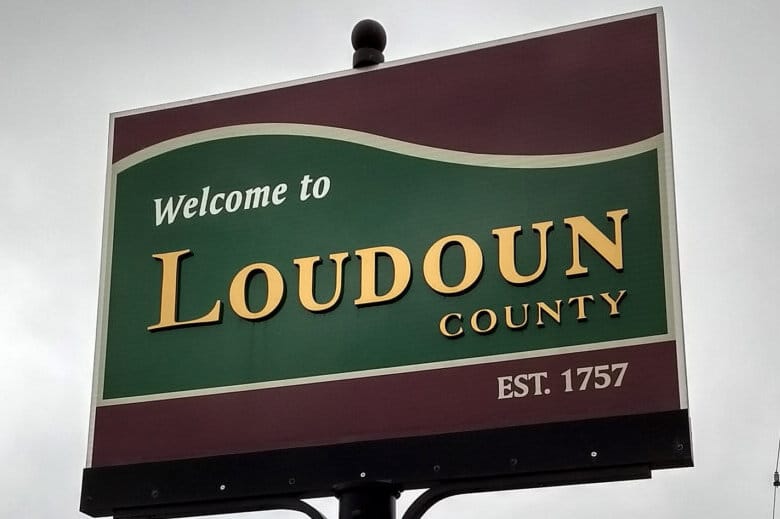
Amazon Data Services paid $427 million for George Washington University's Science and Technology Campus in Ashburn, and Loudoun County is prepared to fight to keep data centers off the property. GW can continue using the campus for up to five years under the sale terms, but after that, the question is what replaces it.
Loudoun's economic development director, Buddy Rizer, has been unusually direct: "At no time has the Board of Supervisors envisioned data centers on that property. In fact, for the last 20 years, we have tried very hard to keep data centers off of Route 7." He'd prefer robotics, drones, AI-related R&D, or mixed-use development. Amazon's spokesperson countered with the company's $161 billion Virginia investment since 2010 and pledged community input on any future plans.
The county's leverage is entirely zoning — and it's eroding. No electrical infrastructure for data centers exists on the site today, but Dominion Energy is planning a high-voltage line nearby. If that line gets approved, Amazon's argument for a data center gets substantially stronger. Meanwhile, Loudoun's share of Virginia's data center market fell from 55 percent in 2019 to about 26 percent by 2025 — the industry is voting with its feet, and places like Culpeper and Botetourt are positioning to catch the overflow.
If Loudoun successfully blocks data center use, it preserves the Route 7 corridor for higher-employment-density development and protects a political principle. If it loses, the county's own zoning framework becomes a case study in how land purchases can outrun land-use policy. Watch Dominion's transmission line approval timeline — that's the variable that decides this fight.
Data Centers Hit a Three-Front War: Courts, Water, and the State Budget
The Virginia data center industry is now fighting on three fronts simultaneously, and the pressure is compounding.
Courts: The Court of Appeals ruling that voided Prince William County's Digital Gateway rezoning — 2,100 acres near Manassas National Battlefield Park — hands opponents a procedural playbook for challenging large-scale rezonings anywhere in the state. Developers are expected to appeal to the Supreme Court by mid-May, and the timeline on that appeal will determine whether other county approvals face copycat challenges.
Water: DEQ is scrutinizing water withdrawal permits more aggressively, particularly in drought-prone areas where data center cooling demands compete with municipal supply. The Virginia Mercury reports the Prince William ruling is already being cited in environmental permit fights across the region.
Budget: The $1.6 billion annual sales-and-use tax exemption for data center equipment remains the central fault line in Virginia's unresolved budget. The Senate wants to eliminate it entirely; the House wants to tie it to environmental compliance; Spanberger has floated a consumption tax as a middle ground. Budget negotiators told reporters the industry coalition needs to come back with "an amount they are willing to pay" — that negotiation is happening now, in private, with the April 23 special session as the deadline.
If the industry offers enough to close the budget gap without losing its competitive edge, Virginia keeps its position as the nation's data center capital. If the deal falls apart, developers accelerate their shift to other states, and Virginia loses both the tax revenue and the jobs. The signal to watch: whether any pre-negotiated framework leaks before April 23.
Culpeper Wants to Let Data Centers Clear Land Before Plans Are Approved
The data center migration out of Loudoun just got a concrete policy expression. Culpeper County supervisors are weighing a zoning tweak that would let data center developers begin grading and clearing trees on parcels up to roughly 500 acres before full site-plan approval — with baseline stormwater protections in place but without the full review that normally precedes any land disturbance.
Supervisors also slipped in language allowing developers to pay proffers (voluntary fees for roads, schools, and utilities) upfront, creating a mechanism that could net the county an estimated $20 million before construction formally begins. Proponents argue it's necessary to compete with Northern Virginia jurisdictions; critics say it removes the one leverage point communities have — once the trees are down and the grading is done, saying no becomes nearly impossible.
If the policy passes, it becomes a template. Every rural Virginia county trying to attract hyperscale investment will study Culpeper's approach, and environmental groups will almost certainly challenge it. If it fails, Culpeper stays in the queue behind better-connected jurisdictions. Watch the Board of Supervisors calendar for a vote, and whether DEQ weighs in on the land-disturbance permit question — that federal-state regulatory intersection is where the legal vulnerability lives.
Richmond Charges $5,700 for Records It's Required to Post for Free
Richmond officials have not complied with a local law requiring financial data to be posted online. When The Richmonder requested the records through FOIA — Virginia's Freedom of Information Act, the state's open-records law — the city quoted $5,732.40 to provide them. These are records the city is already legally required to make public on its own website, without anyone having to ask.
This isn't a rogue invoice. It's a structural feature of Virginia FOIA law, which gives localities wide discretion to set fees. When the Virginian-Pilot surveyed seven Hampton Roads governments for FOIA logs (April 2026 survey), some provided records free while others quoted fees approaching $40,000 combined. Sen. Danica Roem, D-Manassas, has proposed capping fees based on staff salaries, but such proposals have not passed.
Buried in the same Virginia Mercury piece: the Virginia Department of Health overbilled for HIV/AIDS medication rebates and now owes repayment to Gilead Sciences, but when WTVR sought details, VDH cited a FOIA exemption intended for economic development information — a stretch that both the Virginia FOIA Council and the Virginia Coalition for Open Government have questioned. A state health agency using an economic development shield to hide a drug rebate billing error is the kind of story that tends to grow.
If Roem's fee-cap proposals get new momentum from this coverage, it could change how every locality in Virginia handles records requests. If they don't, the $5,700 invoice becomes the going rate for accountability.
Virginia Universities Lose Thousands of International Students — and the Budget Hit Is Real
Cardinal News reports a 15–20 percent drop in international enrollment at some Virginia campuses year over year (April 3, 2026 report). International students typically pay full out-of-state tuition — they're among the highest-revenue students any university enrolls. At UVA, the loss is estimated at roughly 1,200 spots, translating to approximately $80 million in foregone tuition revenue. VCU's medical and graduate programs have seen up to an 18 percent decline in some cohorts, a hit that could delay biotech and lab expansion projects.
The causes are a mix of federal visa policy uncertainty, the broader political climate around immigration, and competition from universities in other countries actively recruiting students who might previously have chosen the U.S. Virginia's universities have been notably quiet about the scale of the problem — nobody wants to advertise a broken recruitment pipeline.
The downstream effect lands squarely in the state budget. Universities that lose tuition revenue lean harder on state appropriations — at exactly the moment the General Assembly is fighting over a budget it couldn't pass in regular session. If SCHEV (the State Council of Higher Education for Virginia) releases enrollment data before the April 23 special session, expect university presidents to testify about the revenue impact. If they stay quiet, the budget hole gets papered over until the next biennium — and the cuts come later, and harder.
⚡ What Most People Missed
- PJM just singled out Virginia's energy habit in front of Pennsylvania lawmakers. A panel discussion on the regional grid operator flagged Virginia as the single largest energy importer in the PJM region, attributing a large share of that demand to data centers. If Pennsylvania and West Virginia start framing Loudoun and Prince William as the reason they're building new gas plants, Virginia environmental groups gain fresh leverage on siting and tax negotiations — and the special-session budget math gets more complicated.
- Google picked Botetourt County for its next data center campus. The Greenfield-site announcement is one of the first hyperscale moves west of traditional "Data Center Alley," and a new Southwest Virginia Data Center Transparency Alliance is already organizing opposition. If this model replicates in mountain and valley counties, the siting fight goes statewide.
- Fairfax's planning commission just posted data center zoning items for April 8. Several new special-exception requests on parcels off Route 28 are already drawing organized opposition. How Fairfax handles these will signal whether Northern Virginia's outer ring keeps accepting large-scale server farms or starts pushing back.
- Arlington schools are spending $56,738 per student on specialty programs — more than double the countywide average of $25,406. APS leaders are defending the gap as the county manager proposes a real-estate tax hike, turning program-level spending into the central fight in Arlington's budget process.
📅 What to Watch
- If early-voting turnout for the April 21 referendum skews older and Republican, it means the enthusiasm gap in today's WaPo poll is real and the "No" side could win a race polls say it should lose — reshaping Virginia's congressional map fight and weakening Democrats heading into the April 23 budget session.
- If Spanberger sends any of the 25 gun bills back with amendments before the April 13 deadline, those specific edits will map exactly where her legal team thinks the courts will strike — a roadmap for both sides of likely litigation.
- If a pre-negotiated data center tax framework leaks before April 23, it means the budget deal is essentially done and the special session becomes a formality; continued silence means the industry hasn't offered enough and the stalemate continues.
- If Dominion's high-voltage transmission line near the GW campus gets regulatory approval, Amazon's case for a data center in Ashburn becomes dramatically stronger and Loudoun's zoning leverage shrinks — watch the SCC docket and the May hearing schedule.
- If Culpeper's pre-clearing policy passes, every rural county courting data centers will study the template within months, changing siting competition dynamics and likely triggering coordinated environmental litigation; the DEQ response is the first signal of whether the policy will survive legal challenge.
The Closer
A former governor daring the current governor to defend a map she won't talk about, a county charging $5,700 for spreadsheets it's supposed to give away, and Culpeper offering to let tech companies bulldoze the forest before anyone's read the blueprints.
Virginia: where the Freedom of Information Act is free in theory and $5,732.40 in practice.
See you Monday. —The Lyceum
If someone you know needs to understand Virginia before April 21, forward this — they're running out of days.