The Lyceum: Virginia Daily — Apr 13, 2026

Monday, April 13, 2026
The Big Picture
Three clocks expire tonight at 11:59 PM, and every one of them reshapes Virginia. Governor Spanberger must sign, veto, or amend every remaining bill from the 2026 session — including assault weapons bans that have the Trump Justice Department threatening to sue before the ink dries. Eight days out from the April 21 redistricting referendum, the campaign has gone national and the turnout math is genuinely uncertain. And ten days from now, lawmakers return for a special session where the entire state budget hinges on whether Virginia ends its billion-dollar data center tax break. This is the week the Democratic trifecta finds out what governing actually costs.
Today's Stories
Virginia's Gun Law Deadline Is Tonight — and the Trump DOJ Is Already Threatening to Sue
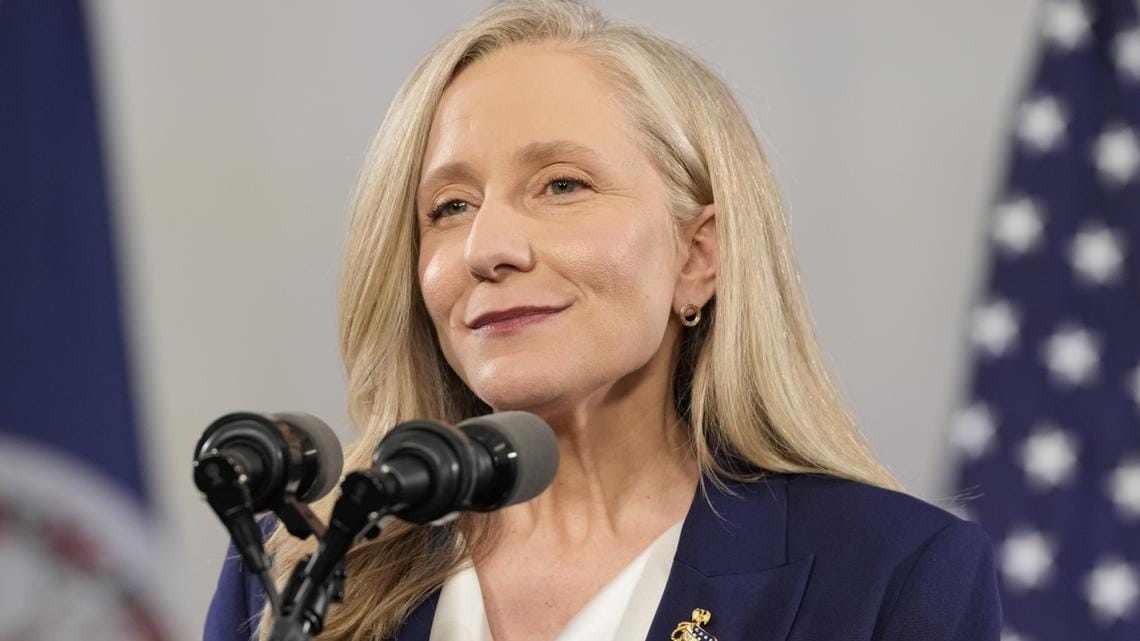
Governor Spanberger has until 11:59 PM tonight to act on the remaining gun bills from the 2026 General Assembly — and the most legally exposed ones are still sitting on her desk.
On April 10, she signed two measures into law, according to NRA-ILA, including SB 27/HB 21, which create a sweeping civil cause of action allowing the Attorney General, local prosecutors, or private individuals to sue firearm manufacturers and retailers for damages. She also signed bans on untraceable "ghost guns" and closed the intimate-partner domestic-violence loophole. But the headline bills — House Bill 217 and Senate Bill 749, the assault weapons bans — remain unsigned; both bills passed both chambers of the General Assembly earlier in the session.
The two bills differ meaningfully. HB 217 would restrict firearms capable of holding more than 10 rounds; SB 749 sets the limit at 15 and removes pistols from the classification entirely, according to 13News Now. Under Virginia law, if the governor takes no action, the bills become law automatically at midnight.
The federal government isn't waiting. The Trump DOJ's Civil Rights Division, led by Assistant Attorney General Harmeet Dhillon, sent a formal pre-enforcement letter warning that it "will commence litigation in the event the Commonwealth of Virginia enacts certain bills that unconstitutionally limit law-abiding Americans' individual right to bear arms." Both the NRA and the Virginia Citizens Defense League have said they'll file suit independently the moment the bills take effect, according to Bearing Arms.
What changes if she signs: Virginia becomes one of the strictest gun-regulation states in the country, and the Eastern District of Virginia — with its fast docket — becomes the venue for what could be the most watched Second Amendment case since Bruen. What failure looks like: If courts enjoin the laws before they take effect, the entire 25-bill package becomes a political symbol rather than policy. The signal to watch: Whether the DOJ files in EDVA within 48 hours of midnight. That pace would be unprecedented and would signal the administration is treating Virginia as a test case for federal preemption of state gun laws.
Eight Days Out: The Redistricting Vote That Could Flip Virginia's Congressional Map
The April 21 redistricting referendum is eight days away, and the campaign has gone national — but the turnout math is the part that should worry both sides.
The ballot question asks voters whether the General Assembly should temporarily redraw Virginia's congressional districts to "restore fairness," with the standard redistricting process resuming after the 2030 census. The map already approved by the legislature would shift Virginia's congressional delegation from the current 6-5 Democratic split to a projected 10-1 Democratic advantage, according to Ballotpedia). A George Mason University/Washington Post poll in April 2026 found 53 percent of respondents support the change, with 44 percent opposed and more than 60 percent saying they're certain to participate in that poll, according to WSET.
That nine-point margin sounds comfortable until you remember that Virginia voters are not accustomed to April elections, according to NBC News. Virginians for Fair Elections, the main pro-referendum group, has spent or reserved $17.2 million in ads through April 21; the opposition group, Virginians for Fair Maps, has spent $1 million. Money helps, but it doesn't solve the fundamental turnout question in a special election nobody expected to care about six months ago.
Former Governor Glenn Youngkin returned to the campaign trail this week to oppose the measure, according to the Virginia Mercury, and is pressing the Supreme Court of Virginia to intervene before the vote. The court has allowed the referendum to proceed, saying final rulings will come after April 21, according to VPAP. Former U.S. Attorney General Eric Holder has publicly backed the plan, according to the Virginia Mercury. U.S. House Democratic Leader Hakeem Jeffries campaigned in Henrico over the weekend, according to Virginia Scope.
The legal time bomb: Virginia could hold the election, certify a result, and then have courts invalidate the whole thing — leaving the state in constitutional limbo heading into the 2026 midterms. Early voting closes April 18. VPAP's early-vote tracker is the single best signal of where this is heading.
The Data Center Tax Exemption Standoff Heads to a Special Session — With $1.6 Billion on the Table
The gun bills are getting the oxygen today, but the data center legislation on Spanberger's desk may be the more consequential long-term story. The legislature sent 15 data-center-related bills to the governor with tonight's same deadline, according to MultiState's legislative tracker. Among them: SB 553, requiring current and future data centers to report water usage, and HB 153, requiring localities to conduct sound studies before approving new projects, according to WJLA.
But the real fight isn't on her desk — it's in the budget. Virginia's sales and use tax exemption for data center equipment costs $1.6 billion annually, and it's the primary unresolved issue from the regular session. Senate President Louise Lucas has said she will not pass a budget that keeps the exemption; House Speaker Don Scott argues eliminating it will harm Virginia's economy; Spanberger says the Commonwealth must honor existing contracts, according to MultiState.
The special budget session begins April 23 — ten days away. The Senate Finance and Appropriations Committee meets April 14 at 9:30 AM, the first formal legislative action since the stalemate began, and any movement on the exemption will signal whether April 23 has a deal to ratify or another impasse to manage.
What success looks like: A compromise that phases out the exemption for new contracts while honoring existing ones — essentially splitting the difference between Lucas and Spanberger. What failure looks like: The session drags past May, school districts and localities can't finalize budgets for the fiscal year starting July 1, and Virginia's reputation as a predictable business environment takes a hit with hyperscalers already looking at alternatives in West Virginia and the Carolinas. The signal: Watch whether Lucas and Del. Luke Torian issue any joint statement before April 23. If they don't, the session is a fight, not a formality.
Spanberger Vetoes Skill Games — and Signs a Pile of Other Bills Before Tonight's Deadline
Buried under the gun bill drama is a significant governing story. Spanberger has been signing — and occasionally vetoing — hundreds of bills this month, and today is the last day.
On April 10, she vetoed legislation that would have legalized skill games — those slot-machine-style terminals at gas stations and convenience stores, according to WSET. In her veto message, she cited the lack of a single statewide gaming regulator and evidence that similar machines clustered in lower-income communities, per the governor's office. On April 9, she vetoed SB 756, which would have forced Fairfax County to hold a casino referendum in Tysons Corner — a move she framed as defending local control, per the governor's office.
Still awaiting action: legislation creating Virginia's regulated retail cannabis market. Both chambers of the General Assembly approved a statewide licensing system, tax structure, and regulatory framework overseen by the Cannabis Control Authority during the 2026 session, according to News From The States. Virginia has allowed possession for years but has had no legal retail market. If Spanberger signs or lets it pass unsigned tonight, legal cannabis sales could begin within months.
Under Virginia law, any bill the governor doesn't act on by midnight becomes law automatically. That quirk means the full picture of what Virginia law looks like starting tomorrow won't be clear until the morning document dump.
Prince William's Digital Gateway Fight Is Entering Its Expensive Next Act
The Virginia Court of Appeals voided Prince William County's Digital Gateway rezoning — 37 data centers across roughly 2,100 acres beside the Manassas Battlefield — ruling the Board of Supervisors moved too quickly and failed to give the public adequate opportunity to weigh in, according to the Virginia Mercury. The county has already logged about $1.6 million in legal expenses.
That ruling is now rippling outward. Prince William is considering a Zoning Text Amendment that would eliminate "by-right" development in the Data Center Opportunity Zone, meaning future campuses would need special-use permits and public hearings instead of automatic approvals, according to legal trade coverage discussed in JD Supra. Developers are reportedly racing to file site plans to lock in existing entitlements before the change takes effect.
Why this matters beyond Prince William: Courts scrutinizing local approval procedures change the calculus for every Virginia county that wants to fast-track data center projects. If counties cut procedural corners, years of planning and promised economic benefits can be thrown into reverse — exactly the dynamic now playing out in the state budget talks, where the value proposition of data centers is being questioned from multiple directions simultaneously.
Spanberger Deploys $1 Billion in Corporate Incentives
While the vetoes and gun bills dominate headlines, the administration quietly signed a bipartisan package of performance-based incentive bills designed to lock in manufacturing and tech investments. The total: roughly $1.07 billion in state incentives tied to more than $7.1 billion in private investment and approximately 3,250 new jobs, per the governor's office.
This is the other side of the data center coin. Spanberger is simultaneously tightening operational rules on hyperscalers — new laws create demand-flexibility programs, stricter emissions standards for backup generators, and pilot waste-heat capture requirements, according to the National Caucus of Environmental Legislators — while deploying record-scale incentives to attract the next wave of investment. The message to industry: Virginia still wants your money, but the terms are changing.
What to watch: Whether the incentive deals include data center operators or are deliberately pointed at manufacturing and life sciences. If the latter, it signals the administration is trying to diversify Virginia's economic base away from hyperscale dependence — a strategic hedge against the possibility that the tax exemption fight scares some operators to other states.
⚡ What Most People Missed
- Fairfax County Public Schools' Comprehensive Planning and Development Committee meets April 13 at 6:30 PM (Gatehouse, Falls Church), per BoardDocs. That committee is where school-capacity pressure, housing growth, and redevelopment collide before they become political fights — and Fairfax is already staring at a roughly $28 million budget gap.
- Virginia Beach's Oceanfront was the site of another mass shooting that injured multiple people on Atlantic Avenue, according to 13News Now — raising renewed concerns about public safety heading into tourism season and occurring the same day the governor faced her gun-bill deadline.
📅 What to Watch
- If the DOJ files in the Eastern District of Virginia within 48 hours of the 11:59 PM deadline, it signals the administration is treating Virginia as a national test case for federal preemption of state gun laws — not just a one-off warning letter.
- If VPAP's early-vote tracker shows Northern Virginia turnout surging past historical April baselines by April 18, the redistricting referendum is likely to pass — but a court invalidation afterward would create a constitutional crisis with no modern Virginia precedent.
- If the Senate Finance and Appropriations Committee meeting on April 14 produces no joint statement from Lucas and Torian, the April 23 special session is a fight, not a formality — and school districts across the state will start making contingency cuts before July 1.
- If Prince William formally eliminates by-right data center development before developers finish filing site plans, it creates a legal scramble over vested rights that could tie up billions in investment for years — and push hyperscalers toward counties with fewer guardrails.
The Closer
A governor staring at a desk full of unsigned assault weapons bans while the DOJ's letter sits next to them; a former governor barnstorming the state to kill a map that would erase his party's congressional seats; and a billion-dollar tax break for server farms holding the entire state budget hostage ten days before a special session.
Virginia scheduled an April election nobody asked for, and now everyone from Eric Holder to Hakeem Jeffries is flying in to make sure people show up — which is one way to discover that your state's most consequential vote of the decade falls on a random Tuesday between Easter and tax day.
See you tomorrow, when we find out what became law at midnight.
If someone you know works in Virginia government, runs a business here, or just votes here — forward this. They'll need it this week.